

Jinshi Technology Secures Over 100 Million Yuan in Series B Funding to Accelerate Clinical Adoption of High-Throughput Nanopore Sequencing Platform

Geneus Technologies
Gene Sequencing Instrument R&D and Manufacturer
VCBeat has learned that on September 29, Geneus Technologies, a nanopore gene sequencing company, announced the completion of its Series B financing round, raising over RMB 100 million. The round was led by Huachuang Capital, with participation from Sequoia China, Sinopharm Capital, Rongan Venture Capital, Huiyuan Capital, and Qushi Growth Fund, as well as existing investors Weidu Capital and Darun Capital. Qushi Capital served as the exclusive financial advisor. The funds will be used for the research and development and commercialization of nanopore gene sequencers.
Geneus Technologies is committed toMaking Gene Sequencing a Routine Tool in Precision Medicine, the company is based on"Sequencing by Synthesis"Nanopore sequencer developed based on the technical route,Addressed the pain points of high costs, low efficiency, and poor data quality in gene sequencing.Achievable“A few hours, a few hundred yuan”The goal of conducting human whole-genome sequencing is expected to drive the widespread clinical adoption of nanopore sequencers.
Previously, Geneus Technologies had completed an angel round solely invested by Kaifeng Ventures, and a Series A round led by Weidu Capital.
Su Yunpeng, CEO of Geneus Technologies, stated, “As the application scenarios for nanopore sequencing become increasingly well-defined and its potential continues to expand, capital markets and the industry are paying growing attention to this sector. The recent IPO filing by Oxford Nanopore has further heated up the industry. Geneus Technologies has overcome major technical barriers, possessing full independent intellectual property rights for its nanopore sequencers and mastering ultra-large-scale chip integration technology, thereby achieving highly competitive costs. Under these circumstances, investors naturally favor nanopore sequencing companies represented by Geneus Technologies.”
According to BBC Research data, the global gene sequencing market size showed a continuous growth trend from 2010 to 2019, with growth rates generally exceeding 10%. In 2019, the global gene sequencing market size was approximately $12.6 billion. Su Yunpeng stated, “After gene sequencing enters clinical practice on a large scale, the market capacity is expected to exceed $600 billion.”
Next-generation sequencing (NGS) technologies, represented by Illumina, are currently the mainstream in the gene sequencing market. Between 2006 and 2015, the cost of NGS testing decreased at a rate surpassing Moore’s Law, with the cost of whole-human genome sequencing dropping from $10 million to $1,000.
"Clinical practice is highly sensitive to the price of gene sequencing, with a general consensus that costs must drop to $100 to drive large-scale clinical adoption. However, from 2015 to the present,"The cost reduction for NGS-based testing has been slow, decreasing only from $1,000 to approximately $500, and there is still no clear technological roadmap for further reducing the cost to $100.“Su Yunpeng stated.
Furthermore, short-read lengths limit next-generation sequencing (NGS) to covering only approximately 85% of the human genome; however, mounting evidence indicates that the remaining 15%, which is poorly covered—particularly regions containing structural variants—is more closely associated with the onset and progression of diseases.NGS has limited capability in interpreting structural variations and other genomic regions, which restricts the application of gene sequencing in the field of precision medicine.
Low efficiency is also a major pain point of NGS technology. It takes about three days from sample collection to report issuance.
In addition to NGS, the emergence of emerging gene sequencing technologies such as single-molecule fluorescence and nanopore sequencing has provided hope for addressing the challenges of high costs, low efficiency, and poor data quality.
Single-molecule fluorescence adopts the "sequencing by synthesis at the single-molecule level" technical route, offering advantages such as high data quality and long read lengths, but its detection cost is approximately six times that of Illumina's NGS technology.Nanopore sequencing, represented by Oxford Nanopore, adopts a “direct sequencing” approach with long read lengths and lower costs than single-molecule fluorescence; however, deficiencies in data quality pose significant barriers to its large-scale adoption in clinical settings., and is also constrained by technical principles in achieving ultra-large-scale integration.
Overall, NGS, single-molecule fluorescence, and nanopore sequencing technologies each have their own advantages and disadvantages, and none has yet fully met the comprehensive high standards required for clinical applications of gene sequencing technology.
Cost, efficiency, and data quality are the prerequisites for the booming development of the gene sequencing and precision medicine industries. Is there a “perfect” sequencing technology that offers low cost, high efficiency, and high data quality? The original intention behind the founding of Geneus Technologies was to address the pain points in gene sequencing by leveraging nanopore sequencers to break through the constraints of sequencing technology in terms of cost, efficiency, and data quality.
The founding team of Geneus Technologies consists of former classmates and long-time friends. Dr. Yaozhong Zou, Chief Scientific Officer, previously served as a Senior Principal Scientist in Roche’s Nanopore Sequencing Division, where he made significant contributions to advancing nanopore sequencer performance to commercial-grade standards. Dr. Yunpeng Su, CEO, is a former executive at a Fortune 500 company and has successfully led multiple national-level R&D projects. Mr. Ke Jiang, Chip Director, has spearheaded the design of dozens of commercial chips.
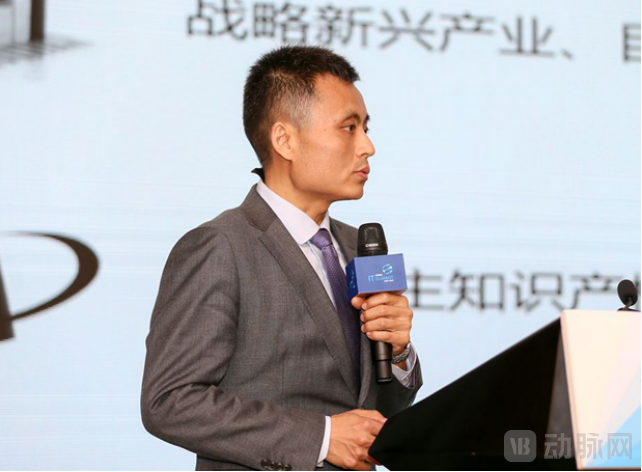
Su Yunpeng, CEO of Geneus Technologies
According to Su Yunpeng, Geneus Technologies has implemented a series of innovations in its three core focus areas—biochemical systems, semiconductor chips, and MEMS chips—and has established a core technological barrier in the nanopore sequencing sector.
Among these, the biochemical system is the core of nanopore sequencing. Developed by Geneus TechnologiesThe biochemical system can eliminate spurious signals generated during sequencing, raise the upper limit of single-read accuracy, and improve consensus accuracy to over 99.99%, thereby overcoming the current limitation of nanopore sequencing technology in providing sufficient accuracy for clinical applications.
Semiconductor chips are the cornerstone, determining how low the cost and how high the efficiency of nanopore sequencing can be. The company’s independently developed semiconductor chips achieve extremely small unit area and low power consumption while ensuring high precision and high sampling rates.
MEMS chips serve as a platform for nanopore proteins and other biochemical components to function, achieving miniaturization through supercapacitor electrodes that support the biochemical system's operation and signal collection. Combined with semiconductor chips featuring an extremely small unit area, this technology enables the integration of over 1 million sequencing units per square centimeter, makingA single chip features over ten million sequencing channels, ensuring low-cost and high-efficiency sequencing.
Leveraging innovations in biochemical systems, semiconductor chips, and MEMS chips, Geneus Technologies has established a proprietary intellectual property portfolio"Sequencing by Synthesis"Technical roadmap, demonstrating highly promising prospects in meeting core requirements such as significantly reducing sequencing costs, improving data quality, and enhancing sequencing efficiency.
Compared with other sequencing technology routes, “sequencing by synthesis” boasts advantages such as low cost, high data quality, and high efficiency, and is expected toReduce the cost of human whole-genome sequencing from $1,000 to under RMB 1,000, complete the sequencing process within hours instead of days, and ensure data quality meets the requirements for broad clinical application.
Currently, Geneus Technologies has completed the development of the engineering prototype for its nanopore gene sequencer. Next, Geneus Technologies will focus on the non-clinical market and launch500,000-channel medium-throughput nanopore sequencer, after which the company will launch a product for the clinical market, featuringGeneus Technologies' Ultra-High-Throughput Nanopore Sequencer,Full-Scale Entry into the Clinical Market, to realize the corporate vision of making gene sequencing a routine tool in precision medicine and improving human health.
Lu Hanjie, Partner at Huachuang CapitalStatement: Huachuang Capital is highly optimistic about Geneus Technologies’ accumulated expertise in nanopore sequencer biochemistry, systems, chips, patents, and intellectual property. It looks forward to the future growth potential of cost-effective, long-read domestic sequencing instruments. Meanwhile, it hopes that nanopore sequencing will continue to make foundational contributions in areas such as personalized medicine, genomics and multi-omics, and early disease screening and monitoring, thereby helping the healthcare industry and other sectors explore more unknown applications.
Dr. Chen Xuanze, Sequoia Capital ChinaIt is indicated that the application scope of NGS is somewhat limited by drawbacks such as short read lengths and complex library preparation, necessitating a new sequencing method to further unlock market opportunities. Low-cost, long-read, miniaturized high-throughput sequencing technologies represent one of the future trends. Geneus Technologies’ technical approach demonstrates significant differentiation and potential technological leadership. By leveraging unique methodologies involving enzyme engineering and nanopore technology, the company aims to further address existing pain points in nanopore sequencing, such as low accuracy, low throughput, and high unit cost, thereby expanding its presence in the current market.
Zou Min, Partner at Sinopharm CapitalStatement: Genomics is a discipline dedicated to tracing origins, with downstream applications experiencing rapid growth in recent years. Geneus Technologies has achieved breakthroughs in upstream sequencing equipment by developing next-generation nanopore sequencing technology, which overcomes the application limitations of traditional sequencing technologies in fields such as scientific research and clinical practice. We look forward to the team achieving greater success during the commercialization phase.
Dr. Xin Xiaoxiong, Partner at Rong’an Venture CapitalStatement: As the upstream segment of the industrial chain, the equipment sector has always been the “crown jewel” of the gene testing industry and market. Under the leadership of its founding team, Geneus Technologies has achieved breakthroughs in core underlying technologies and established independent control over them. In the future, the company strives to develop a “Chinese chip” for high-end sequencing instruments, providing faster, more accurate, and more cost-effective solutions for research and clinical applications.
Zhang Shanshan, President of Huiyuan CapitalStatement: The research, development, and manufacturing of sequencers represent a key direction for high-end precision instruments in China under the 14th Five-Year Plan. This field features exceptionally high technical barriers and is one of our primary areas of focus. As a leading enterprise in nanopore gene sequencing, Geneus Technologies boasts strong independent R&D capabilities. Leveraging its team’s cross-disciplinary technological expertise, the company has achieved significant breakthroughs across all aspects of nanopore sequencing solutions. Its technology offers advantages such as low cost, long read lengths, high throughput, and ease of use, thereby addressing critical market needs that were previously unmet by existing sequencing technologies. We are delighted to grow alongside Geneus Technologies and to create value together through industrial empowerment.
Zhang Junqi, Partner at Qushi CapitalStatement: With the technological iteration of nanopore sequencing, the unique advantages of long-read DNA sequencing in clinical applications are becoming increasingly prominent. The core team of Geneus Technologies has deep expertise in the core technologies of nanopore sequencing, driving iterative innovation with the aim of building a globally leading, domestically produced nanopore sequencing platform with independent intellectual property rights.
Dr. Kang Hui, Partner at Weidu CapitalStatement: In the rapidly evolving gene sequencing industry, the development of upstream sequencers will drive the expansion and innovation of sequencing technologies and application scenarios. Geneus Technologies is a rare high-tech company in China that focuses on upstream nanopore sequencers, supporting reagents, and application development for broad clinical use, possessing fully independent intellectual property rights. We are delighted to have the participation of top-tier investment funds such as Huachuang Capital and Sequoia Capital China. Together, we are committed to advancing the development of the gene sequencing industry, and we believe that under the leadership of our founding team, the company will grow into a leading enterprise in this field.
Zhang Zhongxiao, Partner at Darun CapitalIt indicates that with the successful development and large-scale market entry of Geneus Technologies’ low-cost, high-throughput gene sequencing technology, the advancement of precision medicine will be rapidly accelerated. This will ultimately benefit patient health, reduce medical costs, and deliver ideal returns for investors.
About Huachuang Capital
Founded in 2006, Huachuang Capital focuses on early-stage investments in enterprise software, frontier technologies, life sciences, and consumption upgrades. Leveraging its extensive resources and expertise, the firm assists portfolio companies with strategic planning, business expansion, and team building. Currently, Huachuang Capital manages RMB and USD funds totaling RMB 8 billion, with investments ranging from angel rounds to Series C, and investment amounts spanning from several million to hundreds of millions of RMB. Representative portfolio companies include: SMZDM (ChiNext: 300785), Missfresh (NASDAQ: MF), Wish (NASDAQ: WISH), Tongdun Technology, Tiger Brokers (NASDAQ: TIGR), Ezbuy (NASDAQ: LITB), Bieyanghong (acquired by Meituan, HKEX: 03690), Caiyun Technology (acquired by ByteDance), Xiaoman Technology (acquired by Alibaba, NYSE: BABA), PingCAP, Deephi Technology (acquired by Xilinx, NASDAQ: XLNX), Airlango (acquired by Meituan, HKEX: 03690), Nreal, ABIS Intelligence, LandSpace, Huake Precision, Singleron Group, Fubei Biologics, Beichen Pharma, and Yingshi Biotherapeutics.
About Sequoia Capital China
Sequoia Capital has always been committed to helping entrepreneurs build enduring, great companies by bringing rich global resources and valuable historical experience to its portfolio companies. Over the past 49 years, Sequoia Capital has invested in numerous innovative enterprises and leaders shaping industry trends. As “entrepreneurs behind entrepreneurs,” Sequoia Capital China focuses on investment opportunities in three key sectors: TMT (Technology, Media, and Telecom), healthcare, and consumer goods/services. Over the past 16 years, Sequoia Capital China has invested in nearly 600 companies characterized by distinct technological advantages, innovative business models, and high growth potential.
About Sinopharm Capital
Sinopharm Capital Management Co., Ltd. was established in 2012 as an equity investment institution focused on the healthcare sector, jointly initiated by Sinopharm Group and its management team. The firm currently manages funds exceeding RMB 6 billion. Its management team operates under market-oriented mechanisms, making it one of the earliest investment institutions in China to specialize in healthcare and wellness investments.
About Rongan Venture Capital
Rong'an Venture Capital is dedicated to incubating and supporting innovative startups in the healthcare sector. Its currently initiated and managed medical funds are positioned as specialized early-stage venture capital, focusing on the healthcare industry by investing in high-potential enterprises involved in medical devices, biotechnology, innovative drug R&D, and general healthcare services.
About Huiyuan Capital
Huiyuan Capital, established in 2019 as a joint venture between a professional investment team and state-owned capital, is an emerging healthcare investment firm dedicated to long-term investments in the biopharmaceutical and medical device sectors. It systematically targets high-quality companies with breakthrough and innovative technologies in niche sub-sectors. By forging deep collaborative partnerships with numerous industry players and adhering to an investment strategy of “industry empowerment + capital support,” Huiyuan Capital aims to deliver sustained and stable investment returns to its investors.
About Weidu Investment
Weidu Capital is a young and dynamic venture capital firm dedicated to early-stage investments in the healthcare sector. Weidu Capital focuses on cross-disciplinary applications of cutting-edge biotechnology and artificial intelligence in medicine, pursuing more precise, efficient, and intelligent diagnostic and therapeutic solutions enabled by new technologies, as well as technology-driven business model innovations. The Weidu team boasts extensive industry experience and medical resources, committing to accompany portfolio companies throughout their growth journey and providing comprehensive empowerment at every stage, with the mission of helping entrepreneurs “bridge the gap from vision to realization.”
About Darun Capital
Darun Investment was established in 2014, leveraging the alumni network of Huazhong University of Science and Technology to build an investment and financing platform for the commercialization of high-tech industries. Committed to value creation, Darun Investment focuses on early-stage technology investments, with a portfolio spanning semiconductors, healthcare, new materials, and the internet. Adhering to a selective and refined investment strategy, the firm upholds the business philosophy of “enhancing the value of equity investments through industrial operational expertise.”
About Qushi Growth Fund and Qushi Capital
Qushi Capital, a subsidiary of Qushi Holdings Group, serves as the group’s boutique investment banking arm. It has provided services to dozens of top-tier enterprises, including Haijieya, New Yier Biotechnology, Suosi Medical, Huxiu Technology, Leyan Technology, Hema Coding, and 36Kr Jingzhun, facilitating billions in financing from renowned domestic and international funds. Investors include China Reform Holdings Corporation, Hillhouse Capital, Yunfeng Capital, Huachuang Capital, Boyuan Capital, Lilly Asia Ventures, and Yuanhe Holding.
Qushi Growth Fund, a private equity fund focused on the primary market under Qushi Holding Group, has made investments in companies including ByteDance, Haijieya, Suosi Medical, and 36Kr Jingzhun.
Qushi Holdings Group is committed to becoming a premier research-driven holding group. The company’s businesses include boutique investment banking services (Qushi Capital), primary equity investment (Qushi Growth Fund), secondary equity investment (Hongzhou Capital), research services (Qushi Research Institute), and physical industries and incubation (Qushi Industrial). The company positions itself as a comprehensive service platform behind China’s top entrepreneurs.