

Four Key Trends in Smart Healthcare: Insights from the 2021 Digital Health Forum (DHF)
On September 25, the China (Hangzhou) Digital Health Conference was held again at the Academic Center of Hangzhou Future Sci-Tech City.
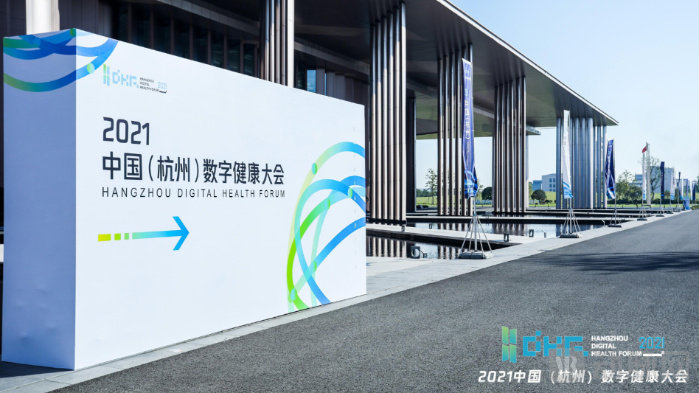
One year has passed since the inaugural Digital Health Conference. A year ago, driven by black-swan events such as the pandemic, the digitalization of healthcare was propelled into the spotlight, with industries across the board jointly exploring the development trajectory of “digital health” from multiple perspectives, including clinical practice and technology.
One year on, as the entire industry continues to explore and advance its digital transformation, healthcare digitization has begun to yield tangible results, with development directions becoming more focused and clearly defined. Hospitals have progressively refined their deployment of digital healthcare solutions and achieved corresponding outcomes through practical application. Meanwhile, enterprises have identified clearer strategic paths during their growth, delivering more valuable solutions tailored to hospitals and patients.
Guided by the Zhejiang Provincial Health Commission, the Zhejiang Provincial Development and Reform Commission, the Zhejiang Provincial Department of Economy and Information Technology, and the People's Government of Yuhang District, Hangzhou; hosted by the Zhejiang Health Service Promotion Association and Sir Run Run Shaw Hospital, Zhejiang University School of Medicine; and organized by the Administrative Committee of Hangzhou Future Sci-Tech City (Haichuang Park), the Digital Health ConferenceCompared to last year, the topics were more focused, case studies were more abundant, and cross-sector integration and interaction within the industry were more pronounced.
Looking back at the event, more than 600 attendees were present, with representatives from all sectors—government, industry, academia, research, healthcare, and investment—in attendance. The venue was nearly filled to capacity.

Cai Xiujun, Vice Chairman of the Zhejiang Provincial Committee of the Chinese People’s Political Consultative Conference and President of Sir Run Run Shaw Hospital, Zhejiang University School of Medicine; Zhang Zhenfeng, Member of the Standing Committee of the Hangzhou Municipal Committee of the Communist Party of China and Secretary of the Yuhang District Committee; Ye Quanfu, Director of the Hospital Management Institute under the National Health Commission; Jin Chengtao, Deputy Secretary of the Yuhang District Committee and District Mayor; Cai Jiangnan, Executive Chairman of the Shanghai Chuangqi Health Development Research Institute; Zhu Yaochuan, President of the Zhejiang Health Service Promotion Association; and Li Jie, Secretary of the Party Working Committee and Director of the Administrative Committee of Hangzhou Future Sci-Tech City, among other leaders and guests, attended the conference.
Academician of the Chinese Academy of Engineering and President of Beijing Tsinghua Changgung Hospital, Dong Jiahong; Academician of the Chinese Academy of Sciences and President of the Cancer Hospital of the University of Chinese Academy of Sciences, Tan Weihong; and Vice President of Westlake University, Xu Tian, respectively delivered industry insights. Executives from Deloitte China, Amazon Web Services (AWS), Zhiyun Health, Yidu Tech, and DXY shared their perspectives on the development of digital health. In addition, Wu Jiadao, Ye Yue, Huang Ting, and others presented their practical achievements and reflections on the digital transformation of healthcare.
During the conference, the launch ceremony for the "Zhejiang Province Digital Health Industry Report" was held.
What progress have hospitals, enterprises, and primary healthcare institutions made since the pandemic? What development directions have been explored?As various representatives shared their insights, the undercurrents lurking beneath healthcare digitalization came to the fore.
Exploring Digital Transformation: The Zhejiang Practice
From a global perspective, the development of any industry is inseparable from a region that boasts industrial cluster advantages and deep collaborative capabilities. Zhejiang Province not only has a solid foundation in the digital economy, but its strategic location in the Yangtze River Delta also brings it a vibrant innovation atmosphere, top-tier talent, and policy dividends.
“Digital Zhejiang” continues to iterate and deepen, becoming a representative model region for the digital transformation of healthcare.
Ye Quanfu, Director of the Hospital Management Institute under the National Health Commission, delivered an address at the conference.It affirmed Zhejiang Province’s achievements in exploring digital reform, such as the “At Most One Visit” reform in healthcare, the promotion of smart hospitals, the construction of digital medical consortia and artificial intelligence in medicine demonstration sites, the iterative upgrade of the “One Map, One Code, One Database, One Index” system for epidemic prevention and control, precise and intelligent epidemic scheduling and command, and the formulation of the “Zhejiang Provincial Health Digital Reform Guidelines.” It was recognized that these pragmatic and effective reform measures provide replicable and scalable practical experience for the rest of China.
Cai Xiujun, President of Sir Run Run Shaw Hospital, Zhejiang University School of Medicine, in the subsequent agenda,Centered on the theme of “SAHZU’s Practice in Building Smart Hospitals,” it shared relevant practical cases of digital applications in hospitals. During the presentation,He highlighted three major challenges in digital health and life applications: “the gap between IT, healthcare, and health/life sciences,” “interoperability of data,” and “data standardization.”, and believes that addressing these three issues is the key to promoting high-quality development in healthcare.
Meanwhile, drawing on the practices at Sir Run Run Shaw Hospital, Cai Xiujun proposed that resource strategies—such as achieving international accreditation, collaborating with world-leading medical institutions, and leveraging international resources for talent development—as well as institutional strategies like refined management, are particularly critical to hospital development. He further emphasized that hospitals must undergo an iterative upgrade from informatization to internet-based operations, and ultimately to intelligent healthcare, while consistently prioritizing patient needs; technology alone is insufficient without compassion. Furthermore, internet technologies should cover the entire care continuum, including pre-hospital, in-hospital, and post-hospital stages. Hospital development should also focus on scientific research innovation and technological innovation.
It is evident that Zhejiang Province has made significant strides in its digital transformation of healthcare.
Why Are Data Issues Critical?
The value of data in healthcare is self-evident. With the advancement of digital transformation in healthcare, data accumulation has become increasingly substantial. However, due to inconsistent internal system interfaces, hospitals suffer from severe information silos, and information barriers also exist among medical service institutions within the same region. Meanwhile, issues such as data standardization remain unresolved, preventing the full realization of data’s true value.
According to statistics from VCBeat, since 2020, relevant authorities have successively issued 12 policies and standards concerning the security of health and medical data. National regulatory bodies have recognized the significant risks posed by data security vulnerabilities and are currently working to address these gaps through top-level legislation and standards.
Professor Dong Jiahong, Academician of the Chinese Academy of Engineering and President of Beijing Tsinghua Changgung Hospital"Eight Major Challenges Facing Smart Healthcare Today Were Highlighted in the Speech", with the third being high privacy requirements, the fourth being poor data standardization, and the fifth being weak information interoperability and severe information silos. Data-related issues account for three of the eight major challenges, making their resolution a key focus in overcoming the obstacles to smart healthcare.
Deputy Director of the Zhejiang Provincial Health Commission and President of Zhejiang Provincial People's Hospital, Ge MinghuaFrom the perspective of practical hospital applications, it addresses the current situation where complex internal data interfaces hinder data sharing, highlighting that data interoperability has become a critical bottleneck.
Chen Yu, Deputy Director of the Zhejiang Provincial Big Data Development Administration, delivered a series of speeches at the conference focusing on issues such as data security and data interoperability. He noted that data sharing, data openness, and data integration are of great significance for disease research and accurate patient profiling.and further proposes the key to solving data challenges.
Chen Yu’s perspective offers valuable insights into resolving data-related challenges. He points out that the core issue lies in a lack of regulatory clarity, the potential risk of legal disputes when sharing data externally, and the difficulty of migrating diverse data formats to the cloud. Therefore, to enable data interoperability, it is essential to de-identify data and ensure its security through multiple measures, ultimately facilitating data utilization to empower the healthcare industry and society at large.Chen Yu proposed six recommendations:
First, the legal and regulatory framework for data sharing is of paramount importance; no component of public data should be excluded.
Secondly, it is essential to build social consensus by establishing collaborative platforms through multi-stakeholder engagement involving government and enterprises, with oversight conducted by professionals.
Third, implement tiered and categorized data entry, establish granular data-sharing protocols, and ensure data security.
Fourth, establish technical measures such as permission management, whitelisting, and name de-identification to enable data utilization.
Fifth, establish a hacker barrier.
Sixth, implement full lifecycle data management, record data security on the blockchain, and ensure traceability of data access.
Yan Jun of Yidu Tech also highlighted the key role of data in the interview:“In the era of digitalization and intelligence, for a product or service to be successfully implemented, it must first have clear digital data. Second, there must be well-defined application scenarios, along with algorithms and models—including computational power capabilities—sufficiently robust to support these scenarios. Ultimately, the implementation must generate tangible value; it is insufficient if the solution appears promising only on paper or in the laboratory but fails to deliver value to end users.”
In response to these challenges, numerous enterprises have been gradually developing corresponding cybersecurity and data security solutions through ongoing exploration, while relevant policies have become increasingly clear during this process.
Regarding data applications, Li Tiantian, Founder and Chairman of DXY, offered a different perspective. He noted that a balance must be struck between ensuring data security and fostering innovative data use, as absolute de-identification may omit critical disease-related information. Furthermore, ensuring data quality is another issue worthy of consideration.
Although issues such as data integration and data security remain to be resolved, the flaws do not obscure the merits; we can still see the value that data will deliver in the future. As policy requirements for data tighten and various cloud services are rolled out, the number of hospitals requiring data security and cybersecurity services will continue to grow, creating a market worth tens of millions.
Where Lies the New Blue Ocean for Smart Healthcare?
Now that the development of smart healthcare is more than halfway through, where exactly can the market’s blue ocean be found?Primary healthcare and the broader health and wellness sector may still hold significant room for growth.
In the latter part of the conference, Wu Jiadao from the Planning and Information Division of the Zhejiang Provincial Health Commission, Ye Yue, Director of the Information Center of the Changxing County Health Bureau, and Huang Ting, Director of the Information Center of the Shengzhou City Health Bureau, shared their experiences on the digital reform of healthcare in Zhejiang Province.
Smart healthcare at the primary care level is in a critical phase of development, with many concepts still awaiting refinement through practical application and numerous challenges yet to be addressed. With demand from medical institutions and pain points in the market, this landscape presents significant opportunities for enterprises.
Wu Jiadao mentioned,Zhejiang Province is planning to build eight application scenarios, including “COVID-19 Vaccination and Traceability,” “One-Stop Service for Medical Consultation and Treatment,” and “One-Stop Service for Pre-hospital Emergency Care,” comprising 37 sub-applications.
It is evident that, beyond mainstream application scenarios such as electronic medical records (EMR), outpatient systems, and physician workstations, there remains substantial room for exploration.Among these, the emergency medical services (EMS) system faces challenges such as the lack of interoperability in cross-regional emergency information, the disconnect between pre-hospital emergency care data and in-hospital clinical treatment records, and the inability of ambulance drivers to accurately locate patients. In primary care for chronic disease management, there are issues such as physicians’ inability to interpret medical images or operate relevant medical devices, and patients’ limited understanding of disease progression, resulting in a significant market gap.
In subsequent remarks,Ye Yue also outlined multiple scenarios, including chronic disease management, future community health integration models, and emergency response linkage applications based on health profiling.Furthermore, regarding chronic disease management, it proposes a solution that leverages digital empowerment to match “the right patients with the right physicians” based on stratified and categorized health profiles. By integrating online and offline services, this approach enables the three-tier circulation of chronic disease management tasks across county, township, and village levels, thereby establishing a closed-loop system for full-cycle chronic disease management.
Huang Ting outlined the overall framework and objectives of primary healthcare reform.Five Key Directions: Adhering to the “1314” Overall Framework for Provincial Digital Health Reform; Focusing on Full-Cycle Health Management of Chronic Diseases in the Elderly as a Priority and Breakthrough Point; Integrating Applications of Various Medical, Health, and Cross-Departmental Data; Developing Digital Family Doctor Continuous Health Service Scenarios Aligned with Primary Care Operational Needs; and Promoting the Formation of a Closed-Loop Health Management System to Assist in Enhancing the Efficiency, Quality, and Performance of Family Doctors.
From this, we can see that there is still considerable room for exploration in primary healthcare. Enterprises can broaden their thinking to identify focal points for innovation across multi-scenario applications, find breakthroughs for development through institutional and mechanistic innovations, and address large-scale scenarios through targeted interventions, thereby exploring more health-related application scenarios in future communities. On the vast landscape of healthcare, this will bring new inspiration and experiences to public health and medical care.
According to data from the National Health Commission, as of June 2021, there were more than 1,600 internet hospitals across China. From the first internet hospital that emerged in 2014 to the current total of over 1,600, the development of internet hospitals has accelerated onto a fast track, driven by supportive policies and catalyzed by the pandemic, with the number of online consultations experiencing explosive growth.
Although internet hospitals attracted a large user base during the pandemic, offline diagnosis and treatment have remained the preferred choice for patients in the post-pandemic era. With the reopening of physical healthcare facilities, in-person care continues to offer distinct advantages, such as providing more robust medical evidence for both patients and physicians, thereby truly fulfilling healthcare needs. This indicates that there is still room for improvement in the ability of internet hospitals to address actual medical needs and deliver substantive outcomes.
However, this does not represent the ceiling for the development of internet hospitals; their application prospects remain extensive. In this regard, Li Tiantian proposedThe out-of-hospital market should not be limited to a disease-centric approach; instead, there is significant potential in exploring health-related scenarios.
Final Thoughts
At the conference, Dong Jiahong stated, “Smart healthcare plays a crucial role in addressing the severe reality of structural imbalances in the supply-side resources of China’s healthcare system and the prominent contradictions between medical supply and demand.”
Amidst the opportunities presented by digital transformation in healthcare, challenges also abound. In summary, there are four major trends currently shaping the development of smart healthcare:
First, data-related issues have become a focal point for both the industry and the government. With the advancement of healthcare digitalization and government initiatives, the scope of data applications is likely to expand further, while developmental boundaries such as data security will become more clearly defined;
Second, primary healthcare is at a critical stage of development, with numerous opportunities. The industry should focus on identifying entry points for innovation across multi-dimensional scenarios, finding breakthroughs for development through institutional and mechanistic innovations, and addressing large-scale contexts through targeted initiatives to explore more health application scenarios in future communities;
Third, internet-based healthcare can gradually extend from within hospitals to outside settings, and from disease management to health promotion.
Fourth, in addition to internet hospitals and data security, emerging fields such as AI-driven biopharmaceuticals and blockchain will become critical nodes in the digital transformation of healthcare, driven by future policy refinements and technological advancements. Among these, blockchain plays a significant role in advancing medical development and enhancing research integrity.
Faced with numerous challenges in the digital transformation of healthcare, medical practitioners must have the courage to tackle these difficulties head-on and propose more solutions to drive the industry’s sustainable development. However, regardless of how strategies evolve, the core principle remains unchanged: the focus must always be on “people.” Digital empowerment should be leveraged to achieve a human-centric, intelligent transformation.
Themed “Digital Reshaping of the Life and Health Ecosystem,” this conference shared insights into the achievements of medical digitalization over recent years from multiple perspectives, including government top-level design, real-world hospital application cases, and corporate development explorations. It also discussed future industry trends and the direction of innovative transformation in the healthcare sector. As the sun set, the conference drew to a close, but the train of medical digitalization will never stop.
Under the special policy measures of Yuhang District, specifically the "Detailed Implementation Rules for Fiscal Policies Supporting the Accelerated Development of the Biopharmaceutical Industry in Yuhang District," Future Sci-Tech City is progressively establishing itself as a major innovation hub in four key sectors: digital economy, life and health, tech finance, and intelligent manufacturing. This initiative will provide critical technological, capital, and model support to the pharmaceutical industry. With the development of major innovation platforms and key laboratories in the pharmaceutical field, Future Sci-Tech City will continuously strengthen its full-cycle empowerment of the pharmaceutical sector, thereby better facilitating the absorption and translation of global innovation resources.