

Alibaba Health's Digital Healthcare Initiative: China's First County-Level 'Cloud-Based Medical Consortium' Brings Premium Medical Resources to Rural Communities
On September 26, the 2021 World Internet Conference Wuzhen Summit opened in Wuzhen, Zhejiang. Under the theme “Moving Towards a New Era of Digital Civilization—Joining Hands to Build a Community with a Shared Future in Cyberspace,” this year’s conference showcased emerging trends in global cutting-edge internet technologies and forward-looking insights from various industry sectors on the future development of the internet.
In his address at the conference, Zhang Yong, Chairman of the Board and CEO of Alibaba Group, stated that in grassroots and rural areas, building self-sustaining capacity is more effective than providing temporary aid, and delivering digital capabilities is more beneficial than simply giving money or goods. If villages, towns, and counties can be helped to integrate diagnostic and treatment resources, villagers would need to travel less for medical care.
In Tiantai County, Zhejiang Province, the vision of accessing medical care at one’s doorstep and enabling physicians to conduct cloud-based consultations has been gradually realized, with technical support from Alibaba Health and Xininiu Medical.
Tiantai County, located in the central-eastern part of Zhejiang Province with a population of over 500,000, is a national-level ecological tourism destination. However, as most of its area consists of mountainous terrain, there is a pronounced mismatch between the supply and demand for medical resources. County-level hospitals face bed shortages, while remote mountainous areas suffer from a scarcity of medical resources.
In November 2020, China’s first county-level “Cloud-based Medical Consortium” was launched in Tiantai County. Centered on Tiantai County People’s Hospital, with 15 township health centers and community health service centers as hubs, and 62 community health service stations and 42 village clinics as nodes, the “Cloud-based Medical Consortium” constitutes an integrated healthcare service system. After nearly one year of operation, all 120 medical institutions in Tiantai County have achieved unified management under the principle of “one family, one ledger, and one strategic plan,” fully integrating and centrally allocating all medical resources within the consortium.
In the past, patients seeking care at different medical institutions within a county had to carry all their previous medical records to enable physicians to assess their conditions. Following the launch of the “Cloud-Based Medical Consortium,” patient information from examinations and consultations, regardless of location, is now integrated in real time into resident health records, providing a clear and comprehensive overview of their medical status. Meanwhile, bed resources across all hospitals within the medical consortium have been interconnected, facilitating two-way referrals between facilities at different levels based on patients’ clinical needs. In the first nine months of this year, more than 4,100 outpatients and inpatients were referred down from county-level hospitals to primary care institutions. This shift has not only promoted the decentralization of high-quality medical resources but also enhanced the quality of primary healthcare services.
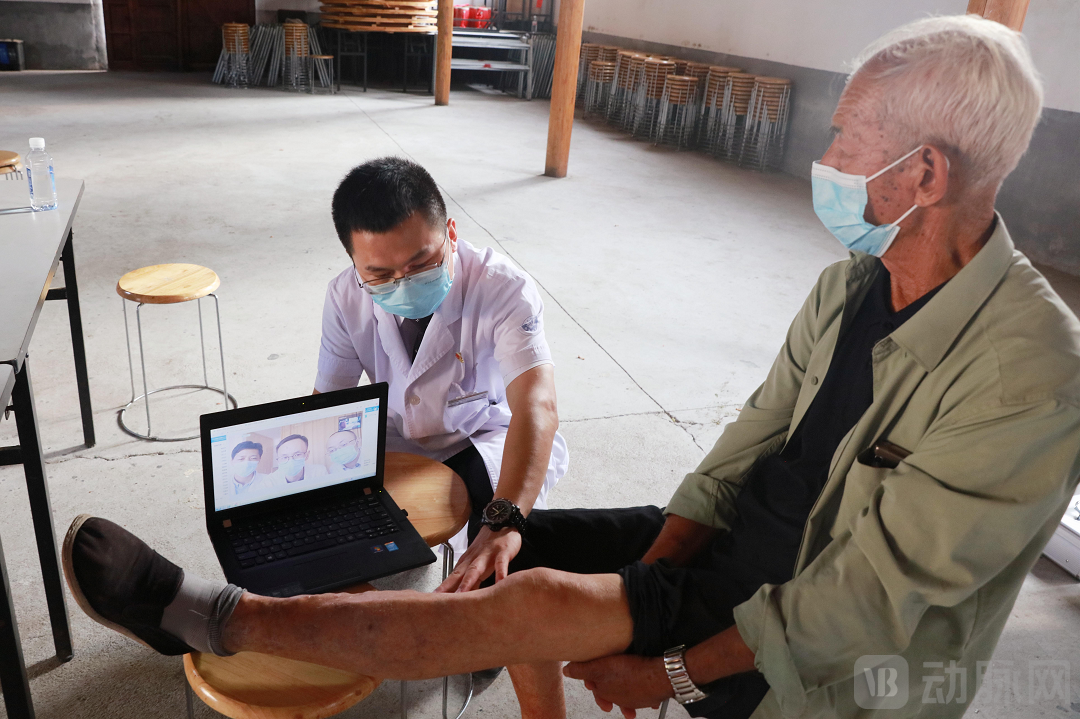
In September 2021, at a free clinic site in Jiuzhe Village, Jietou Town, Tiantai County, a physician was conducting a remote video consultation for a patient with varicose veins.
Leveraging 5G applications, the "Mobile Clinic" has become standard equipment for Tiantai physicians conducting rural consultations. In remote villages where access to medical care is hindered by difficult terrain, doctors visit households equipped with only a laptop and a health follow-up kit. They can instantly issue test orders, process medical insurance payments, perform examinations, and dispense medications on-site. For patients requiring specialized care, they facilitate remote consultations with experts from Tiantai County People’s Hospital or even Zhejiang Provincial People’s Hospital. The development of the "Cloud-Based Medical Consortium" makes hospital services ubiquitous and physician care meticulous, delivering high-quality medical resources directly to the doorsteps of local residents.
Benefiting from the comprehensive integration of medical information across county, township, and village levels, diagnostic tests and laboratory examinations need to be performed only once for use across different institutions. Currently, mutual recognition and sharing of test and examination results among medical institutions in Tiantai County exceed 200,000 cases per month, which not only reduces out-of-pocket expenses for patients but also saves on health insurance costs.
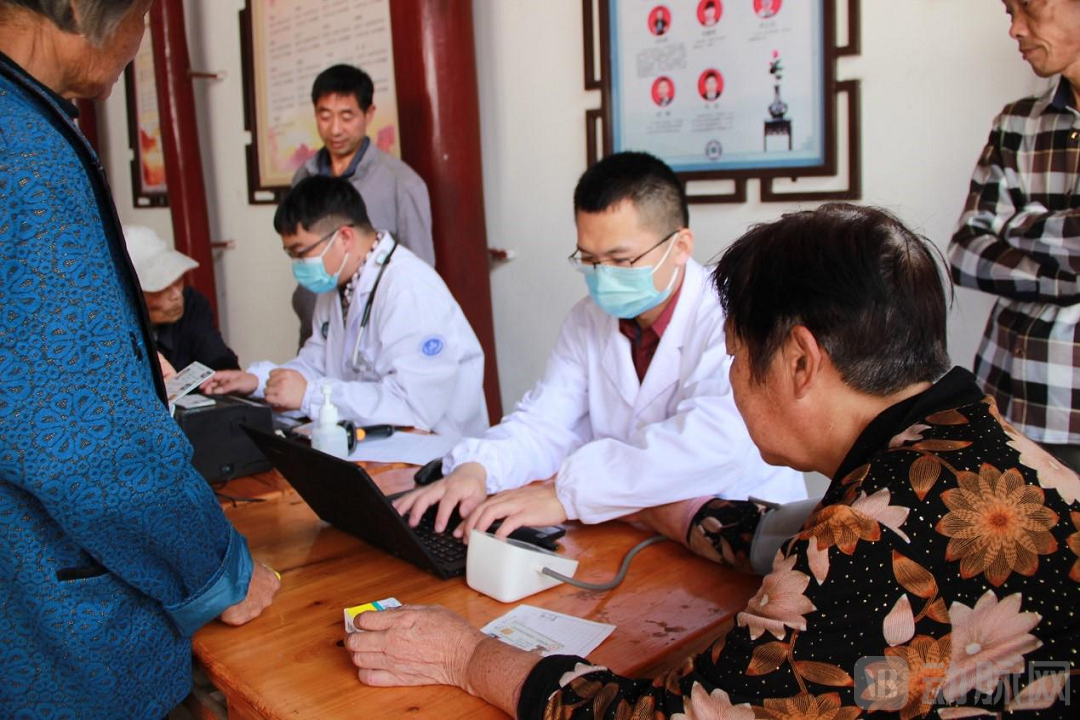
In November 2020, at the free clinic site in Zheyi Village, Jietou Town, Tiantai County, a single computer was able to connect to medical resources across the entire county.
Promoting the decentralization of high-quality medical resources and improving the quality of primary healthcare services have consistently been a focal point for governments at all levels. The 2021 National Teleconference on Healthcare Reform emphasized accelerating the development of regional medical centers and county-level medical consortia, and prioritizing key initiatives such as “Internet + Healthcare,” to ensure that the public enjoys more convenient and higher-quality medical services.
It is reported that the “Tiantai Model” is poised for broader adoption and replication in other regions, enabling more people to benefit from the “Cloud-Based Medical Consortium.” Qiang Hui, CEO of XiNiu Medical, stated, “We aim to support the development of local healthcare systems and improve residents’ health and well-being through more extensive digital infrastructure initiatives in the healthcare industry.”