

Medlinker Collaborates with Leading Vascular Surgery Experts to Explore a Novel Chronic Disease Management Model

Medlinker
Chronic Disease Management Platform Provider
From September 23 to 26, 2021, the 15th Qianjiang International Cardiovascular Conference (QICC 2021) was grandly held in a hybrid format combining online and offline participation. During the conference, Medlinker, together with more than ten domestic vascular surgery experts, jointly launched the “Project on Exploring New Models of Chronic Disease Management in Vascular Surgery.” The project is led by Professor Zhong Chen, a renowned vascular surgery expert. He serves as Director of the Vascular Surgery Center at Beijing Anzhen Hospital, Capital Medical University, and holds several key positions, including President of the Vascular Surgeons Branch of the Chinese Medical Doctor Association, Head of the Vascular Surgery Group under the Surgical Branch of the Chinese Medical Association, and Chairman of the Vascular Surgery Branch of the Beijing Medical Association.
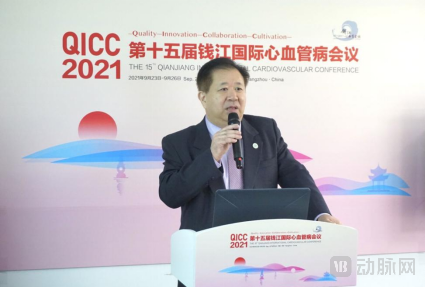
Prof. Zhong Chen
According to reports, following the launch of the new model for chronic disease management in vascular surgery, pilot programs will focus on representative conditions such as peripheral artery disease (PAD). Tens of thousands of postoperative patients will be followed up and managed in accordance with relevant guidelines and literature. The project will subsequently be implemented in more than 30 hospitals across China. Data accumulated during the project will be used by an expert panel to develop and publish expert consensus statements, thereby promoting the development of internet-based chronic disease management models in vascular surgery.
At the launch event, Professor Chen Zhong announced the inaugural list of experts for the New Model Exploration Project in Chronic Disease Management of Vascular Surgery (listed in alphabetical order by surname). The experts include Chang Guangqi, Director of the Department of Vascular Surgery at the First Affiliated Hospital of Sun Yat-sen University; Fu Weiguo, Director of the Department of Vascular Surgery at Zhongshan Hospital, Fudan University; Ge Xiaohu, Vice President and Director of the Department of Vascular Surgery at the People's Hospital of Xinjiang Uygur Autonomous Region; Guo Wei, Director of the Department of Vascular Surgery/Center of Vascular Surgery of the Chinese PLA General Hospital; Li Yongjun, Director of the Department of Vascular Surgery at Beijing Hospital; Wu Danming, Director of the Department of Vascular and Hernia Surgery at Liaoning Provincial People's Hospital; Zhang Wei, former Vice President of the International Society of Vascular Specialists (ISVS); and Zhao Jichun, Director of the Department of Vascular Surgery at West China Hospital, Sichuan University. Chen Bing, Director of the Department of Vascular Surgery at the Second Affiliated Hospital of Zhejiang University School of Medicine, and Tang Xiaobin, Deputy Director of the Vascular Surgery Center at Beijing Anzhen Hospital, Capital Medical University, serve as Secretaries-General.
Vascular surgical diseases refer to pathological changes in all peripheral vessels, excluding cardiac and intracranial vessels. Consequently, vascular surgical diseases involve a broad range of the human body and encompass a wide variety of conditions. Among these, peripheral artery disease (PAD) has become a serious public health issue. Relevant statistics show that the number of PAD patients in China increased from 29.44 million to 41.13 million between 2000 and 2020, representing a growth of nearly 40%.
Vascular surgery is one of the fastest-growing clinical specialties, with the application of highly complex techniques and the performance of challenging surgeries serving as hallmarks of its development. In practice, however, due to the absence of dedicated vascular medicine departments, vascular surgeons are tasked not only with diagnosing and treating surgical conditions but also with assuming responsibility for disease prevention, postoperative follow-up, and long-term patient management.
“While filled with pride, we cannot help but feel a sense of melancholy.” Director Chen Bing used this phrase to describe the circumstances of vascular surgeons. “Surgery is an art for physicians and a procedure to alleviate suffering for patients; however, the surgical time accounts for only one percent, one-thousandth, or even less of the total treatment duration. Throughout the prolonged course of disease onset and progression, comprehensive management—including long-term medication guidance, follow-up tracking, patient education, and lifestyle interventions—is crucial.”
Medlinker is China’s leading internet hospital, committed to leveraging internet technologies to empower physicians in efficiently managing patients and providing effective, affordable, and accessible out-of-hospital chronic disease management services. Through years of refined operational practices, Medlinker has accumulated extensive experience and resources in the field of internet-based chronic disease management. Building on Medlinker’s strengths and the specific characteristics of diagnosis and treatment in vascular surgery, the Exploratory Project on New Models of Chronic Disease Management in Vascular Surgery was launched following extensive discussions and communications.
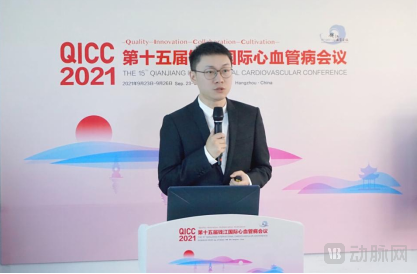
Wang Shirui
Wang Shirui, Founder and CEO of Medlinker, stated, “Although I am an entrepreneur in the internet healthcare industry, I believe that the current and future development of internet hospitals is not intended to disrupt or replace traditional hospitals, but rather to serve as a robust complement to the traditional medical model. Throughout Medlinker’s growth, we have adhered to the same logic as traditional hospitals: starting with discipline construction and gradually improving online management standards. We are honored to participate in the exploration of a new model for chronic disease management in vascular surgery. We look forward to collaborating with esteemed experts in vascular surgery to jointly explore and promote comprehensive, closed-loop management of vascular chronic diseases, encompassing early screening, prevention, diagnosis, treatment, and rehabilitation.”