

How Penumbra Became the Global Leader in Neurovascular Intervention with a Multi-Billion Dollar Market Cap

Penumbra
Developer of Treatment Devices for Stroke and Other Neurovascular Diseases
The Vascular Intervention Market Is Booming. Beyond Coronary Intervention, Neurointervention and Peripheral Intervention Are Growing Rapidly at a Significant Pace. Across the Entire Vascular Intervention Landscape, Minimally Invasive Mechanical Thrombectomy Has Gradually Become a Key Focus for Both Clinical Practice and Industry Players.
Globally, any discussion of mechanical thrombectomy devices is incomplete without mentioning Penumbra. The company has been a pioneer and remains the leader in the field of neurointerventional aspiration systems, breaking the “invincibility myth” long held by Medtronic and Stryker.
However, in late 2020, Penumbra recalled its flagship product—the JET 7 Xtra Flex Aspiration Catheter—sparking a series of safety discussions. Previously, the global spread of the COVID-19 pandemic had led to a decline in surgical volumes in hospitals and disrupted cross-border commercial activities, delivering a significant blow to Penumbra, which places great emphasis on overseas markets. In 2019, 35.1% of Penumbra’s revenue came from international sales, whereas in 2020, this figure dropped to 28.6%.
We can’t help but ask: how much longer can Penumbra’s “prime” last?
In 2004, Penumbra was “born” in the United States.
In September 2015, an acute ischemic stroke survivor rang the opening bell at the New York Stock Exchange, marking Penumbra’s successful initial public offering. As of September 8, 2021, Penumbra’s market capitalization exceeded $9.9 billion.
In the neurovascular market (neurovascular and neurosurgery) and the peripheral market (peripheral vascular and cardiovascular), Penumbra has strategically positioned itself to address ischemic stroke, hemorrhagic stroke, and peripheral vascular disease.
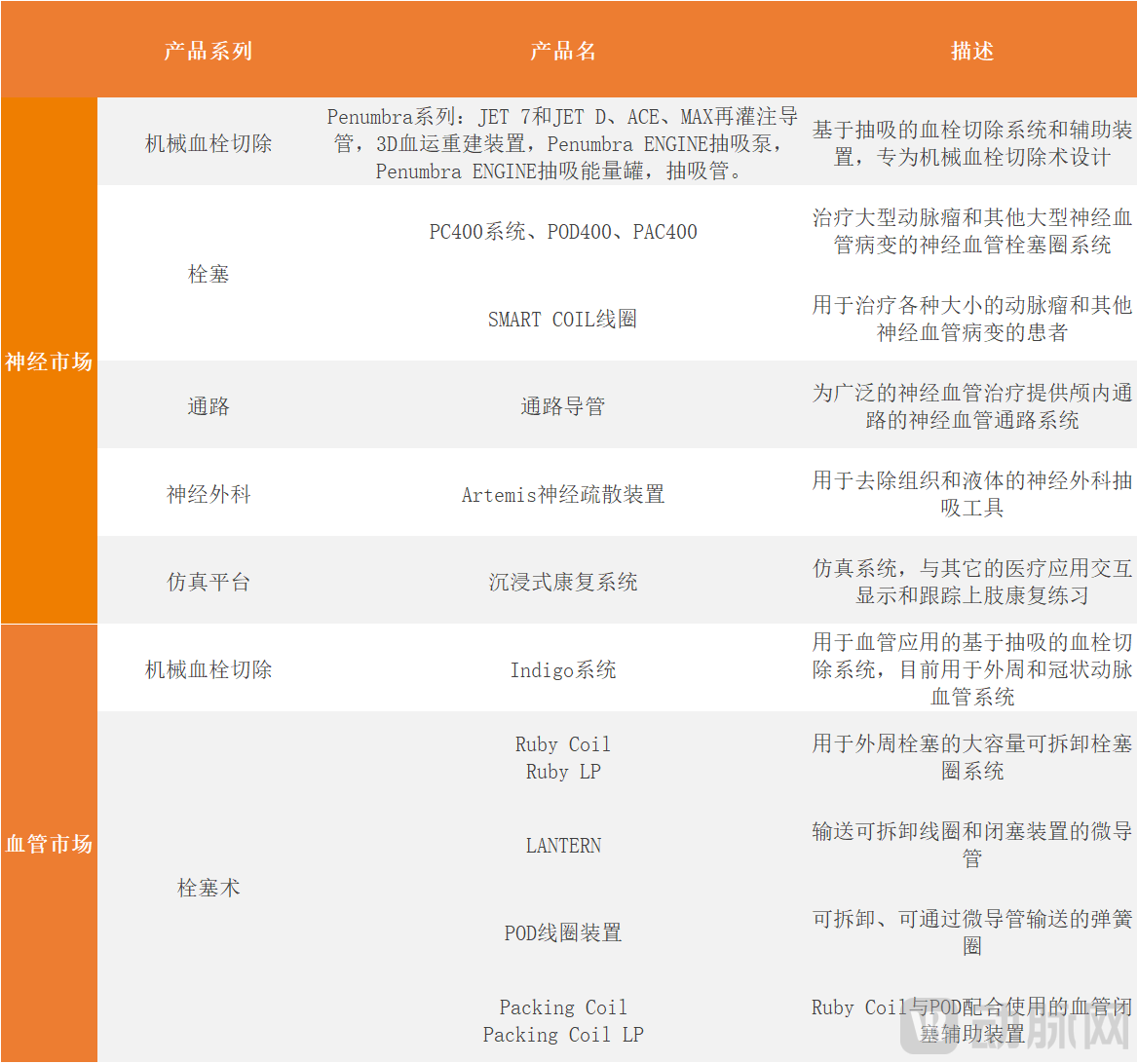
Penumbra Product Portfolio Source: Penumbra Official Website 2020 Annual Report
In the blue ocean of vascular interventions, Penumbra was the first to enter the neurovascular market.
Stroke is the second leading cause of death worldwide. In the United States, ischemic stroke accounts for approximately 87% of all stroke cases, affecting around 700,000 patients annually. Ischemic stroke is caused by thrombi and/or fatty deposits from atherosclerosis obstructing cerebral arteries, resulting in high rates of mortality and disability.
Clinical evidence has confirmed that patients undergoing mechanical thrombectomy achieve better therapeutic outcomes than those treated with thrombolytic drugs alone. Furthermore, while the therapeutic time window for intravenous thrombolysis is limited to 4.5 hours, mechanical thrombectomy extends this window to 24 hours.
To treat patients with acute ischemic stroke, Penumbra has specifically designed a fully integrated system for mechanical thrombectomy. The Penumbra System received its initial FDA approval in December 2007.
Currently,The Penumbra System consists of multiple devices—the Penumbra JET, ACE, and MAX aspiration catheters; the 3D Revascularization Device; high-flow suction tubing; a vacuum pump; and accessories.. In the COMPASS trial, the therapeutic efficacy of the Penumbra system was non-inferior to that of stent retrievers in patients with acute ischemic stroke.
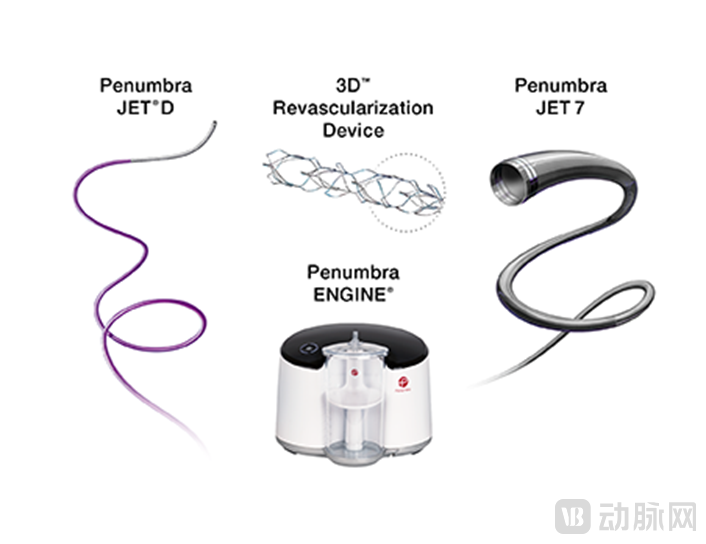
Penumbra System Source: Penumbra Official Website
Among these, the aspiration catheter is the cornerstone of the Penumbra system.Penumbra’s JET, ACE, and MAX aspiration catheters are all large-bore aspiration catheters. Their large aspiration lumens reduce resistance to thrombus flow, thereby enhancing aspiration performance. Furthermore, they exhibit excellent kink resistance and flexibility, along with superior distal trackability.
The Penumbra JET 7 Aspiration Catheter featuresExtra-large inner lumen of 0.072 inches (1.83 mm), with strong thrombus aspiration capability. The JET 7 features 20 transition segments from the proximal shaft to the distal tip for tracking and navigation, along with a gradually tapered distal coil winding that provides excellent flexibility. Moreover, the proximal shaft of the catheter adopts a four-wire technology to enhance pushability. The JET D aspiration catheter, also part of the JET series, is 138 cm in length and specifically designed for distal occlusions, enabling access to smaller distal vessels.
The ACE aspiration catheters (ACE68 and ACE60) further increase the dimensions of the distal and proximal lumens, enhancing the catheter’s trackability and aspiration performance.
The ACE68 aspiration catheter features a distal inner diameter of 0.068 inches and a soft distal shaft, enabling navigation through tortuous vasculature. With 16 transition segments from the proximal shaft to the distal tip, the catheter offers excellent trackability. Additionally, the catheter is reinforced with nitinol round wire to maintain lumen integrity. The ACE60 aspiration catheter has a distal inner diameter of 0.060 inches, and its 12 transition zones along the shaft provide superior kink resistance.
The MAX aspiration catheter series includes the 3MAX, 4MAX, and 5MAX catheters. The 3MAX and 4MAX catheters feature advanced tracking technology and can be advanced over a standalone guidewire, while the 5MAX catheter offers a larger lumen and excellent trackability.
The company's independently developed aspiration pump canProvides a near-vacuum aspiration environment, the aspiration effect is far superior to that of traditional syringes, providing continuous aspiration and reducing the likelihood of thrombus dislodgement.
Following its aspiration catheters, Penumbra introduced another innovation: the 3D Revascularization Device, launched in 2017. This novel thrombectomy device is designed for use in conjunction with the Penumbra JET 7 and ACE aspiration catheters.
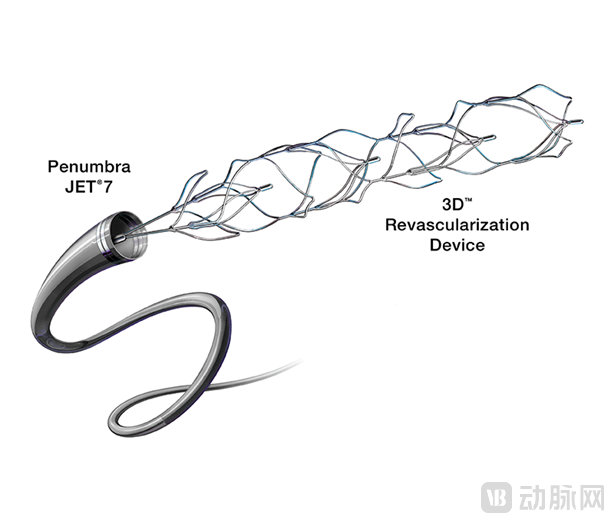
JET 7 Combined with 3D Revascularization Device Source: Penumbra Official Website
The 3D revascularization device captures thrombi through four lumens. Unlike previous-generation stents, it offers superior thrombus capture capability. Its structural design canMinimizeVessel Wall Contact Area, to avoid vascular injury. Meanwhile, the four distal markers provide accurate device positioning and enhance trackability.
Composite mechanical thrombectomy devices are a hot topic in clinical practice, and 3D revascularization devices combined with aspiration catheters have promising development prospects.
In the neurovascular market, in addition to patients with ischemic stroke, Penumbra also focuses on the field of hemorrhagic stroke.
Intracranial aneurysms are “ticking time bombs” within the human body; their rupture can trigger acute hemorrhagic stroke. According to Penumbra’s annual report, approximately 6 million people in the United States have cerebral aneurysms. The American Heart Association (AHA) and the American Stroke Association (ASA) state that once a cerebral aneurysm ruptures, the mortality rate is approximately 30% to 40%.
Clinically, endovascular embolization is commonly performed for patients with cerebral aneurysms, with coils being the most frequently used material to fill the aneurysm and reduce blood supply.
Penumbra’s independently developed PC400 System is designed to achieve higher packing density with fewer coils, specifically for large and giant aneurysms. This coil embolization system consists ofTensile-Resistant Ultra-High-Definition Fibersmanufactured with strength and elasticity three times that of traditional polypropylene fibers. Moreover, the product is available in various models with different shapes and degrees of softness. Furthermore,The SMART COIL spring coil features an instant, one-button mechanical detachment function., with accurate positioning; the coil can be repeatedly adjusted if it has not yet reached the designated location.
In neurosurgery, Penumbra has also made moves by developing the Artemis aspiration device. It can be used to remove fluid and tissue from the ventricles and brain, entering hematomas through a sheath alongside a neuroendoscope. The Artemis device works with a 19F sheath in conjunction with a neuroendoscope, providing powerful, controllable suction force of up to 98.2 kPa.
Furthermore, Penumbra is independently developing neurovascular access devices, such as the Velocity Delivery Catheter, which can be used to deliver 3D revascularization devices. In the fourth quarter of 2020, Penumbra launched the BMX 96 Delivery System, which provides a larger inner diameter without increasing the outer diameter of the delivery catheter, thereby offering a larger working space for all neurovascular procedures.
In addition to treating neurological disorders, Penumbra has expanded its business into the upper limb rehabilitation market.
In 2017, Penumbra and Sixense established MVI.Aimed at applying virtual reality (VR) technology to healthcare and developing truly immersive systems。
Previous studies have shown that incorporating VR therapy into conventional treatment can effectively improve rehabilitation outcomes. Currently, VR is transforming certain healthcare scenarios, with the global market size for immersive technologies in healthcare reaching $930 million in 2018.
Penumbra Launches “REAL System” Rehabilitation Product to Aid Upper-Body Recovery, Focusing on Strengthening, Range of Motion, and Postural Control. It Also Helps Patients Improve Cognitive Functions, Such as Visuospatial Awareness and Response to Instructions. Grounded in an Understanding of Stroke, Penumbra Aims to Make Therapy Enjoyable for Patients While Achieving Better Treatment Outcomes.
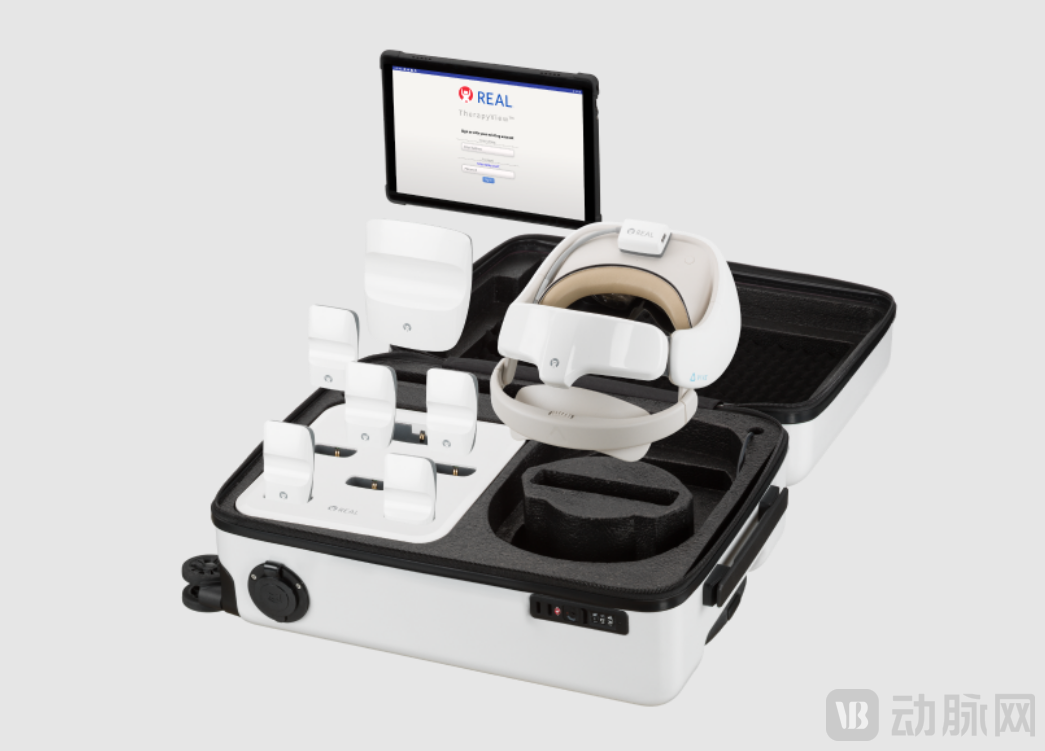
REAL System Product Source: Penumbra Official Website
It can be said that in the neurointerventional market, Penumbra has built a complete set of solutions from treatment to rehabilitation. First-mover advantage and unique technology are the golden keys for Penumbra to open the door to neurointervention, while a rich product portfolio and technological iteration in the later stages are important reasons for the company to remain at the forefront.
Peripheral interventions represent a new goldmine in the vascular intervention sector, and Penumbra is certainly not missing this first-mover advantage.
Compared to its presence in the neurovascular market, Penumbra has entered the peripheral intervention space more recently. However, leveraging its accumulated core expertise in thrombectomy devices, the company has achieved rapid development.
The Indigo Thrombus Aspiration System, independently developed by the company, has received FDA approval for use in removing thrombi from peripheral arteries and veins, as well as for the treatment of pulmonary embolism.Pulmonary embolism is the third leading cause of cardiovascular death, after coronary heart disease and stroke, with 75%–90% of the thrombi originating from deep vein thrombosis in the lower extremities and the pelvic venous plexus.
In recent years, mechanical thrombectomy devices originally designed for deep vein thrombosis have been repurposed for pulmonary embolism; however, few thrombus aspiration systems worldwide currently achieve this. In this regard, Penumbra has once again taken the lead.
The Indigo Thrombus Aspiration System offers excellent trackability and is suitable for removing various clot morphologies in the peripheral arteries, peripheral veins, pulmonary arteries, and coronary arterial systems. The system includes CAT aspiration catheters, separators, a vacuum pump, and accessories. Among these, CAT catheters are available in multiple sizes and lengths to accommodate varying vessel diameters and thrombus locations.
Lightning 12 is Penumbra’s next-generation aspiration system for peripheral thrombectomy., it combines the CAT 12 aspiration catheter with Lightning Intelligent Aspiration, enabling physicians to optimize thrombus removal and reduce patient blood loss by leveraging the system’s unique clot detection mechanism.
In the field of peripheral embolization, Penumbra has launched the Ruby Coil and Ruby Coil LP embolic coil products. The Ruby Coil is a high-capacity coil that can be delivered through the LANTERN high-flow microcatheter, making it suitable for embolization of peripheral arteries and veins.
Similar to the technical features of this company’s intracranial aneurysm embolization products, these coils enable high-density packing of the aneurysm, reducing procedure time and equipment requirements, thereby lowering surgical risks and costs. Moreover, both products feature a one-touch mechanical detachment handle, facilitating repeated repositioning.
Furthermore, Penumbra’s peripheral embolization products can also be used to treat vascular malformations, hemorrhage, endoleaks, ovarian vein varices, and varicoceles.In 2020, the Company’s global revenue from thrombectomy aspiration products and peripheral embolization products increased by 38.6% and 9.3%, respectively.
Whether in the neurointerventional space or the peripheral market, Penumbra has been keeping pace with the surge in artificial intelligence. In November 2020, Penumbra entered into a partnership with the AI company RapidAI, aiming toAccelerating Clinical Decision-Making for the Diagnosis and Surgical Management of Pulmonary Embolism。
RapidAI pioneered the use of artificial intelligence in advanced stroke imaging and currently offers platforms for treating stroke, aneurysms, and intracranial hemorrhage within the neurointerventional field. From intracranial conditions to pulmonary embolism, the company is collaborating with Penumbra to expand its business scope.
The two companies will collaborate to develop clinical and communication modules for pulmonary embolism, aiming to streamline and accelerate triage and decision-making by processing CT scan images and delivering them to physicians.
In the peripheral intervention market, Penumbra’s first-mover advantage is not significant, but its technological edge remains.
Globally, Boston Scientific’s AngioJet thrombectomy device has captured a significant market share, yet substantial gaps remain in the current market. For instance, in China, there are 1.5 million patients with deep vein thrombosis (DVT), but only 60,500 thrombectomy procedures for DVT were performed domestically in 2019.
Penumbra, Inc.’s products can simultaneously treat deep vein thrombosis and pulmonary embolism, offering considerable application prospects. According to the company’s annual reports for 2019 and 2020, the Indigo thrombectomy system was a significant driver of revenue growth in Penumbra’s peripheral market. In the field of peripheral interventions, the company is poised to achieve new growth milestones.
From 2007 to 2018, Penumbra aspiration catheters accounted for approximately 80% of all aspiration thrombectomy procedures in the United States. Despite the launch of thrombus aspiration systems by international giants such as Medtronic and Stryker, Penumbra’s catheters have maintained their leading position. It can be said that the company holds an absolute competitive advantage in the intracranial thrombus aspiration market.
However, last year, safety issues emerged with Penumbra’s aspiration catheters.
In September 2020, Penumbra catheters malfunctioned, occasionally experiencing fractures or wear.
In response, the company neither explicitly acknowledged nor denied the issue, but instead issued a “Notification to
"Healthcare Providers" To Healthcare Service Providers,Reiterate the catheter instructions for use, warning against using the catheter with non-Penumbra pump products.
Subsequently, in December 2020, Penumbra recalled the Penumbra JET 7 Xtra Flex due to the potential for distal tip damage during catheter use. Following the product recall, Penumbra’s stock price fell by 7%.
Previously, the FDA had received more than 200 medical device reports related to the JET 7 catheter, including deaths, serious injuries, and malfunctions. Among these, 20 Medical Device Reports (MDRs) described 14 unique patient deaths, including reports from different sources pertaining to a single adverse event. Other MDRs described serious patient injuries, such as vascular injury, hemorrhage, and cerebral infarction.
The U.S. Food and Drug Administration’s Manufacturer and User Facility Device Experience (MAUDE) database listed 11 deaths occurring after surgery from January through the end of July involving the JET 7 catheter. Of the 11 reports related to surgeries performed in 2020, two explicitly stated that the patient deaths were associated with the JET 7.
Given the numerous uncontrollable variables associated with mortality in patients with acute stroke, such as the inherent risk profile of patients with ischemic stroke, adherence to surgical procedural standards, and other indeterminate factors, these adverse event reports are unlikely to pose a significant threat to Penumbra catheters.
However, Penumbra’s official statement carries certain risks. The company’s catheters are designed to be used exclusively with its own products and are not compatible with those from other manufacturers. In clinical practice, many physicians opt to use only select Penumbra products due to concerns about product performance, while some hospitals lack the resources to procure the full product line. How should these situations be addressed?
If Penumbra emphasizes the combined effect of its products, it is likely to deter some buyers.
In 2020, the COVID-19 pandemic raged globally, leading to a decline in surgical volumes worldwide and hindering cross-border circulation. Penumbra was similarly affected; the company has consistently relied on its global network of direct sales and distributors for revenue, with more than one-quarter of its income derived from international markets.
The company generated revenues of $560.4 million and $547.4 million in 2020 and 2019, respectively, representing a growth rate of 2.4%.Although overall revenue increased, the growth was not significant despite the company’s recent launch of peripheral vascular products.
Moreover, Boston Scientific’s AngioJet thrombectomy system has long established a strong presence in the peripheral thrombectomy market, becoming a leading product globally. To enter the peripheral market, Penumbra will face formidable competition.
Yet, there is light at the end of the tunnel. Given the acute and life-threatening nature of pulmonary embolism, clinical aspiration of deep vein thrombosis has remained a focal area with substantial market potential.Leveraging its core thrombus aspiration technology, Penumbra has achieved notable breakthroughs in product performance, enabling the treatment of pulmonary embolism. Furthermore, the company offers complementary access products, providing a one-stop solution and conferring certain advantages in its product portfolio.
In the field of neurointervention, academia has long debated whether intravenous thrombolysis can be bypassed in favor of direct mechanical thrombectomy. If direct mechanical thrombectomy can be performed within 4.5 hours of symptom onset, it is believed that this approach would also bring a wave of growth opportunities for Penumbra’s aspiration catheters.
In mechanical thrombectomy, aspiration catheters can only remove relatively fresh and soft thrombi and cannot address plaques; thus, they serve as a complement to stent retrievers. Stent retriever thrombectomy requires multiple passes through the thrombus and traction on the clot, which carries significant potential risks, including thrombus fragmentation. In contrast, aspiration catheters, when conditions permit and if the lumen diameter is sufficiently large, can avoid the need for traction.
In the COMPASS clinical trial, Penumbra demonstrated a shorter time to reperfusion compared with stent retriever thrombectomy. Moreover, 85.3% of stent retriever procedures required adjunctive use of an aspiration catheter, whereas only 20.9% of Penumbra aspiration catheter procedures required adjunctive use of a stent retriever.Penumbra’s aspiration catheters streamline the product portfolio for thrombectomy procedures, reducing treatment costs and facilitating market adoption.
Turning our attention to the Chinese market, Penumbra’s thrombectomy catheter was the first product to receive approval from the National Medical Products Administration (NMPA), and currently, only one other domestically produced catheter has been approved. In terms of market share, Penumbra’s products have consistently maintained a leading position.
Meanwhile, in terms of product promotion, Penumbra has partnered with the emerging Chinese company Jianshi Medical.In January 2021, Joyscare Medical acquired Hongyi Medical and entered into a strategic partnership with Penumbra, Inc., introducing several of its core neurointerventional products and technologies to the Chinese market.Previously, Jianshi Medical also acquired Jiangsu NICO, thereby obtaining its first domestically produced thrombectomy stent approved by the NMPA.
With the assistance of domestic enterprises, the promotion of Penumbra’s products may proceed more smoothly.
The road ahead remains uncertain. However, we can expect Penumbra to establish a solid foothold in neurointerventional and peripheral intervention, leveraging its robust thrombectomy aspiration technology and diverse product portfolio.
Reference Article: Penumbra Inc.’s Catheter Fail: Broken Tips and Lost Lives