

Xingdeturn: 15 Years of Expertise in Pharmaceutical CRO with Innovative ICVP Model Accelerating Drug Development
In August 2021, Life Times published an article titled “How to Awaken Sleeping Pharmaceutical IP?” The article not only outlined the many challenges facing modern new drug development but also highlighted a solution: the involvement of pharmaceutical CROs. It specifically featured Sinocro, a new-drug CRO established in 2006, which is the focus of this text. What lies behind the founding and growth of Sinocro? What changes will the ICVP model bring to the industry? VCBeat addressed these questions in an exclusive interview with Huang Mingguang, Chairman of Sinocro.
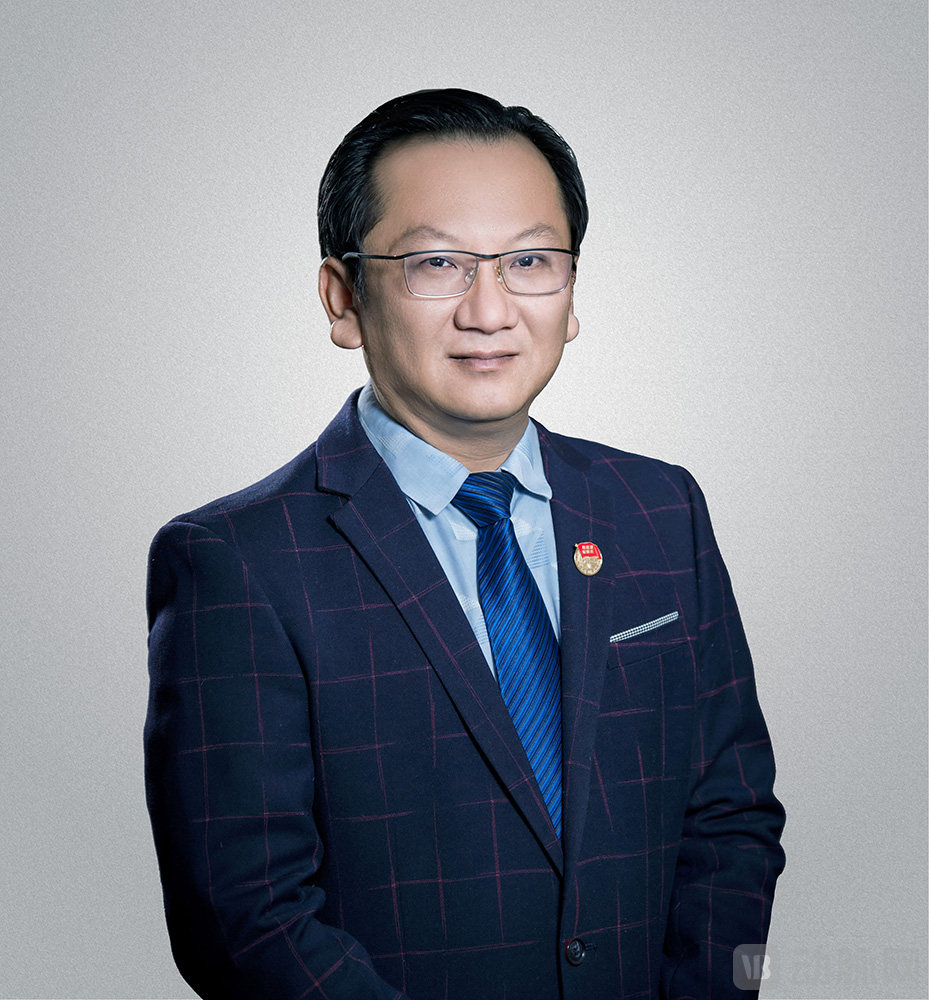
Huang Mingguang, Chairman of Beijing Sinocro PharmaScience Co., Ltd.
Beijing Sinocro PharmaScience Co., Ltd. (hereinafter referred to as “Sinocro”) has been in operation for exactly 15 years since its establishment. As an innovative contract research organization (CRO), Sinocro specializes in providing integrated comprehensive services for new drug clinical research, with its business covering major drug clinical trial institutions across China. Over the years, Sinocro has established long-term business partnerships with more than 400 clinical trial institutions in various provinces and municipalities throughout China, serving over 200 corporate clients.
“Pharmaceutical CRO is a sector worthy of deep exploration and substantial resource accumulation.”
Fifteen years ago, Huang Mingguang, Chairman of Beijing Sinocro PharmaScience Co., Ltd., was still a co-founder of a well-known financial website in China. His early successful entrepreneurial experience in the internet industry allowed him to accumulate the initial capital for his future ventures. This entrepreneurial journey, which appeared successful to outsiders but felt incomplete to him personally, further instilled in him a long-term strategic mindset for business. At that time, Huang had already shifted his perspective, determined to establish a company with greater longevity, significance, and value.
Which industry should one choose for in-depth and long-term development after leaving the internet sector? How can one seize industry opportunities to plan for significant entrepreneurial success? Huang Mingguang is pondering these questions intently.
In 2003, China issued its first Good Clinical Practice (GCP) guidelines (“Good Clinical Practice for Drug Clinical Trials”), which accelerated the development of Contract Research Organizations (CROs). An increasing number of pharmaceutical companies and researchers proactively sought collaborations with CROs to drive innovative partnerships, leading to a surge in demand for CRO services in the new drug R&D market. Coincidentally, Huang Mingguang’s spouse had many years of extensive experience in the CRO sector for clinical drug research. These factors enabled Huang Mingguang to gain an in-depth understanding of the pharmaceutical CRO industry and its broad prospects. Seizing this industry opportunity, he decided to establish a firm foothold in the field of clinical research, planning a major initiative aimed at improving the well-being of patients in China.
Thus, in 2006, Huang Mingguang officially established Sinocro. “China’s large population, ethnic diversity, significant regional economic disparities, and lagging pharmaceutical technology compared to developed countries such as the United States and Europe—these seemingly unfavorable conditions are precisely the fertile ground for the growth and expansion of CRO companies,” judged Huang Mingguang with keen business insight. “The future potential and demand of China’s pharmaceutical CRO market will be enormous, with broad prospects. This is a sector worth deep exploration and substantial investment!”
Advancing with Medicine: Addressing the Many Pain Points on the Path of Pharmaceutical CROs
As things are constantly evolving and improving, the CRO sector has inevitably revealed certain shortcomings.
On the one hand, new drug development is largely market-driven, which has led to the shelving of some new drug intellectual property (IP) and concepts with clinical value due to lack of funding or sponsors’ unfamiliarity with clinical research processes. On the other hand, clinical researchers are required to possess expertise in both medicine and pharmacology, representing a type of interdisciplinary talent; however, there is a shortage of highly qualified professionals in this field.
Huang Mingguang sought to reverse this situation, expressing his desire to shift from a “market-oriented” approach to one “guided by clinical value,” while respecting intellectual property rights. By 2010, Beijing Sinocro PharmaScience Co., Ltd., led by Huang, had already been operating in the industry for four years. At that time, he conceived the ICVP model—an integrated service chain combining IP (Intellectual Property), CRO (Contract Research Organization, serving as a resource nexus), VC (Venture Capital), and PI (Principal Investigators/Expert Pool)—to assist new drug registration and research projects that had been stalled due to lack of funding.
The ICVP model is guided by the clinical value of new drugs and always centers on patient needs. As a large-scale resource-sharing platform, the ICVP model enables participation from various stakeholders across the pharmaceutical sector. This model spans the entire continuum from new drug development to technology transfer and subsequent commercialization, ultimately forming a complete ecological industry chain that promotes industrialization. Capital invested by industry, academia, and research institutions eventually exits in accordance with market mechanisms, thereby realizing respective returns.
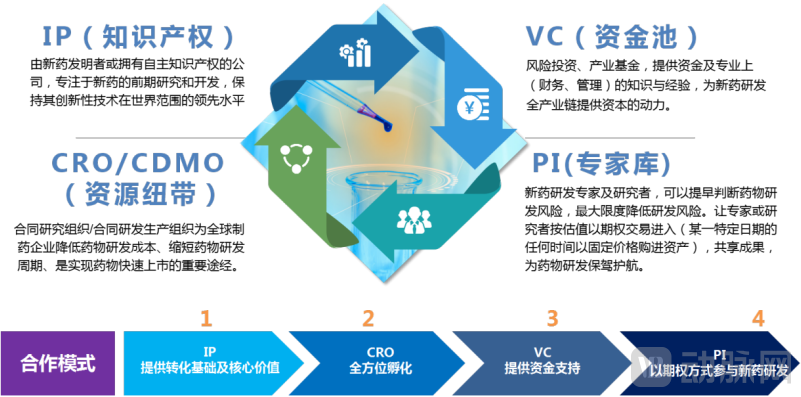
Specifically, new drug inventors or companies with independent intellectual property rights commission CROs to provide comprehensive outsourced new drug R&D services. Subsequently, project companies are gradually established to attract venture capital investment and engage principal investigators, initiating independent operations with coordinated efforts to drive the marketization of new drug R&D outcomes. The basic process is as follows: IP holders or IP companies provide the foundation for translation and core value; CRO resources then deliver comprehensive incubation services; venture capitalists (VCs) subsequently invest to provide financial support; and finally, Principal Investigators (PIs) participate in the entire new drug development process to provide technical assurance.
In terms of talent development, Sinocro PharmaScience joined forces with several renowned clinical research institutions in 2017 to establish the Clinical Research Training Center under the Chinese Medical Education Association. This initiative has cultivated and supplied outstanding professionals for both the company and the entire industry. Over the years, Sinocro PharmaScience has collaborated with Beijing Hospital, Chaoyang Hospital, Yanda Hospital, Shougang Hospital, and others to host more than ten clinical research training programs. Since the onset of the COVID-19 pandemic, online training sessions have gained significant prominence, attracting up to over 200,000 participants per session at their peak. Today, the integration of online and offline training programs has become a distinctive approach to talent development characteristic of Sinocro PharmaScience.
Over the past 15 years, through continuous self-improvement and diligent efforts, Sinocro has steadily grown to become one of the top 20 clinical research CROs in China. It was recognized as a National High-Tech Enterprise in 2012. In 2014, it undertook major projects under the Ministry of Science and Technology’s National Major Project for New Drug Innovation during the 12th Five-Year Plan period and the National Key Basic Research Development Program (973 Program), and was designated as a key enterprise supported by the Beijing Municipal Government. Furthermore, in 2020, Sinocro, as one of the founding investors, helped establish the Guangdong New Huangpu Traditional Chinese Medicine Joint Innovation Research Institute, with Academician Zhang Boli, a “People’s Hero,” serving as the first Chairman of its Council.
Proprietary Development of Information Systems to Build an Integrated CRO Focused on Cell-Based Clinical Research
It is reported that Sinocro’s CRO service portfolio encompasses clinical study project management and monitoring services (including Phase I to Phase IV clinical trials, bioequivalence studies, etc.), new drug registration regulatory affairs consulting, new drug product development initiation consulting, data management, biostatistics, medical scientific affairs, clinical study quality control and third-party audits (QA), site management organization (SMO) services, pharmacovigilance (PV), subject recruitment services, and professional training for clinical research personnel.
Huang Mingguang provided VCBeat with a detailed overview of Sinocro’s current specialty services:
I.Cell Therapy Research: Beijing Sinocro PharmaScience Co.,Ltd. has demonstrated exceptional expertise in cellular therapy research. To date, it has supported 18 high-quality collaborative R&D projects for cell-based drugs, covering indications such as liver cancer, HIV/AIDS, chronic kidney disease, liver cirrhosis secondary to hepatitis B, menopausal syndrome in women, severe pneumonia caused by the novel coronavirus, pulmonary interstitial damage induced by the novel coronavirus, and acute respiratory distress syndrome (ARDS) resulting from severe novel coronavirus (2019-nCoV) pneumonia.
II.Early Clinical Studies of New Drugs: Beijing Sinocro PharmaScience Co., Ltd. boasts a professional team specializing in early-stage clinical drug research. The team has extensive experience in preclinical studies, including new drug discovery, synthesis and process development of lead compounds and active pharmaceutical intermediates, formulation research, pharmacological and efficacy evaluation, as well as pharmacokinetics and safety assessment. In particular, the team excels in pharmacokinetics, drug accumulation and mass balance, ethnic differences, and bridging data across different ethnic groups, thereby helping new drug developers scientifically evaluate preclinical indications for novel drugs.
III.Information Technology ConstructionIn 2013, Beijing Sinocro PharmaScience Co., Ltd. proactively entered into a strategic partnership with Oracle Corporation, becoming one of the first to introduce Oracle’s data management system. Leveraging the Oracle OC/RDC system with perpetual licensing rights, Sinocro employs the internationally recognized Medical Dictionary for Regulatory Activities (MedDRA) for coding diseases and adverse events. This approach ensures that Sinocro’s clinical trial data collection fully complies with international industry standards and meets the requirements of FDA 21 CFR Part 11, significantly reducing verification risks associated with clinical trials. As a result, Sinocro has aligned its data management practices with international standards, achieving greater standardization and substantially improved efficiency in data management.
Meanwhile, Sinocro has independently developed multiple scientific and information-based systems: the CTMS system, RWS Master system, PV pharmacovigilance system, and Phase I automation system. Among these, the CTMS system institutionalizes and streamlines the company’s quality assurance and risk management framework, enabling clients to log in in real time to monitor the entire project implementation process online; the RWS Master system helps pharmaceutical companies reduce costs associated with real-world studies and post-marketing research; the PV pharmacovigilance system facilitates rapid and accurate reporting of SUSARs (Suspected Unexpected Serious Adverse Reactions); and the Phase I automation system standardizes the entire process of early-stage clinical drug trials and enhances risk control.
Supported by a suite of information technology systems, the continuity and stability of Beijing Sinocro PharmaScience Co., Ltd.’s Standard Operating Procedure (SOP) framework are ensured. The company strictly controls details through SOPs; any data modifications during clinical research must be executed in accordance with these SOPs. Project data servers are backed up daily, data management personnel upload relevant work on a scheduled daily basis, database administrators perform full data backups weekly, and technical support is available 24/7/365. The critical role of this rigorous framework in achieving high-quality research outcomes is unquestionable. It is Sinocro’s SOPs that safeguard data security and maintenance, which also contributes to the reduced subject dropout rate.
It is reported that Sinocro’s early client base was primarily focused on traditional Chinese medicine (TCM), shifted to chemical drugs in its intermediate stage, and is now centered on biopharmaceuticals and cell therapy. Over the past three years, the proportion of innovative drugs in the clinical trials managed by the company has increased year by year, far exceeding that of generic drugs. Sinocro has continuously expanded its strategic layout during its growth: it established a subsidiary in Shenyang in 2017 and a branch in Wuhan in 2021, thereby forming a “north-south” presence. In the future, Sinocro will further expand “eastward and westward,” gradually completing its nationwide footprint in China and implementing its grand strategy of deep cultivation in the Chinese market.