

Sedon Automation: Driving High-Throughput, Fully Automated Cell Manufacturing from Source Innovation
According to a report published by the global market research and consulting firm Roots Analysis, the global cell manufacturing market is projected to reach a value of $11 billion by 2030, with a compound annual growth rate (CAGR) of 14.9%. This market comprises not only various pharmaceutical companies but also specialized institutions that make significant contributions to GMP-grade cell production. Practitioners in this field are continuously improving and upgrading existing cell manufacturing processes and providing novel technical solutions, thereby further driving the development of the global cell manufacturing market.
However, numerous market pain points requiring urgent resolution have also emerged throughout the development of the cell therapy industry. “First, cell products are expensive in the market, difficult to authenticate, and exhibit unstable therapeutic efficacy, which essentially reflects inconsistent quality. Second, the cell therapy industry is one that relies heavily on factor inputs; investments and accumulation are required for cleanroom facilities, production line equipment, and professional talent pools. It is necessary not only to establish ‘hard’ barriers in compliance with regulatory requirements but also to develop a ‘soft’ system to prevent the poaching of carefully cultivated teams. Third, under the national macro-policy orientation of comprehensively promoting ‘innovation-driven development,’ there remains a contradiction between the approval model reliant on manual submission of paper dossiers and the urgent clinical need for streamlined regulatory approvals.”Dr. Liu Muyun, Founder of cellautoIn summary.
Dr. Liu Muyun is a pioneer who has grown alongside China’s cell therapy industry, serving as the Director of the National and Local Joint Engineering Laboratory for Cell Therapy Technology. Prior to 2017, Dr. Liu focused on product development services in the downstream segment of the cell therapy industry chain, establishing China’s first [entity] outside of the National Institutes for Food and Drug Control (NIFDC).The First Third-Party Public Service Platform for Cell Quality Testing Technology—Shenzhen Konuo Medical Laboratory; In 2017, it was further authorized by the Ministry of Human Resources and Social Security to undertake the professional title evaluation for talents in emerging industries. In collaboration with the National-Local Joint Engineering Laboratory for Individualized Cell Therapy Technology, it has assumed responsibilities for cultivating specialized talents required by the cell industry development and conducting professional title evaluations. It has led its team in participating in the formulation of two national standards, six local standards, three group standards, and two industry standards.
Having been deeply engaged in the cell therapy industry for many years, Dr. Liu Muyun stated that for this emerging sector, which is closely tied to public health and well-being, to achieve standardized, regulated, and sustainable development, it is not enough to rely solely on soft systems such as conceptual frameworks, operational processes, and laws and regulations. Instead, new technological achievements and advancements must play a more substantive role in enhancing the standardization and regulation of the cell therapy industry, rather than depending merely on the vigilance and self-discipline of individuals and companies.
As downstream product applications and services expanded, an urgent demand for upstream cell intelligent manufacturing equipment and components emerged during the development process. Dr. Liu Muyun sought to further promote and strengthen downstream product innovation and service ecosystem enhancement through the research and development of core upstream equipment, thereby breaking the previous vicious cycle characterized by “chaos upon deregulation and stagnation upon strict control.” In 2017, Dr. Liu Muyun founded Shenzhen Cellauto Intelligent Manufacturing Technology Co., Ltd. (hereinafter referred to as “Cellauto”), shifting her focus to the research and development of comprehensive solutions for upstream cell intelligent manufacturing.
An industrial automation platform aimed at driving revolutionary development in the cell therapy industry
In 2004, the U.S. FDA noted in its published research report that, compared with other industries, manufacturing operations in the pharmaceutical industry remained characterized by low efficiency and high costs, with very limited adoption of modern technological innovations such as engineering design concepts, new measurement methods and control technologies, and knowledge management systems. This observation aligns closely with the industry pain points in China’s cell therapy sector identified by Dr. Liu Muyun.
“Intelligent and digital innovations that enhance production efficiency and ensure process quality represent a vast, yet unrecognized and unmet, market demand,” emphasized Dr. Liu Muyun. The establishment of cellauto aims to leverage an industrial automation platform to advance cell therapy products with revolutionary therapeutic efficacy.Large-scale, High-quality, Low-cost, Reproducible“Reaching every individual and household in need, ultimately achieving the goals of ‘consistent quality, accessible application, and affordability for all’ in cell therapy.”
To provide a solution for the continuous and stable delivery of cell therapies that is “large-scale, high-quality, low-cost, and reproducible,” CellAuto has started from “Man, Machine, Material, Method, Environment“Systematic deployment measures have been implemented across several key areas, encompassing cleanroom facilities required for manual operations, production lines equipped with extensive machinery for human-operated processes, and a substantial team of preparation engineers and quality management personnel. Building upon its existing biological cell team, the company has further integrated automation, electrical, computational, and information technology teams to achieve complementary synergy.”
It is reported that cellauto has implemented a comprehensive patent strategy across the entire intelligent cell manufacturing process, covering automated cell preparation technology, artificial intelligence, industrial internet platforms, and process monitoring technology. To date, the company has filed 187 patent applications, with 97 granted, including 93 invention patents, one PCT patent, and 25 software copyrights.
Fully Automated Cell “Intelligent Manufacturing System” for High-Quality, Low-Cost Cell Product Production
In the cell therapy industry, how can A-grade cleanroom conditions be dynamically maintained within confined production workspaces to mitigate interference from airborne particles, bacteria, vibration, and other factors, thereby complying with cGMP standards for cell product manufacturing? Furthermore, how can consistent product quality be ensured during scaled-up cell production processes?
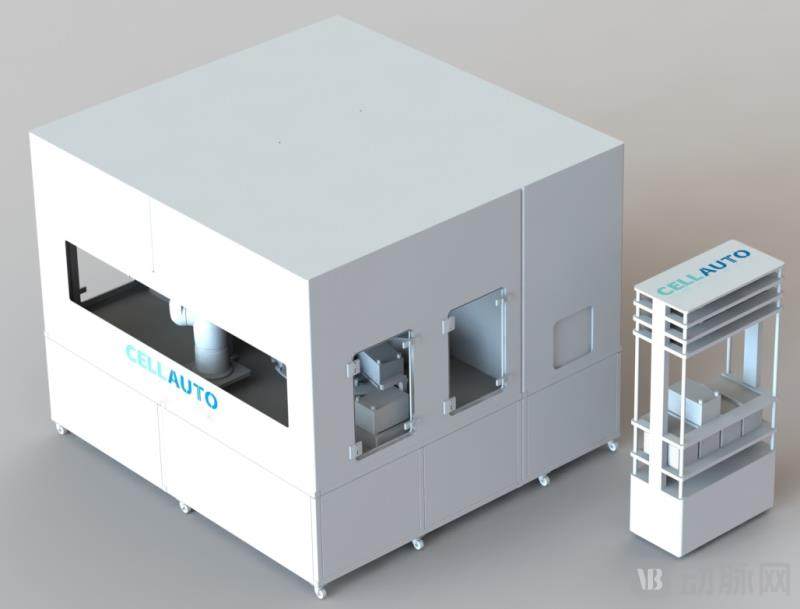
Fully Automated Cell Intelligent Manufacturing System: Low-Throughput Point-of-Care Manufacturing Platform
To address these challenges in actual production lines, the cellauto team leveraged industrial software to build data models, continuously optimizing deployment and iterating until they ultimately produced a fully automated cell “intelligent manufacturing system” that meets regulatory requirements.The system encompasses cleanroom facilities required for manual operations, a wide array of equipment with diverse functions, numerous formulation engineers, and quality assurance personnel., and waste disposal after cell preparation, enabling the full-process, fully enclosed, and fully automated production of qualified cell products.
Cellauto leverages digital technologies to summarize quality curves and trends of cell products under different processes, enabling real-time monitoring and prediction of cell status during preparation. This allows the fully automated cell “intelligent manufacturing system” to “autonomously” judge key quality attributes of cell products, much like an engineer, and determine critical parameters such as harvest time.
Notably, the cellauto system can rapidly adapt to different cell product manufacturing processes through its proprietary scripting language, enabling customers to continue leveraging their previously developed and accumulated processes.
Currently, Cellauto has delivered complete production lines to clients to assist them in conducting regulatory research for cell-based therapies and has completed the manufacturing of over 30 batches of cell products. Dr. Liu Muyun introduced that after the company deployed one fully automated cell intelligent manufacturing system for a client, a comparison of real-world data from before and after the implementation of the cell production line showed that,Costs for cleanroom facility renovation and equipment investment were reduced by 94% and 50%, respectively, while personnel management expenses decreased by 98.8%.。
Dual-Track “Smart Manufacturing” of Stem Cells and Immune Cells to Meet Customers’ Flexible Capacity Needs
cellauto boasts two intelligent manufacturing systems: the “Fully Automated Stem Cell Intelligent Manufacturing System (Off-the-Shelf → Personalized)” and the “Fully Automated Immune Cell Intelligent Manufacturing System (Personalized → Off-the-Shelf),” both of which can accommodate customers’ flexible capacity requirements.
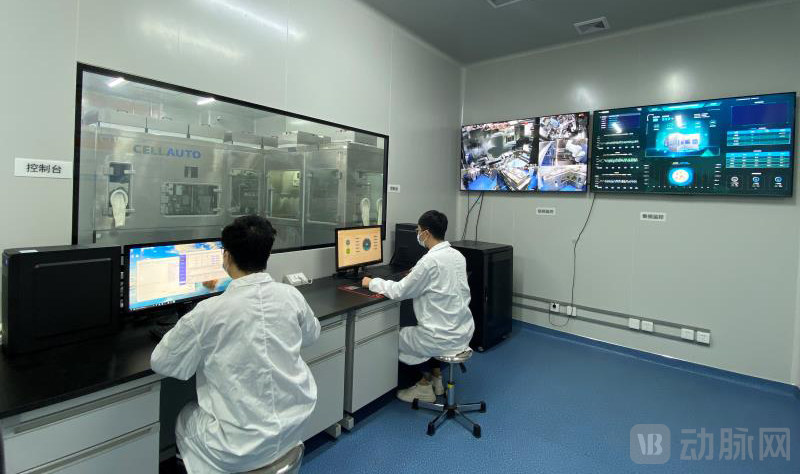
Cell Manufacturing Control Room: A Comprehensive View of the Entire Cell Product Production Process
Among them,Fully Automated Stem Cell Intelligent Manufacturing SystemAn automated system adaptable for universal stem cell products, suitable for cell therapy companies to deploy at clinical endpoints in conjunction with their own cell-based drugs to ensure quality consistency; and an automated intelligent manufacturing system for personalized stem cell products, suitable for cell therapy companies and stem cell storage companies engaged in the R&D of personalized stem cell products.
andFully Automated Intelligent Manufacturing System for Immune CellsApplicable to personalized immune cell therapy products, such as CAR-T cell products, as well as off-the-shelf immune cell products, such as NK cell products. Cellauto’s fully automated intelligent cell manufacturing systemMonthly electricity consumption is only 1/9 of that for manual cell preparation., with higher efficiency and lower energy consumption, contributing to the national carbon neutrality goals.
Empowered by its intelligent manufacturing system, cellauto helps customers improve the quality consistency of personalized cell therapy products and reduce the costs associated with performance enhancements under industrial automation. By converting manual operations into automated processes through code and algorithms, and executing production via closed-loop programs, it eliminates execution variations arising from differing interpretations of standard operating procedures among operators, while minimizing or even eliminating discrepancies caused by differences in cleanroom environments, hardware equipment, and other facilities, thereby ensuring quality consistency. Additionally, it alsoReduced training costs for cell therapy manufacturing engineers by 98%, improving efficiency by 70%。
Operators of the CellAuto Intelligent Cell Manufacturing Platform need only follow the operating instructions for the intelligent production platform and press the start button to achieve end-to-end manufacturing of cell products, eliminating the need for transfer training on standard operating procedures (SOPs) and formulations. Furthermore, the “one item, one code” traceability system ensures that cell products used by patients are from legitimate sources, preventing the infiltration of cell products of unknown origin. Integrating hardware, software, and services, the platform replaces various equipment and consumables currently used in manual cell product production lines, thereby establishing a new supply chain for cell products in this emerging sector and ensuring autonomous and controllable cell product services.
It is reported that cellauto is currently undergoing a financing round, with the funds raised primarily intended to support production and order fulfillment. As the company’s current orders exceed its existing production capacity, there is an urgent need to expand factory facilities, boost capacity, and deliver on orders. Consequently, the company plans to further establish production plants and scale up manufacturing for product delivery.