

Maquet's Critical Role in China's Pandemic Response: Supplying 81 ECMO Units and Leading the Global ECMO and Vascular Graft Markets
Maquet
Medical Device Research, Development, Production, and Sales
In 2020, the COVID-19 pandemic swept across the globe, causing massive casualties worldwide and straining medical resources everywhere. Amidst this shadow, ECMO “emerged onto the scene” as a life-saving miracle for patients with COVID-19.
ECMO (Extracorporeal Membrane Oxygenation), also known as the "artificial lung," is primarily used to provide continuous extracorporeal respiratory and circulatory support to patients with severe cardiopulmonary failure, thereby sustaining their lives. ECMO can temporarily take over the functions of the patient's heart and lungs, alleviating cardiopulmonary burden in conditions such as respiratory failure and cardiac arrest.
In fact, ECMO technology has been around for quite some time. As early as 1953, Gibbon developed a homemade heart-lung machine and successfully applied cardiopulmonary bypass technology to clinical cardiac valve surgery for the first time. Previously, due to high treatment costs and technical challenges, the ECMO market developed slowly, with consistently low adoption rates.
However, ECMO devices truly shone during the pandemic. In January 2020, Zhongnan Hospital of Wuhan University first employed ECMO to successfully treat a critically ill patient with COVID-19. In August 2020, a COVID-19 patient who had received ECMO support for 111 days recovered and was discharged, marking the longest duration of ECMO use among COVID-19 patients worldwide.
Amid the ECMO shortage in China, 81 German-imported ECMO devices arrived at Wuhan Jinyintan Hospital, bringing hope of survival to patients.These 81 devices are from Maquet, based in Germany, a global leader in the ECMO market. Moreover, it is also a frontrunner in the synthetic vascular graft sector, holding the largest market share in China.
Maquet, a subsidiary of the Swedish Getinge Group, is one of the world’s largest suppliers of operating room and ICU medical engineering solutions and equipment.
In 1838, Johann Friedrich Fischer founded Maquet in Heidelberg, manufacturing and selling patient chairs and other medical equipment. In 1933, the company relocated to Rastatt, Germany, focusing primarily on three areas: surgical procedures, intensive care, and cardiovascular diseases. The world’s first electric operating table and the first heart transplant surgery bed were both developed by Maquet.
In 2000, the Getinge Group acquired Maquet, expanding its business scope into the field of emergency medical care. Getinge is a global enterprise that transitioned from agriculture to healthcare and was listed on the Stockholm Stock Exchange in Sweden in 1993. The Group comprises the Surgical Systems Division, Cardiac Surgery Division, and Critical Care Division, providing surgical workstations, heart-lung machines, and equipment, services, and technologies in the field of intensive care under the MAQUET brand.
Following the acquisition of Maquet, Getinge Group has been restructuring its mergers and acquisitions, a process that has also driven Maquet’s continuous growth. In 2003, the group acquired Siemens Life Support Systems, then the market leader in ventilators, and integrated its Servo series of ventilators into Maquet’s critical care equipment division. Subsequently, in 2007, the group launched the Servo-i series of ventilators, which rapidly captured market share.
Also in 2003, Getinge acquired Siemens’ life support business and the Jostra Group, achieving new progress in the field of cardiopulmonary bypass machines. Subsequently, in 2008, the Getinge Group acquired Boston Scientific’s cardiovascular surgery business, and in 2009, it acquired the Datascope Group, obtaining two major artificial aortic vascular graft products.
Acquisitions remain a constant theme for multinational corporations, enabling Maquet to leverage this strategy and emerge as a global leader in ventilators, ECMO devices, artificial blood vessels, and other sectors.
ECMO is a complete system comprising four components: a power pump, a tubing system, a monitoring system, and a heat exchanger. The blood drive pump and the membrane oxygenator are the core of the system. Globally, only a handful of companies can independently manufacture complete ECMO units; most participants are limited to producing components other than the membrane oxygenator and centrifugal pump.
Centrifugal pumps serve as the source of circulatory power for ECMO devices. The core of next-generation centrifugal pumps lies in magnetic levitation technology and the design of high-efficiency impellers; the key R&D challenge is to enhance blood pumping efficiency while maintaining favorable hemocompatibility.
The membrane lung performs the core blood oxygenation function in ECMO devices, with its interior composed of hollow microporous fiber membranes. During operation, patient blood flows along the outer surface of the hollow fibers, while oxygen is infused into the lumen of the fibers. Carbon dioxide in the blood and oxygen within the fibers are exchanged via a pressure gradient, thereby replicating the gas exchange function of the lungs.
This necessitates that the membrane oxygenator materials possess both excellent gas permeability and long-term hydrophobicity, thereby meeting the clinical requirement for continuous operation over weeks or even months. Membrane oxygenator materials have evolved from first-generation solid silicone membranes to second-generation microporous hollow fiber membranes. Currently, third-generation poly(4-methyl-1-pentene) (PMP) hollow fiber membranes are internationally recognized as offering superior performance.
Globally, Membrana, a subsidiary of 3M, is the exclusive supplier of PMP hollow fiber membranes.This has constrained the production capacity of downstream ECMO manufacturers and kept prices persistently high.
According to a research report by MarketstandMarkets, Maquet, Medtronic, and LivaNova are the top three players in the global ECMO market.In 2015, these three companies accounted for 65%–70% of the global ECMO device market. Medtronic, ranked as the world’s largest medical device company, demonstrates considerable strength, while LivaNova, the world’s leading cardiopulmonary bypass company, focuses primarily on cardiovascular and neuromodulation businesses.
How Did Maquet Successfully Reach the Top in the Face of These Two Strong Competitors?
Currently, Maquet is capable of independently manufacturing the full range of ECMO equipment products, including oxygenators, centrifugal pumps, water tanks, cannulas, and puncture accessories.
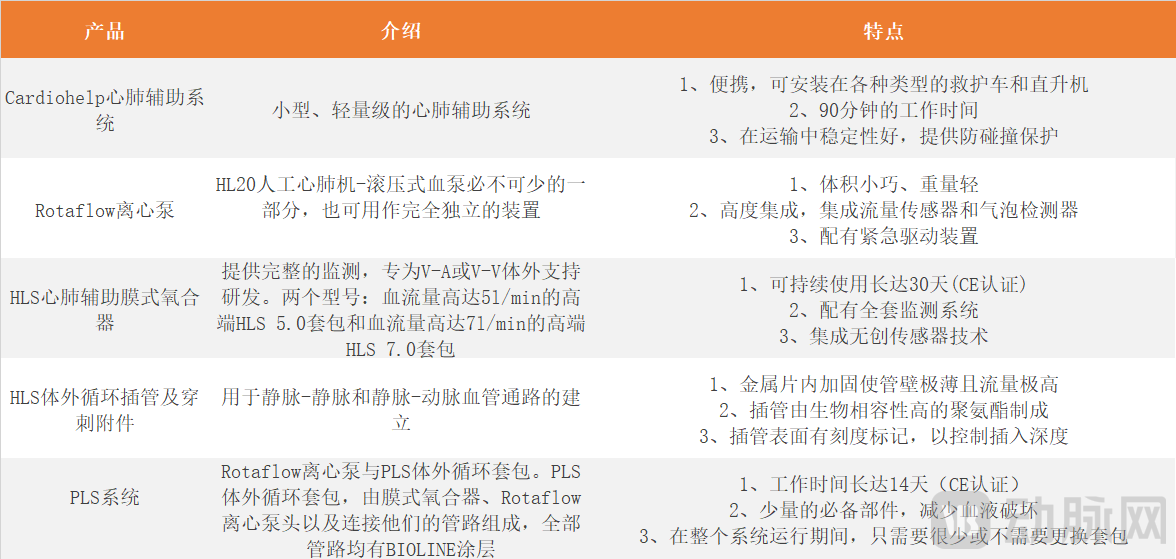
ECMO-Related Products Source: Getinge Official Website
The company’s independently developed Cardiohelp is a compact and lightweight cardiopulmonary support system designed for cardiac surgery, intensive care, and emergency treatment. Its most distinctive feature is portability; with its small size and light weight, it can be used during patient transport to rapidly establish extracorporeal circulation.
In clinical practice, critically ill patients often require transport between various hospital departments, during which normal respiration and extracorporeal circulation must be maintained. Compared with bulky and less mobile cardiopulmonary bypass machines, ECMO devices are relatively portable; however, most products still rely on small carts for transportation.
Maquet’s Cardiohelp reduces product weight through highly integrated technology, helping to achieve better emergency care outcomes.Due to its compact size, the product minimizes the exogenous surface area in contact with patient blood, thereby reducing blood trauma. Furthermore, Cardiohelp offers high stability and anti-collision protection during transport, ensuring adequate oxygen delivery and carbon dioxide removal for patients.
The Cardiohelp system can operate in veno-venous or veno-arterial mode., two modes can be used for critically ill patients with different symptoms. Based on the circuit return, ECMO can be divided into two modes: veno-arterial (V-A ECMO) and veno-venous (V-V ECMO).
V-VECMO withdraws blood from the central vein for oxygenation and then returns it to the central vein, providing only gas exchange function. In contrast, V-AECMO withdraws blood from the central vein for oxygenation and then pumps it into the artery, providing both respiratory and circulatory support.
In addition,Cardiohelp with integrated lithium-ion battery can operate for at least 90 minutes on a full charge。
The ROTAFLOW centrifugal pump is used for blood pumping and can be integrated with ECMO systems or operated as a standalone device, equipped with a backup battery and power supply. The device is compact and lightweight, and features an integrated bubble and flow sensor for simultaneous monitoring of flow rate and air bubbles.
The HLS cardiopulmonary assist membrane oxygenator is simple and safe. Its surface features a Bioline coating with high biocompatibility, and it is equipped with a comprehensive monitoring system. The non-invasive sensor technology reduces the risks of air embolism, coagulation, and gas blockage. The system can be used continuously for up to 30 days, requiring little or no circuit replacement during operation, thereby reducing treatment costs.
For short-term or long-term extracorporeal life support (ECLS) or extracorporeal membrane oxygenation, Maquet provides comprehensive solutions through its full range of product portfolios.
In the emergency room, ECMO is not a routine treatment modality; it is primarily used to sustain life, buying critical time and opportunities for the rescue of critically ill patients. Clinically, the utilization of ECMO remains low. According to statistics, fewer than 4,000 ECMO cases were recorded in China in 2018.
On one hand, ECMO establishes extracorporeal circulation, which may lead to complications such as bleeding, infection, and renal failure. On the other hand, although the price of ECMO equipment is not high—with domestic procurement prices ranging from RMB 1 million to 3 million per unit (for instance, Huashan Hospital Affiliated to Fudan University purchased a Cardiohelp system at a unit price of RMB 3 million)—ECMO consumables are expensive due to technological monopolies.
Initiating ECMO costs approximately 50,000 yuan per session, with daily treatment expenses exceeding 10,000 yuan.
Under such circumstances, the adoption rate of ECMO remains low. As of the end of 2018, there were only over 400 ECMO units in China. During the pandemic,ECMO was included in China’s “Diagnosis and Treatment Protocol for Novel Coronavirus Pneumonia (Trial Version 3)” and falls within the scope of reimbursement by the basic medical insurance fund.. However, aside from treatments for COVID-19, health insurance does not cover the costs of other ECMO uses.
Moreover, ECMO devices are complex and difficult to operate, requiring a high level of professional expertise from medical personnel.Previously, China introduced the "Specifications for Clinical Application Management of Extracorporeal Membrane Oxygenation (ECMO) Technology" to standardize the clinical application of ECMO technology., requiring physicians performing ECMO procedures to undergo continuous systematic training or receive ECMO technical training abroad for more than three months.
In China, where the distribution of doctors and patients is uneven and medical resources are scarce, ECMO procedures are predominantly performed in tertiary Grade A hospitals.
Under normal circumstances, the development of ECMO has been a relatively slow process, but the COVID-19 pandemic has driven this market forward. Since June 2020, the Getinge Group has decided to increase the production of ECLS devices. According to Getinge Group’s 2020 annual report, the group’s net sales grew by 14.3% in 2020, primarily driven by ICU ventilators, ECMO, and sterile transfer products. Among them,Sales in the emergency care segment increased by 32.1%.。
Getinge Group primarily generates sales in the Americas, EMEA (Europe, the Middle East, and Africa), and APAC (Asia-Pacific). Among these regions, the Americas account for the largest share of sales, while the Asia-Pacific region is experiencing the fastest growth.
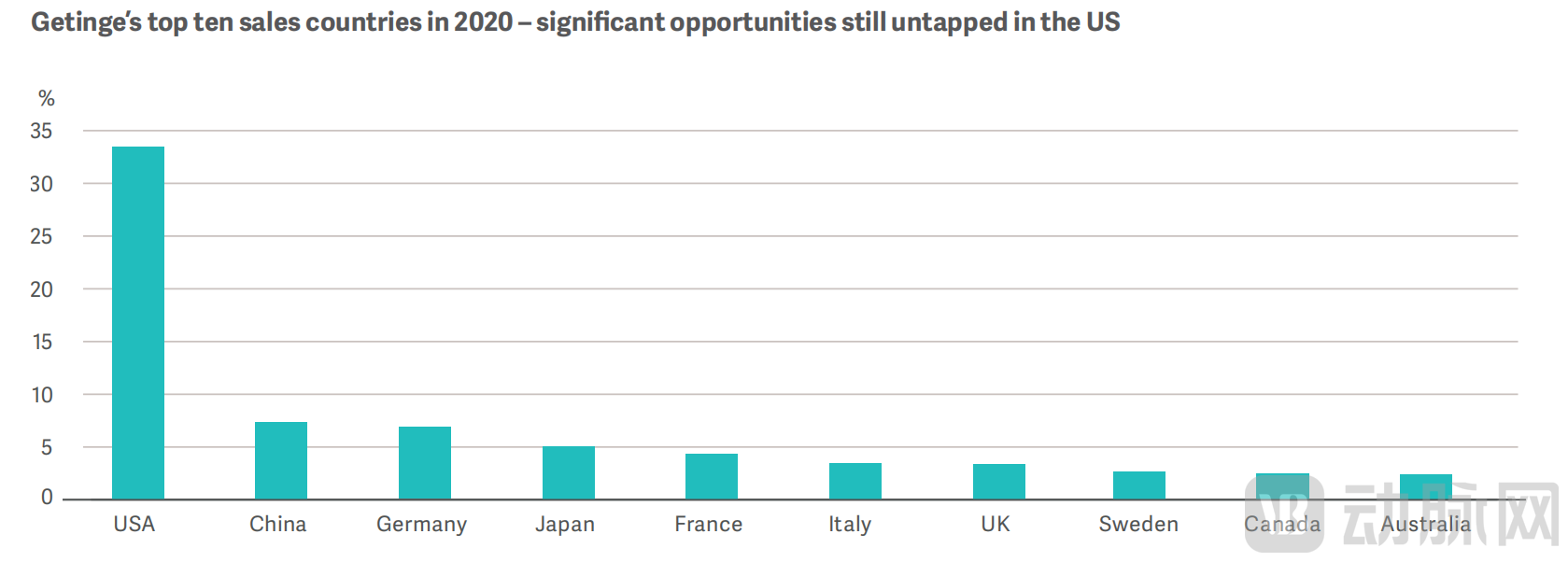
Top 10 Countries by Sales for the Getinge Group Source: Getinge 2020 Annual Report
It is difficult to assess the changes in the ECMO market, and Maquet’s future development is also hard to predict.
From a social perspective, the global ECMO market has experienced a surge in growth due to the critical role of ECMO devices in treating severe COVID-19 patients.
Previously, China’s ECMO sector had achieved considerable development; in 2019, when there were only 430 ECMO centers worldwide, China accounted for 260 of them. However, the application rate of ECMO in China still lags behind that of developed countries such as the United States. Although the Getinge Group recognizes the growth potential demonstrated by the Asia-Pacific market, it has currently decidedFocus on the U.S. Market。
From the perspective of the competitive landscape, among the three major ECMO giants currently,2020 reports indicated that Medtronic planned to acquire LivaNova, no related information has emerged so far. However, if the two companies were to undergo a robust integration, it would inevitably lead to a monopoly in the global ECMO market. This would pose a significant threat to Maquet.
In the short term, the competitive landscape of the ECMO market is unlikely to undergo significant changes; the growth dividends brought by the pandemic will instead consolidate the positions of existing industry giants. As upstream material technologies for ECMO are controlled by a single company, this concentration affects the production autonomy and schedules of all market participants. However, in the long run, new entrants may emerge in the ECMO market, and mergers and acquisitions among major players are also likely. To solidify its leading position, Maquet must continuously improve its products and expand their market reach.
In its 2020 annual report, the Getinge Group repeatedly referenced COVID-19, noting that while the pandemic drove growth in its acute care business, it also impacted other segments of the group, such as causing supply shortages for vascular grafts.
Artificial blood vessels are applicable in vascular surgery and cardiology, used to replace severely stenotic or occluded diseased vessels in the human body, and are commonly employed in aortic surgeries. As artificial blood vessels must assume normal vascular functions and remain implanted in the human body for an extended period, they must balance properties such as elasticity, thromboresistance, anti-aging, and impermeability to blood leakage.
To meet these requirements, significant effort has been devoted to material selection for vascular grafts, with trials conducted using materials ranging from polyester and polyurethane to mulberry silk; notably, a Chinese company once launched a polyurethane-based vascular graft. Currently, polyester fiber-woven vascular grafts remain the most commonly used in clinical practice.
Moreover, existing artificial blood vessels are predominantly large-diameter grafts, with a lack of mature small-diameter artificial blood vessel products. Small-diameter artificial blood vessels can be used to replace peripheral vessels, perform coronary artery bypass grafting, and establish arteriovenous fistulas, offering broad clinical applications. However, due to factors such as small diameter and low flow velocity, these grafts exhibit a high rate of restenosis after implantation, which limits their clinical application.
In the global artificial blood vessel market, Maquet, Terumo, and W. L. Gore & Associates are the major manufacturers. Among them,Maquet’s vascular graft business has grown through acquisitions, including the acquisition of Boston Scientific’s cardiovascular surgery division in 2008 and the acquisition of the Datascope Group in 2009.
Maquet's vascular graft is aSilk Fibroin-Impregnated Coated Porous Knitted Polyester Vascular Graft, Silk fibroin is a natural protein characterized by high biocompatibility, biodegradability, and non-toxicity, and it is commonly used in surgical sutures. Artificial blood vessels coated with silk fibroin through impregnation exhibit excellent maneuverability and are less prone to bleeding during implantation. Furthermore, after implantation of silk fibroin-impregnated coated artificial blood vessels, patients experience milder rejection reactions, and the coating promotes endothelial cell adhesion and growth.
Furthermore, Maquet’s vascular graft products have undergone an upgrade in weaving technology, differing from traditional weaving processes,Utilizing Lock-Stitch Weaving Technology, thereby enhancing the product's stability and tensile strength.
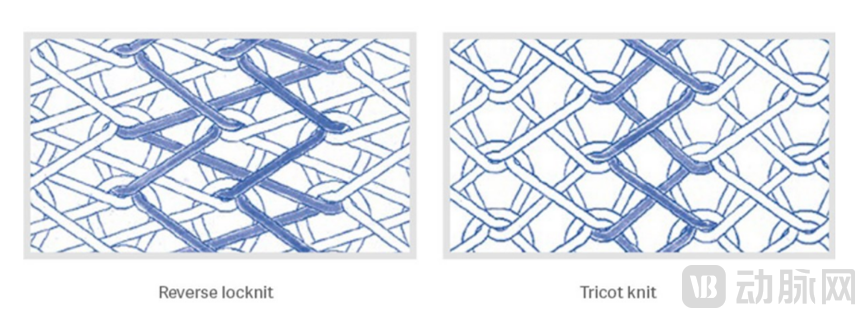
Maquet Vascular Graft Weaving Technique vs. Conventional Vascular Graft Weaving Technique Source: Getinge Official Website
In March 2020, Maquet recalled its double-velour woven vascular grafts due to complaints of intraoperative bleeding at the anastomotic sites of the graft branches. While such bleeding could lead to surgical delays, it would not affect the course or outcome of the procedure. Subsequently, in July 2021, Maquet issued another recall of its vascular grafts because the product packaging did not match the internal contents.
Although Maquet issued two product recalls within two years, neither involved serious safety issues.
Although artificial blood vessels are not expensive, the substantial upfront investment of time and capital required has resulted in few market participants. Under these circumstances, Maquet has successfully taken the lead in the artificial blood vessel market by virtue of its product superiority.Previously, Maquet shut down its U.S. production lines and relocated the factory to France, a transition that took nearly seven years, leading to a critical shortage of vascular graft inventory.. With the outbreak of the COVID-19 pandemic, the production capacity of French factories fell short of that of the original production lines, thereby causing supply disruptions in the global market.
In the annual report,Getinge Group has decided to increase production capacity at its vascular graft manufacturing facility.
In China, the artificial vascular graft market is dominated by imports, with Maquet and Terumo being the two primary suppliers. Previously, both companies experienced supply shortages that affected the performance of domestic surgeries. For patients with acute aortic diseases, failure to replace the diseased vessels in a timely manner could lead to death within a short period.
From a geographic perspective, China will be the growth driver for Maquet’s revenue. By establishing a local entity in China, Maquet aims to expand its presence in the Chinese market and strengthen after-sales support for its products. Previously, 81 ECMO units destined for China were delivered to Jinyintan Hospital through its Shanghai-based enterprise.
Overall, both the ECMO device and artificial vascular graft markets are characterized by high barriers to entry, a scarcity of market participants, and monopoly by leading enterprises. Maquet’s leading position in both markets is unlikely to change in the near term. Furthermore, as pandemic response becomes normalized, personal health awareness rises, and emergency medical services develop, these markets may experience further growth.
Reference article: “Death Must Not Arrive Before the Artificial Blood Vessel” — Caijing