

Aileshi: Empowering B2B Mental Health Services through Psychological Informatization and AI-Driven Solutions
With socioeconomic development and shifting public perceptions, mental health issues are receiving increasing attention. According to the 2017 White Paper on Mental Health of Urban Residents in China, 73.6% of the Chinese population is currently in a state of suboptimal psychological well-being, 16.1% experience varying degrees of psychological problems, and only 10.3% are considered mentally healthy, with depression and anxiety being the predominant conditions. The Healthy China Action (2019–2030) reports that the prevalence of depression in China has reached 2.1%, while the prevalence of anxiety disorders stands at 4.98%.
Amid the rising incidence of mental disorders, another issue is becoming increasingly prominent: the trend toward younger age groups affected by mental health problems. Public data show that China has 340 million children and adolescents under the age of 17, among whom approximately 30 million are affected by various emotional disorders and behavioral problems.
In response to adolescent mental health issues, policy initiatives have been continuously implemented to prevent and address psychological problems. As early as 2007, the State Council approved the Ministry of Education’s “Outline of the National Plan for Educational Development during the 11th Five-Year Plan Period,” which explicitly called for “strengthening students’ mental health education and life-appreciation education, and effectively improving students’ health levels.” Subsequently, in 2015, the General Office of the Ministry of Education issued the “Guidelines for the Construction of Psychological Counseling Rooms in Primary and Secondary Schools,” mandating that all 480,000 primary and secondary schools across China establish psychological counseling rooms to ensure that psychological guidance plays a substantive role in enhancing students’ psychological well-being.
By 2019, twelve ministries and commissions, including the National Health Commission, the Publicity Department of the Communist Party of China Central Committee, and the Ministry of Education, jointly issued the Healthy China Action—Action Plan for Mental Health of Children and Adolescents (2019–2022). The plan stipulated that by the end of 2022, schools at all levels and across all types should establish psychological service platforms or leverage school physicians and other personnel to provide mental health services to students. Furthermore, preschool education institutions and special education institutions were required to staff full-time or part-time teachers specializing in mental health education, thereby further expanding the scope of coverage.
Against the backdrop of growing societal attention to mental health issues, Fuzhou Alexander Health Management Co., Ltd. (brand name: “Ai Li Shi”), established in 2014, has focused on the B2B mental health market. By integrating clinical psychology, psychosomatic medicine, internet technologies, cloud computing, and big data, the company has developed a comprehensive mental health management and service platform. To date, Ai Li Shi has served over 100 domestic universities, government agencies, and enterprises, and has undertaken public welfare science communication initiatives for state-owned enterprises and schools, thereby contributing to the development of China’s social psychological service system.
From Clinical to Mental Health Services: Focusing on the Digitalization of Mental Healthcare
The career journey of Chen Hongpo, founder of Ailishi, has always been intertwined with mental health services.
From the emergency department to community psychiatric outpatient clinics, and from psychosomatic health training to entrepreneurship in mental health informatics, Chen Hongpo has always maintained close ties with mental health services through the lens of psychosomatic medicine.
Driven by his professional experience and deep commitment to the mental health sector, Chen Hongpo founded Fuzhou Alexander Health Management Co., Ltd. in 2014. At that time, China’s mental health industry was in its nascent stages, grappling with challenges such as uneven distribution of medical resources and inconsistent service quality.

Chen Hongpo (far right), Founder of Ailishi
Furthermore, compared with most clinical specialties, mental health exhibits a distinct characteristic of “high demand but small market.” While nearly all population groups have needs related to mental health, the number of effective demands that can be commercially converted remains very limited due to factors such as consumers’ low willingness to pay for mental health services and the public stigma associated with mental and psychological disorders. Therefore, directly targeting the consumer (C-end) market was clearly not the most suitable strategic direction for Fuzhou Alexander Health Management Co., Ltd. at that time.
In light of current market conditions, Fuzhou Alexander Health Management Co., Ltd. initially focused on providing mental health training courses to enterprises. As its services deepened, the client base gradually expanded from corporations to include universities and government agencies, while its service delivery models increasingly integrated internet-based concepts.
From Chen Hongpo’s perspective, campus mental health represents a critical market segment. However, compared to the “Internet Plus” transformations that were already underway in sectors such as transportation and food services at the time, the level of informatization in campus mental health remained very low, with many schools still relying on paper-based assessments distributed individually to students.
To this end, Alexander officially launched “Ai Li Shi,” a mental health SaaS mobile tool, in 2017. It was the first true campus mental health management SaaS mobile work platform in China at that time. This coincided with the joint issuance of the Guiding Opinions on Strengthening Mental Health Services by 22 departments, including the National Health and Family Planning Commission and the Publicity Department of the Communist Party of China. The enthusiasm of entrepreneurs for mental health was reignited, and the market began to show a turning point.
To ensure the professionalism of its services, Ailishi has assembled a team of experts and professionals from various fields, including clinical psychology, psychiatry, psychosomatic medicine, Employee Assistance Programs (EAP), and music therapy. Additionally, it has appointed leading academics in psychology from universities to form a Technical Advisory Board, embarking on a path dedicated to the digitalization of mental health services. To date, the Ailishi SaaS platform has served nearly 3 million users.
Delve Deeply into B-Side Psychological Informatics Needs to Build a Practical Management Service Cloud Platform
In the process of continuously expanding into the B2B mental health market, Chen Hongpo and his team have also identified key challenges in industry development: inconsistent needs among different client segments, incomplete service workflows, and the absence of standardized mechanisms for service delivery within the industry. Furthermore, the difficulty in quantifying service outcomes has made it challenging to ensure professional quality and reliable after-sales support.
To address the aforementioned challenges, Ailishi has continuously gathered requirements to identify the most core and fundamental needs of B-side clients. By integrating these needs into its service system through information technology, Ailishi has developed a mental health SaaS tool and a comprehensive mental health service ecosystem, gradually achieving integrated and standardized services. This constitutes Ailishi’s competitive advantage.
In the education section, Alexander advocates for psychological services to break through the physical boundaries of counseling centers, making them accessible in every corner of the campus. Compared with traditional psychological equipment, this approach significantly increases the frequency of student usage. Additionally, the online psychological service package is a major feature of Ailishi’s products, laying the foundation for multi-dimensional development of psychological data.
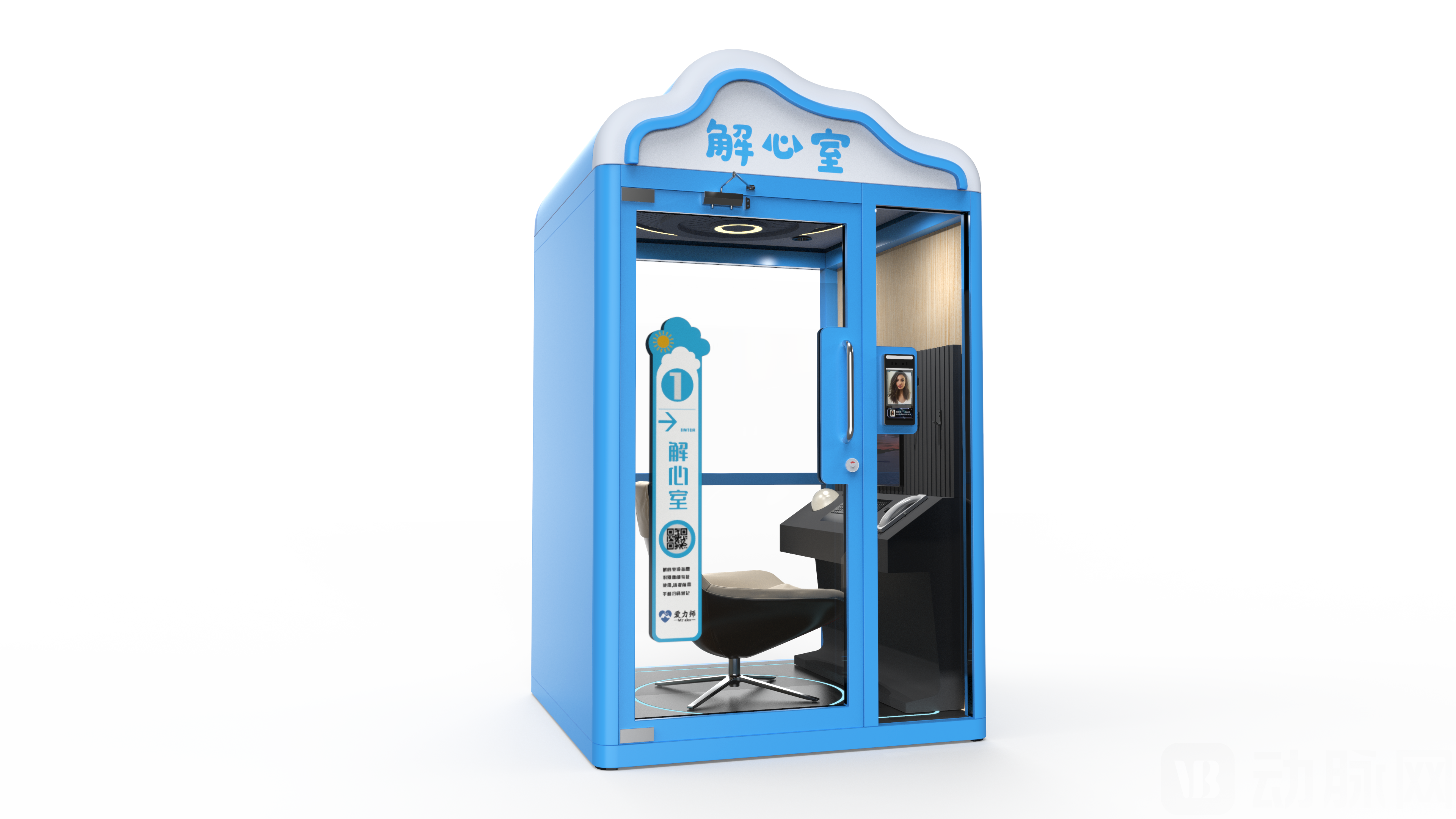
At present, Ailishi’s business operations are primarily focused on the education sector. The company has developed products such as a Mobile Mental Health Management Platform for Universities, a Cloud-Based Mental Health Platform for Education Bureaus, a Cloud System for Comprehensive Social Psychological Services Solutions, and new application-oriented mental health hardware. It provides clients with a range of traditional mental health information services, including psychological assessments, counseling, and anomaly alerts.
Building upon its existing software platforms and service categories, Ailishi has also developed new hardware products, such as mental health self-service kiosks and scenario-based cognitive guidance audio relaxation systems, to serve as offline channels for certain services, thereby enhancing service accessibility.
Leveraging its existing service framework, Ailishi manages the front-end psychological counseling process. To integrate psychological diagnosis and treatment services, Ailishi has jointly established an offline Psychotherapy Center with the Comprehensive Outpatient Department of the Fujian Academy of Traditional Chinese Medicine to meet clinical care demands.
Leveraging Psychological Big Data to Build a Multidimensional Psychological Big Data Model
In the era of informatization, data itself is a critical asset and driver of growth for enterprises, and this holds true for the mental health industry as well.
Chen Hongpo believes that China’s current psychological informatics industry still lags significantly behind the true era of big data. Most available data consist merely of routine psychological screening scale assessments, which suffer from insufficient authenticity and limited dimensional breadth, thereby precluding the use of big data algorithms for modeling and delivering in-depth intelligent services.
In response, Ailishi plans to collect and process user psychological data based on its existing services, while leveraging algorithms to build and refine systems such as user profiling and risk early warning. This initiative aims to accelerate the application of digital scenarios in the mental health service sector and empower clients including universities, psychological counseling agencies, and party and government organs.
Furthermore, leveraging the team’s subsequent application of data and AI technologies, Ailishi plans to launch an AI-powered mental health service robot in the future. This robot will provide users with interactive online counseling and psychological companionship, thereby maximizing the value of big data in mental health and contributing to the development of a socially oriented mental health service system through intelligence and big data analytics.
Moving forward, Ailishi will remain focused on expanding its presence in the B2B mental health market, increasing its market share in universities and colleges, while also assisting local governments in multiple regions with the development of social psychological information service systems. In this process, Ailishi aims to leverage capital to accelerate market expansion and strengthen its service delivery capabilities.