

Six Brokerages Unanimously Upgrade Stock Rating as Health Catalyst Doubles Market Cap Within Two Years of IPO
Health Catalyst
Medical Data Development Service Company
On September 26, SVB Leerink’s equity analysts reaffirmed a “Buy” rating for Health Catalyst in a report released that day. This marks the sixth time in two months that Health Catalyst’s stock rating has been upgraded.
On September 21, Zacks Investment Research upgraded Health Catalyst’s rating from “Sell” to “Hold” in a report;
On August 10, Raymond James raised the target price for Health Catalyst from $66 to $70 and assigned the company a “Strong Buy” rating;
On August 9, Citigroup raised the target price for Health Catalyst from $62 to $68 and assigned a “Buy” rating to the company;
On August 6, Piper Sandler raised the price target for Health Catalyst from $57 to $66 and assigned an “Overweight” rating to the company in a report;
On August 6, Canaccord Genuity raised the target price for Health Catalyst from $60 to $64 and assigned a “Buy” rating.
# Rating UpgradeA rating upgrade refers to the assessment made by a brokerage firm’s research division regarding its expectations for a listed company’s future growth, following an in-depth analysis of the company. The upgrade of Health Catalyst’s stock rating indicates that brokerage firms hold a favorable view of Health Catalyst’s profitability and industry prospects.
Health Catalyst is a healthcare big data company. VCBeat has closely tracked the company since its startup phase, witnessing and documenting its entire journey from an innovative enterprise to a healthcare unicorn, and ultimately to its public listing. In July 2019, when Health Catalyst went public, we conducted a comprehensive analysis of its development history, business model, and future plans. For details, click here:Three Healthcare Companies Go Public in the U.S. Today: This One Saves Hospitals Hundreds of Millions with AI + Big Data, Now Generating $112.6 Million in Annual Revenue
Two years later, we turn our attention back to Health Catalyst to assess the progress made on its ambitious promises. By conducting an in-depth analysis of this leading overseas enterprise, we aim to draw valuable insights for our own development and provide references for similar companies in China.
First, let us introduce this leading U.S. healthcare big data enterprise. Founded in Utah in 2008, Health Catalyst is a premier provider of healthcare data management and analytics services, specializing in processing and analyzing healthcare organization data to address clients’ clinical, financial, and operational challenges. True to its name, Health Catalyst aims to serve as a catalyst for improving healthcare quality.
On July 25, 2019, Health Catalyst successfully listed on the Nasdaq under the ticker symbol HCAT. On its first day of trading, Health Catalyst’s closing price reached $39.17, surging 51%, with a market capitalization of approximately $1.3 billion.
As of the market close on October 15, 2021, Health Catalyst’s closing price was $48.78, with a market capitalization of $2.417 billion. Given the overall upward trend in its stock price over the past two years, Health Catalyst has demonstrated considerable momentum in the capital markets.
Health Catalyst was founded by Tom Burton and Steven Barlow. Both founders came from Intermountain Healthcare, a top-tier healthcare system in the United States, and possessed extensive experience in corporate process improvement and IT. They led initiatives at Intermountain Healthcare to enhance care quality and reduce costs.
In 2011, after Health Catalyst secured investments from Sequoia Capital and HB Ventures, its co-founder Dan Burton joined the board of directors and has served as CEO since October 2012.
Bringing the focus back to the present, Health Catalyst has shown strong momentum over the past two months: it successfully completed the acquisition of Twistle, welcomed a key addition to its core management team, delivered robust performance in the second quarter of 2021 that boosted investor confidence, and rolled out several new products. At the same time, potential risks are closing in. Is this surge the culmination of Health Catalyst’s long-term business development, or merely a fleeting rally before the storm? Let us take a closer look.
On August 5, 2021, Health Catalyst released its financial statements for the second quarter of 2021. Dan Burton, CEO of Health Catalyst, stated that the company achieved strong performance across its entire business. Health Catalyst’s total revenue for this period amounted to $59.6 million, and its adjusted EBITDA (earnings before interest, taxes, depreciation, and amortization) reached $1.7 million, exceeding the midpoint of the company’s quarterly guidance for each metric. “This marks the first time since the company’s inception that we have achieved positive quarterly adjusted EBITDA. This accomplishment is a significant milestone demonstrating the continued improvement in our business’s operating leverage.”
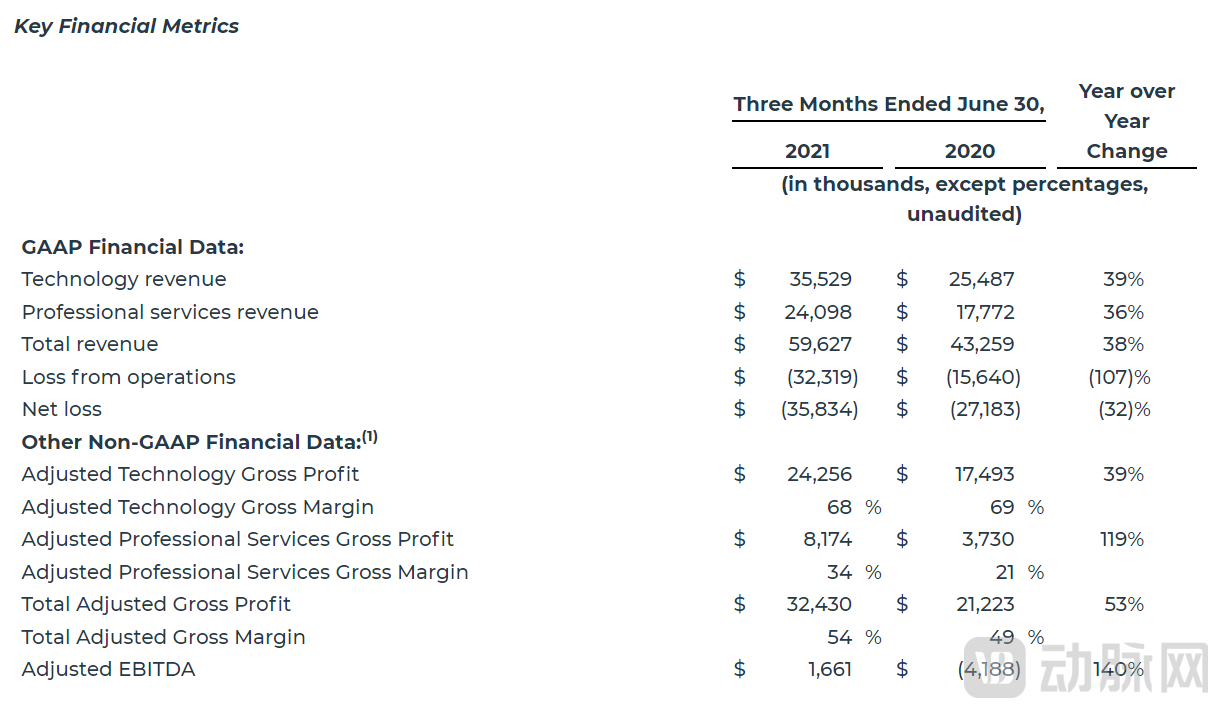
During the second-quarter earnings conference call held on August 5, 2021, Health Catalyst’s Chief Financial Officer, Brian Hunter, commented on the company’s financial performance: “Total revenue of $59.6 million represents a 38% year-over-year increase, outperforming the midpoint of the company’s guidance.”
It is worth noting that Health Catalyst completed its acquisition of Twistle on July 1, 2021, for $57.5 million in cash. This transaction will impact Health Catalyst’s financial performance in the third quarter. In light of this, Brian Hunter projected total revenue for the third quarter to range from $59.4 million to $62.4 million, with adjusted EBITDA losses between negative $7.5 million and negative $5.5 million. For the full year 2021, Health Catalyst raised its full-year outlook, expecting total revenue to be between $236.7 million and $239.7 million.
During the conference call, Brian Hunt also addressed the company’s assets and liabilities. As of the second quarter of 2021, Health Catalyst held $263 million in cash, cash equivalents, and short-term investments, compared to $271 million at the end of 2020. For reference, in April 2020, Health Catalyst issued $230 million in principal amount of convertible notes and used a portion of the proceeds to repay a term loan. As of June 30, 2021, the net carrying amount of the liability component of the convertible notes was $174.8 million, after deducting $50.9 million in unamortized debt discount associated with the conversion feature and $4.3 million in unamortized issuance costs.
Here, one matter needs to be mentioned.
On August 11, Health Catalyst priced its public offering of approximately 4.2 million shares of common stock at $53 per share, raising total proceeds of approximately $225 million. The background and implications of this event are not currently known to us; however, perhaps time will provide the answers.
Financial report data reveal that the acquisition of Twistle holds significant importance for Health Catalyst. On June 24, Health Catalyst announced that it had reached a definitive agreement to acquire Twistle, a SaaS platform provider, for $104 million.
Wistle, founded in 2011 and headquartered in New Mexico, is dedicated to transforming the patient experience by enabling HIPAA-compliant, patient-centered communication automation between care teams and patients. This approach enhances the quality and efficiency of care while reducing healthcare costs.
Collaboration Deepens Value. Following the acquisition, Health Catalyst’s cloud-based Data Operating System (DOS) will deliver more comprehensive clinical, quality, and life sciences solutions by leveraging Twistle’s leading clinical workflow and patient engagement platform.
Regarding this acquisition, Dan Burton stated, “Twistle’s efforts to improve patient outcomes and reduce care costs align with our mission to be a catalyst for large-scale, measurable, data-driven healthcare quality improvement. We are delighted to welcome the Twistle team to Health Catalyst and look forward to working together to fulfill our promise of ‘helping healthcare organizations safeguard population health.’”
Notably, Matt Revis, President and Chief Operating Officer of Twistle, will join the Health Catalyst leadership team while continuing to lead the Twistle business. Prior to joining Twistle in 2019, Matt Revis served as Head of Product at Jibo, where he spearheaded the product development lifecycle for the world’s first home social robot.
In fact, Health Catalyst has made multiple acquisitions over the past year to enhance its capabilities.
In February 2020, Health Catalyst acquired Able Health for $27 million, leveraging Able Health’s SaaS application to automate measure reporting and enhance its cloud-based quality and regulatory compliance capabilities;
In July 2020, Health Catalyst acquired the health IT company Healthfinch for $40 million. The latter provides a clinical workflow integration engine that helps reduce physicians’ administrative burden and simplifies EMR-based clinical workflows through intelligent data services.
In August 2020, Health Catalyst reached an acquisition agreement with the health technology company Vitalware for $120 million. Vitalware provides performance workflow optimization and SaaS services to healthcare organizations; additionally, Vitalware brought an updated product suite focused on performance integrity to help health systems achieve lean financial management.
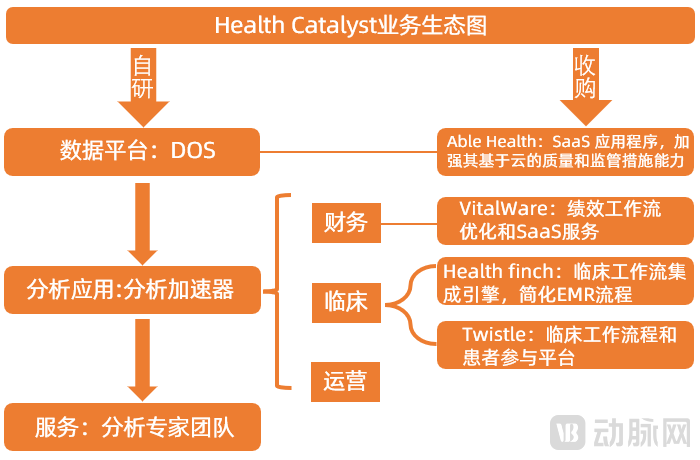
The company initially focused on creating databases for clinics and hospitals, and later began helping various healthcare institutions analyze and manage clinical, financial, and operational data, thereby improving work efficiency, reducing waste of health resources, and promoting the standardization of medical processes.
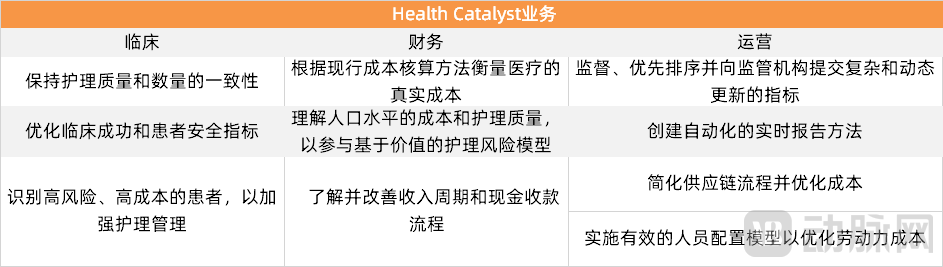
Health Catalyst's core business comprises three aspects:
Data Platform:Cloud-based Data Operating System (DOS) is an open, flexible, and scalable data platform designed for healthcare organizations, providing customers with a single, integrated environment to consolidate data from disparate software systems, thereby enabling comprehensive data analytics;
Analysis Applications:Health Catalyst’s software analytics applications are built on its data platform to deliver foundational or specialized analytics that enhance clients’ clinical, financial, and operational performance. The company also offers a broad range of prebuilt data models and visualizations that can be customized to meet clients’ specific needs, which Health Catalyst refers to as “Analytics Accelerators.”
Services:Health Catalyst has assembled a team of analytics experts to leverage the company’s technology in helping clients accelerate time-to-value and achieve sustainable, measurable improvements.
In December 2016, Health Catalyst launched healthcare.AI, the first open-source machine learning software library designed specifically for healthcare. This software lowers the barrier to applying machine learning techniques in medical practice by converting patients’ medical and genetic records, billing systems, customer surveys, and laboratory data into user-friendly formats, enabling healthcare professionals with only basic computational skills to easily utilize the software.
In March 2021, Health Catalyst launched its new Healthcare.AI platform to enhance the effectiveness of its artificial intelligence products and services suite in clinical, financial, and operational applications within the healthcare sector.
In a news interview, Health Catalyst pointed out that although most hospitals and health systems have now achieved strong practices in analytics, business intelligence, and data-driven decision-making, many still face the challenge of outdated technology.
Specifically,The new product incorporates five levels of healthcare AI analytics: analytical integration, selection and construction of predictive models, optimization of predictive analytics, retrospective comparison, and normative optimization.
Level 1 is the basic product suite, focusing on one-click AI access and integrating existing BI tools and over 100 other Health Catalyst applications into healthcare institutions’ systems. Levels 2–5 provide guidance to help users deploy their predictive models more effectively and design them to better meet specific use cases, while offering recommendations on retrospective comparisons, prescriptive optimization, and more.
On September 10, 2021, Health Catalyst released a new data research tool to help hospitals, pharmaceutical companies, and research institutions securely transform and maximize their existing clinical databases, and recruit patients who meet the criteria for real-world studies and trials.
The new products include two core components: Health Catalyst Research Network and Health Catalyst Touchstone Match.
The former is a mature cloud-based collaborative forum that connects medical institutions, research centers, pharmaceutical companies, and CROs. Touchstone Match is an intelligent search feature and service that supports data-driven research use cases—from clinical trial feasibility analysis to identifying patients eligible for real-world studies.
On February 24, 2021, Innovaccer, a healthcare big data company headquartered in San Francisco, completed a $105 million Series D financing round, achieving unicorn status with a valuation of $1.3 billion. Over its nine years of operation, Innovaccer has developed a comprehensive suite of solutions, offering population health management and value-based care solutions to physicians, healthcare institutions, and other service providers in the healthcare sector.
Innovaccer’s flagship product, Datashop, leverages proprietary modeling algorithms to standardize data and link it across multiple disparate sources. Built on a microservices architecture, Datashop decomposes complex healthcare operations into granular functional modules, enabling on-demand invocation and flexible composition by various applications. It offers services including population health management, care management, referral management, and quality reporting.
On June 28, 2021, Health Verity, a medical data analytics services company, announced the completion of its $100 million Series D financing round to accelerate the development of its IPGE (Identity, Privacy, Governance, and Exchange) platform. The IPGE platform provides a unified infrastructure that enables more than 250 leading healthcare enterprises and over 80% of top pharmaceutical companies to leverage technological capabilities in identity, privacy, governance, and exchange to discover, access, and apply real-world healthcare data. This financing will also accelerate Health Verity’s path to going public.
On August 17, 2021, data science platform ClosedLoop.ai raised $34 million in Series B funding. ClosedLoop.ai is a healthcare data science platform that leverages AI tools to help healthcare organizations improve the quality and service levels of medical care. A month later, brain data startup Rune Labs secured $23 million in financing to accelerate the development of neurological drugs.
Turning our attention to the domestic market, the medical big data sector is equally vibrant. According to incomplete data from VCBeat, as of September 10, 2021, there were 14 financing rounds in China’s medical big data sector, including several large-scale investments in later-stage funding rounds.
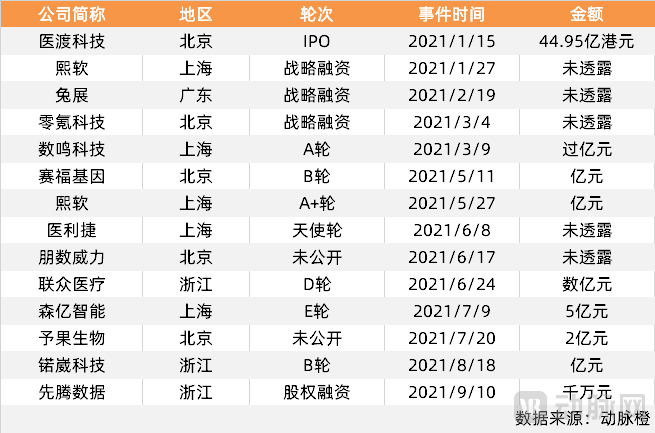
From the development trajectory of Health Catalyst, it is evident that the company has been able to identify methods to enhance hospital management and reduce costs amidst vast amounts of data, thereby incentivizing hospitals to pay for its products and ultimately achieving substantial revenue growth. In its review of big data and artificial intelligence enterprises in the healthcare sector, VCBeat has found that China’s health and medical big data industry has progressed through early stages including data generation, collection, storage, and processing. However, the true value of industrial application lies in data analysis and utilization. This also necessitates that companies engage with specific application scenarios to reduce research and development as well as operational costs.
Clinical medical data is like a treasure buried deep in the mountains; although gold deposits exist, without proper mining equipment, vast reserves remain as barren as a Gobi Desert. Clinical big data holds immense value for pharmaceutical companies, healthcare providers, payers, and patients alike. However, due to low data density, data silos, and the lack of linkage with long-term patient follow-up, this potential remains largely untapped.
With the continuous development of artificial intelligence, deep learning, and natural language processing technologies in China, domestic medical big data companies have begun to focus on different sectors, gradually widening the gap between them. Driven by supportive policies and favorable capital investment trends, the medical big data market is also moving toward maturity.
Reference Link:
Health Catalyst Second Quarter Financial Report: https://www.globenewswire.com/news-release/2021/08/05/2275981/0/en/Health-Catalyst-Reports-Second-Quarter-2021-Results.html
Health Catalyst Acquires SaaS Provider Twistle for $104.5 Million https://www.dotmed.com/news/story/55216
Health Catalyst Acquires Vitalware https://www.globenewswire.com/news-release/2020/08/11/2076734/0/en/Health-Catalyst-Announces-Agreement-to-Acquire-Vitalware-a-Revenue-Workflow-Optimization-and-Analytics-SaaS-Technology-Solution.html
Health Catalyst Launches New AI Product https://www.prnewswire.com/news-releases/health-catalyst-launches-new-healthcareai-to-deliver-augmented-intelligence-at-scale-to-healthcare-industry-301244263.html