

Fangzhou Jianke Attends China Health Industry (International) Ecosystem Conference, Showcasing Expertise in Chronic Disease Management and Innovation in DTP Pharmacy Services
Recently, the 14th China Health Industry (International) Eco-Conference (hereinafter referred to as “Xipu Conference”) was held. This year’s Xipu Conference put forward the theme of “Efficiency Revolution – Building a Sufficient and Balanced New Health Industry,” aiming to promote the optimized allocation of medical and health resources through new ideas, new methods, and new technologies, comprehensively improve the efficiency of the health industry, and support “Healthy China 2030” construction.
As a leader in internet-based chronic disease management services, Fangzhou Jianke was invited to attend the conference. Meanwhile, Cui Ying, Senior Vice President of Fangzhou Jianke Group, participated in a roundtable discussion on “How DTP Pharmacies Can Address the Challenges of Getting Innovative Drugs into Hospitals.” Cui Ying stated that patient needs are the core driving force behind healthcare services; only when services are truly aligned with these needs can pharmaceutical and medical services be delivered more efficiently.
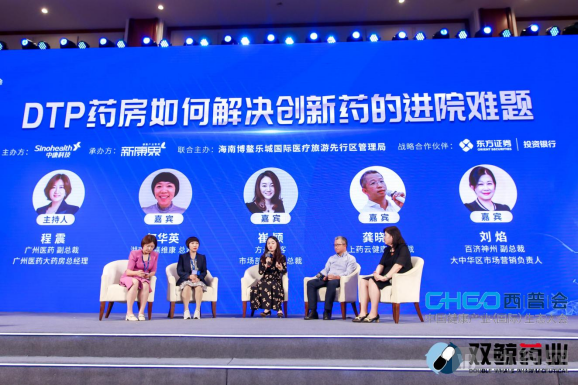
(Cui Ying, Senior Vice President of Fangzhou Jianke Group, Was Invited to Attend the China Health Industry (International) Eco-Conference)
The so-called “dual-channel” mechanism incorporates retail pharmacies into the list of providers eligible for pooled medical insurance reimbursement. Under this model, patients can utilize their pooled medical insurance benefits not only at hospitals but also at retail pharmacies. Cui Ying believes that the purpose of the “dual-channel” policy is to improve the accessibility of negotiated drugs by including those with high clinical value, urgent patient demand, and limited substitutes under medical insurance management. This means that retail pharmacies will have equal opportunities as hospitals to access new and specialized drugs in the future, while also attracting greater patient traffic. In the long run, this undoubtedly represents a wave of policy-driven benefits for their business operations.
In Cui Ying’s view, the “dual-channel” policy will inevitably encourage more patients to purchase medications through medical insurance channels, helping to alleviate the high cost of care for patients with special chronic diseases and shortening the gap period in medication access. For pharmaceutical companies, this enables more comprehensive collection of patient medication data and feedback, thereby accelerating the iteration and innovation of drug services. Meanwhile, the implementation of the “dual-channel” policy also signifies a more rational allocation of national medical insurance resources. Currently, most regions across China have not yet rolled out the “dual-channel” mechanism, as its adoption depends on local government medical insurance resources and the progress of healthcare reform. In the short term, the impact of this policy on innovative drugs is not expected to be particularly significant.
The establishment of the dual-channel management mechanism imposes higher quality and service requirements on designated retail pharmacies and pharmaceutical companies, while also creating new market opportunities. For instance, supported by the dual-channel policy, DTP (Direct-to-Patient) pharmacies must enhance their focus on delivering superior patient services and offering a more diverse range of medications. This includes leveraging technologies such as internet healthcare, artificial intelligence, and big data to strengthen collaboration with pharmaceutical manufacturers. Such efforts aim to help pharmaceutical companies accelerate capital recovery, absorb prescriptions flowing out of hospitals, and improve professional capabilities in patient medication guidance and services. This implies that DTP pharmacies need to integrate the entire chain of specialty and chronic disease management services, building a continuous platform-based service model grounded in multi-source data and high-standard requirements, thereby achieving the goals of “zero” waiting time for patients and “zero” distance for medication access.
Since the launch of healthcare reform, the separation of medical services from pharmaceutical sales has been a key focus. In April 2018, the General Office of the State Council issued the “Opinions on Promoting the Development of ‘Internet + Healthcare’,” allowing internet hospitals to prescribe medications online for certain common and chronic diseases. After review by pharmacists, medical institutions and pharmaceutical distributors may entrust qualified third-party agencies with delivery, thereby accelerating the trend of prescription outflow. According to reports from research firms, the market size for prescription outflow is projected to exceed RMB 720 billion by 2028.
Cui Ying stated that the outflow of prescriptions is an inevitable outcome of the healthcare industry’s development, representing a long-term, systemic endeavor. The implementation of the “dual-channel” policy has enabled retail pharmacies and Direct-to-Patient (DTP) pharmacies to assume part of the function of handling outflowing prescriptions, thereby partially alleviating the challenges associated with the hospital listing of innovative drugs. However, as recipients of outflowing prescription drugs, pharmacies must possess the capability to integrate multiple resources—including medical insurance payment, pharmacy operations, drug distribution, and physician prescriptions—and establish a systematic framework. They need to strengthen their capabilities in areas such as platform services, chronic disease management, and patient data management.
According to her, Fangzhou Jianke has consistently adhered to this chronic disease management philosophy, actively advocating the “H2H” (Hospital-to-Home) service model. When Epclusa (sofosbuvir/velpatasvir) was introduced for liver disease treatment, Fangzhou Jianke was among the first online channels to offer it. The company also promptly introduced originator drugs such as Vemlidy (tenofovir alafenamide) and Descovy (emtricitabine/tenofovir alafenamide). Leveraging technological advantages in internet platforms, artificial intelligence, and big data, Fangzhou Jianke implements refined management of patients’ chronic conditions. By obtaining authentic patient feedback in real time, the company progressively advances comprehensive, personalized patient management and services.
Innovative drugs often demand higher standards for professional pharmaceutical services and logistics storage conditions. For instance, Cosentyx requires cold-chain distribution, prompting Fangzhou Jianke to develop a specialized cold-chain transportation system. Meanwhile, drugs such as Vemlidy necessitate support from professional pharmacists and physicians. To address this, Fangzhou Jianke fully leverages expert resources from its internet hospital, with professional doctors and pharmacists providing service assurance for the sales of innovative drugs and patient medication management.
Both pharmacies and pharmaceutical companies serve not only as distribution channels for medications but also as communication bridges between physicians and patients. The core driver of healthcare services is patient demand, while their core competitiveness lies in building barriers in areas such as professionalism, privacy protection, logistics and storage, and chronic disease management. For instance, this includes strengthening the monitoring of adverse reactions to innovative drugs, providing professional medical services such as therapeutic management and patient education, and fully meeting the medication and disease management needs of complex conditions. These are the primary needs of patients using innovative drugs and those with special chronic diseases. Fangzhou Jianke has been continuously exploring and researching in its service to pharmaceutical companies and patients, such as segmenting and planning services based on single-disease management, equipping high-standard medical devices, and leveraging highly specialized pharmaceutical experts to enhance the logistics safety of innovative drugs and provide patients with better communication environments and service capabilities.

(Cui Ying participated in the roundtable discussion on “How DTP Pharmacies Can Solve the Challenge of Getting Innovative Drugs into Hospitals”)
Cui Ying emphasized that Fangzhou Jianke is committed to advancing the development of internet-based chronic disease services, building a smart healthcare business ecosystem, and establishing China’s leading full-lifecycle chronic disease management services. The company aims to achieve a closed-loop service model across multiple dimensions, including internet hospitals, chronic disease management services, online pharmacies, and new media empowerment services. By leveraging advanced technologies, Fangzhou Jianke facilitates the extension of chronic disease care from in-hospital to out-of-hospital settings, breaking through temporal and spatial constraints. This enables more patients with chronic conditions to access professional medical services in a timely and convenient manner, fundamentally addressing the challenges of difficult access to medical care and high medication costs.