

Phase II Trial of Novel ADC MRG002 Shows Promise in HER2-Low Advanced Breast Cancer, Led by Professor Jiang Zefei at CSCO 2021
Editor’s Note: This article is reprinted from Oncology Frontier, with authorization granted to VCBeat.
From September 25 to 29, 2021, the 24th National Clinical Oncology Conference and the 2021 CSCO Annual Academic Meeting were held as scheduled, under the theme “Focusing on Innovative Research, Leading an Original Future.” On September 26, the Innovation Session showcased a wealth of new drugs, studies, and advances. In the field of HER2-low breast cancer, the Phase II study of MRG002, led by Professor Jiang Zefei from the Chinese PLA General Hospital, achieved a significant breakthrough. The novel antibody-drug conjugate (ADC) MRG002 demonstrated preliminary efficacy and safety, paving the way for China-led innovation in anti-HER2 therapy.
On September 26, 2021, at the Innovative Diagnosis and Treatment Session of the CSCO Annual Academic Conference, Professor Jiang Zefei from the Chinese PLA General Hospital and Secretary-General of the CSCO Conference, presented a significant report titled “A Multicenter Phase II Study of a Novel Antibody-Drug Conjugate (MRG002-ADC) in the Treatment of HER2-Low Advanced Breast Cancer,” offering new insights into the redefinition of HER2-positive breast cancer and its future diagnosis and treatment.
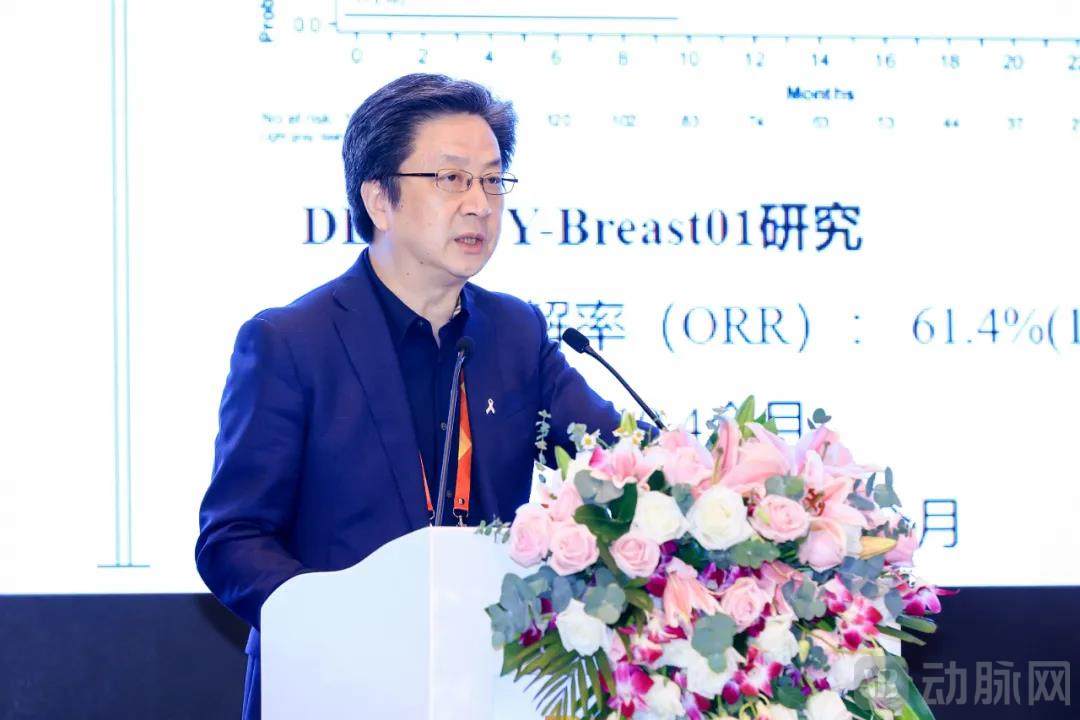
Professor Jiang Zefei first outlined the research background: The landscape of anti-HER2 therapies for breast cancer has evolved from a lack of available options to a diverse array of new treatments, making the rational sequencing of therapeutic lines particularly important. With the publication of the EMILIA and DESTINY-Breast01 studies, antibody-drug conjugates (ADCs) have gradually emerged as a new treatment option for HER2-positive breast cancer. However, patients with HER2-low expression—defined as immunohistochemistry (IHC) 2+ with in situ hybridization (ISH) negativity or IHC 1+—are not eligible for current anti-HER2 therapies. This population accounts for approximately 54% of all breast cancer patients and represents an unmet therapeutic need.
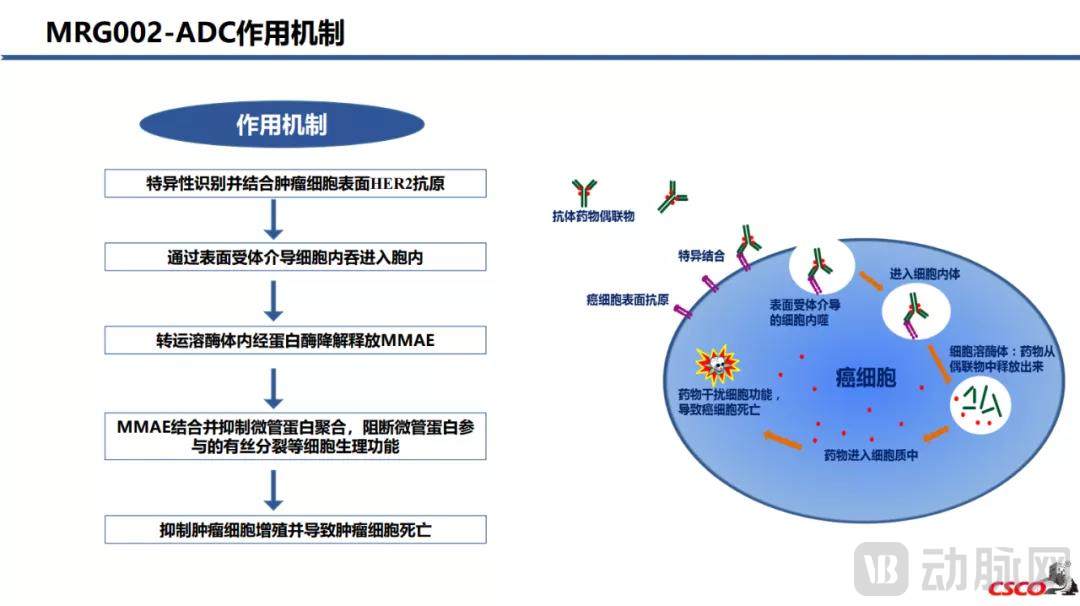
As an emerging antibody-drug conjugate (ADC) independently developed in China, MRG002 is composed of glycosylated trastuzumab conjugated to monomethyl auristatin E (MMAE) via an enzyme-cleavable valine-citrulline (vc) linker. Mechanistically, it holds inherent advantages for patients with low HER2 expression. Professor Jiang Zefei stated, “It enables precise targeting and facilitates directed chemotherapy through the combination of antibodies and cytotoxic drugs.”
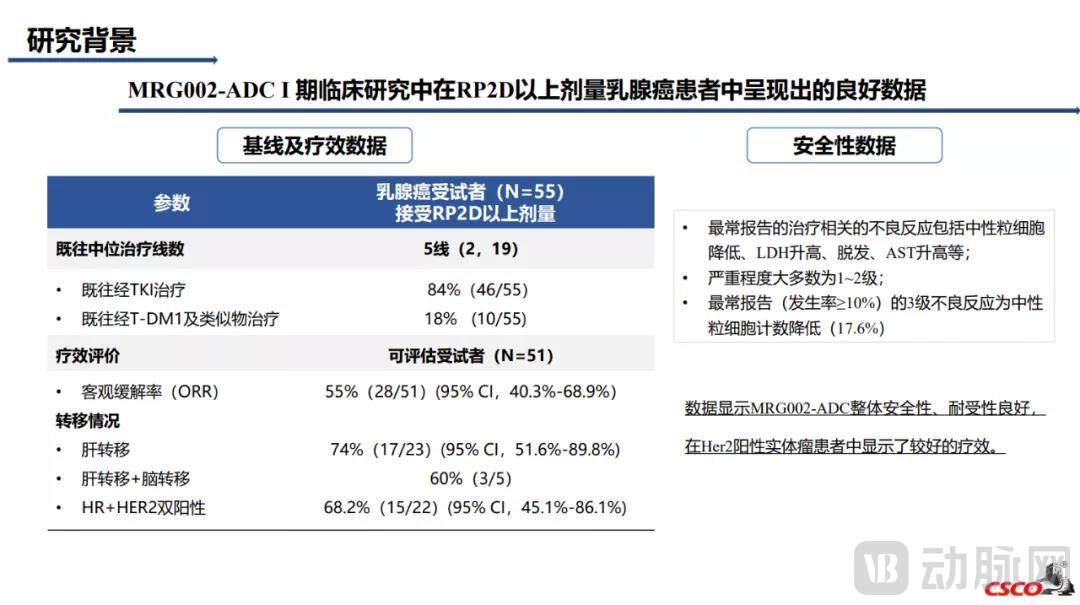
In this context, Professor Jiang Zefei reviewed the efficacy of MRG002 in patients with HER2-positive breast cancer who had received multiple prior lines of therapy, as demonstrated in the Phase I clinical trial led by Professor Li Jin. As of September 15, 2021, among the 55 evaluable patients with HER2-positive breast cancer (median of 5 prior lines of therapy) enrolled in the Phase I study, those treated with MRG002 at doses above the recommended Phase 2 dose (RP2D; 2.6 mg/kg) achieved an objective response rate (ORR) of 55%. Favorable responses were observed across subgroups, including patients with liver metastases, liver and brain metastases, and hormone receptor (HR)-positive disease. The most common adverse event was neutropenia (17.6%), indicating a tolerable safety profile.
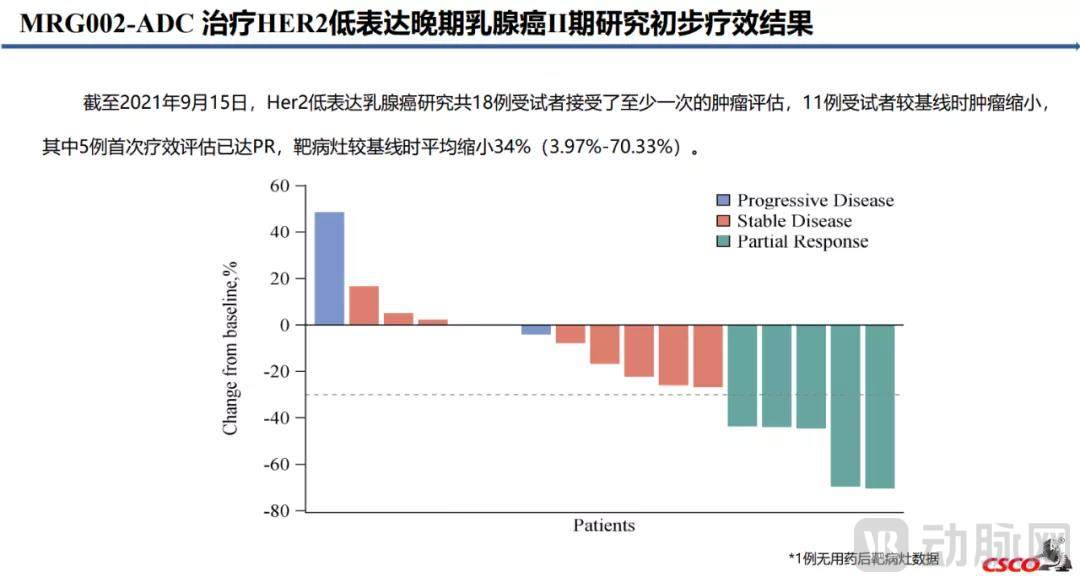
Subsequently, Professor Jiang Zefei presented the preliminary results of a multicenter Phase II study evaluating MRG002 in patients with HER2-low advanced breast cancer. Led by the Fifth Medical Center of the Chinese PLA General Hospital, the study involved 17 institutions across China. It planned to enroll 56 patients with HER2-low breast cancer who had experienced failure of prior standard first-line therapy, administering MRG002 at a dose of 2.6 mg/kg every three weeks (Q3W). Efficacy was assessed every two treatment cycles. The primary endpoint was objective response rate (ORR), and the secondary endpoints included progression-free survival (PFS), duration of response (DOR), disease control rate (DCR), overall survival (OS), and safety.
As of September 15, 2021, a total of 39 patients were enrolled, including 38 (97%) with HER2 1+ expression and 33 (85%) who were hormone receptor (HR)-positive; all had previously received chemotherapy. In terms of efficacy, among the 18 evaluable patients, 5 achieved a partial response (PR) at the first efficacy assessment. Commenting on these results, Professor Jiang Zefei stated, “For patients with HER2-low expression, MRG002 has demonstrated promising preliminary efficacy.” Regarding safety, the profile observed in this study was similar to that of the Phase I trial, characterized by low toxicity and ease of management.
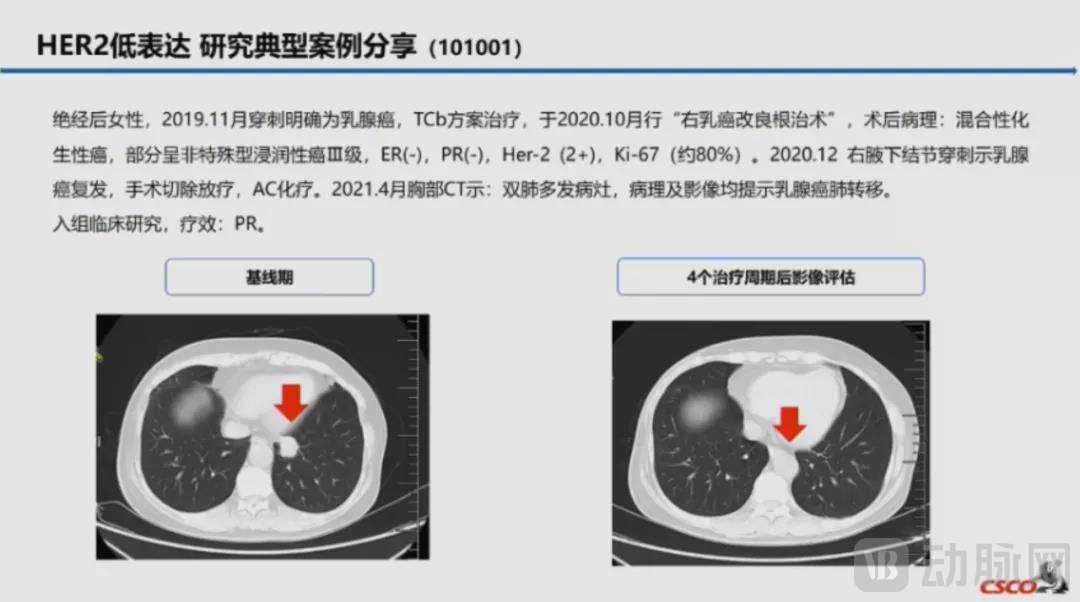
Subsequently, Professor Jiang Zefei shared a typical case from this study. The patient was a postmenopausal woman with HER2-low breast cancer who had previously undergone neoadjuvant TCb therapy, surgery, radiotherapy, and AC chemotherapy, yet still presented with lung metastases. Imaging evaluation after four cycles of MRG002 treatment demonstrated a favorable response, with regression of the metastatic lesions.
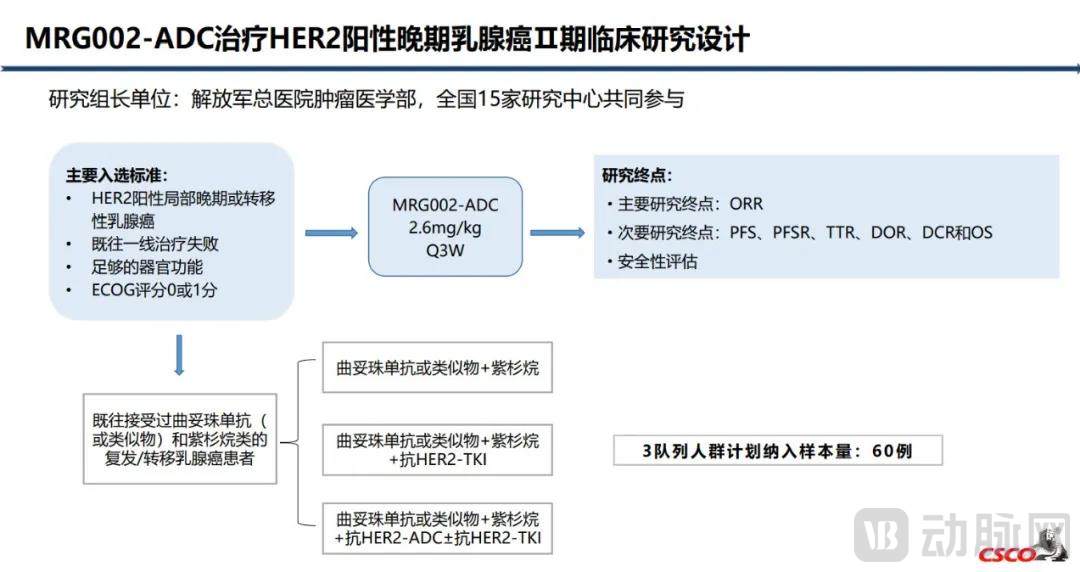
Furthermore, Professor Jiang Zefei also presented the design and enrolled patient efficacy data of another multicenter Phase II study on MRG002 for the treatment of HER2-positive advanced breast cancer, which he leads. The Chinese PLA General Hospital’s Department of Oncology served as the lead site, with a total of 16 centers across China participating. The study administered MRG002 at a dose of 2.6 mg/kg every three weeks (Q3W) to patients with HER2-positive advanced breast cancer who had failed prior therapies. Patients were stratified into three cohorts: those who had failed prior trastuzumab or similar agents; those who had failed prior trastuzumab or similar agents plus tyrosine kinase inhibitors (TKIs); and those who had failed prior trastuzumab or similar agents plus antibody-drug conjugates (ADCs), with or without TKIs. The study planned to enroll 60 patients. The primary endpoint was objective response rate (ORR), and the secondary endpoints included progression-free survival (PFS), PFS rate (PFSR), time to response (TTR), duration of response (DOR), and safety.
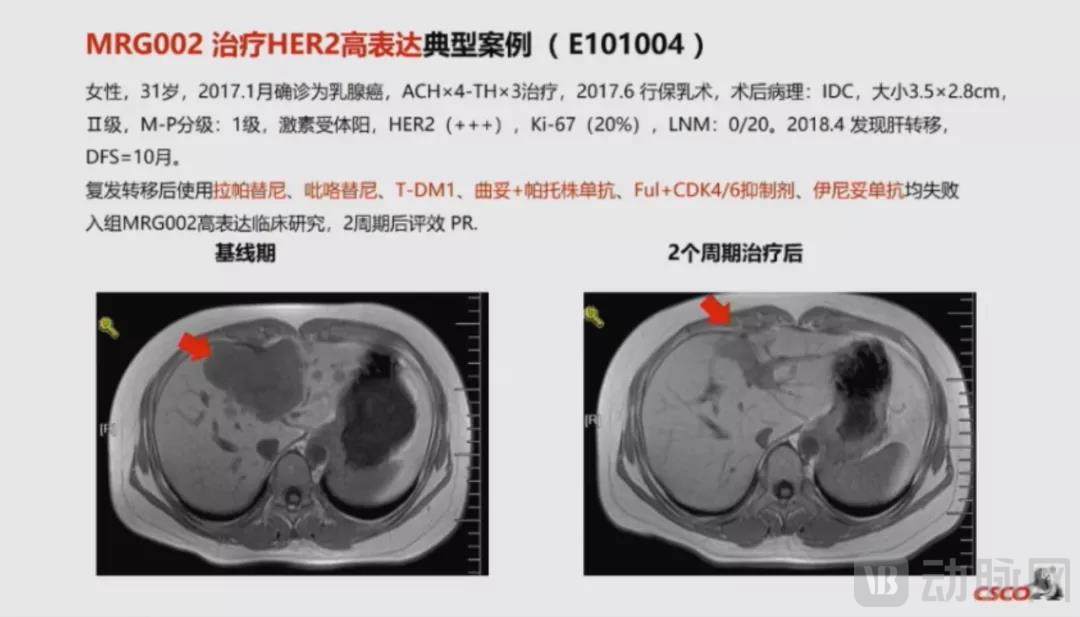
In this study, a 31-year-old patient with HR-positive, HER2-positive advanced breast cancer and liver metastases was enrolled after failing treatments with lapatinib, pyrotinib, T-DM1, trastuzumab plus pertuzumab, fulvestrant plus a CDK4/6 inhibitor, and inetetamab. After two cycles of treatment with MRG002, the lesions showed significant regression, achieving a partial response (PR).
Finally, Professor Jiang Zefei stated that based on the above two studies, MRG002 has initially demonstrated efficacy in patients with HER2-low expression, and there is even greater anticipation for its efficacy results in patients with HER2-high expression. Professor Jiang expressed gratitude to the participating institutions, investigators, patients, and their families for their contributions, and expressed hope that Phase III clinical trials will be initiated immediately after the completion of Phase II clinical trials, so as to provide patients with more and better clinical options at the earliest possible time.
Outside the CSCO Innovation Special Session, Professor Jiang Zefei affirmed the preliminary performance of MRG002 in an interview with Oncology Frontier reporters: “The data on HER2-low expression have been encouraging so far, demonstrating favorable efficacy and safety even after multiple lines of prior therapy. There are also cases of patients with HER2-high expression who achieved good therapeutic outcomes after failing multiple lines of treatment.”
Professor Jiang Zefei further pointed out that MRG002, as an innovative antibody-drug conjugate (ADC), owes its innovation to its novel design. The design of ADCs presents unique challenges: if the cytotoxic payload is too potent, it becomes intolerable for patients; if it is too weak, it fails to achieve therapeutic efficacy. Similarly, if the linker is too stable, the cytotoxic drug cannot be released effectively; if it is too labile, premature release may occur. Due to these challenges, many early ADC development programs failed. Professor Jiang expressed hope that the current wave of ADC research will identify the correct direction, thereby adding another powerful tool to the clinical arsenal.
The Chinese Society of Clinical Oncology (CSCO) has long been committed to disseminating industry policy information and tracking progress in new drug development, thereby facilitating the advancement of novel therapeutics. To this end, CSCO established dedicated sessions for the Center for Drug Evaluation (CDE) and for innovation. The release of the clinical study data on MRG002 at this platform garnered significant attention. Professor Jiang Zefei stated that, regarding the development of new drugs, first, the sustained collaboration between CSCO and CDE provides direction for R&D through insights shared by leaders of the Drug Evaluation Center on recent successes and failures in drug reviews, as well as interpretations of the supportive measures underlying newly issued policies. Second, the Innovation Session received over 100 research submissions this year, including nine reports on overseas advancements. By allowing researchers to disclose new targets, mechanisms, designs, and results of innovative drugs in advance, these sessions highlight progress in new drug development and bring fresh perspectives to clinical practice.