

SmartLabs Files IPO Prospectus: Revolutionizing Drug Development with Lab-as-a-Service Platform

SmartLabs
Laboratory as a Service Provider
According to data from Qianzhan Industry Research Institute, the global pharmaceutical market size increased from approximately USD 1,105 billion in 2015 to USD 1,324.5 billion in 2019. Among this, the global biologics market size rose significantly from approximately USD 204.8 billion in 2015 to USD 286.4 billion in 2019, with a compound annual growth rate (CAGR) of 8.7%, outpacing the growth of the chemical drug market.
Innovative Drug R&D Is the Hottest Segment of the Global Pharmaceutical Market. As countries increasingly prioritize strengthening their new drug R&D capabilities, policy environments improve, patient populations remain vast, and therapeutic technologies advance, global enthusiasm for innovative drug research and development has reached a fever pitch.
In terms of clinical trial applications, the U.S. FDA has received more than 300 investigational new drug (IND) applications annually over the past five years, with the number surging from 344 in 2014 to 618 in 2019. The Center for Drug Evaluation (CDE) under China’s National Medical Products Administration has also seen a substantial increase in its review volume of IND applications since 2014, rising from 494 in 2014 to 983 in 2019, nearly doubling.
Regarding new drug approvals, the FDA approved 48 new drugs in 2019, while the NMPA approved 56 new drugs, including 13 domestically produced ones. In 2020, the FDA approved 53 new drugs, and the NMPA approved 53 innovative drugs, including 21 domestically produced ones—the highest number on record.
On the other hand, protracted R&D cycles, persistently high R&D investment, and declining success rates have become unavoidable challenges in the field of new drug development.
It takes over a decade for a drug to go from project initiation to successful market launch, requiring substantial investments in human resources, materials, and capital, while also facing an extremely high risk of R&D failure.
The Eroom’s Law in New Drug Development Is Becoming Increasingly Prominent. BIO, one of the world’s largest biotechnology industry organizations, analyzed 12,728 transitional-stage projects among 9,704 drug clinical development programs from 2011 to 2020. It found that the average success rate for drug development projects from Phase I clinical trials to obtaining U.S. FDA approval for market launch was 7.9%, with an average timeframe of 10.5 years.
The long development cycles, high capital requirements, and elevated risks associated with innovative drug R&D have dampened investor enthusiasm, thereby reducing the R&D motivation of innovative pharmaceutical companies to some extent and hindering the accelerated development of the innovative drug research sector.
To help pharmaceutical companies shorten R&D cycles, reduce investment, and improve the success rate of drug development, CRO services and AI-driven new drug discovery solutions have emerged. Driven by factors such as rising drug development costs and sustained growth in medical demand, the sectors of pharmaceutical CROs and AI-powered drug discovery have become prime areas for high-growth opportunities.
Beyond the highly sought-after sectors of pharmaceutical CROs and AI-driven drug discovery, are there more solutions? SmartLabs provides the answer—Laboratory as a Service (LaaS), also known as shared laboratories for drug development.
Hardware, software, and operations are key factors influencing the efficiency and success rate of new drug development.
In terms of hardware, the early stages of drug development require significant capital investment in large, specialized laboratories and a wide array of high-end instruments and equipment. However, constructing such large-scale laboratories takes several years and substantial funding, while high-end instruments often come with hefty price tags, posing a major financial burden for startups and small pharmaceutical companies with limited cash reserves.
In terms of software, the pharmaceutical industry previously had a low level of digitalization, leading to numerous issues in laboratories such as extensive paper-based records, information silos, lack of traceability, and poor compliance. The use of big data, artificial intelligence, and digital technologies for efficient project management and improved drug R&D efficiency has been widely accepted by the industry.
From an operational perspective, in addition to drug development, scientists must also handle compliance, waste management, logistics, and laboratory safety. This stretches them thin, making it difficult to concentrate on R&D and thereby compromising research efficiency.
SmartLabs co-founder Amrit Chaudhuri has extensive experience in the biopharmaceutical industry. He founded the CRO company Advanced Peptides in 2007 and participated in multiple FDA clinical trials. His rich experience enabled Amrit Chaudhuri to keenly identify pain points in pharmaceutical R&D.
Amrit Chaudhuri has noted that the global biomedical industry is undergoing rapid development. With technological advancements, the pace of biomedical research has accelerated significantly: vaccine development timelines have been reduced from years to mere months, and gene sequencing time has shrunk from days to hours. However, the cost and efficiency of drug development have yet to see substantial optimization.
Thus, in 2015, Amrit Chaudhuri founded SmartLabs in Boston, USA, providing shared laboratory spaces for pharmaceutical companies to meet their hardware, software, and operational needs in drug R&D.
Shared laboratories for drug development refer to facilities where pharmaceutical companies are not required to build their own labs or purchase equipment. Instead, these shared laboratories provide customized experimental spaces and testing instruments, and even offer one-stop services including policy application assistance, financing support, and operational management, thereby helping pharmaceutical companies improve R&D efficiency and reduce costs.
Why Choose Boston as the Company’s Headquarters? Amrit Chaudhuri Has His Own Considerations. Since the 1970s, Boston’s biopharmaceutical industry has grown into the world’s largest hub for biopharmaceutical innovation. In the annual U.S. Life Sciences Cluster Rankings published by JLL, Boston has consistently ranked first.
Nineteen of the world’s top 20 biotechnology and pharmaceutical companies have a presence in Boston, where a large number of startup pharmaceutical firms are established each year, creating substantial demand for shared R&D laboratories.
In the following years, SmartLabs established its foothold in Boston, targeting the most active regions for biopharmaceutical R&D in the United States, and gradually expanded into the Greater Boston area and the San Francisco Bay Area in California.
The Greater Boston area, jointly established by the mayors of Boston, Braintree, Cambridge, Quincy, and Somerville in 2014 and known as the “Life Sciences Corridor,” is currently home to the world’s largest cluster of life sciences and biotechnology companies, with 450 leading healthcare firms.
The San Francisco Bay Area in California is the second-largest biopharmaceutical industry cluster after Boston, home to nearly 24% of the nation’s biopharmaceutical companies, and plays a significant supporting and leading role in the development of the U.S. biopharmaceutical industry. Silicon Valley, a world-renowned high-tech R&D hub, is located in the southern part of the Bay Area.
Currently, SmartLabs has established four shared laboratories in the Greater Boston area and one shared laboratory in the San Francisco Bay Area of California.
SmartLabs boasts laboratory facilities covering the entire drug R&D process, including new drug screening, safety assessment, and clinical trials. Capable of accommodating teams ranging from fewer than 10 to over 100 members, it provides pharmaceutical companies with comprehensive, diverse, and high-quality shared laboratory and office services.
SmartLabs flexibly customizes personalized and diverse laboratories based on the actual R&D needs of pharmaceutical companies. While traditional laboratory construction typically takes several years, SmartLabs can complete deployment within 2–4 weeks.
Meanwhile, with the rapid development of IoT and AI technologies, SmartLabs has independently developed SmartLabs OS, an intelligent laboratory operation management system based on a cloud platform, to better manage laboratories and resources, ensuring R&D quality and efficiency. SmartLabs OS can also predict potential needs and issues in drug development, providing enhanced security measures to safeguard data integrity.
Furthermore, SmartLabs serves as a “steward,” bringing together experts in GxP compliance, environmental health and safety, waste management, information technology, laboratory design, project management, laboratory operations, safety, logistics, and facility management to help scientists handle mundane operational tasks, allowing them to focus on drug research and development.
By providing pharmaceutical companies with comprehensive hardware, software, and operational services, SmartLabs helps them save millions of dollars in costs while increasing drug R&D productivity by more than tenfold. This enables the delivery of equivalent service levels at a faster pace, thereby accelerating drug development, shortening time-to-market, and ensuring the safety and efficacy of pharmaceutical products.
Currently, approximately 40 biopharmaceutical companies are housed at SmartLabs, including renowned enterprises such as Mitsubishi Tanabe Pharma Corporation, Cue Biopharma, Blue Rock Therapeutics, MITSUBISHI, and Sana Biotechnology. With the support of SmartLabs, Mitsubishi Tanabe has established a neuroscience drug R&D center in Boston, USA, dedicated to discovering innovative therapeutic targets for amyotrophic lateral sclerosis (ALS) and other central nervous system disorders.
SmartLabs has also garnered favor from multiple investment institutions, completing five rounds of financing with a total amount of $355 million. In September 2021, SmartLabs closed a $250 million Series B round led by ArrowMark Partners, with participation from Winslow Capital Management, Onex Falcon, Conversion Venture Capital, and Hill Capital.
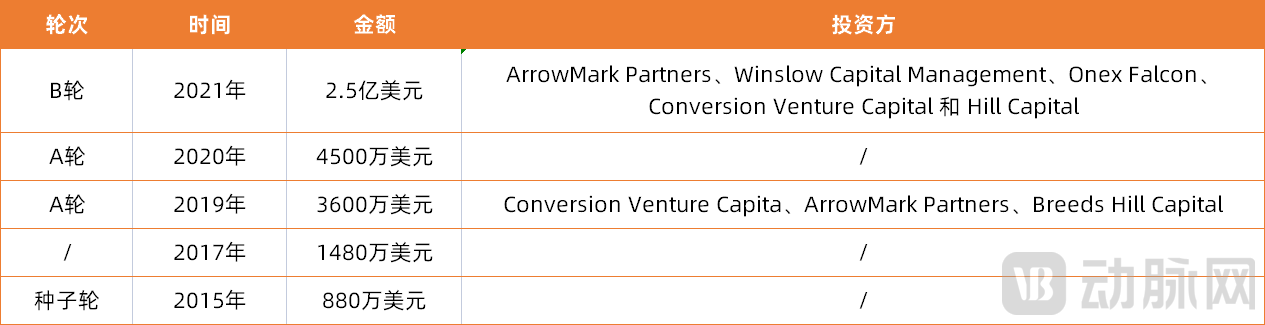
SmartLabs Funding Status
China is the world’s second-largest pharmaceutical market, after the United States.
Data shows that the market size of China's pharmaceutical industry increased from $182.2 billion in 2014 to $264.8 billion in 2020. In 2020, the market sizes for chemical drugs, traditional Chinese medicine, and biologics were $128.2 billion, $78.1 billion, and $58.5 billion, respectively.
As China places increasing emphasis on innovative drugs, the country’s drug R&D environment has improved, prompting many scientists to return home to launch startups and ushering in a wave of development in new drug research and development.
Data from the China Commercial Industry Research Institute shows that the number of domestic innovative drug applications in China is on an upward trend. In 2019, there were 12 applications for innovative chemical drugs and 37 for innovative biological products. The number of clinical trial projects for innovative drugs in China increased from 3,367 in 2016 to 13,862 in 2020, representing a compound annual growth rate (CAGR) of 42.4% from 2016 to 2020.
The continuously expanding innovative drug R&D market has spurred Chinese pharmaceutical companies’ demand for shared drug development laboratories. Currently, the most representative shared laboratories in China are BioBAY Labs and ATLATL Innovation Center (ATLATL Accelerator).
SmartLabs
Originating in Boston, SmartLabs not only provides space and capital services but also features a comprehensive suite of multi-functional laboratories, including fully equipped core shared labs, molecular biology labs, cell culture labs, and imaging platforms. These facilities support experimental requirements across multidisciplinary fields such as molecular biology, biochemistry, and cell biology. Companies can select the necessary instruments and laboratory space according to their specific needs, enabling an industrially customized Lab-as-a-Service (LaaS) model.
Meanwhile, Nest Biosciences boasts a professional operations team with laboratory expertise, providing tenant companies with specialized lab equipment, customizable laboratories, one-stop corporate settlement services, as well as premium resources and investment opportunities through its global ecosystem network.
Since its establishment, SmartLabs has established a presence in four regions across three countries worldwide, with over 8,500 square meters of laboratory and office space. To date, 50 companies have joined the global SmartLabs platform, and these tenant companies secured a cumulative total of $580 million in financing in 2019.
ATLATL Innovation R&D Center
ATLATL is headquartered in Zhangjiang, the core science city of Shanghai. As a global hub for the biopharmaceutical R&D service supply chain, Zhangjiang leverages its strategic position in the Yangtze River Delta to empower ATLATL’s development.
ATLATL has gradually evolved into an integrated innovation hub for life and health technology, combining R&D centers, accelerated translation, and early-stage incubation. It comprises five core sectors: shared laboratories, specialized central laboratories, R&D assembly systems, R&D collaborations, and source innovation. Currently, ATLATL serves over 100 innovative enterprises.
As the global pharmaceutical market and the innovative drug R&D market expand rapidly, the industrialization of biopharmaceuticals is accelerating, with a pronounced trend toward consolidation. In the future, specialization within the biopharmaceutical industry will become increasingly refined, and the niche market for shared drug R&D laboratories will experience rapid growth. Seeking collaborations with shared laboratories is poised to become the preferred approach for startups engaged in drug development.