

Exo Imaging Files for IPO: Aiming to Revolutionize Point-of-Care Ultrasound with AI-Powered Handheld Platform

Exo
High-Performance Handheld Ultrasound Platform and AI Developer
In 2008, GE Healthcare launched its first-generation handheld ultrasound device, the Vscan 1.0, in the United States, causing a sensation. It was subsequently named one of “The 50 Best Inventions of 2009” by U.S. Time magazine and one of “The 100 Best Scientific Achievements of 2010” by the renowned popular science magazine Popular Science.
Although the device’s market performance at the time was less than satisfactory, it is undeniable that, thanks to the portability of handheld ultrasound and its powerful features—such as real-time compound imaging and automated scanning—it can acquire high-quality images even in challenging cases. This enables physicians to obtain diagnostic information more easily and rapidly, fundamentally improving both the diagnostic workflow and the manner in which patient care is delivered.
Over the subsequent decade, an increasing number of medical device giants and innovative startups have entered the emerging blue-ocean market of handheld ultrasound, while investors have continued to ramp up their commitments.
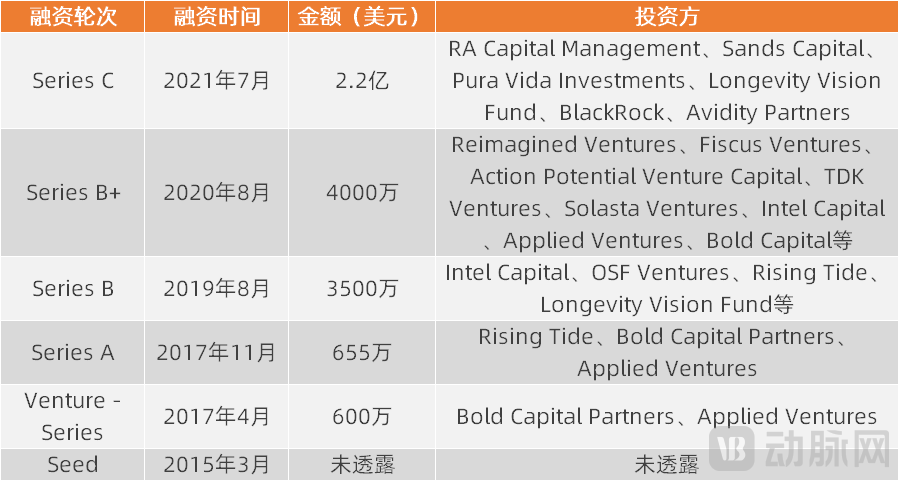
It is reported that in July this year, Exo Imaging (“Exo”), a medical technology startup developing portable ultrasound devices and an accompanying AI-driven cloud platform, announced the completion of a $220 million Series C financing round. Since then, Exo’s total funding has exceeded RMB 2 billion, with investors including prominent firms such as Intel Capital.
In 2000, Corning Incorporated of the United States acquired IntelliSense, the developer of the world’s first commercial software suite for MEMS (Micro-Electro-Mechanical Systems), for $750 million. Following the acquisition, Sandeep Akkaraju, who had served as head of IntelliSense’s hardware division, opted to backpack across Africa. It was this journey that ultimately spurred the founding of Exo.
Africa, the world’s second-largest continent, has a total population of nearly 1.3 billion, growing at an annual rate of over 2%. As the continent with the highest concentration of developing countries, where industrialization and urbanization are still in their early stages, Africa is also hailed as the “Continent of Hope.” At the same time, however, healthcare standards in most parts of Africa still have significant room for improvement.
This journey across Africa made Sandeep Akkaraju realize how the lack of medical equipment allows numerous treatable and preventable diseases to progress into difficult-to-cure conditions, thereby affecting the overall healthcare standards in the region. This experience further reignited his vision of leveraging technology to transform healthcare.
After concluding his trip to Africa, Sandeep Akkaraju, together with his partners, reacquired IntelliSense from Corning Incorporated and assumed the role of CEO. He later founded Jyve, an AR sensor company, in 2008 (which has since been acquired by the semiconductor company Fairchild Semiconductor). Indeed, Sandeep Akkaraju’s entrepreneurial journey has never ceased.
Throughout his entrepreneurial journey, Sandeep Akkaraju gradually connected with Janusz Bryzek (now Chairman of the Board at Exo), Yusuf Haque (now CTO of Exo), and John Kokulis, among others, and co-founded Exo in 2015.
According to WHO data, two-thirds of the world’s population lacks access to medical imaging services, and most patients in the remaining one-third must wait weeks or even months to obtain medical scanning services and diagnostic results.
Taking ultrasound examination as an example, traditional large-scale ultrasound equipment suffers from drawbacks such as bulky size, heaviness, lack of portability, and high cost. For hospitals, procuring large ultrasound systems involves significant expenditure and requires training for specialized physicians. For patients, usage scenarios are limited; examinations must be conducted in dedicated departments, typically requiring advance appointments or queuing, which makes the process relatively cumbersome.
Portable ultrasound devices are well-positioned to address these limitations. First, the portability and ease of use of handheld ultrasound systems can significantly improve diagnostic efficiency, facilitating their integration into clinical departments and deployment at primary care levels. Second, handheld ultrasound devices also offer substantial cost advantages.
Exo was established to enhance the accessibility of high-quality medical diagnostic services. As a technology-driven company, Exo prioritizes its technical foundation as a core driver of growth, which constitutes its key competitive advantage.
Dr. Janusz Bryzek, Co-founder and Chairman of the Board of Exo, earned his Master’s and Ph.D. degrees in Electrical Engineering from the Warsaw University of Technology in Poland. He co-founded 11 Silicon Valley MEMS companies, with products including MEMS sensors (pressure, acceleration, gyroscopes), MEMS microstructures (mirrors), sensor-based systems-on-chip (wireless pressure sensors, motion sensors with embedded sensor fusion), and systems (optical switches, medical ultrasound imagers). He has also served as an advisor or board member for more than 40 startups.
Co-Founder & CTO Dr. Yusuf Haque holds 35 patents and has previously worked at companies such as SliceX/Crest and Maxim, where he gained extensive experience in the design and development of digital X-ray imaging chips and related products, contributing to the commercialization of more than 30 integrated circuits. Additionally, he served at the Institute of Electrical and Electronics Engineers (IEEE) for 20 years and holds a Ph.D. in Electrical Engineering from Carleton University and a Master’s degree from Santa Clara University.

From left to right: Sandeep Akkaraju, Janusz Bryzek, Yusuf Haque
The rest of Exo’s core team members are mostly from multinational corporations such as Apple, Google, GE, and Medtronic. They not only provide support in the development of innovative ultrasound technology but also have experience in promoting products to the market.
Since its inception, Exo’s mission has been to equip every healthcare worker and clinician with diagnostic-grade medical imaging devices, fundamentally transforming the affordability, accessibility, and availability of high-quality medical imaging and therapeutic equipment.
Over time, Exo envisions that handheld ultrasound devices will become accessible to ordinary consumers; therefore, achieving both high performance and low cost represents the primary challenge facing the team.
In the early stages, leveraging the team’s extensive R&D experience in capacitive sensors, Exo chose to explore capacitive MEMS ultrasonic transducer (CMUT) technology, which integrates MEMS and ASIC onto a single chip. Although CMUT technology was developed three decades ago, it has only been applied to handheld ultrasound devices in recent years. Butterfly Network, a benchmark company in this field, utilized CMUT technology to achieve miniaturization of ultrasound equipment, fundamentally transforming the design philosophy of ultrasound products.
However, during R&D, the Exo team identified certain drawbacks of CMUTs compared to traditional PZT transducers. Consequently, they shifted their development focus to piezoelectric MEMS ultrasonic transducers (PMUTs) and developed Cello, an integrated, manufacturable PMUT transducer designed for medical imaging applications. This breakthrough technology not only represents the most significant technical challenge Exo has overcome to date but also stands as the only one of its kind in its category.
It is understood that Cello comprises 4,096 transducers. The adopted PMUT technology represents a high-efficiency transducer architecture that not only overcomes the spectral limitations of piezoelectric crystal-based transducers in traditional point-of-care ultrasound devices—enabling a single probe to replace multiple conventional probes—but also combines the advantages of CMUT and traditional PZT transducers, such as low cost, high acoustic power, stability, linearity, and wideband operation. Additionally, it offers further benefits including low operating voltage.
Leveraging this technology, the Exo handheld ultrasound device can be directly used for imaging of whole-body tissue structures, providing clear visualization of the vascular system and musculoskeletal features. Furthermore, by integrating 3D acoustic beams, microwave beams, and high-speed computing, Cello is capable of acquiring and slicing 3D volumetric images, thereby making the imaging process more intuitive.
Thanks to its robust underlying technology, Exo’s handheld ultrasound device is suitable for patients with specific physical conditions (such as obesity or overweight), who are typically difficult to examine using conventional handheld ultrasound devices.
At this stage, Exo is collaborating with hospitals to conduct clinical trials while actively advancing the FDA approval process for its handheld ultrasound devices. Meanwhile, to facilitate subsequent commercialization, Exo successfully established a global supply chain in 2020 to ensure broad market distribution.
Sandeep Akkaraju has publicly stated that Exo’s vision is to build a healthcare system unbound by physical barriers, with every decision prioritizing decentralized healthcare; accordingly, Exo’s hardware and software are co-designed.
To optimize ultrasound workflows, Exo has launched Exo Work, an intelligent and intuitive point-of-care ultrasound workflow solution designed for the entire healthcare system, enabling seamless integration in settings such as emergency departments and clinics.
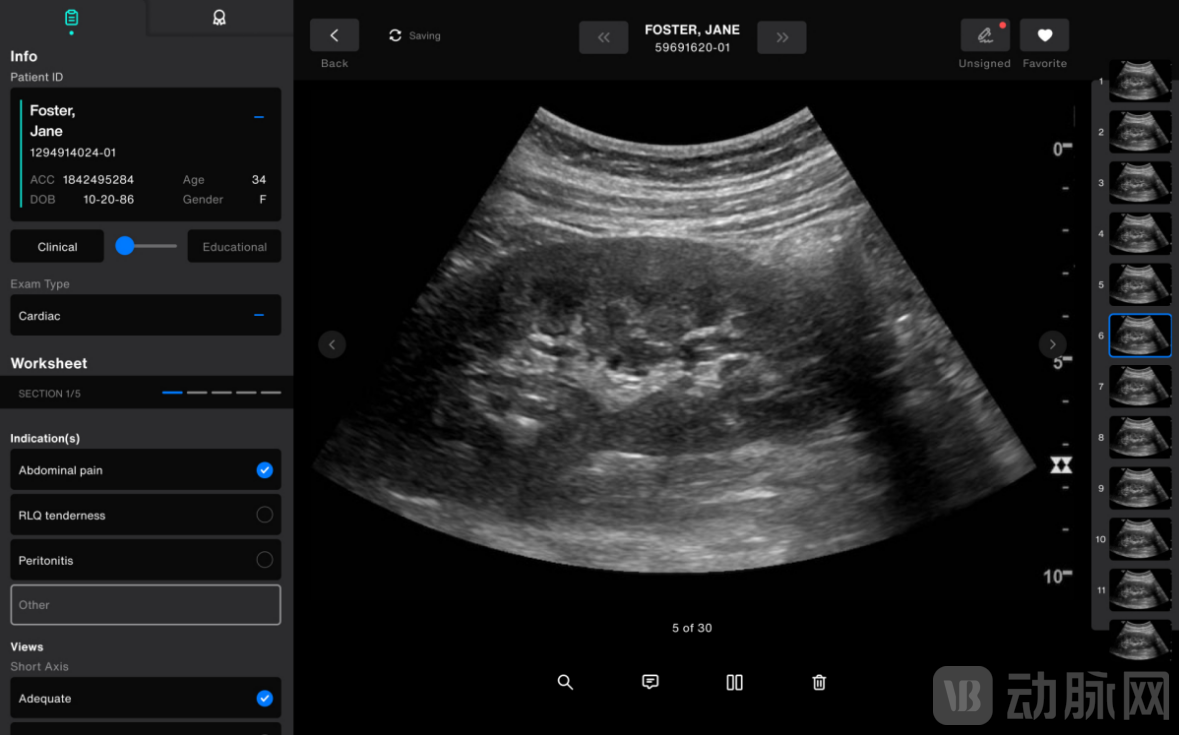
It is reported that Exo Work can complete case screening, archiving, and billing within 60 seconds, resolving workflow challenges that have persisted for decades.
Moreover, the software is compatible with nearly all bedside ultrasound devices and can be safely integrated into hospital EMR and PACS systems to facilitate imaging and communication; this connectivity ultimately enables interactive operations.
More importantly, Exo Work’s remote quality assurance enables patients to undergo ultrasound scans via telemedicine, using the probe at home under the remote guidance of experienced healthcare professionals.
With the rapid advancement of AI technology, various scenario-based applications are permeating every aspect of daily life, and the healthcare industry is no exception.
In recent years, in addition to the emergence of compact and portable handheld ultrasound devices derived from traditional bulky systems, ultrasound examination is also transitioning from experience-driven practice to intelligent diagnosis.
AI-powered ultrasound is also a key direction for Exo’s future product development. This approach not only provides healthcare professionals with better real-time training and guidance to obtain diagnostically compliant, high-quality images, but also assists them in image processing. Furthermore, Exo plans to establish a real-time imaging platform that can support surgical robots or endoscopic procedures, as well as non-invasive neuromodulation and drug delivery systems.
To align with the company’s future development plans, Exo does not rule out accelerating business growth through mergers and acquisitions of AI-related products. Janusz Bryzek has also publicly stated that sensor products embedded with AI are potential acquisition targets.
Throughout the ultrasound sector, handheld ultrasound devices have carved out a substantial market, driven by advantages such as broad applicability and ease of operation. Currently, more than a hundred companies worldwide have entered the handheld ultrasound arena. This group includes industry leaders such as GPS (GE Healthcare, Philips, and Siemens Healthineers), but the majority of participants and technological innovators are startups. In this field, Chinese companies are largely on par with their international counterparts.
In August 2016, China’s first handheld ultrasound device (manufactured by Langsheng Technology) was officially introduced for clinical use. Subsequently, Sonostar and Suzhou Scott also received regulatory approval.
With the continuous rise of primary healthcare in China, hospital outpatient services are increasingly shifting toward primary care settings, making grassroots medical institutions one of the main application scenarios for small, non-invasive diagnostic devices. According to data from the Statistical Information Center of the National Health Commission, as of the end of November 2020, there were 1.031 million medical and health institutions nationwide, including 978,000 primary healthcare institutions—an increase of nearly 20,000 compared to the end of November 2019. This trend highlights the substantial market potential for handheld ultrasound devices in the future.
From a policy perspective, the development of handheld ultrasound has continued to receive favorable support. In 2016, handheld ultrasound devices were included in the National Key R&D Program of the “13th Five-Year Plan” released by the Ministry of Science and Technology. In 2017, the General Office of the Communist Party of China Central Committee and the General Office of the State Council issued the “Opinions on Deepening the Reform of the Review and Approval System to Encourage Innovation in Drugs and Medical Devices,” encouraging innovation in domestically produced medical devices.
Driven by both policy and market forces, China’s handheld ultrasound market is flourishing, with a number of high-quality companies emerging, such as Sontek, U-Tech, Deepwise Technology, and Vinno.
Like Butterfly, StoCo also integrates its underlying platform algorithms and artificial intelligence algorithms into ASIC chips. Leveraging the embedded intelligent diagnostic module, it moves routine ultrasound applications out of single imaging departments and into various clinical departments, significantly expanding usage scenarios and market scale. This approach enables more precise diagnoses while minimizing reliance on high-level expert experience, making it highly conducive to promotion at the primary care level.
U-Tech’s MU3C, a fully digital handheld ultrasound diagnostic system developed by the company specializing in portable smart ultrasound imaging equipment, is China’s first handheld ultrasound visualizer.
In the field of AI-enabled handheld ultrasound, global players such as Australia’s Signostics and the U.S.’s Butterfly Network, along with Chinese companies including Deepwise Technology, Langsheng Technology, and Siduoke, have all established a presence, demonstrating that domestic enterprises are keeping pace with their international counterparts.
Taking Deepwise Technology as an example, through extensive training with high-quality data and distributed computing power, Deepwise has overcome the technical barriers of high computational demand and real-time performance associated with integrating AI into handheld ultrasound devices. This has addressed the pain points of real-time dynamic imaging, and the company has made the independent development of intelligent, miniaturized AI-enabled devices one of its key future development strategies.
With its ease of use, intelligent features, and effectiveness in reducing healthcare costs, handheld ultrasound devices are poised to become the true stethoscope for healthcare professionals in the future.