

From Autism Parent to Healthcare Entrepreneur: Zhang Zhiguang and the ALSOLIFE Journey
Over the nearly five years since its establishment, ALSOLIFE has established eight offline intervention centers for children with autism in Beijing, Zhengzhou, Xi’an, Tianjin, Nanjing, Chengdu, and other cities. Meanwhile, it has built the largest parent community in China’s autism sector online, boasting more than 180 fully subscribed WeChat groups. Its free online assessment system has provided multi-domain assessments and customized individualized training plans for special-needs children to 270,000 families affected by autism across China.
As the founder and CEO of ALSOLIFE, Zhang Zhiguang downplayed these achievements during his face-to-face interview with the reporter, focusing instead on using the opportunity to educate us about autism. He joked that in recent years, he has had to repeat the same set of talking points to everyone associated with the company—explaining what autism is and how it is treated. “If even one sentence sinks in, that’s a good thing. When they encounter a child with autism in their circle, they will think of reaching out to me, allowing ALSOLIFE to help parents of children with autism find the shortest path to rehabilitation.”
Six years ago, Zhang Zhiguang’s life hit its darkest hour when his two-year-old son, Paopao, was diagnosed with autism. After gaining a thorough understanding of the condition and personally experiencing the industry’s pain points from a parent’s perspective, Zhang made a pivotal decision:Starting a business by addressing the pain points in autism rehabilitation.
Perhaps at that time, he did not anticipate that a single decision would not only alter the trajectory of his own life but also leverage a pivotal point to reshape the landscape of the autism industry. Like the tip of an iceberg, five years later, the application of digital health in autism rehabilitation gradually came to light.
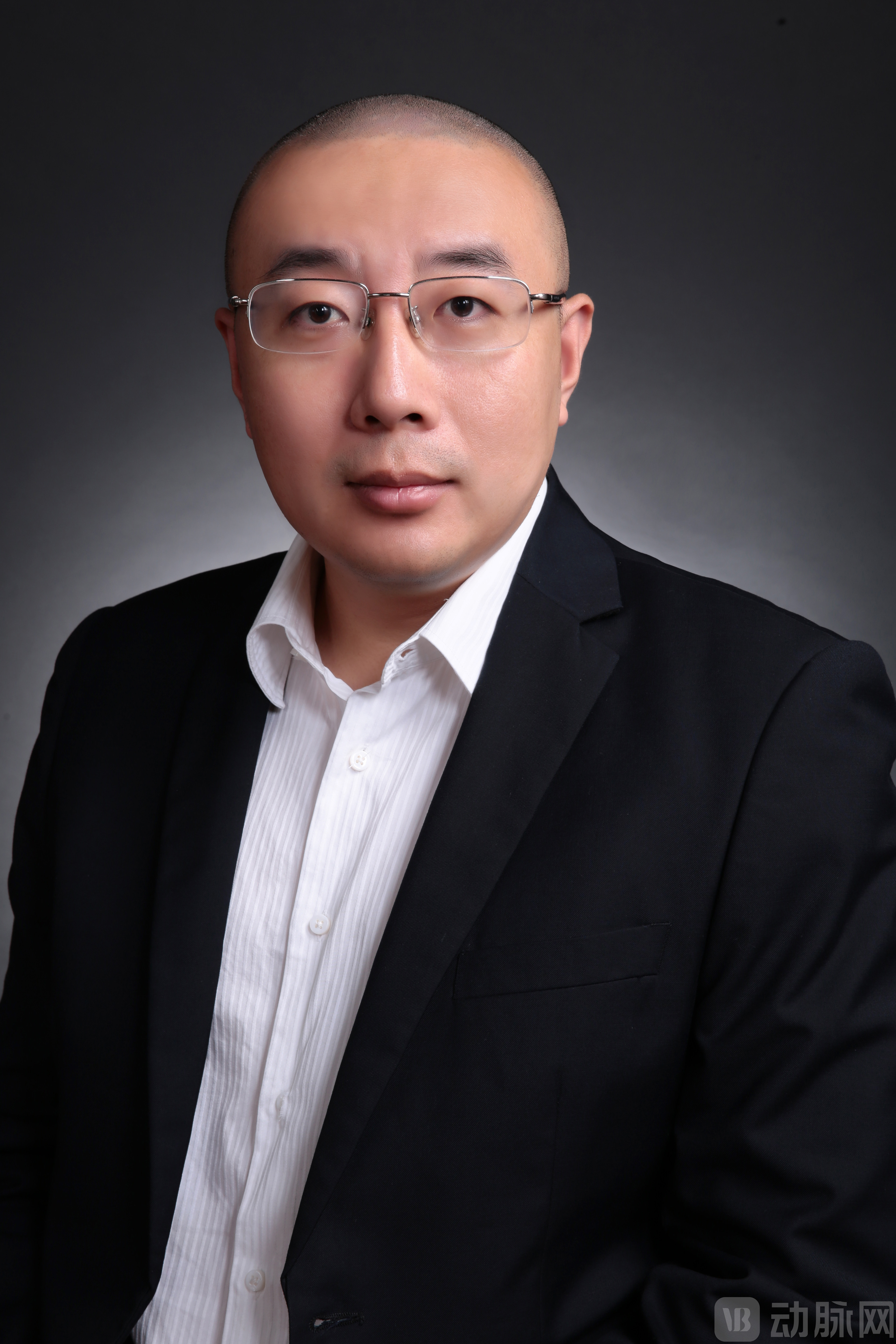
Zhang Zhiguang, Founder of ALSOLIFE
Back in 2013, Zhang Zhiguang’s family welcomed a new member, Paopao, with great joy and emotion. When his son was one year old, Zhang began strategically planning for his child’s future education, following WeChat official accounts focused on parenting by highly educated parents, and becoming thoroughly familiar with schools in Beijing.
However, Zhang Zhiguang gradually noticed that his two-year-old son showed no response to instructions from family members, despite having no hearing problems. Meanwhile, compared with typical children, his cognitive development also exhibited deviations. The couple promptly took their child for medical evaluation.
In June 2015, two-year-old Paopao was diagnosed with autism spectrum disorder (ASD). Autism is referred to as “mental cancer,” and what makes it even more despairing than cancer is that its etiology remains unknown and there is no cure; management relies solely on behavioral interventions.
“If we compare a person to a computer, then the computer of a child with autism is born without a keyboard or a graphics card; it can neither receive information from the outside world nor express its own emotions to others,” said Zhang Zhiguang.
Although there is no cure, whether early intervention is implemented is crucial to determining how well children with autism can integrate into society. Professor Zou Xiaobing, a renowned expert in the field of developmental disabilities, states that intervention for children with autism should begin no later than age three. The earlier children with autism receive rehabilitative training, the better the outcomes in terms of restoring activities of daily living and social interaction skills.
Adhering to the principle of “early detection, early diagnosis, and early intervention,” Zhang Zhiguang and his wife selected a rehabilitation facility on the second day after their child’s diagnosis. On the third day, his wife resigned from her job to devote herself full-time to caring for Paopao, and on the fourth day, the entire family relocated near the rehabilitation center to facilitate the child’s access to intervention services.
HoweverBehind the swift action lies the anxiety, fear, and unease in the hearts of parents of children with autism.. After the child’s diagnosis, Zhang Zhiguang, like all parents of affected children, endured two weeks of extreme anguish.
“I once read an article about a father who, upon learning that his daughter had been diagnosed with an extremely rare and incurable disease, walked out of the hospital. Although the sunlight was brilliant and the scenery exceptionally beautiful, he felt as chilled as if it were the depths of winter. During those two weeks, I truly came to understand that father’s feelings.”
What causes immense distress to parents of affected children is not only the lack of a cure for their condition, but also the numerous pain points prevalent within the industry.Zhang Zhiguang found that parents often felt lost when conducting home-based interventions for their children, unsure of how to proceed or where to begin.
Survey data indicate that autism spectrum disorder (ASD) has long exhibited epidemic trends in China, with a prevalence rate of 1%. However, the infrastructure within the ASD rehabilitation industry remains significantly underdeveloped. On one hand, there is a lack of assessment tools for evaluating the foundational skills of children with ASD, corresponding data are neither centralized nor comprehensive, and there is a severe shortage of both production tools and resources. On the other hand, there is a critical scarcity of qualified professionals capable of providing services to affected children; as of 2015, the number of registered Board Certified Behavior Analysts (BCBAs) in China was exceedingly small.
Zhang Zhiguang recalled, “At that time, we invited a well-known rehabilitation therapist in the industry to assess a child. One of her actions left a particularly deep impression on us—after the assessment, she needed to use a calculator to compute the scores. I asked her, ‘Can’t you use Excel?’ This illustrates that our entire industry remains at a very low, rudimentary level, rife with pain points and unresolved issues.”
In China, autism is characterized by a high prevalence rate, low public awareness, and a chaotic intervention market, leaving tens of thousands of families grappling with confusion. Believing that “behind every misfortune lies an equal measure of positive opportunity,” Zhang Zhiguang resolved to launch his own venture after his child was diagnosed with autism. Starting by addressing his own family’s challenges, he aims to improve the infrastructure of the autism care sector, break down information asymmetries within the industry, and safeguard these unique children—a testament to a father’s simple yet profound love for his child.
Starting a business is by no means easy, and going it alone presents numerous challenges. Fortunately, while engaging with the autism parent community, Zhang Zhiguang met Liu Daiyue and Chen Weijing, who were in similar circumstances. Each of them has a pair of twins with severe, classic, low-functioning autism. The three fathers, all with backgrounds in science and engineering, came together with a shared hope of addressing common industry challenges through rational, scientific solutions. They quickly hit it off and decided to join forces to rally stakeholders in this field and make a meaningful impact.
To ensure rehabilitation efficacy while reducing the overall cost of autism intervention, Zhang Zhiguang’s team identified the ALSO framework as the most suitable approach after extensive exploration. The ALSO framework is a novel intervention model for children with autism, proposed by Professor Guo Yanqing, an autism expert at Peking University Sixth Hospital.
ALSO Philosophy Emphasizes: Grounded in the Present, Looking to the Future.ALSO stands for A (Cognitive/Academic Skills), L (Life and Survival Skills), S (Social Rules Skills), and O (Occupational/Vocational Skills). It advocates considering the needs of children from the age of two or three through their twenties and thirties, and indeed their entire lifespan, with the ultimate goal of enabling them to live independently without interference. When designing instructional plans, it adheres to the principle that “current training must encompass future needs, and future goals must be practiced today.”
In 2017, Zhang Zhiguang’s team conducted preliminary research and studied the advantages and disadvantages of popular assessment tools for language, cognitive, and behavioral developmental milestones, such as VB-MAPP, PEP, and the Portage Guide. Based on the scientific principles of Applied Behavior Analysis (ABA), they operationalized and clinicalized the ALSO concept, resulting in aChina’s Independently Developed Rehabilitation Education System with Proprietary Intellectual Property Rights—The ALSOLIFE Online Assessment and Intervention System for Children with Special Needs.
ALSOLIFE pioneered an online intervention mechanism for children with autism, providing online assessments, targeted reports, personalized teaching plans, and home-based training guidance. Additionally, it established the ALSO·IN Offline Evidence-Based Center to deliver tailored rehabilitation programs for diverse families.
Founder Zhang Zhiguang previously worked in big data and intellectual property, which is why the “data-driven” gene is deeply rooted in ALSOLIFE.Since its inception, the company has cultivated a data-driven mindset, leveraging data for operational workflows and algorithm development to analyze and influence user behavior, thereby gradually establishing a dynamic database of information on individuals with autism.
Unlike typical entrepreneurs, Zhang Zhiguang is both the provider and the user of the product.When discussing this dual identity, Zhang Zhiguang stated, “First and foremost, we must not deceive ourselves. It is easy for product developers to fall into self-deception, failing to truly meet user needs. However, our unique position allows us to intuitively grasp the industry’s demands and identify products that align with those needs. All of our company’s products are first used by myself and the parents on our team; only after we have thoroughly evaluated their effectiveness do we set the pricing. Therefore, our understanding and insight into user needs may be more profound than that of other teams.”
Regarding intervention costs, Zhang Zhiguang cited data from the Report on the Current Status, Needs, and Support Resources for Families of Individuals with Autism in China: the average monthly expenditure on intervention for families of children with autism in China reaches RMB 6,950. Furthermore, 56% of these families require one parent to provide full-time companionship, placing even greater financial strain on household budgets.
As a parent of an affected child and the founder of a company,Zhang Zhiguang introduced that ALSOLIFE also has a unique culture, which isStrictly control the profit margins of all products, and firmly prohibit excessively high gross profit margins.“As members of this community, we are called upon to uphold a strong sense of responsibility. We aspire for ALSOLIFE to be an enterprise that delivers both innovative and social value.”
In addition to controlling product pricing, ALSOLIFE has never stopped its steps on the path of public welfare.Over the past five years, ALSOLIFE has launched a series of public welfare initiatives, including the “Fisherman Project” (a therapist training program), the “ALSO Twin Stars Family Public Welfare Program,” the special online micro-course series “Joining the Fight Against the Epidemic and Overcoming Difficulties,” and the “Star-Loving Partners Program.” It has also supported numerous “Aier Morning Star Project – Autism Care Campaign” public welfare events across China, benefiting over ten million individuals.
Currently, the ALSOLIFE team has grown from its initial “Three Musketeers” to a workforce of over 40 Applied Behavior Analysis (ABA) therapists. The ALSOLIFE Evidence-Based Center serves more than 350 individuals daily and has accumulated tens of millions of data records. The ALSOLIFE Assessment and Intervention Platform has already benefited 270,000 families affected by autism across China, steadily advancing toward its mission: “To help more families with children on the autism spectrum take firmer steps and endure less suffering during intervention, enabling these children to live and work independently without disruption in the future.”
In October 2019, ALSOLIFE met Dr. Qi Lu, a leading scientist in China’s technology sector, and stood out among 1,800 companies to become an incubatee of MiraclePlus, the investment and startup incubation firm founded by Dr. Lu. During their first meeting, Dr. Qi Lu and Zhang Zhiguang defined a development path for ALSOLIFE:From online to offline, and ultimately back to online.
It has become evident that ALSOLIFE has been consistently evolving along this trajectory. Initially, in response to parents’ fundamental need for knowledge on child assessment and intervention, ALSOLIFE established an online assessment and intervention system. Similarly, to meet the needs of parents seeking more professional and efficient intervention approaches for their children, ALSOLIFE incubated the ALSO·IN Evidence-Based Center. To further reduce intervention costs and enhance efficiency, ALSOLIFE has decided to refocus its efforts on digital therapeutics.
Zhang Zhiguang recalled, “At MiraclePlus, we usually refer to Dr. Qi Lu as ‘Qi’ or ‘Dr. Qi.’ Qi helps broaden our perspectives, encouraging us to observe the world with a broader vision; he patiently provides hands-on guidance in addressing every minor issue. If there is one key takeaway from our experience at MiraclePlus, it is that it has given us the courage to change the world and the confidence to believe that we can succeed.”
As ALSOLIFE gradually matured, it finally seized a real-world opportunity. In 2020, a “game-based therapy” was launched. EndeavorRx (AKL-T01), a digital therapeutic product developed by Akili Interactive Labs in the United States, received dual FDA and CE approvals, becoming the world’s first prescription software leveraging video games to treat attention-deficit/hyperactivity disorder (ADHD), major depressive disorder (MDD), and autism spectrum disorder (ASD).
Inspired by this, ALSOLIFE has decided to advance into the development of prescription-grade digital therapeutics for autism spectrum disorder, leveraging Applied Behavior Analysis (ABA) theory and carefully designed games to deliver behavioral interventions for affected children.Addressing the four major challenges of digital therapeutics—completeness of the theoretical framework, validity of clinical data, protection of intellectual property rights, and patient adherence—one by one,andSuccessfully developed a digital therapeutic for childhood autism.
Zhang Zhiguang succinctly summarized the development path of ALSOLIFE as follows: starting with online tools, then expanding to offline service provision, and ultimately returning to AI-driven automated services that replace manual labor. This is essentially a process of continuous efficiency improvement, evolving from light-asset to heavy-asset operations, and then back to light-asset models.
“However, the primary goal of digital therapeutics has never been to replace human intervention, but rather to integrate with it, achieving more efficient and optimal rehabilitation outcomes. We aim to help the industry reduce operational costs by up to 60% through digital therapeutics, which underscores the significance of the ALSOLIFE platform.”
Currently, ALSOLIFE has engaged in a series of research and survey collaborations with institutions including Peking University Sixth Hospital, the Peking University Institute for Neuroscience, the Institute of Psychology of the Chinese Academy of Sciences, the School of Basic Medical Sciences at Xi’an Jiaotong University, Microsoft Research Asia, the National Institute of Health Data Science at Peking University, and the College of Language Rehabilitation at Beijing Language and Culture University, thereby jointly strengthening the technical barriers of ALSOLIFE’s digital therapeutics.
In fact, whether it involves online assessment and estimation, offline physical rehabilitation institutions, or the digital therapeutics currently being vigorously developed, ALSOLIFE remains committed to its original mission: reducing costs and improving efficiency. Zhang Zhiguang has firmly stated on numerous occasions, “Early intervention for children with autism is urgent. This is a race against time; the sooner we implement digital therapeutics, the more families will benefit.”
“We firmly believe that our research findings and product efficacy will speak for themselves. By doing what is difficult yet right, we will ultimately establish a new trend within the industry. As a participant in this sector, ALSOLIFE also bears the responsibility to actively raise and enhance industry standards. Digital therapeutics not only represent ALSOLIFE’s new product direction but also embody our vision and determination to leverage technology to transform interventions,” added Zhang Zhiguang.
Currently, China’s digital therapeutics industry remains in its nascent stage, with opportunities and challenges going hand in hand. Zhang Zhiguang holds an optimistic view on this matter.“The upfront costs of digital therapeutics are extremely high. However, it is precisely because we have made such investments—leveraging massive datasets and our robust capability for high-intensity data acquisition—that we are able to develop China’s own rehabilitation tools, achieving more substantial, evidence-based rehabilitation outcomes at a lower cost. I firmly believe that, much like the evolution of application-level internet services, China will ultimately take a global lead in the field of digital therapeutics.”