

Innovation Meets Commercialization: Trinomab and China Medical System Forge Strategic Partnership to Advance Neutralizing Antibody Pipeline
VCBeat has learned that, in order to accelerate the industrialization of fully human anti-SARS-CoV-2 neutralizing antibodies with promising application prospects and to jointly develop a cocktail drug of fully human anti-rabies virus neutralizing antibodies, Tynomics recently announced that it had entered into a series of agreements and established a strategic partnership with CMS Pharmaceuticals (867.HK). The two parties will establish a new joint venture to co-develop at least two innovative drug products, including the aforementioned neutralizing antibody therapies.
These are the third and fourth products from the collaboration between Transcenta Holding and CMS Pharmaceutical since 2021. Previously, in April 2021, while participating in Transcenta Holding’s Series A financing round, CMS Pharmaceutical established a strategic partnership with Transcenta Holding and set up a joint venture. Subsequently, in June 2021, the two parties reached cooperation agreements on two innovative products, achieving a strong alliance between innovation capabilities and commercialization strength.
Collaboration within the pharmaceutical industry is becoming increasingly frequent. The partnership between CMS Pharmaceutical and Tynobio may be even closer than other collaborations we have observed. How do the two companies achieve complementary advantages? What distinguishes this renewed collaboration from their previous efforts?
Therabody, a global, clinical-stage innovative biopharmaceutical company that recently secured nearly RMB 700 million in Series A+ financing in August, is built on its proprietary “HitmAb® Integrated Platform for Natural Fully Human Monoclonal Antibody Development.” The company is dedicated to developing highly differentiated, efficacious novel natural fully human monoclonal antibody drugs with independent intellectual property rights.
Monoclonal antibody (mAb) innovations have achieved remarkable success in oncology and autoimmune diseases in recent years, but this has also led to overcrowding in the field. Amidst the intense competition and rapid race for market share in oncology and autoimmune therapies, TynoMed has carved out a distinct path by identifying a more suitable strategic priority at its founding in 2015: infectious diseases, particularly the development of alternatives to plasma-derived specific immunoglobulins.
Infectious diseases represent a highly mature market. For most infectious diseases, stable diagnostic and treatment protocols have been established for both pre-exposure and post-exposure immunization, and market education has been largely completed. In recent years, there has been a significant increase in awareness of post-exposure prophylaxis among the population in China.
In this mature market, clinical solutions remain inadequate, particularly for post-exposure prophylaxis.
In post-exposure prophylaxis, vaccines are typically administered in conjunction with specific immunoglobulins. These specific immunoglobulins are purified and refined from animal or human plasma. While animal-derived immunoglobulins allow for stable production, they are highly prone to causing allergic reactions in clinical settings. In contrast, human-derived immunoglobulins rarely cause allergic reactions; however, their reliance on human plasma as a raw material significantly limits production efficiency and poses potential risks of cross-infection.This situation represents a practical dilemma faced by many infectious diseases, such as rabies and tetanus.
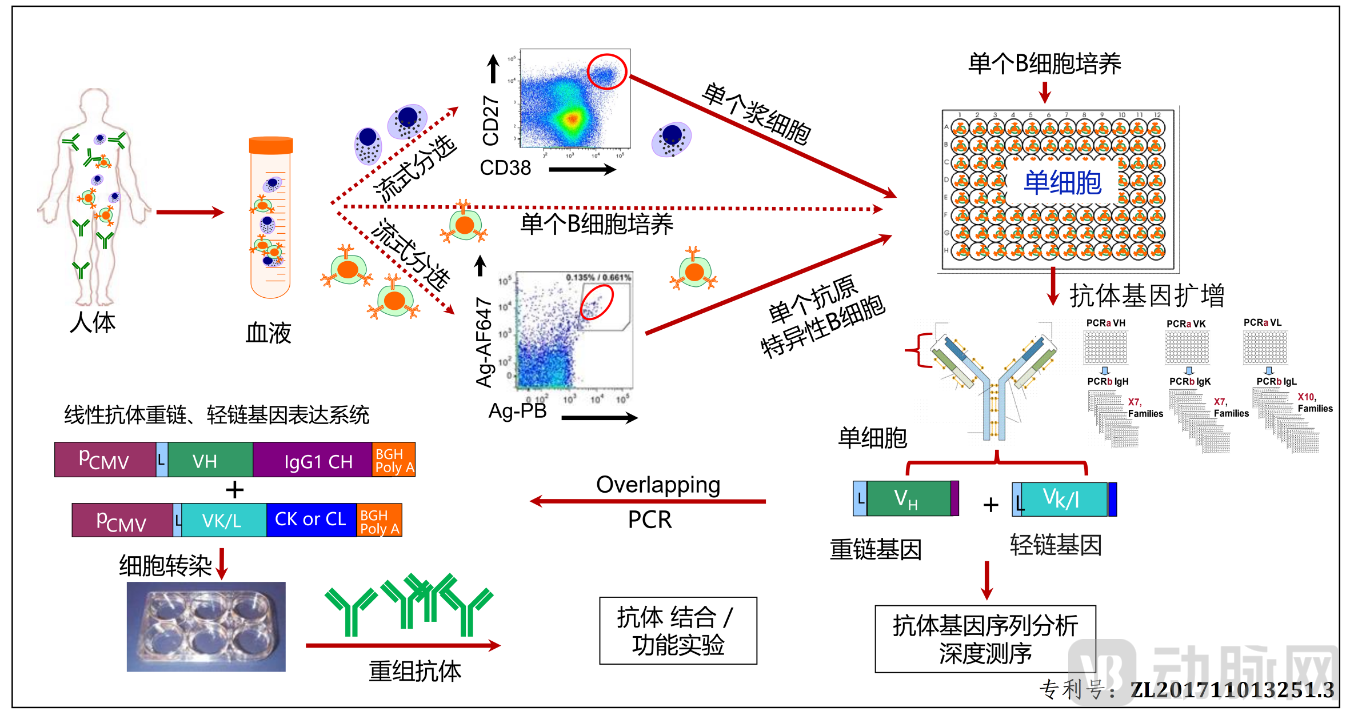
Integrated Technology Platform for the Development of Natural Fully Human Monoclonal Antibodies: HitmAb® Technical Route
In this scenario, Tianmai Biotech’s HitmAb® can better demonstrate its value by enabling the large-scale in vitro production of gene-recombinant fully human monoclonal antibodies to replace plasma-derived specific immunoglobulins.Furthermore, monoclonal antibodies isolated via the HitmAb® technology platform are natural, fully human monoclonal antibodies that have matured through selection in the human immune tolerance environment. These antibodies overcome the limitations associated with human immunoglobulins, such as source scarcity, inconsistent quality control, and the risk of transmitting other infectious diseases, thereby providing patients with maximal efficacy and safety guarantees in clinical applications.
One of the products involved in this collaboration, the “Anti-Rabies Virus Monoclonal Antibody Cocktail,” targets precisely such a market opportunity.In China alone, approximately 15 million people are bitten by dogs and other animals each year, among whom 7–8 million are classified as having Category III exposure. The actual demand for rabies antibodies is approximately 40 million doses, whereas the annual batch release volume of rabies immunoglobulin in China stands at 12 million doses (representing the existing market), leaving a potential incremental market of at least 28 million doses.
Once Tainuomaibo’s fully human anti-rabies virus cocktail antibodies are launched and achieve large-scale production, their manufacturing costs are expected to be significantly lower than those of blood-derived products. Upon market entry, they will demonstrate substantial product advantages and competitiveness over traditional blood-derived pharmaceuticals, thereby generating significant economic and social benefits.
Beyond the products involved in this collaboration, driven by its core technologies, TrinoMab has advanced multiple of its product candidates into clinical development:
In relatively mature markets, TNM002, the world’s first recombinant fully human monoclonal antibody against tetanus toxin (TT), initiated its Phase I clinical trial in Australia in November 2020 and has recently received Investigational New Drug (IND) approval in both China and the United States.
For certain infectious diseases that still lack clinical solutions, Teneobio’s recombinant fully human monoclonal antibody against respiratory syncytial virus (RSV), TNM001, received Investigational New Drug (IND) approval from the National Medical Products Administration (NMPA) in July this year and is expected to formally initiate Phase I clinical trials in November. TNM001 is also China’s first independently developed fully human anti-RSV antibody therapeutic.
In 2022, Tynobio will also sequentially advance the Investigational New Drug (IND) applications for its natural fully human monoclonal antibodies against human cytomegalovirus (HCMV), anti-nerve growth factor (NGF) monoclonal antibody, and anti-varicella-zoster virus (VZV) monoclonal antibody.
CMS Pharmaceutical, which collaborates with Tynobio, is well known among domestic pharmaceutical companies for its strong marketing capabilities. However, in an era where independent innovation is emphasized everywhere, CMS Pharmaceutical has also carved out a highly efficient path of innovative development suited to its own strengths.
CMS Pharma focuses on building a pipeline of first-in-class global innovations, or innovative products featuring novel formulations and delivery methods that achieve the best efficacy, highest safety, or most favorable cost-effectiveness within their therapeutic classes. The company currently holds a portfolio of more than 20 highly innovative products with significant market potential and competitive differentiation.Similarly grounded in innovation, CMS Pharmaceutical derives its innovation primarily through collaborative R&D, focusing on advancing the clinical development and commercialization of global innovative products in China.
In recent years, CMS Pharmaceutical has primarily expanded its overseas portfolio of late-stage innovative products through equity investments and strategic collaborations with foreign biotechnology companies, thereby enriching its mid- to late-stage clinical innovation pipeline. Starting this year, the collaboration with TopAlliance Biosciences has initiated a new model for CMS Pharmaceutical’s industrial investment in early-stage innovative drugs from Chinese biotech firms, further building short-, medium-, and long-term drivers for innovative development. The company is fully committed to advancing the clinical development and commercialization of high-quality innovative drugs from both overseas and domestic sources in China.
Currently, the main products marketed by CMS Pharmaceutical are all branded original drugs and exclusive drugs. The differentiated advantages of its products, combined with strong academic marketing and promotion capabilities, have achieved a double harvest in revenue and profit. Revenue increased more than fivefold from RMB 1.36 billion in 2011 to RMB 6.95 billion, while net profit during the same period rose 6.4 times from RMB 403 million to RMB 2.56 billion.
CMS Pharma's marketing network has extensive coverage,As of June 30, 2021, the network covered physicians in major clinical departments of Grade A tertiary hospitals, approximately 57,000 hospitals and medical institutions, and over 200,000 terminal retail pharmacies; as of December 31, 2020, there were approximately 3,300 professional academic promotion personnel.
So, how strong are CMS Pharmaceutical’s clinical development and commercialization capabilities?This year, CMS Pharma completed the enrollment of all subjects for the China-based registrational bridging trials of its blockbuster innovative drugs, tirzepatide and 0.09% cyclosporine eye drops, in just 2.5 months and 4 months (including the Spring Festival holiday), respectively.
Furthermore, CMS Pharmaceutical’s marketed products have maintained a leading market position for many years, establishing a professional and high-quality brand image. Driven by the combined strengths of robust product portfolios, powerful commercialization capabilities, and an efficient management system, CMS Pharmaceutical has achieved sustained high-speed growth over the years.
To date, Transcenta Holding and CMS Pharmaceutical have reached collaborations on four products: a fully human monoclonal antibody against human cytomegalovirus, a fully human antibody against Staphylococcus aureus alpha-toxin, a neutralizing antibody against SARS-CoV-2, and a cocktail of fully human neutralizing antibodies against rabies virus. The collaboration model for these products involves establishing joint ventures, with Transcenta Holding contributing intangible assets as equity investment and CMS Pharmaceutical contributing cash.
How do the two companies achieve complementary strengths? How does this renewed collaboration differ from their previous partnership?
First, the clinical value of these products is beyond doubt. In particular, the recently partnered COVID-19 neutralizing antibody product has garnered significant attention due to the outstanding performance of several products both domestically and internationally.
The COVID-19 neutralizing antibody developed by Junshi Biosciences in collaboration with Eli Lilly is being widely used in the United States. In September, in particular, the U.S. FDA expanded the Emergency Use Authorization (EUA) for this product to include post-exposure prophylaxis in individuals. According to disclosures in Eli Lilly’s 2021 interim report, total sales of its COVID-19 neutralizing antibody reached $959 million in the first half of the year, effectively securing its status as a new blockbuster drug. Brii Biosciences, which listed on the Hong Kong Stock Exchange in 2021, has also benefited from the positive momentum surrounding COVID-19 neutralizing antibodies. Driven by its combined neutralizing antibody therapy BRII-196/BRII-198, Brii Biosciences’ share price rose steadily from around HK$20 at the time of its IPO to a high of HK$52.6.
The performance of the secondary market has clearly demonstrated the growth potential of COVID-19 neutralizing antibodies in the post-pandemic era. The strategic alliance between TopAll Biosciences and China Medical System (CMS) has undoubtedly emerged as a formidable force in the domestic competition for COVID-19 neutralizing antibodies.
Secondly, in terms of product development, the advantageous resources of the two companies have been fully complementary.
Leveraging the HitmAb® technology platform, the Tynorab team screened over 2,000 monoclonal antibodies from COVID-19 convalescent patients. From these, they identified and optimized a “cocktail” therapy combination of neutralizing antibodies targeting different antigenic epitopes. This regimen effectively covers various SARS-CoV-2 variants currently circulating globally and holds strong potential to combat emerging variant strains in the future.
The development of antibody cocktail therapies leverages the advantages of monoclonal antibodies, such as well-defined composition, controllable quality, and low side effects, while also incorporating the benefits of polyclonal antibodies, including multiple binding sites, strong avidity, and a lower likelihood of viral escape. This approach effectively utilizes the respective strengths of monoclonal and polyclonal antibodies, maximizes the efficacy of different antibodies, compensates for the limitations of single-antibody therapy, prevents the emergence of drug-resistant strains, covers a broader population, and achieves a synergistic therapeutic effect where “1+1>2.” This combination antibody exhibits the following characteristics:
Broad-spectrum activity: Preclinical data demonstrate neutralizing activity against all currently circulating variants of concern, including Alpha, Beta, Gamma, Delta, Delta Plus, Kappa, Lambda, and Iota. The half-maximal inhibitory concentration (IC50) for neutralization of SARS-CoV-2 ranges from 0.01 to 0.07 μg/mL.
The combination antibody exhibits picomolar (pM)-level affinity for the S protein and RBD protein, and demonstrates robust binding activity to the RBD proteins of the Alpha, Beta, Gamma, Delta, Delta Plus, Kappa, Lambda, and Iota variants.
The antibody pair exhibits strong complementarity in antigenic epitope recognition, binding to non-overlapping epitopes, and provides broader coverage of antigen-binding sites compared to many other SARS-CoV-2 neutralizing antibodies. One antibody binds within the receptor-binding motif (RBM) region of the receptor-binding domain (RBD) protein, while the other, similar to the VIR7831 antibody, binds outside the RBM region of the RBD protein.
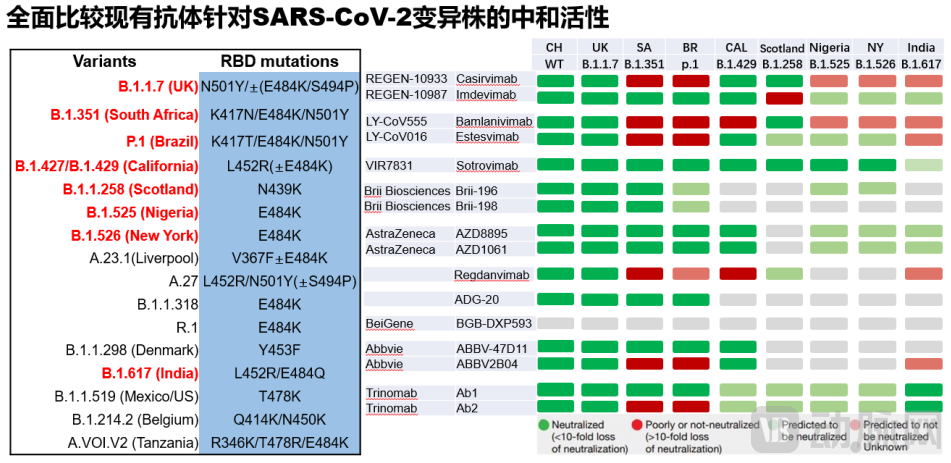
Tainuomaibo has completed the discovery and identification of anti-SARS-CoV-2 antibodies, pharmacodynamic evaluation, engineered cell line construction, and manufacturing process development. The company is currently conducting efficacy studies and non-clinical toxicology and pharmacology studies, with an Investigational New Drug (IND) application planned for 2022, followed by Phase I clinical trials.
With its experts across a broad range of therapeutic areas, hospital resources, and an experienced clinical development team, CMS Pharmaceutical can efficiently and effectively advance and complete the clinical development of innovative drugs in China by rigorously controlling key aspects such as clinical trial protocols, project quality, and patient enrollment.
Third, regarding the future commercialization of its products, CMS Pharmaceutical’s accumulated expertise in academic promotion, extensive network of physician and expert resources, and broad coverage of hospital and retail channels have alleviated concerns about achieving comprehensive product rollout and realizing commercial value.
The collaboration between Transcenta Holding and CMS Pharmaceutical represents a paradigmatic integration of technological innovation and commercialization, fully leveraging Transcenta’s molecular innovation capabilities alongside CMS Pharmaceutical’s strengths in clinical development and marketing distribution networks. This strategic alliance achieves a synergy of strengths and complementary advantages. The successive announcements of their collaborations indicate that mutual trust has been established and a stable cooperative framework has been formed. As the partnership deepens, the two companies are poised to expand into a broader range of therapeutic areas, creating new breakthroughs for innovation in the pharmaceutical industry.