

Suzhou New District: Home to Nearly 400 Medtech Firms and Over RMB 20 Billion Annual Output, Leading Suzhou’s 'No.1 Industry'
In recent years, China’s medical device industry has experienced rapid growth, driven by a continuously improving external environment. This progress is supported by a series of policies, including reforms to deepen review and approval processes, innovations in high-value consumables, the adoption of Supply, Processing, and Distribution (SPD) models, the implementation of tiered diagnosis and treatment systems, and the Medical Device Registrant system. Meanwhile, rising living standards and heightened health awareness among residents have fueled sustained growth in demand for medical device products. Additionally, the sector has attracted continuous attention and investment from external capital.
China's medical device industry has entered a phase of rapid growth overall. According to statistics, the market size of China's medical device industry reached RMB 772.1 billion in 2020, representing a year-on-year increase of 21.76%. The market size is projected to exceed RMB 900 billion in 2022, indicating highly promising market prospects for the industry.
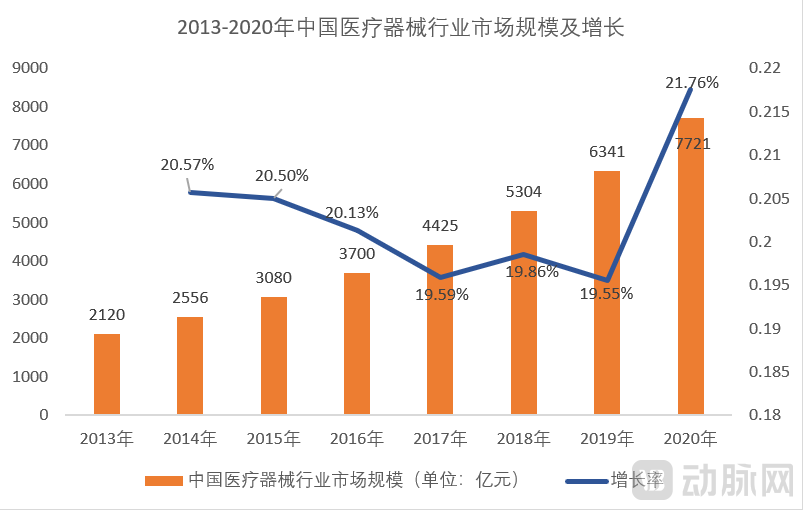
Data Source: "China Medical Device Blue Book (2021 Edition)" | Chart by VCBeat
From the perspective of medical device manufacturers, China saw a leap in the number of such enterprises from 16,000 to 25,000 between 2018 and 2020. By the end of 2020, the number of medical device manufacturers in China reached 25,440, representing a year-on-year increase of nearly 40%. The total number of distributors amounted to 788,097, a year-on-year growth of 29.39%.
In terms of regional distribution, as of the end of 2020, Guangdong Province had 4,553 medical device manufacturing enterprises, accounting for the largest market share among all provinces, municipalities, and autonomous regions in China. Jiangsu, Shandong, and Zhejiang followed closely behind. In these major medical device-producing provinces, industrial cluster advantages have gradually taken shape.
In terms of the number of medical device industrial parks. As of the end of December 2020, there were a total of 1,505 clusters with resident medical device manufacturers and a total of 2,637 specialized parks across China.
Currently, the medical device industry, thrust into the historical spotlight, is ushering in a “golden” period of development. Judging by its growth rate, the future of the medical device sector looks highly promising. However, amidst this fervor, it is essential to maintain rational reflection.
Although China’s medical device industry has developed rapidly, it lacks strategic integration and is characterized by a fragmented distribution pattern and extensive growth. As a technology-intensive sector, the medical device industry relies heavily on core technologies and high-level R&D teams within enterprises. However, due to their small scale, low starting point, limited capital, and constrained business philosophies, Chinese medical device companies often struggle to build R&D teams with independent innovation capabilities.
Medical device industrial parks are specialized locational environments established to promote the development of the medical device industry. They serve as important spatial agglomeration forms for regional economic development and industrial restructuring and upgrading, undertaking critical missions such as aggregating innovation resources, nurturing emerging industries, and advancing urbanization. These parks can effectively generate agglomeration effects, drive the development of related industries, and thereby facilitate the formation of industrial clusters.
Analyzing the model and experience of medical device industrial parks holds significant importance for the development of the medical device industry. In light of this, VCBeat takes Suzhou New District as a case study, conducting an in-depth analysis of dimensions such as the park’s current development status, layout logic, and industrial planning. By summarizing the experience in park planning, construction, and development, we aim to provide valuable references for the construction of medical device industrial parks, thereby promoting the healthy and orderly development of China’s medical device industry.
I. Building Cluster Benefits to Attract Over 400 Medical Device Companies to Compete for Entry
Suzhou New District (SND), approved for establishment in 1992, is a key component of Suzhou’s “One City, Two Wings” development framework. Located 90 kilometers from Shanghai Hongqiao International Airport and just a half-hour drive from Wuxi Shuofang Airport, the district enjoys unique geographical advantages that foster industrial development.
In 2008, the Suzhou New District Government successfully introduced the Suzhou Institute of Biomedical Engineering and Technology, Chinese Academy of Sciences; the following year, the two parties collaborated to jointly establish it.National Medical Device Science and Technology Industrial Park—Jiangsu Medical Device Science and Technology Industrial Park(Medpark, constructed and operated by Suzhou Medical Device Industry Development Co., Ltd.), andEstablish it as the core demonstration zone for the medical device industry cluster, and strive to build the “Medpark” brand with international influence.Thus, the spark was officially ignited for the development of the medical device industry cluster in Suzhou New District.
In April 2020, Suzhou hosted the Biopharmaceutical Development Conference, formally proposing to benchmark against and draw lessons from the “Boston Model” in the United States, with the aim of establishing an internationally renowned biopharmaceutical and health industry hub that is the most competitive and influential in China. Leveraging advantages in policy, market, environment, and funding, the medical device industry in Suzhou New District has experienced rapid growth.
As the only region receiving key support for the development of the medical device industry within Jiangsu Province’s “One District, One Industry” strategic layout,Suzhou High-Tech Zone has introduced and cultivated 411 leading talents at various levels, gathered 437 medical device-related enterprises, and achieved an annual total output value of RMB 20 billion.Among them, the number of medical device enterprises in the core demonstration zone accounts for nearly three-quarters of the total in the entire district, with the introduction of well-known domestic listed companies.Yuwell Medical、Sinobio、Meikang Bio、Lepu Medical、Hengrui Medical, international leaderEuclid USA、Hill-Rom、KaVo Kerr, Germany, andXinqing Medical、Nuoyimaieretc., the benefits of medical device industry clusters are becoming increasingly prominent.
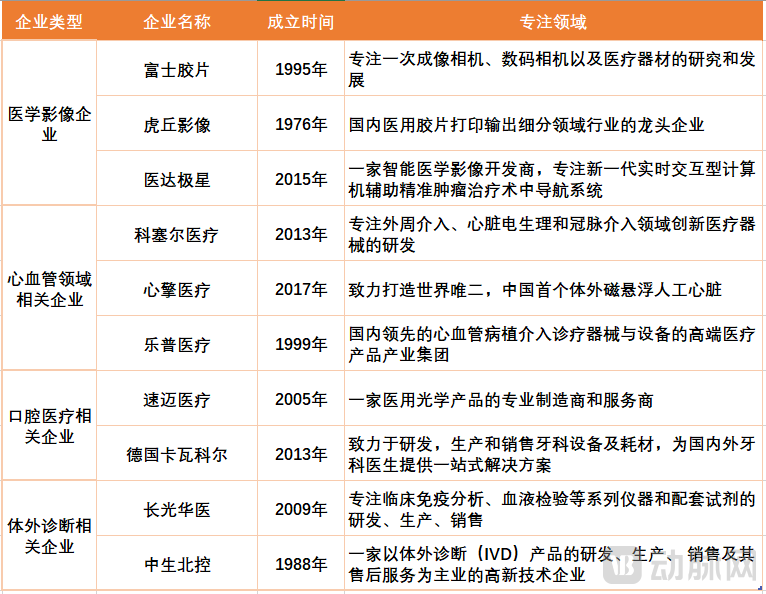
Representative Medical Device Enterprises in Suzhou New District
The medical device industry is gradually becoming the leading sector driving the development of Suzhou High-Tech Zone. Based on trend projections, the revenue of the medical device industry in the High-Tech Zone is expected to reach RMB 30 billion, RMB 50 billion, and RMB 80 billion in 2021, 2022, and 2023, respectively, with an average annual growth rate exceeding 60%.
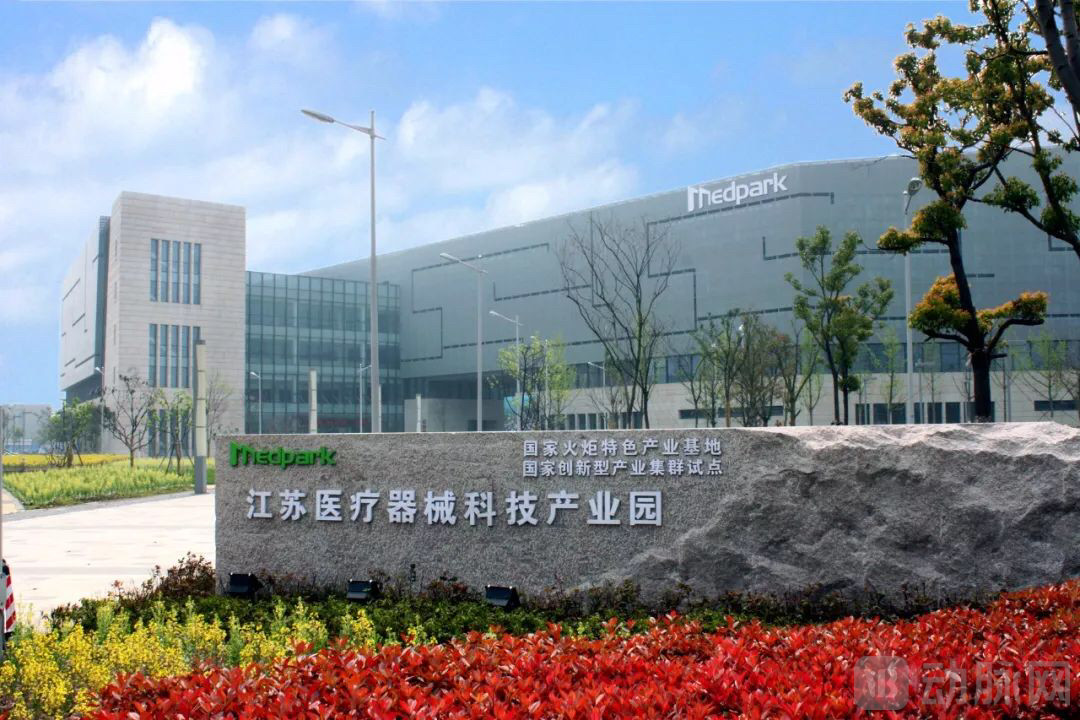
Jiangsu Medical Device Science and Technology Industrial Park (Medpark)
As the core demonstration zone for the medical device industry in the High-Tech Zone, Medpark Industrial Park commenced construction in 2009. With a total planned area of 2 square kilometers, it currently features 460,000 square meters of self-built facilities, divided into the Southern R&D and Innovation Zone, the Authoritative Testing and Evaluation Institutions Zone, the Comprehensive Support Zone, the Northern Industry Demonstration Zone, and the Medical Device Accelerator. Since its establishment, the industrial park has been successively approved as a National Torch Characteristic Industrial Base, a Pilot National Innovative Industrial Cluster, a National Professional Incubator for Medical Devices, and a Demonstration Unit for the Construction of National Scientific and Technological Entrepreneurship Incubation Chains.
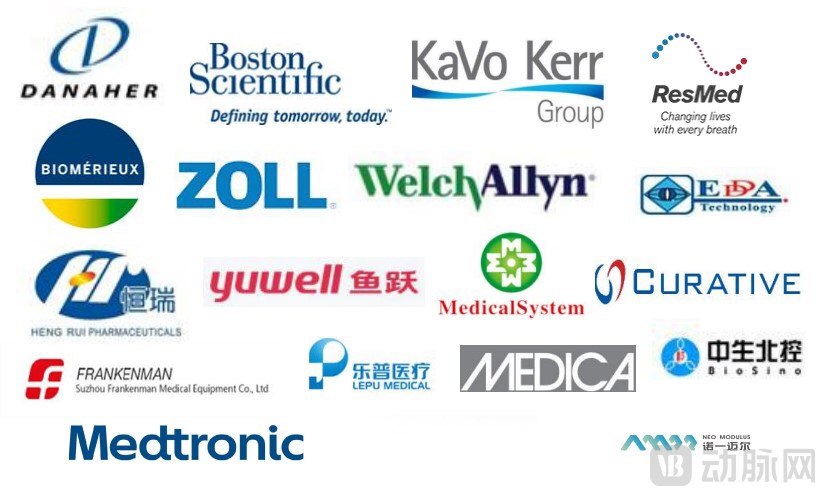
Established Cluster of Innovative Enterprises
The industrial park integrates medical device industry resources in the High-Tech Zone, with products coveringMedical Imaging, Biomedical Materials, In Vitro Diagnostics, Medical Robotsand other fields,Numerous technological achievements are first-of-their-kind in China and industry-leading., the cluster effect of industrial agglomeration is gradually becoming apparent.
As of the deadline,Total Financing for Park Enterprises Exceeds RMB 10 Billion, Since the beginning of 2021 alone, dozens of companies, including WeGene, Kangduo Robot, Hearten Medical, Wushuang Medical, Depin Medical, EDDA Health Technology, Kuanyue Orthopedics, and Juyi Medical, have secured investments from prominent top-tier venture capital firms such as Sequoia Capital, Shenzhen Capital Group (SCGC), CDH Investments, Northern Light Venture Capital, and Qiming Venture Partners.
Suzhou Yuwell, as a wholly-owned subsidiary of Yuwell Medical, an A-share listed company that is China’s largest provider of medical equipment and integrated solutions and Jiangsu Province’s largest medical device enterprise, it is primarily engaged in the research, development, and production of medical devices such as non-invasive ventilators, embedded software for oxygen concentrators, and electronic blood pressure monitors, with an average annual operating revenue exceeding RMB 400 million. The technical specifications of its non-invasive ventilators far surpass those of domestic brands and exceed those of some leading international brands, securing a 20% market share in China and ranking first.
Huqiu Imaging, it is currently one of only four companies worldwide and the sole company in China that possesses independent intellectual property rights and mass production capabilities for both medical film and film printers. It is the leading enterprise in the domestic niche sector of medical film printing and output, and a key player in China’s medical imaging market for domestically producing medical film printing equipment and film as import substitutes.
Euclid GroupAs a global leader in vision care products and an industry-leading specialized manufacturer of contact lenses, Euclid Suzhou represents the first global production base established by the U.S.-based Euclid Group outside its headquarters. With a total investment of $30 million, the facility plans to commence mass production and market launch within five years, targeting annual sales of 1 million lenses by 2025.
Suzhou Xinjunte, Xinjunte Group’s R&D and production base in East China, with a total investment of RMB 30 million. The company’s intelligent minimally invasive orthopedic surgical system, which possesses fully independent intellectual property rights, is the first fully intelligent orthopedic surgical system in China featuring “navigation + active screw placement” capabilities, and is currently valued at RMB 1.5 billion.
HeartEngine MedicalLed by Dr. Xu Boling, a Distinguished Professor at Soochow University and an expert in the National Young Thousand Talents Program, the company is dedicated to developing solutions for next-generation extracorporeal life support systems in critical care settings. Its flagship product, an extracorporeal short-to-medium term ventricular assist device, is the world’s second and China’s first extracorporeal magnetically levitated artificial heart. The company has secured over RMB 100 million in Series B financing and has initiated clinical trials.
Nuoyi MaierA Suzhou-based unicorn incubatee dedicated to implantable regenerative medical devices that “enable human tissue repair and organ regeneration.” Rooted in the fields of tissue engineering and regenerative medicine, the company leverages the world’s most advanced 3D electrospinning and 3D bioprinting technologies to research, develop, and manufacture gradient-layered and modulus-tailored nanoscale tissue-engineered products. Its offerings span three key areas—head and neck/oral health, reproductive medicine, and sports medicine—providing systematic solutions for the regeneration of complex tissues. To date, the company has secured cumulative financing of RMB 400 million.
II. Convergence of Multiple Advantages Creates a Fertile Ground for Industry Development
As the driving force behind regional economic development, industrial parks serve as key vehicles for investment promotion and management innovation, as well as robust platforms for fostering high-tech industries and facilitating industrial clustering. What underpins the confidence of Suzhou New District in attracting numerous leading medical device companies and innovative enterprises? VCBeat has identified the following advantages:
First, the location advantage is prominent: with well-connected transportation networks, it facilitates industrial development by establishing efficient logistical channels.Suzhou New District is located 90 km from Shanghai Hongqiao International Airport and 130 km from Shanghai Pudong International Airport. Wuxi Shuofang Airport is only a half-hour drive away. The district is also 100 km from the Port of Shanghai, 90 km from Zhangjiagang Port, 70 km from Taicang Port, and 60 km from Changshu Port. Major transportation arteries, including the Shanghai–Nanjing Expressway, National Highway 312, the Beijing–Shanghai Railway, the Beijing–Hangzhou Grand Canal, and the Ring Expressway, traverse the area, offering highly convenient regional connectivity.
Second, proactive government guidance: the introduction of multiple key policies to actively support industrial development.Over the past decade, the Suzhou New District Government has successively issued specialized scientific and technological policies for medical devices, including the “Guiding Opinions of Suzhou New District on Promoting the Development of the Medical Device Industry (Trial)” (Su Gaoxin Guan [2010] No. 61), the “Implementation Measures of Suzhou New District on Promoting the Development of the Medical Device Industry,” and the “Three-Year Action Plan for the Development of the Medical Device and Biopharmaceutical Industries in Suzhou New District (2020–2022),” as well as Jiangsu Province’s special policies for the industrialization of medical device achievements and policies supporting the Jiangsu Provincial Medical Device Innovation Center.
Meanwhile, Suzhou New District has established green channels for medical device registration testing and for the approval of infrastructure projects supporting medical device enterprises. These measures have formed a policy package for the development of the medical device industry in Suzhou New District, characterized by continuity and specialization, thereby laying a solid policy foundation for the district to lead Suzhou’s “No. 1 Industry.”
Third, a comprehensive platform system has been established, with industry associations, R&D incubators, industrial innovation platforms, and financial platforms working in concert to drive all-around industrial development.In terms of supporting industrial service platforms, the industrial park leverages its advantage in aggregating innovation resources to build a comprehensive ecosystem covering the entire industry chain.
Co-developed with the Suzhou Institute of Biomedical Engineering and Technology, Chinese Academy of Sciences; the Southeast University Suzhou Medical Device Research Institute; and the Zhejiang University Industrial Technology Research InstituteInnovation Platform, injecting sustained innovative vitality into the industry; jointly established with the Suzhou Collaborative Innovation Institute for Medical Robotics, the Guoqian Innovative Medical Technology Research Institute, and others to createIncubation Platform, promoting collaborative innovation and the translation of research findings into practical applications; jointly establishing with the Suzhou Branch of the Jiangsu Institute for Medical Device Testing, the medical device usability testing platform, and other entities to createRegistration Service Platform, helping enterprises accelerate their growth and development; in collaboration with Guoqian Venture Capital, we established the Guoqian Medical Investment Fund; in partnership with Northern Light Venture Capital, we set up the Jichuang Xinyuan Investment Fund; and together with Boying Capital, we founded the Boying Dushi Fund and the Boying Yanren Investment Fund, jointly creatingInvestment and Financing Platform, thereby intensifying efforts to attract and cultivate high-quality projects.
In addition, Suzhou New District has also constructedSuzhou Medical Device Industry Intellectual Property Operation Center, actively integrating into the Yangtze River Delta integration initiative, co-founding the Yangtze River Delta High-End Medical Equipment Innovation Alliance, serving as an executive committee member of the “Belt and Road” Medical Device Innovation and Application Alliance, and proactively coordinating with and absorbing high-end resources spilling over from the Yangtze River Delta region. These multi-platform collaborations have thus promoted the development of the medical device industry in Suzhou High-Tech Zone.
III. Seize Development Opportunities and Focus on Building a High Ground for the Medical Device Industry
In June 2021, the government work conference of Suzhou New District further clarified the requirements for accelerating the development of the medical device and biopharmaceutical industries across the district:Adopting “Medpark” as the unified district-wide brand, all state-owned industrial parks with medical devices and biopharmaceuticals as their leading industries shall serve as sub-parks of “Medpark.”, thereby enhancing brand awareness and influence.
Seizing this favorable momentum, Suzhou Medical Device Industry Development Co., Ltd. will uphold the development philosophy of “Integration and Innovation,” with “Ecological Development, Industrial Cluster Formation, Fund-Based Investment Promotion, Professionalized Services, Market-Oriented Platforms, Self-Owned Carriers, Asset Securitization, and Digitalized Operations and Maintenance"Operational model, to build the leading domestic brand in the medical device industry, establish a world-class science and technology park, and develop into a demonstration zone for the innovative and integrated development of the medical device industry as well as the premier highland for industrial innovation."
Currently, China’s medical device industry is experiencing a period of rapid growth, with the market evolving toward clustering and relative monopolization, while products are advancing toward high technology and human-centered design. However, due to the low level of medical device equipment in primary healthcare institutions and low per capita expenditure on medical devices, competition in the low-end market is intense. The high-end market remains dominated by imported products, resulting in a low localization rate. As the industry continues to develop, China’s medical device sector will face even more challenges.
Medical device industrial parks serve as vital platforms for the industry and hubs where various medical device companies converge. This article summarizes key operational experiences from Suzhou New District, aiming to provide valuable references for the development of medical device industrial parks and thereby promote the growth of China’s medical device industry.
First, local policy support has driven industrial development.The government strengthens top-level design by integrating regional resources, formulating industrial plans and policies to guide industrial agglomeration, and providing support in key areas such as financial assistance, talent development, and inspection and approval.
Second, collaborate with universities and research institutes.Introduce universities and research institutes, establish technology transfer centers, and promote the integrated development of industry, academia, and research, thereby creating a comprehensive innovation and entrepreneurship service platform that integrates R&D, scientific consulting, technical training, technology incubation, and industrial cultivation.
Third, focus on attracting leading enterprises while emphasizing the incubation of innovative companies.Strive to attract leading enterprises to settle in, enhancing the park’s influence and bringing numerous resource advantages for industrial development; incubating innovative enterprises is key to bolstering industrial innovation capabilities.
Fourth, we have leveraged the advantages of concentrated innovation resources to build a comprehensive ecosystem covering the entire industry chain.An innovative ecosystem injects sustained vitality into the industry, driving collaborative innovation and the commercialization of research outcomes. One-stop service platforms provide supporting industrial resources to help enterprises accelerate their growth and development.