

Lung Cancer Standard Dataset (2021 Edition) Officially Launched to Empower Real-World Research in China
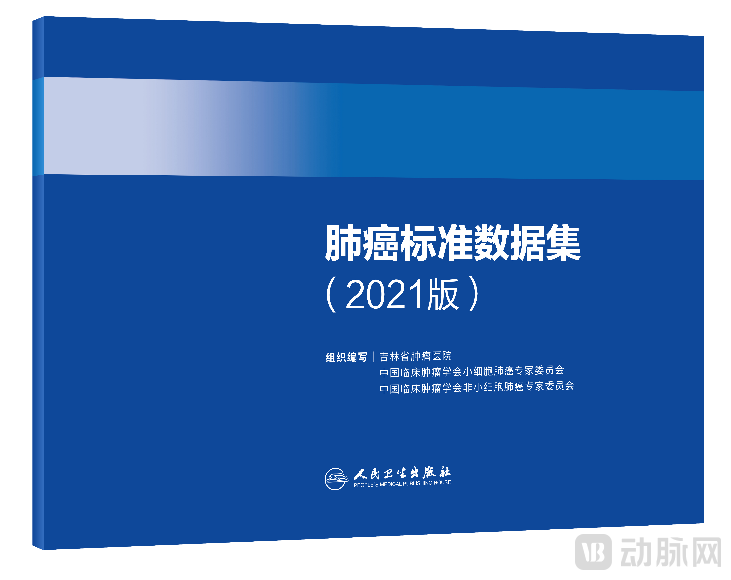
The 24th National Clinical Oncology Conference and the 2021 CSCO Annual Meeting were recently held with great ceremony. At this year’s CSCO Annual Meeting, the Lung Cancer Standard Dataset (2021 Edition), organized and compiled by Jilin Province Cancer Hospital, the Small Cell Lung Cancer Expert Committee of the Chinese Society of Clinical Oncology (CSCO), and the Non-Small Cell Lung Cancer Expert Committee of the Chinese Society of Clinical Oncology (CSCO), and published by People's Medical Publishing House, was officially released.
Lung cancer is a malignant tumor that poses a serious threat to human health. In China, it ranks first in both incidence and mortality rates, with 1.5 people diagnosed and one person dying from lung cancer every minute. The high prevalence of lung cancer imposes a substantial disease burden on the public and society, while the exponential growth of multidimensional, multimodal clinical data presents new challenges for real-world research in lung cancer.
It is understood that there are currently hundreds of commercial Hospital Information Systems (HIS) in China, resulting in patient information being isolated both between and within hospitals. Scattered across various medical systems, these data form numerous "information silos," creating significant challenges for data integration. Meanwhile, the lack of unified standards leads to disorganized data records and inconsistent data quality, which hinders data structuring, impedes the mining and utilization of medical data, and fails to adequately reflect clinical practices in China. Consequently, the improvement of clinical capabilities remains slow, and reliable data support for hospital management and policy-making is lacking. Although some cancer databases exist abroad, they are predominantly multi-cancer registries; there is a global absence of a unified, standardized database dedicated specifically to lung cancer. Therefore, it is urgent to establish unified data standards for lung cancer, interconnect and share dispersed, multi-source, heterogeneous, and vast amounts of lung cancer diagnosis and treatment data, and leverage these data through mining and analysis. This will accelerate the development of a standardized, normalized, and large-scale big data platform for lung cancer.
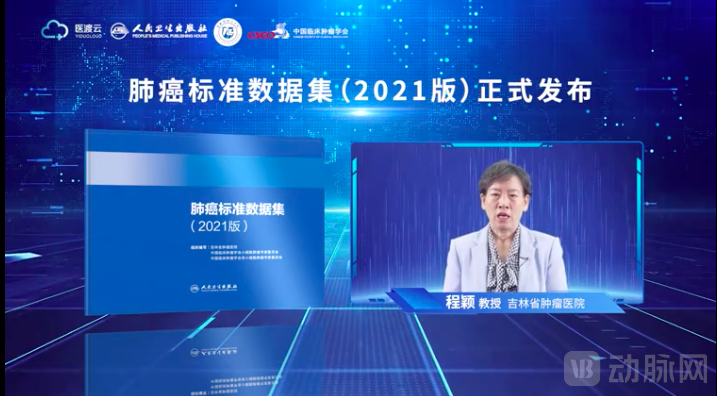
Address by Cheng Ying, Party Secretary of Jilin Provincial Cancer Hospital
With the continuous advancement of technologies for information acquisition, storage, transmission, and processing, such as big data technology, natural language processing, search engines, machine learning, and artificial intelligence, which are becoming increasingly mature, the healthcare sector has ushered in the era of “big data.”
Professor Cheng Ying from Jilin Provincial Cancer Hospital stated, “To meet the challenges posed by the big data era to the diagnosis, treatment, and research of primary lung cancer, the Integrated Diagnosis and Treatment Center for Malignant Tumor Clinical Research at Jilin Provincial Cancer Hospital proposed the development of a ‘Standard Dataset for Lung Cancer’ tailored to China’s clinical practice. We drafted the initial version of this standard dataset based on the NCCN (National Comprehensive Cancer Network) Guidelines, the CSCO Guidelines for Primary Lung Cancer, expert consensus, and our own experience in lung cancer diagnosis and treatment. Meanwhile, we selected several renowned domestic technology companies specializing in big data platforms and disease-specific database construction, ultimately choosing ‘Yidu Cloud’ as our partner to establish our hospital’s lung cancer disease-specific database.”
Professor Cheng Ying stated, “Following extensive discussions among our hospital’s lung cancer experts, we revised and added data modules and fields, clearly defined the value ranges for these fields, and provided detailed explanations for certain fields. We also conducted application simulations in our hospital’s specialized lung cancer database, performing iterative validation and revisions. Finally, we sought input from top experts in the field of lung cancer, including members of the Small Cell Lung Cancer Expert Committee and the Non-Small Cell Lung Cancer Professional Committee of the Chinese Society of Clinical Oncology (CSCO), to further refine our dataset.”
“Over the course of one year, we have completed the Standardized Lung Cancer Dataset, currently the most professional and authoritative dataset of its kind in China. We hope that this Standardized Lung Cancer Dataset will facilitate large-scale, high-quality, multicenter real-world studies on lung cancer, address the limitations of randomized controlled trials, and enable China’s medical big data on lung cancer to be truly transformed from real-world data into evidence,” emphasized Professor Cheng Ying.
“Standardized Dataset for Lung Cancer” is developed in accordance with domestic and international guidelines for the diagnosis and treatment of lung cancer. Its establishment will promote standardized diagnosis and treatment, accelerate the standardization of electronic medical records for lung cancer, improve data quality, enhance China’s capacity for clinical research, facilitate the translation of research findings into practice, advance translational research, strengthen comprehensive patient management throughout the care continuum, and provide data support for hospital administration and government decision-making.

Address by Yang Jin, Deputy Editor-in-Chief of People's Medical Publishing House
As a professional publisher in the domestic medical and health sector, People’s Medical Publishing House (PMPH) is actively promoting digital transformation and integrated publishing. In his address at the conference, Yang Jin, Deputy Editor-in-Chief of PMPH, extended congratulations on the release of the standardized lung cancer dataset and emphasized the importance of leveraging the publisher’s strengths to facilitate the implementation and application of technological achievements. Over the past few years, PMPH has published more than ten standardized disease datasets, contributing to the establishment of clinical diagnosis and treatment guidelines. PMPH will continue to focus on original Chinese works, create high-quality publications, provide richer and more valuable medical knowledge and health services to the healthcare industry, support the development of “AI + Healthcare,” and contribute to the national strategy of “Healthy China 2030.”