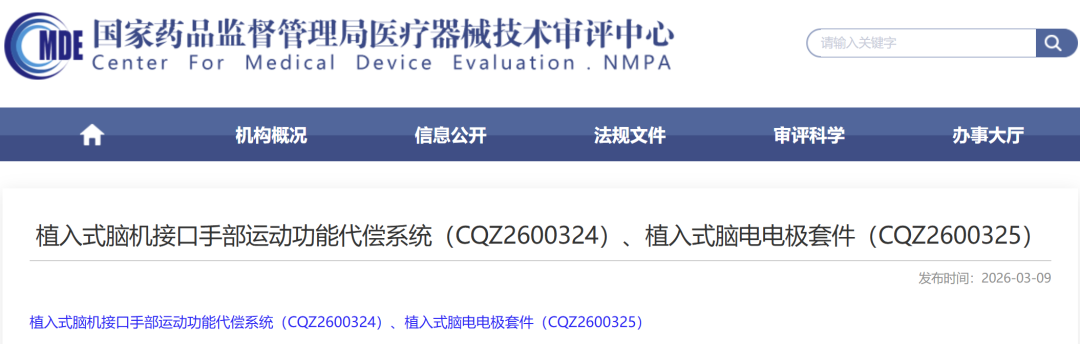
Home Borui Kang Receives China NMPA Class III Approval for Implantable Brain-Computer Interface System: Technical Review Report and Product Details

Borui Kang Receives China NMPA Class III Approval for Implantable Brain-Computer Interface System: Technical Review Report and Product Details

Apr 02, 2026 08:06 CST Updated 08:06
Neuracle

Developer and Manufacturer of Brain-Computer Interface Systems and Related Equipment

Image

Image
Image
Image

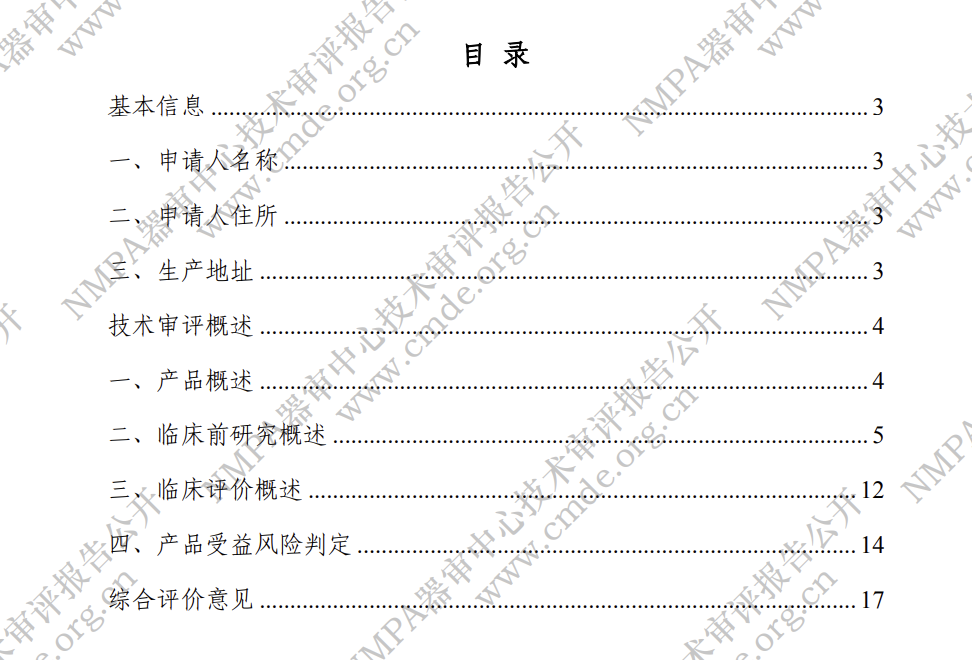
Technical Review Overview


1. Product Overview
(1) Product Structure and Composition
The product consists of a brain-computer interface implant, an implantable EEG electrode kit, an EEG signal transceiver, a pneumatic hand device, a disposable surgical tool kit, EEG decoding software (release version: 1.0), medical testing software (release version: 1.0), and clinical management software (release version: 1.0).
(II) Product Scope of Application
This product is suitable for quadriplegic patients caused by cervical spinal cord injury, assisting in achieving hand grip function compensation through a pneumatic glove device. Patients must meet the following criteria: aged between 18 and 60, with C2 to C6 cervical spinal cord injury graded A to C level quadriplegia, diagnosed for over one year, and with stable condition for at least six months after standardized treatment. The hands should be unable to perform grasping actions (ARAT score for grasping a wooden ball or pouring water from a cup ≤1 point, ISNCSCI score for finger flexor muscle strength <3). Partial upper arm functionality should remain (ARAT score for touching the mouth ≥2 points, touching the top of the head, or touching the back of the head ≥1 point).
(III) Model/Specification
Implantable Brain-Computer Interface Hand Motor Function Compensation System: NEO-M, NEO-M Pro
Implantable EEG Electrode Kit: K1014-15, K1014-25, K1014-35
(IV) Working Principle
Patients with quadriplegia caused by cervical spinal cord injury have disrupted or abnormal descending transmission of motor intentions due to spinal cord damage, making it impossible to complete hand grasping functions. When patients attempt to grasp or relax, the motor cortex generates stable and distinguishable low-frequency and high-frequency EEG signals, which can reach up to 200Hz and can be captured epidurally. This product collects EEG signals through epidural electrodes, wirelessly transmitting the signals through the scalp to external devices; the software algorithm extracts low-frequency and high-frequency information from the epidural EEG signals in real time, generating continuous control commands through decoding to drive pneumatic glove devices, achieving compensation for the patient's hand grasping function.
2. Overview of Preclinical Studies
(1) Product Performance Research
The applicant has specified the performance indicators for brain-computer interface implants, implantable EEG electrode kits, EEG signal transceivers, pneumatic glove devices, disposable surgical tool kits, EEG decoding software, medical testing software, and clinical management software.
Among these, the performance indicators of the brain-computer interface implant include appearance, size, weight, tensile strength, bending resistance, sealing, impact resistance, impedance measurement, signal acquisition, radio frequency transmission frequency and maximum distance, maximum distance and accuracy of Bluetooth transmission, sterility, bacterial endotoxins, chemical properties, insertion force and extraction force, network security, electromagnetic compatibility, etc.
The performance indicators of the implantable EEG electrode kit include appearance, DC resistance, insulation impedance, tensile load, bending performance, retention force, sterility, ethylene oxide residue, bacterial endotoxins, chemical performance, corrosion resistance, X-ray detectability, and electromagnetic compatibility.
The performance indicators of the EEG signal transceiver include appearance, connection reliability, operability, network security, electrical safety, and electromagnetic compatibility, among others.
Performance indicators of brain electrical decoding software include device connection and wearing prompts, calibration and model optimization, training, etc.
Performance indicators of medical testing software include EEG waveform display, data forwarding, electrode configuration, impedance measurement, and events.
Performance indicators of clinical management software include doctor information management, patient information management, patient training program configuration, and patient training progress statistics.
Performance of pneumatic glove devices includes inflation rate, air tightness, deflation rate, output pressure, force adjustment, overpressure protection, and glove angle range.
The performance indicators of disposable surgical tool kits include appearance dimensions, corrosion resistance, sterility, ethylene oxide residue, chemical properties, bacterial endotoxins, etc.
System metrics include brain electrical decoding response time, system execution response time, system status display, effective working distance of wireless communication, etc.
The applicant submitted the product technical requirements and product test reports for the above performance indicators, and the test results are consistent with the product technical requirements.
The applicant submitted product performance research data. Among these, the research data for the brain-computer interface implant includes surface temperature, component airtightness, impact testing, connector component performance (waterproof sealing performance, tensile performance, bending performance), extracorporeal coil transmission efficiency, connector retention force, and cavity insertion force.
Research Materials of Implantable EEG Electrode Kits Include DC Resistance, Insulation Resistance, Electrode Tensile Performance, Electrode Insulation Performance, Electrode Bending Performance, Electrode Retention Force, and X-ray Detectability.
Research materials on EEG signal transceivers include studies on battery life and the transmission efficiency of external coils.
The applicant submitted a product usability engineering research report in accordance with the "Guiding Principles for Usability Engineering Registration Review of Medical Devices," and the comprehensive residual use risks have been reduced to an acceptable level. The safety and effectiveness of the user interface meet the design requirements.
(II) Biocompatibility Research
The applicant conducted a biological evaluation of the brain-computer interface implant, implantable EEG electrodes, wire clamps, fixation screws, blank electrodes, electrode dilators, tunneler, EEG signal transceiver coil housing and harness, and pneumatic glove device according to GB/T 16886.1-2022 "Biological Evaluation of Medical Devices - Part 1: Evaluation and Testing within a Risk Management Process." After comprehensive evaluation, the biocompatibility risks of the products are acceptable.
(III) Research on Cleaning, Disinfection, and Sterilization
In vitro devices require cleaning and disinfection by the user, and the product manual specifies the methods for cleaning and disinfection.
The brain-computer interface implant, implantable EEG electrode kit, and disposable surgical tool kit are sterilized using ethylene oxide. The applicant has provided sterilization validation and sterilization residue research data, confirming that the sterility assurance level (SAL) of the products meets the requirements.
(IV) Product Validity Period and Packaging
The shelf life of the brain-computer interface implant, implantable EEG electrode kit, and disposable surgical tool kit is 3 years. The applicant has submitted research data on the shelf life.
The expected service life of the brain-computer interface implant and the implantable EEG electrode kit is 10 years, the expected service life of the EEG signal transceiver is 2 years, the expected service life of the pneumatic glove device is 8 years, and the expected service life of the pneumatic glove is 1 year or 100,000 uses. The applicant has submitted system stability research data in accordance with the "Guiding Principles for Technical Review of Service Life Registration of Active Medical Devices."
The applicant submitted the product's packaging and transportation research materials, as well as the environmental testing inspection report conducted in accordance with GB/T14710-2009, which met the requirements.
(5) Software Research
The product includes six software components: Brain-Computer Interface Implant Software, release version 1.0, full version 1.0.0.3; EEG Signal Transceiver Software, release version 1.0, full version 1.0.0.2; EEG Decoding Software, release version 1.0, full version 1.0.1.0; Medical Testing Software, release version 1.0, full version 1.0.4.0; Clinical Management Software, release version 1.0, full version 1.0.0.8; Pneumatic Glove Device Software, release version 2, full version 2.0.0. The safety level of the product software is critical.
The applicant submitted a software research report in accordance with the Requirements for Medical Device Software Registration Review (2022 Revised Edition). The applicant also submitted a cybersecurity research report in accordance with the Requirements for Medical Device Cybersecurity Registration Review (2022 Revised Edition), demonstrating that the existing cybersecurity risks of the product are controllable and an emergency response plan for cybersecurity incidents has been established.
The applicant submitted research materials on brain electrolyte decoding algorithms, including:
1. Research on Algorithm Decoding Accuracy:Animal models were used to confirm that there is no significant difference in the quality and stability of epidural and subdural EEG signals. Subsequently, a subdural EEG dataset was used for algorithm performance testing, with decoding accuracy ≥80%. A feasibility clinical study involving three subjects achieved an average decoding accuracy of 90%, establishing the acceptance criterion for decoding accuracy at 80%. Clinical trials with 32 subjects achieved an average decoding accuracy of 87%, meeting clinical requirements.
2. Algorithm Performance Calibration Research:Based on feasible clinical research and the status of clinical trial participants, develop an algorithm performance calibration process. Specify that the initial calibration requires manual adjustment of the frequency band window, followed by subsequent calibrations based on algorithm performance degradation or at regular intervals.
3.Algorithm Stress Test Research:Conduct an analysis of factors affecting algorithm performance to identify interference factors such as electromyography, eye closure, speaking, and psychotropic drugs. Perform stress testing on the algorithm for interference factors like electromyography, eye closure, and speaking to demonstrate that the algorithm's stability meets design requirements. Clearly state product usage limitations in the instructions and include warning information regarding additional interference factors such as psychotropic drugs. Further validate the algorithm’s stability against clinical requirements based on the clinical trial participant data.
4. Long-term Stability Study:Based on feasibility clinical research for over 12 months and 6-month follow-up data from clinical trials, combined with electrode impedance, EEG signal quality, and decoding accuracy, a study on the long-term stability of the algorithm was conducted. The average decoding accuracy was 83%, demonstrating that the long-term stability of the algorithm meets clinical requirements.
Analyze the situations of long-term decline, fluctuation, and persistently low decoding accuracy among subjects. The accuracy of algorithmic decoding can be maintained at a level that meets clinical requirements through recalibration and retraining of the subjects.
Develop an algorithm performance quality control program, integrating algorithm performance calibration procedures, user training evaluations, and long-term monitoring of electrode impedance, EEG signal quality, and decoding accuracy to carry out algorithm performance quality control work, thereby ensuring the long-term stability of algorithm performance.
(6) Animal Experiment
The effectiveness of the brain electrophysiological decoding algorithm of this product has been preliminarily validated through EEG and subdural ECoG datasets. Combined with bench research, animal experiments are required to further validate the operability of the implantation surgery, the effectiveness of signal acquisition after implantation, and the safety related to the implant, in order to evaluate preclinical risks.
Based on the purpose of animal testing, and considering the spatial size of the implant site and the biological risks associated with the product's implant location, white pigs were selected as the model for evaluating product safety.
The applicant selected 7 experimental white pigs to conduct animal trial research, implanting brain-computer interface implants and EEG electrodes into the heads of the white pigs to evaluate the surgical operability, safety, and stability of the product. Among them, 2 pigs were observed for 1 month, and 5 pigs were observed for 6 months.
Evaluation indicators include surgical procedure evaluation, product effectiveness and stability (including product impedance, temperature rise, EEG signal acquisition, etc.), safety (allergic or rejection reactions, infection at the implant site, anatomical and CT observation of electrode breakage or displacement, redness and swelling or exudation at the implant site, system leakage, electric shock to the operator, postoperative health status of animals, neurological dysfunction including lameness, inability to stand, death, head rotation, circling, hemianopia, etc., clinical pathology, histopathology).
Results from animal studies indicate that the product has surgical operability, and signal acquisition is effective and safe.
(VII) Safety-related Standards
The product complies with the following safety standard requirements:
1. GB 16174.1-2015 "Surgical Implants - Active Implantable Medical Devices - Part 1: General Requirements for Safety, Marking, and Information Supplied by the Manufacturer"
2. GB 9706.1-2020 "Medical Electrical Equipment - Part 1: General Requirements for Basic Safety and Essential Performance"
3.YY 9706.102-2021 "Medical Electrical Equipment - Part 1-2: General Requirements for Basic Safety and Essential Performance - Collateral Standard: Electromagnetic Compatibility - Requirements and Tests"
4.YY 9706.111-2021 "Medical Electrical Equipment - Part 1-11: General Requirements for Basic Safety and Essential Performance - Collateral Standard: Requirements for Medical Electrical Equipment and Medical Electrical Systems Used in Home Healthcare Environments"
5.YY 9706.278-2023 "Medical Electrical Equipment - Part 2-78: Particular Requirements for Basic Safety and Essential Performance of Medical Robots for Rehabilitation, Assessment, Compensation or Alleviation"
3. Overview of Clinical Evaluation
The applicant chose the clinical trial pathway for clinical evaluation and conducted a confirmatory clinical trial based on prior feasibility studies. The clinical trial was designed as a prospective, multi-center, single-group target value study. The clinical trial was conducted across 11 medical institutions in China, enrolling 32 subjects, with a follow-up period of 6 months.
The primary endpoint of the clinical trial is the Brain-Computer Interface (BCI)-assisted ARAT grasp response rate (the response rate is defined as the proportion of patients whose difference between BCI-assisted ARAT grasp scores and baseline unassisted ARAT grasp scores is greater than or equal to the minimal clinically significant improvement value). Secondary endpoints include changes in ISNCSCI scale scores from baseline; changes in BCI-assisted ARAT grasp scores from baseline; changes in unassisted ARAT scores from baseline; investigator's overall performance evaluation of the device; subject’s overall performance evaluation of the device; device impedance; average monthly usage duration of the device by subjects; changes in quality of life scores from baseline; subject satisfaction with the device; investigator satisfaction with operating the device. Safety endpoints are adverse events and device defects during the trial period.
Clinical trial results showed that the Brain-Computer Interface-assisted ARAT grasp response rate was 100% at both 3 months and 6 months, with a 95% confidence interval of (89.1%, 100.0%), and the lower limit of the 95% confidence interval was greater than the target value.
The results of the secondary evaluation indicators showed that the motor scores of the ISNCSCI scale for subjects at 3 and 6 months were improved compared with baseline, while there was no significant improvement in sensory scores. The mean change in ARAT scores assisted by brain-computer interface (BCI) grip from baseline increased by 8.03 ± 3.78 points at 2 months and 9.06 ± 3.60 points at 6 months. The mean change in manual ARAT scores from baseline at 3 months improved by an average of 5.72 ± 4.67 points for the impaired hand and 10.72 ± 8.10 points for both hands. At 6 months, the mean change in manual ARAT scores from baseline improved by an average of 6.53 ± 4.38 points for the impaired hand and 12.56 ± 8.82 points for both hands. The investigator's overall performance evaluation of the device showed that all surgical implants could be successfully completed, and the device worked normally and stably on the day of implantation and at 2, 3, and 6 months post-operation. The subject's overall performance evaluation of the device showed that the system could work normally at 2, 3, and 6 months post-operation. The impedance of the equipment was within the normal range at 1, 2, 3, and 6 months post-operation. The average monthly usage time of the device from the 2nd to 6th month post-operation was 44.61 ± 22.43 hours. The results of the change in the quality of life scale score from baseline showed that the physical domain scores improved by an average of 4.28 ± 10.79 points at 2 months and 9.19 ± 9.86 points at 6 months post-operation. The subject’s satisfaction with the use of the device was very satisfied or satisfied at 2, 3, and 6 months post-operation. The investigator's satisfaction with operating the device was very satisfied or relatively satisfied at 1, 2, 3, and 6 months post-operation.
The safety evaluation results showed that the incidence of adverse events in clinical trials was 81.25%, including pain at the head surgical wound, subdural effusion, local swelling at the indwelling needle site, subcutaneous effusion at the head incision, fever, etc. The incidence of serious adverse events was 6.25%, which were bacterial pneumonia and lumbar vertebral fracture. No adverse events or serious adverse events related to the trial device occurred, and no device defects were reported.
In summary, the clinical evaluation data provided by the applicant meet the current clinical review requirements.
4. Product Benefit-Risk Assessment
Risk-Benefit Analysis:
(1) Clinical Benefits:
This product is suitable for quadriplegic patients caused by cervical spinal cord injury, assisting in achieving hand grasping function compensation through a pneumatic glove device. Patients must meet the following conditions: aged 18 to 60, with C2-C6 cervical spinal cord injury graded A-C according to the ASIA Impairment Scale, diagnosed for over one year, and with stable condition for at least six months after standardized treatment; unable to complete grasping (ARAT score for grasping a wooden ball or pouring water from a cup ≤1 point, ISNCSCI finger flexor muscle strength < grade 3); partial upper arm function retained (ARAT score for touching mouth ≥2 points, touching top of head or back of head ≥1 point).
(II) Product Risks
1. Possible adverse events, such as pain at the surgical incision site on the head, subdural effusion, localized swelling around the indwelling needle, subcutaneous effusion at the head incision, fever, etc.
2. Risks related to chemical and physical properties, implant temperature rise, electrical safety, electromagnetic compatibility, cybersecurity, biocompatibility, cleaning, disinfection and sterilization, usability, and non-ionizing radiation.
3. The generalization ability of the decoding algorithm is insufficient, leading to decoding errors, and prolonged use may cause mental fatigue and muscle fatigue; factors such as closed eyes, use of psychoactive drugs, emotional fluctuations, and electromyography may affect signal acquisition and algorithm recognition performance; inadequate subjective effort, lack of concentration, or failure to train according to the training program requirements may reduce recognition accuracy and result in unstable control, thereby affecting task completion.
(III) Risk Control Measures
The following measures can be taken to control the associated risks:
1. Closely monitor relevant adverse events and treat them if necessary.
2. Standardize design and production, and implement relevant requirements such as electrical safety, electromagnetic compatibility, network security, biocompatibility, sterilization, and usability engineering.
3. Warn users to continue, standardize, and actively train; calibrate and control quality in a timely manner, and strengthen user training; do not touch or operate items or scenarios that may cause harm or accidents, including but not limited to hot water, sharp objects.
In summary, it can be considered that the benefits of this product outweigh the risks.

Comprehensive Evaluation Opinion


The applicant applies for the registration of Class III medical devices within China. The product is an innovative medical device (Innovation Number: CQTS2400209). The registration application materials are complete and meet the requirements.
According to the Regulations on the Supervision and Administration of Medical Devices (Decree No. 739 of the State Council), the Measures for the Administration of Medical Device Registration and Filing (Decree No. 47 of the State Administration for Market Regulation), and other relevant medical device regulations and supporting rules, after a systematic evaluation of the product's safety and effectiveness, and based on the current level of understanding, it is believed that the clinical use benefits of the product outweigh the risks. The registration application materials meet the current technical review requirements, and it is recommended to grant registration.
This product belongs to a new type of high-risk implantable medical device and requires continued follow-up research after its market release to enhance the safety and effectiveness evaluation throughout the product's entire lifecycle. The following tasks need to be carried out after its market release: continue follow-up with the population from the pre-market clinical trial, with a recommended follow-up period of no less than 2 years. The follow-up should focus on adverse events, manual grasping ability, quality of life improvement, long-term signal stability, decoding accuracy, etc.

Source: Medical Device Technology Evaluation Center, National Medical Products Administration

Reference: Brain-Machine New Voice

For academic sharing only. If there is any infringement, please leave a message and we will delete it immediately!

Image

Promotion | Business Cooperation,Please contact

WeChat: ZuoLeiLeiya(Note: Name-Organization-Business Cooperation)

Communication | Join Group for CommunicationPlease contact

WeChat: RoseBCI(Note: Name - Organization - Communication)

Submission | Become a Creator,Please contact

WeChat: RoseBCI(Note: Name - Creator)

Image

One-click follow? Light up the star

Don't miss any cutting-edge developments in brain-computer interface.


One-click triple action: "Share," "Like," and "Read"

Welcome to chat in the comment section