

Superb Medical Skills Secures Tens of Millions in Series A Funding Led by Longling Capital
VCBeat has learned that Haoyishu, a vocational education institution for clinicians, recently completed its tens-of-millions-yuan Series A financing round. This round was exclusively invested by Changling Capital, with the funds primarily allocated to teaching R&D, technological expansion, and base construction. Previously, Haoyishu had secured investments from Yifang Capital and Cybernaut Capital.
Jiang Xiaodong, Managing Partner at Changling Capital, stated:“Continuing medical education, as a critical component of healthcare infrastructure, has clearly evident demand and value. Haoyishu is one of the very few platforms in this field that doctors are willing to pay for, underscoring its inherent value and impact. Changling Capital has long been bullish on enterprises that empower the professional development of healthcare professionals. As the Series A investor in Haoyishu, we will continue to firmly support the company’s growth.”
Hao Yishu was founded in 2016 and is among the early enterprises to enter the field of continuing medical education for physicians. To date, it has supported the professional development of over 400,000 practicing doctors across four medical specialties. The company is committed to gradually addressing the societal challenge of difficult access to medical care by efficiently enhancing physicians’ clinical expertise.
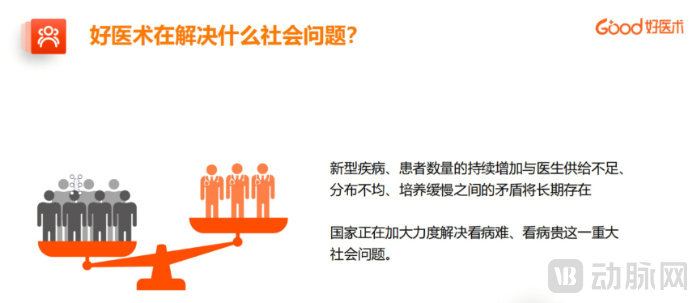
According to VCBeat, Haoyishu initially started with orthopedic surgeon education, dedicating three years to the orthopedics field and focusing on exploring teaching methods that could genuinely help doctors improve their skills. It was not until 2019 that Haoyishu underwent an iterative upgrade from a single department to multiple departments (orthopedics, cardiology, dentistry, and medical aesthetics).
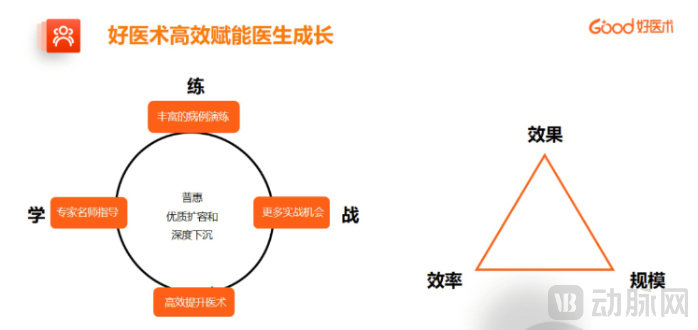
This year, in response to the learning characteristics of clinicians, the company has undertaken digital upgrades and innovated its educational products, with a focus on strengthening expert mentorship and deliberate practice. It has now implemented various teaching methodologies, including Problem-Based Learning (PBL), Team-Based Learning (TBL) for online collaborative study, Online-Merge-Offline (OMO) integrated learning, and case simulation exercises, making solid progress toward efficiently enhancing clinical proficiency.
Today, the content and mathematical framework of the Haoyishu platform are structured around physicians’ professional development needs. Although it currently covers only four medical specialties, the number of registered physicians has exceeded 370,000 and continues to grow.
The Development of Online Medical Education Platforms Is an Irresistible Trend
Online medical education can be described as a “dark horse” sector, harboring immense commercial value.
On the one hand,Medicine is a profession that demands lifelong learning, with an exceptionally high need for education. In the past, however, medical training was predominantly organized by non-profit industry associations and conducted through in-person exchange meetings. This sector has historically been characterized almost entirely by “demand” with virtually no “market.”
On the other hand,Amid the trend of population aging, medical demand is surging. The current state of the healthcare industry—characterized by insufficient physician supply, uneven distribution, and lengthy training cycles—stands in stark contrast to this growing demand, creating an urgent need to fill the shortage of high-quality physicians.
Amid rising demand and the emergence of digital technologies, the value of online education has been further highlighted.Online education not only enhances the accessibility of learning for physicians and meets the industry’s educational demands, but also enables doctors in remote areas to access high-quality medical educational resources, thereby further improving their surgical skills and contributing to the growth in the number of highly competent physicians.
According to the “2021 China Physician Insights Report—Analysis of Online Medical Behavior” released this year by DXY, the use of online medical education platforms for learning has become an inevitable trend.
The report mentions,The pandemic has catalyzed the rise of the internet healthcare industry and the refinement of its products and services. A comprehensive overview of physicians’ online medical activities is gradually taking shape, entering a phase of vertical deepening. Physicians’ behaviors are shifting from superficial “passive acquisition” to deeper “active learning” and “active output,” with online medical activities being strengthened; on average, more than 70% of their time is now devoted to active learning and active output.
Since the beginning of this year, physicians have spent an average of 12.0 hours per week engaging in online medical activities. Their needs have evolved from fragmented searches and queries to the use of more systematic and structured learning modules. Meanwhile, the number of paying users has risen, with physicians showing greater willingness to pay for high-value content with strong practical applicability.
The Golden Age of Blended Online and Offline Medical Education Appears to Be Dawning.
Policies, as beacons charting the “course,” also point toward the direction of medical education.,and view it as a window into addressing the pressures on China's healthcare system.
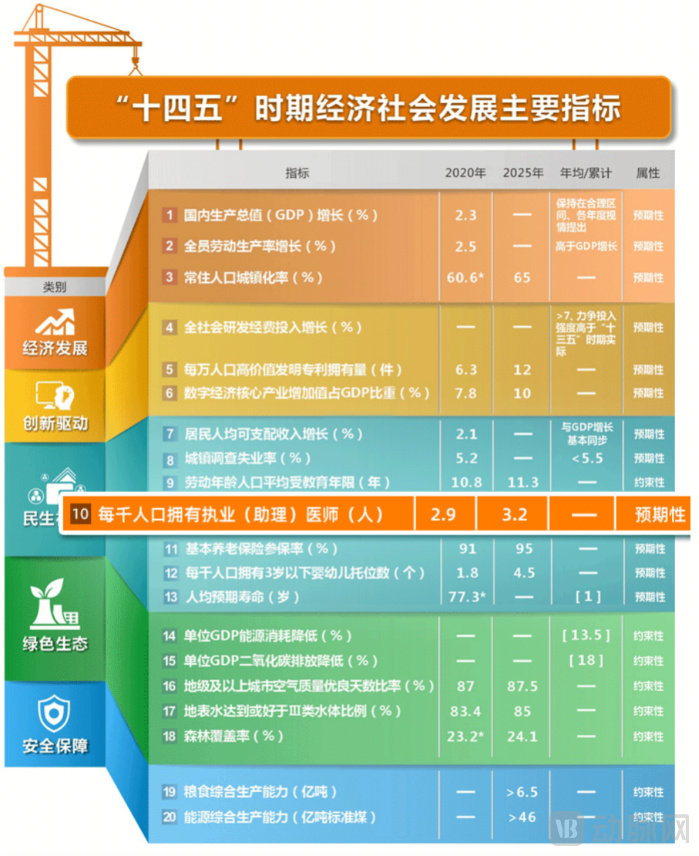
Among them, the 14th Five-Year Plan points out that the supply of medical service resources should be expanded by strengthening the construction of public health schools and talent teams. It also mentions accelerating the expansion of high-quality medical resources and their balanced regional distribution, improving the quality and scale of healthcare professional training, expanding the number of shortage specialists such as pediatricians and general practitioners, and achieving a target of 3.2 licensed physicians per 1,000 population.
The Physicians Law, released this August, mentions the need to strengthen collaboration between medical education and practice, improve the systems of medical school education, postgraduate training, and continuing education; establish a talent cultivation mechanism that integrates public health with clinical medicine, enhance relevant professional training for clinical and public health physicians; guide high-quality medical resources to flow toward primary care settings, and encourage more highly skilled physicians to serve at the grassroots level. Engaging in vocational education for doctors is thus aligned with these policy directions.
Dual-Engine Drive: Educational Products and Digital Capabilities
Wan Anqiang, founder of Hao Yishu, told VCBeat“Only through practical, hands-on medical training and education that tangibly enhances physicians’ clinical skills can we hope to truly address the imbalance in healthcare resources. Chinese doctors, in particular, need case-based insights from frontline practitioners in developed cities and overseas clinical experts.”

Wan Anqiang, Founder of Hao Yishu
Today, Haoyishu has assembled a "high-cognition" learning team.
In this regard, Wan Anqiang, founder of Haoyishu, stated:“First, guided by its mission of ‘empowering physicians and safeguarding lives,’ Haoyishu aligns its strategy and operations with China’s 14th Five-Year Plan. Second, our team is a quintessential learning organization. In serving physicians—a highly educated professional group—our organization must engage in continuous learning and self-iteration. Candid communication and the efficient flow of information are distinctive features of our organization. These constitute the core competencies that enable our company to achieve progress and breakthroughs, and to develop high-quality content products.”
Moreover, in terms of organizational development, Haoyishu has collaborated with external partners to establish an advisory team comprising more than 30 medical experts from China and abroad, who are responsible for the development and review of educational content.
Nowadays, with the deepening of online medical practices and the continuous strategic expansion by related enterprises,The industry has entered a stage of refined operations, with the Matthew effect gradually becoming apparent. Haoyishu, which entered this sector in 2016, holds inherent value.
Changling Capital is a new generation of theme-driven venture capital funds. In the fields of big health and aging, Changling Capital is committed to investing in technology-driven business model innovations, making longevity a gift of life for everyone in China's rapidly aging society. Changling Capital has offices in Shanghai and Beijing, with a total managed fund size of 6 billion yuan. Its investors include endowments from globally renowned universities and hospitals, foundations, pension funds, top-tier fund-of-funds, and other leading investment institutions. Changling Capital is dedicated to continuously creating value for the growth and development of companies in emerging sectors.