

CommBio Therapeutics Completes Pre-A Financing to Advance Synthetic Biology-Driven Microbial Vector Gene Therapy Drug Development
Recently,CommBio Therapeutics (Shanghai) Co., Ltd. (“CommBio Therapeutics,” hereinafter referred to as “CommBio”) announced the completion of its Pre-A financing round.It is reported that this round of financing was led by CDH Investments, with participation from Daoyuan Capital, Longmen Capital, and Zhongying Xinda. The funds will be used to accelerate the R&D of innovative drugs at Hedoo Biotech and advance research on microbial bacterial vector-based gene therapy into the preclinical drug development stage.
Public information indicates that Hedoo Bio was established in Zhangjiang, Shanghai, in 2019, becoming one of the first companies in China to develop genetically engineered bacterial therapeutics based on gut biology. The company’s founding team hails from the former Novartis Shanghai R&D Center and possesses substantial research expertise in gut microbiota, disease biology, novel drug discovery, and gene therapy.
Based on the Natural Activity of Gut Bacteria, Hedu BioModifying bacterial genomes using synthetic biology and other methods to introduce exogenous genes for disease treatment, and regulating gut immunity and metabolism by constructing genetically engineered microorganisms,thereby treating diseases associated with intestinal dysfunction. This pharmaceutical approach is referred to as bacterial vector gene therapy, recombinant live biotherapeutic products, or synthetic probiotics.
Dr. Xiang Bin, Founder & CEO of Hedu BioIntroduction: Gut microbiota-based vector gene therapy is an emerging therapeutic modality. Over the past two years since its establishment, Hedushengwu has advanced from initial laboratory research to achieve new insights and breakthroughs in the fields of autoimmune and metabolic diseases. The growing body of efficacy data from animal studies has bolstered our confidence in the potential therapeutic breakthroughs offered by this drug modality.
“Microbial bacterial vector gene therapy is an emerging field, and the management team at Hedubio represents a rare multidisciplinary group with genuine professional expertise in drug R&D within this sector.” As the lead investor for this funding round,Dr. Liu Dan, Partner at CDH VGC (Venture & Growth Capital)The interview also highlighted that recent research has made the industry aware that disease pathogenesis is typically associated with disruptions in multiple signaling pathways, and that new drug development must transcend the diseased tissue itself to understand diseases from a systemic perspective. By employing synthetic biology to engineer bacteria for the delivery of gene products that modulate gut function, Hedu Bio is highly likely to bring about breakthroughs in future disease treatments. CDH Investments will support Hedu Bio’s R&D efforts for innovative drug projects, promote the development of gut microbiota-based gene therapy, and accelerate the creation of novel therapeutics that benefit patients.
In fact, compared with gene therapy products using AAV (adeno-associated virus) and other vectors, bacterial vector-based gene therapy products inDrug Safety, Therapeutic Efficacy, and Drug Pricingdemonstrates significant potential advantages in these areas.
From a safety perspective, the vectors selected for bacterial vector-based gene therapy products are predominantly probiotics that are harmless to the human body, ensuring a reliable safety profile. Compared with fecal microbiota transplantation (FMT), which is currently gaining significant momentum, bacterial vector-based gene therapy products eliminate the risk of contamination by miscellaneous bacteria or harmful pathogens. This offers superior safety and greater application potential. Furthermore, the introduced genes target specific disease signals, enabling more targeted therapy and reducing inter-individual variability in drug response.
In terms of specific therapeutic efficacy, while AAV vectors are constrained by the number and size of genes they can carry, bacterial vectors can integrate multiple target genes into their chromosomes, enabling multi-target therapy to achieve superior drug efficacy.
For innovative drug R&D enterprises, bacterial vector gene therapy products also offer significant advantages in terms of development costs. This means that such products can be made available to a broad patient population at more affordable prices, ensuring tangible benefits for patients and enhancing drug affordability.
In summary of the above advantages,Research on bacterial vector-based gene therapy products is currently gaining momentum in the global new drug development industry. In advanced regions such as Europe and the United States, a number of biopharmaceutical companies have emerged in this emerging therapeutic field, with early-stage projects from some companies already having entered Phase II clinical trials.
On September 20, 2021, Synlogic disclosed positive clinical data for its engineered bacterial therapeutics: the candidate drugs SYNB1618 and SYNB1934, developed for the treatment of phenylketonuria (PKU), achieved positive results in clinical trials and are poised to advance into Phase III trials. This achievement not only demonstrates the significant therapeutic potential of microbial vector-based gene therapy but also bolsters market confidence in the future development of this sector.
“The methodology of using gut bacteria as delivery vehicles to construct genetically engineered bacteria is highly innovative, with a remarkably clever design rationale. In recent years, as academic and industrial research on the gut microbiota has deepened, we have become increasingly aware of the subtle interplay between the gut microbiota and human physiological systems. Hedu Bio integrates synthetic biology with the gut microbiota by incorporating therapeutic target genes into the bacterial genome via CRISPR-Cas technology to create genetically engineered bacteria, which are then delivered to the gut for disease treatment.”Zhang Dafeng, Founding Partner of Daoyuan CapitalIn the interview, he stated candidly that he believes HeDu Bio’s R&D of genetically engineered bacterial drugs based on gut biology is poised to emerge as a new hot sector and deliver novel therapeutic breakthroughs.
Wang Haining, Founding Partner of Longmen CapitalIt also described Hedu Bio as “a domestic enterprise that truly possesses foundational technologies,” noting its unique technological and patent barriers. “As China’s first new drug R&D company focused on gut bacterial vectors, we believe that Hedu Bio’s future development will continue to improve, enabling it to develop globally original drugs in the years ahead.”
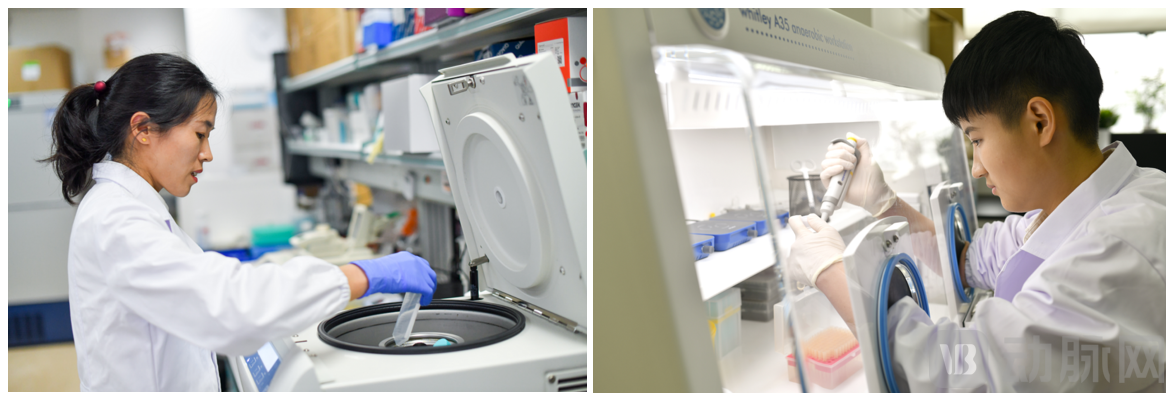
On-site photos of Hedoo Bioscience scientists working in the laboratory (Image source: Provided by the company)
It is reported that since its establishment, Hedu Bio has mainly focused onMetabolic and Autoimmune Diseases...and other fields, we are developing products and gradually establishing a proprietary R&D platform for novel microbial bacterial vector-based gene therapies. To date, we have obtained encouraging and significant experimental data across multiple new drug programs, positioning us to develop globally leading, first-in-class innovative therapeutics.
Jiang Yong, Founding Partner of Zhongying XindaIt is also believed that Hedu Biopharma, as a domestic innovator in original new drug development, remains committed to the research and development of First-in-class innovative drugs. “The research spirit and scientific rigor demonstrated by the company’s R&D team have convinced us that it is an enterprise grounded in practical execution. We remain committed to accompanying the company through its long-term growth. Leveraging Hedu Biopharma’s exceptional R&D capabilities and global perspective, we aim to develop original novel therapies in the field of gene therapy that are both highly efficacious and affordably priced, thereby benefiting patients.”
Dr. Xiang Bin told VCBeat that the company’s current round of financing will accelerate the transition of its first batch of R&D projects from laboratory research to drug development, while empowering the concurrent development of subsequent pipeline projects. “We will collaborate more closely with experts across various fields, including clinicians, to advance the R&D of gut bacteria vector-based gene therapies, aiming to develop novel drugs that benefit patients as soon as possible.”