

Three Mid-Career PhDs Left Big Pharma to Launch Abbisko, Achieving IPO Within Five Years

Abbisko
Small Molecule Tumor Therapy Developer
On October 13, Abbisko Cayman Limited (abbreviated as Abbisko-B, SEHK: 02256) was officially listed on the Stock Exchange of Hong Kong. Due to Typhoon Signal No. 8, and in accordance with the HKEX’s extreme weather arrangements for the securities market, trading in Hong Kong stocks was suspended for the entire day.Abbisko’s listing ceremony was held as scheduled in Shanghai. The IPO was priced at HK$12.46 per share, with a total of 141 million shares issued, raising approximately HK$1.758 billion.
On October 14, coinciding with the Double Ninth Festival, the Hong Kong stock market was closed for the day.
On October 15, Abbisko finally celebrated its first trading day since going public. The stock opened at HK$11.30 and reached a high of HK$11.56, dipping slightly from its IPO price.
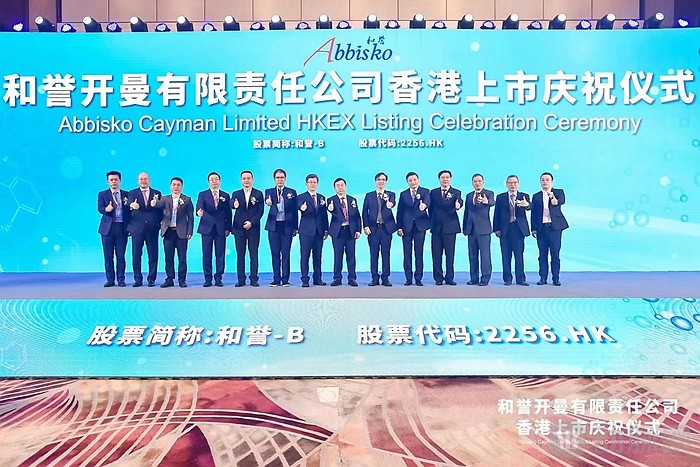
The joint sponsors for this IPO are Morgan Stanley and JPMorgan; the joint global coordinators is China International Capital Corporation (CICC); and the joint bookrunners are Industrial Securities International, Haitong International, HSBC, and Huatai International.。
Abbisko’s IPO is not only backed by two major international investment banks, Morgan Stanley and JPMorgan Chase, but also features a strong lineup of cornerstone investors, including 11 renowned domestic and foreign institutional investors such as Lilly Asia Ventures, UBS, OrbiMed, BlackRock, Warburg Pincus, and Temasek.
Why Is Top-Tier Capital So Bullish on Abbisko? It All Starts with the Story of Its Three PhD Founders.
First is Dr. Xu Yaochang, born in the 1950s, with over 30 years of R&D experience in oncology and other disease areas. Xu Yaochang has previously held positions at major pharmaceutical companies such as Eli Lilly, Novartis, and Hansoh Pharma. He possesses extensive R&D expertise in oncology, diabetes, immunology, neurodegenerative diseases, and ophthalmology, along with substantial experience in the development, manufacturing, and marketing of branded and generic prescription drugs, active pharmaceutical ingredients (APIs), and biosimilars.
Notably, during his tenure at Eli Lilly, Xu Yaochang became a key facilitator in helping China’s pharmaceutical outsourcing industry expand globally.
Prior to 2003, foreign pharmaceutical companies never considered the option of outsourcing pharmaceutical services in China.
Between 2003 and 2004, Xu Yaochang traveled frequently between China and the United States, repeatedly demonstrating through concrete evidence the capability and speed of China’s pharmaceutical outsourcing services, thereby convincing Eli Lilly. As a result, Eli Lilly placed its first overseas order in Zhangjiang, Shanghai, prompting other global pharmaceutical companies struggling with efficiency and cost issues to follow Lilly’s lead and seek partners in China.
Following this, Xu Yaochang successively held positions at several pharmaceutical giants. In 2007, he facilitated the establishment of Novartis’ China R&D Center in Zhangjiang. In 2012, he joined the domestic Chinese company Shanghai Hansoh Pharmaceutical as General Manager of the New Drug R&D Center, playing a key role in establishing Hansoh’s New Drug R&D Center in Zhangjiang.
By 2016, Xu Yaochang had finally made up his mind to start his own business, personally contributing to innovation in China’s biopharmaceutical industry.
The other two co-founders accompanying him are Dr. Yu Hongping, born in the 1960s, and Dr. Chen Zhui, born in the 1970s.
Yu Hongping has over 15 years of experience in drug discovery and development, having held positions at major pharmaceutical companies such as Merck, Novartis China R&D Center, and Shanghai Hansoh. He possesses extensive expertise in the development, manufacturing, and marketing of pharmaceutical drugs, vaccines, and animal health products, as well as in the development, production, and marketing of branded and generic prescription drugs, active pharmaceutical ingredients (APIs), biosimilars, and ophthalmic products.
Chen Zhui has over 15 years of experience in drug discovery and development, having held positions at major pharmaceutical companies such as the University of Texas Southwestern Medical Center, Abbott, Novartis China R&D Center, and Johnson & Johnson. He possesses extensive expertise spanning early-stage drug discovery, translational research, clinical translation, and oncology research.
Fate is wonderfully ineffable. The three PhD founders crossed paths while working together at the Novartis China R&D Center in Zhangjiang, Shanghai. They also shared similar career trajectories: starting with drug development abroad, then joining domestic R&D centers, and ultimately pioneering locally developed innovative biopharmaceuticals in China.
The three PhDs have also achieved notable accomplishments at major global pharmaceutical companies, contributing to dozens of commercialized projects including Ameile (almonertinib), Cymbalta (duloxetine), Balversa (erdafitinib), Reyvow (lasmiditan), Fu Laimei (pegloxisenatide), Kisqali (ribociclib), Xinfu (flumatinib), and Venclexta (venetoclax).
Shared experiences and common goals led three middle-aged PhDs to shed their former accolades, step out of the comfort zones they had worked hard to build, and jointly establish a domestic Chinese pharmaceutical company dedicated to developing homegrown innovative biologics.
In April 2016, Abbisko was established. Since its inception, Abbisko has completed five rounds of financing over the past five years, raising a total of $263 million. Investors include Sinopharm Capital, Lilly Asia Ventures, CICC Capital, Zenovo Capital, Qiming Venture Partners, GIC, OrbiMed, and many other renowned domestic and international institutions.
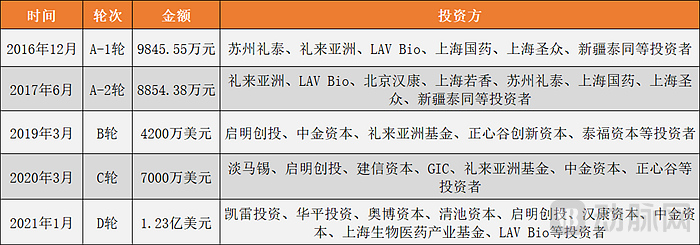
Financing History
Notably, Qiming Venture Partners, the second-largest institutional investor in Abbisko prior to its IPO, led the Series B financing round in 2018 and subsequently participated in the Series C and Series D funding rounds.
Hu Xubo, Managing Partner at Qiming Venture Partners, stated, “As one of the early investors, Qiming Venture Partners has witnessed the growth of Abbisko. The company boasts an outstanding founding and management team, first-class R&D capabilities, and a robust clinical development pipeline. We believe that Abbisko will emerge as a globally competitive innovative drug developer in the future. We will continue to support Abbisko in its efforts to address unmet clinical needs for patients in China and around the world.”
Under the overall leadership of three PhDs and Abbisko’s core team, Abbisko is dedicated to discovering and developing innovative and differentiated small-molecule oncology therapies.The candidate drugs are primarily small-molecule agents focused on precision oncology and small-molecule tumor immunotherapy.
The vast size of the oncology market and the superior efficacy of small-molecule drugs are the primary reasons why Abbisko has chosen to develop in this field.
In terms of efficacy, combination therapies in the oncology field demonstrate broader preclinical and clinical efficacy, holding greater market potential.Combination therapies such as pembrolizumab plus axitinib for metastatic renal cell carcinoma (RCC), nivolumab plus cabozantinib for RCC, and atezolizumab plus cobimetinib and vemurafenib for BRAF V600 mutation-positive advanced melanoma have also been successively approved by the FDA.
Studies have shown that combination therapies involving multiple small-molecule targeted anticancer drugs significantly improve overall survival in patients. Recent trials, such as Roche’s study of atezolizumab combined with bevacizumab for the treatment of primary liver cancer, and pembrolizumab combined with lenvatinib for renal cell carcinoma (RCC), also demonstrate that combination regimens of tumor immunotherapy and targeted anticancer agents yield improved overall survival compared with monotherapy.
In terms of the market, the small-molecule oncology drug market in China and globally holds immense growth potential.From 2020 to 2025, the global compound annual growth rate (CAGR) for the small-molecule oncology drug market is projected to be 12.3%, with China’s CAGR reaching 26.3%.
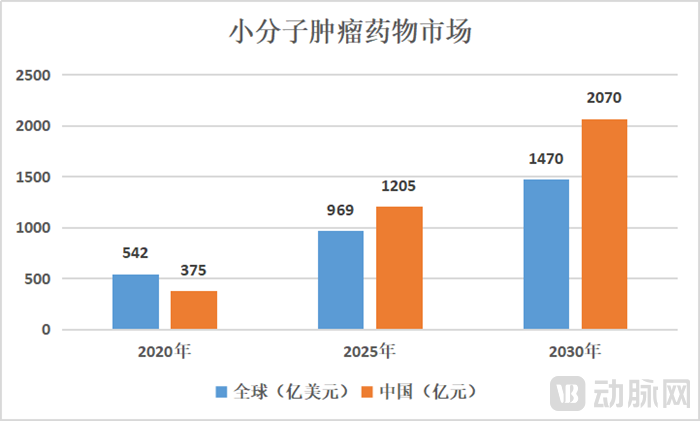
Small-Molecule Oncology Drug Market, Compiled from the Prospectus
Specifically, the United States approved 43 small-molecule oncology drugs and 23 monoclonal antibody oncology drugs between 2016 and 2020.
In comparison, China approved only 34 small-molecule oncology drugs and 14 monoclonal antibody oncology drugs from 2016 to 2020.
The disparity between the United States and China in the number of listed oncology precision medicine drugs and oncology immunotherapy drugs indicates greater growth potential for this market in China.
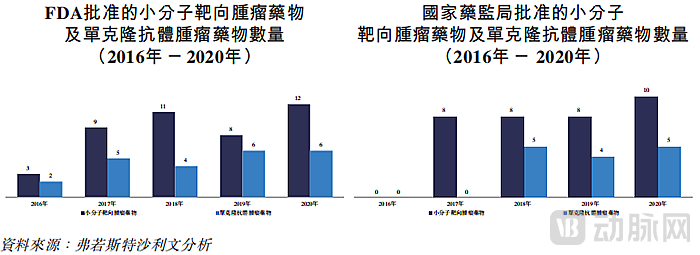
Source: Prospectus
In 2020, the global market for small-molecule precision oncology therapeutics reached $54.2 billion.
Among these, small-molecule precision oncology therapies primarily include selective and non-selective kinase inhibitors, as well as other types of inhibitors.
Non-selective kinase inhibitors exert their anticancer activity by simultaneously targeting a broad range of kinases or multiple signaling molecules across various signaling pathways. Selective kinase inhibitors target specific signaling molecules within a single pathway, such as the epidermal growth factor receptor (EGFR), vascular endothelial growth factor receptor (VEGFR), and fibroblast growth factor receptor (FGFR).
According to Frost & Sullivan data, to date, there are three approved pan-FGFR inhibitors globally (Incyte’s pemigatinib, Johnson & Johnson’s erdafitinib, and QED Therapeutics’ infigratinib), along with a total of 15 other pan-FGFR inhibitor candidates at various stages of clinical development.
Regarding FGFR4 and its pathway, there are currently no marketed FGFR4 inhibitors, and only seven candidate drugs are in various stages of clinical development worldwide (including ABSK011, a candidate from Abbisko), focusing on the treatment of multiple types of solid tumors such as liver cancer, head and neck cancer, esophageal cancer, and cholangiocarcinoma.
According to Frost & Sullivan, the number of patients with solid tumors has increased year after year. Driven by this substantial demand, the global market for small-molecule precision oncology therapies has naturally experienced rapid growth, as indicated by Frost & Sullivan’s data.
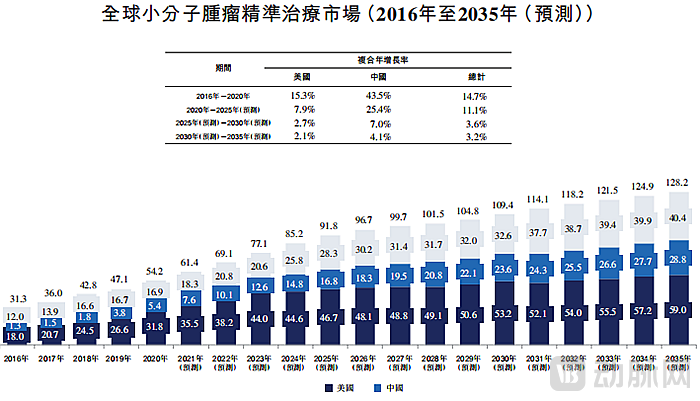
Source: Prospectus
Tumor immunotherapy is in its early stages, with a market size of only $8.9 million in 2020.
Compared with conventional therapies, one of the greatest advantages of cancer immunotherapy is the durability of its efficacy.
Small-molecule cancer immunotherapy drugs not only target immune-suppressive mechanisms similar to those of monoclonal antibodies, but also stimulate intracellular pathways downstream of checkpoint proteins in immune cells that are inaccessible to monoclonal antibodies or their indicated applications.
A variety of biologic immuno-oncology drugs have been approved for marketing, indicated for different conditions, including pembrolizumab for melanoma, non-small cell lung cancer, and head and neck squamous cell carcinoma; ipilimumab for melanoma and renal cell carcinoma; and atezolizumab for urothelial carcinoma, non-small cell lung cancer, and triple-negative breast cancer.
However, according to Frost & Sullivan data, the global small-molecule tumor immunotherapy market is still in its early development stage, with a market size of approximately $8.9 million in 2020., which are expected to reach US$5.1 billion, US$37.6 billion, and US$67.4 billion in 2025, 2030, and 2035, respectively, with corresponding compound annual growth rates of 49.4% and 12.4%.
The projected rapid growth is driven by the fact that an increasing number of small-molecule immuno-oncology drug candidates are expected to complete clinical trials and achieve commercialization.
According to Frost & Sullivan data, as of May 31, 2021, pexidartinib was the only CSF-1R inhibitor approved by the FDA for the CSF-1R pathway; additionally, there were six candidate drugs (excluding ABSK021) in various stages of clinical development globally. For CXCR4, plerixafor is the only marketed drug worldwide, with three other candidate drugs (including Abbisko’s ABSK081) still in clinical development.
Based on the aforementioned areas, Abbisko has currently designed and developed a pipeline comprising 14 oncology-focused drug candidates, five of which have entered clinical stages. Among these, ABSK011 and ABSK091 are Abbisko’s core candidate products.
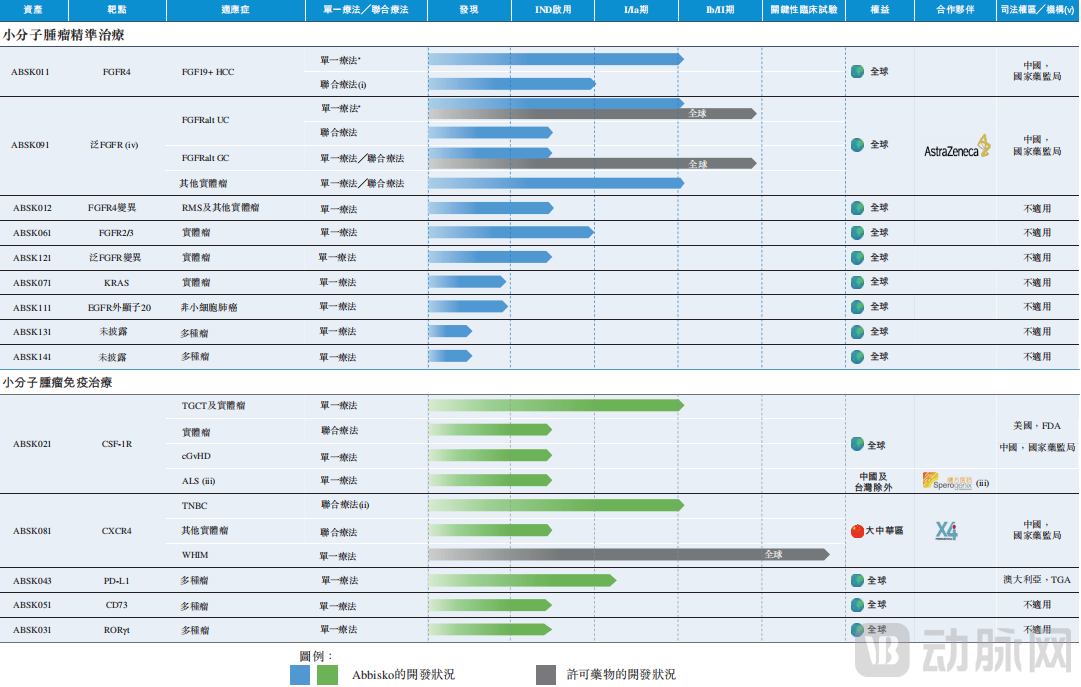
Pipeline, Source: Prospectus
ABS011: Treating Advanced HCC with Highly Activated FGF19/FGFR4 Signaling
According to Frost & Sullivan, liver cancer ranks fourth in incidence among all cancers and was the second leading cause of cancer-related deaths in China in 2020. The most common type of liver cancer is hepatocellular carcinoma (HCC), which is one of the deadliest cancers worldwide and the third most common cause of cancer-related mortality.
According to Frost & Sullivan data, the number of patients with hepatocellular carcinoma (HCC) in China exceeded 390,000 in 2020, and the prevalence of FGFR alterations among Chinese HCC patients was approximately 20.0%. Driven by factors such as high incidence rates of chronic viral hepatitis and cirrhosis, high consumption of alcohol and tobacco, and obesity, the number of new HCC cases in China reached 378,600 in 2020 and is projected to reach 473,400 by 2030, representing a compound annual growth rate (CAGR) of 2.3%.
For resectable hepatocellular carcinoma (HCC), surgery is recommended as the first-line treatment; for advanced or metastatic unresectable HCC, systemic therapy is recommended as the first-line treatment.ABS K011 is a potent and highly selective small-molecule fibroblast growth factor receptor 4 (FGFR4) inhibitor independently developed by Abbisko, primarily indicated for advanced hepatocellular carcinoma (HCC) with highly activated FGF19/FGFR4 signaling.
During the preclinical research phase, ABSK011 demonstrated robust cellular potency., ABSK011 demonstrated greater cellular potency than BLU-554 (fisogatinib, a potent and highly selective small-molecule FGFR4 inhibitor with significant potential as a novel therapeutic agent for patients with hepatocellular carcinoma [HCC]) across multiple FGF19/FGFR4-dependent HCC cell lines.
Furthermore, ABSK011 also exhibits excellent overall physicochemical and drug-like properties., demonstrating significant improvement over BLU554, particularly in terms of solubility and plasma protein binding. These properties enable ABSK011 to achieve higher free drug exposure in both animals and humans, thereby potentially yielding better target coverage and efficacy.
ABS011 also demonstrated dose-dependent antitumor efficacy in various HCC xenograft models, demonstrated superior efficacy compared to BLU554 or sorafenib at the same dose levels in direct comparative preclinical studies.
In February 2020, the National Medical Products Administration (NMPA) approved Abbisko to conduct a Phase Ib clinical trial of ABSK011 in China. The first patient was dosed in June 2021 to evaluate the safety and efficacy of ABSK011 in treating patients with advanced hepatocellular carcinoma (HCC) characterized by FGF19 overexpression.
ABS091: The Potential Game-Changer Among Pan-FGFR Inhibitors
According to Frost & Sullivan data, the prevalence of urothelial carcinoma and gastric cancer in China was 211.9 thousand cases and 675.8 thousand cases, respectively, in 2020. The FGFR alteration rates among patients with urothelial carcinoma and gastric cancer in China were approximately 31.7% and 6.7%, respectively. Surgery or radical cystectomy is the recommended first-line treatment for non-muscle-invasive or early-stage urothelial carcinoma.
In December 2020, the Phase Ib/II clinical trial of ABSK091 for the treatment of patients with urothelial carcinoma harboring FGFR2 or FGFR3 alterations and patients with advanced solid tumors received Investigational New Drug (IND) approval from the National Medical Products Administration.
ABS091 (licensed from AZ, formerly known as AZD4547) is a molecularly targeted investigational product that acts as a potent and selective inhibitor of FGFR subtypes 1, 2, and 3, and is indicated for the treatment of various solid tumors, including but not limited to urothelial carcinoma, gastric cancer, cholangiocarcinoma, and lung cancer.
ABSK091, as a potential pan-FGFR inhibitor, offers three advantages.
First, ABSK091 demonstrates a significant antitumor response., demonstrating dose-dependent efficacy in multiple tumor models with FGFR alterations and exhibiting robust in vivo activity across a broad range of xenograft models.
Secondly, ABSK091 demonstrated a favorable safety profile in clinical trials.
Finally, in terms of efficacy, ABSK091 has achieved clinical proof of concept (PoC) in urothelial carcinoma, gastric cancer, and cholangiocarcinoma.For example, in a Phase Ib study, ABSK091 monotherapy demonstrated a confirmed response rate of 31.3% (per RECIST v1.1) in urothelial carcinoma. In a Phase II study conducted by AstraZeneca in patients with FGFR2-amplified gastric cancer, the objective response rate (ORR) was 33% (3/9), with durable responses; the median progression-free survival (PFS) for responding patients was 6.6 months (range: 6.2–10.5 months).
Abbisko has completed the Phase Ia clinical trial of ABSK011 and the Phase I clinical trial of ABSK091. These trials have generated only limited safety and efficacy data, which may be insufficient for meaningful comparisons with data from other drugs.
Although Abbisko has a robust pipeline, its core product and other candidates remain in early-stage development, unlike its approved drugs.
Furthermore, as no products have been launched to date and the entire pipeline remains in the R&D phase, Abbisko incurred losses in 2019, 2020, and the three months ended March 31, 2021, amounting to RMB 134 million, RMB 706 million, and RMB 124 million, respectively, with cumulative losses exceeding RMB 900 million.
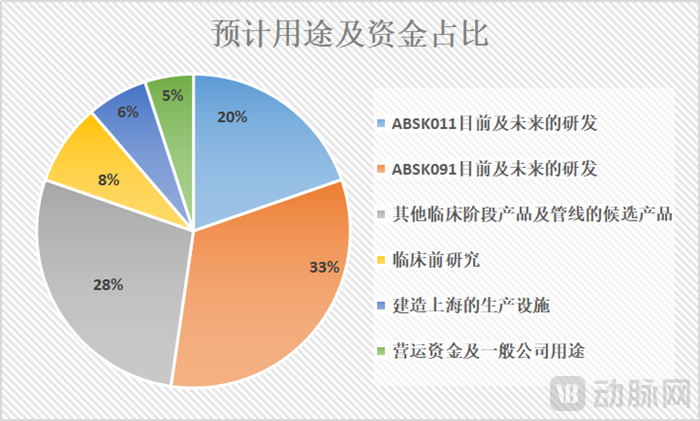 Intended Use and Fund Allocation
The prospectus shows that the majority of losses stem from R&D and administrative expenses. Following its listing, Abbisko will allocate over 80% of the net proceeds from the offering to the research and development of its drug candidates.
Looking ahead, Abbisko will continue to focus primarily on the research and development of small-molecule precision oncology therapies and small-molecule cancer immunotherapies. Although its three PhD founders bring extensive experience and a proven track record in commercialization, operating within the broader oncology market (not just the FGFR inhibitor segment) means the company will continually face intense competition from both existing products and candidate drugs in development.
Across the pharmaceutical and biotechnology industry, characterized by rapid technological advancements, intense competition, and a strong emphasis on proprietary drugs, Abbisko is expected to deliver an outstanding performance as a representative of China’s innovative biopharmaceutical sector in the near future, amidst fierce multi-party competition.