

Ziyang Healthcare Files IPO Prospectus to Revolutionize Critical Elderly Care for Severely Disabled Seniors
Where Do Ordinary People Spend the Most Money in Their Lifetime?
Not on trips, not in schools, nor even in the luxury mansions with sky-high property prices in major cities—it is found in ordinary hospitals, within the intensive care unit (ICU).
Wang Jian, Chairman of BGI Group, stated in an interview with Phoenix TV: “60% of people spend 60% of their savings in the last 28 days of life” has resonated with many people.
Currently in China, most critically ill patients require treatment in the ICU, where it is common for a single bed to cost more than 10,000 yuan per day. Newspapers and online platforms are replete with headlines such as “72 Days in the ICU, Two Houses Sold…” and “Two Weeks in the ICU, a Lifetime’s Savings Depleted…”
Meanwhile, the national medical insurance system is also under immense strain. In 2019, the total revenue of China’s basic medical insurance fund was approximately RMB 2.3 trillion, with total expenditures reaching around RMB 2 trillion. When distributed evenly across the population, this amounts to less than RMB 1,500 per person. This implies that the annual medical insurance contributions of at least six individuals are required to cover just one day of ICU care for a single patient.
“The treatment and care of critically ill patients with severe disabilities represent the most complex challenge in our increasingly aging society, imposing a heavy burden on the state, families, and individuals..” Zhang Xuejun, founder of Ziyang (Beijing) Hospital Management Co., Ltd. (hereinafter referred to as “Ziyang Medical”), told VCBeat that this was precisely the purpose behind his entrepreneurial venture: “Perhaps we can introduce private investment and leverage new technologies and business models to find a solution.”
Care for Critically Ill Patients with Severe Disabilities: A Formidable Medical Challenge
In China’s current healthcare industry, critical care nursing can be described as one of the greatest challenges.
As Chinese people enjoy increasing longevity and higher standards of healthcare, the mismatch between the existing service system and the public’s growing demands has become increasingly pronounced.。
Data from the seventh national population census shows that China’s population aged 60 and above reached 264.02 million, representing a 5.44 percentage point increase in their share of the total population compared to 2010. In 2016, life expectancy at birth in China was 76.3 years; if current trends continue, it is projected to reach 81.9 years by 2040. However, aging and illness often go hand in hand. The majority of older adults suffer from chronic diseases, and a significant proportion have lost their ability to work, requiring companionship and care.
Currently, China has over 40 million elderly individuals with disabilities or partial disabilities, among whom 12 million are completely disabled. “How to care for disabled elderly people” is a core issue facing the entire society. In the past, most care for disabled elderly people was provided by their families, but this not only resulted in a lack of professional nursing care for the elderly but also placed a significant burden on their family members.
It is even less realistic to send elderly patients to existing hospitals for care. In 2019, China’s total healthcare expenditure reached RMB 6.5 trillion, with approximately RMB 2 trillion spent from the medical insurance fund. If all critically ill and disabled elderly individuals were admitted to intensive care units (ICUs), it would not only strain the limited number of hospital beds and nursing staff but also impose a substantial burden on medical insurance expenditures.
This issue is becoming increasingly severe. Survey data indicate that even if the current level of service is maintained, meeting the needs of the growing elderly population would require China’s medical insurance revenue to achieve a compound annual growth rate (CAGR) of 15%–23%, which would clearly place greater pressure on society.
And if health insurance is waived, with costs borne solely through out-of-pocket payments, it would constitute a catastrophic financial blow for the vast majority of families.
Care for Severely Disabled Elderly: A Critical Juncture Demanding New Solutions
Identifying Industry Pain Points Through Personal Experience
These issues have also long plagued Zhang Xuejun, the founder of Ziyang Medical.
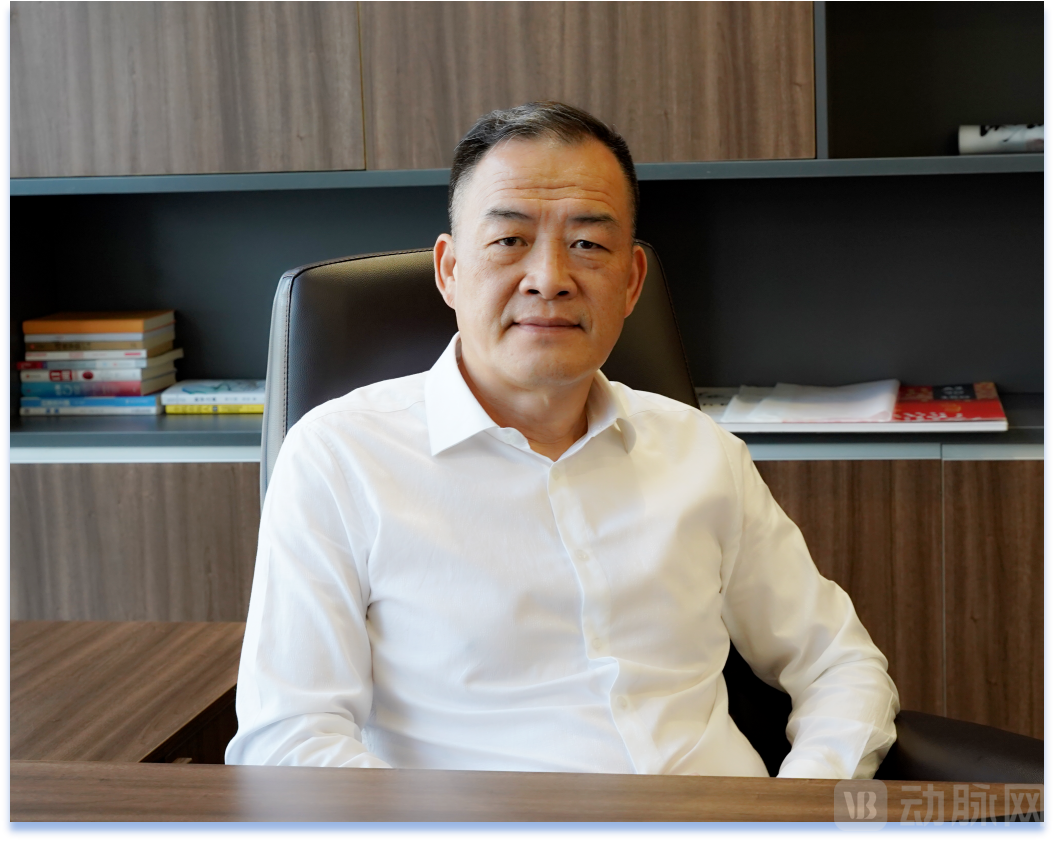
Zhang Xuejun, Founder of Ziyang Medical
What prompted Zhang Xuejun to focus on critical care for the severely disabled was his personal experience in caring for the elderly.。
Previously, Zhang Xuejun had been deeply immersed in the healthcare industry, possessing not only clinical work experience but also having founded health management-related enterprises in Japan. Although he had some exposure to elderly care, his personal understanding was not particularly profound until a severe illness struck an elderly family member.
Due to severe illness, the elderly individual has little capacity for self-care and requires assistance from family members and caregivers. Prolonged bed rest not only causes physical and psychological suffering for the elderly but also results in high costs and places a significant burden on their children.
To ensure that elderly patients receive more professional care and treatment services during their therapy, Zhang Xuejun began to focus on institutions capable of providing emergency care for severely disabled seniors, turning his attention to Japan, where the elder care and emergency rescue industry is highly developed. As one of the most rapidly aging countries globally, Japan has accumulated extensive experience in developing its elder care and emergency rescue sector, offering valuable lessons for others. Zhang’s many years of work experience in Japan also gave him direct exposure to this field.
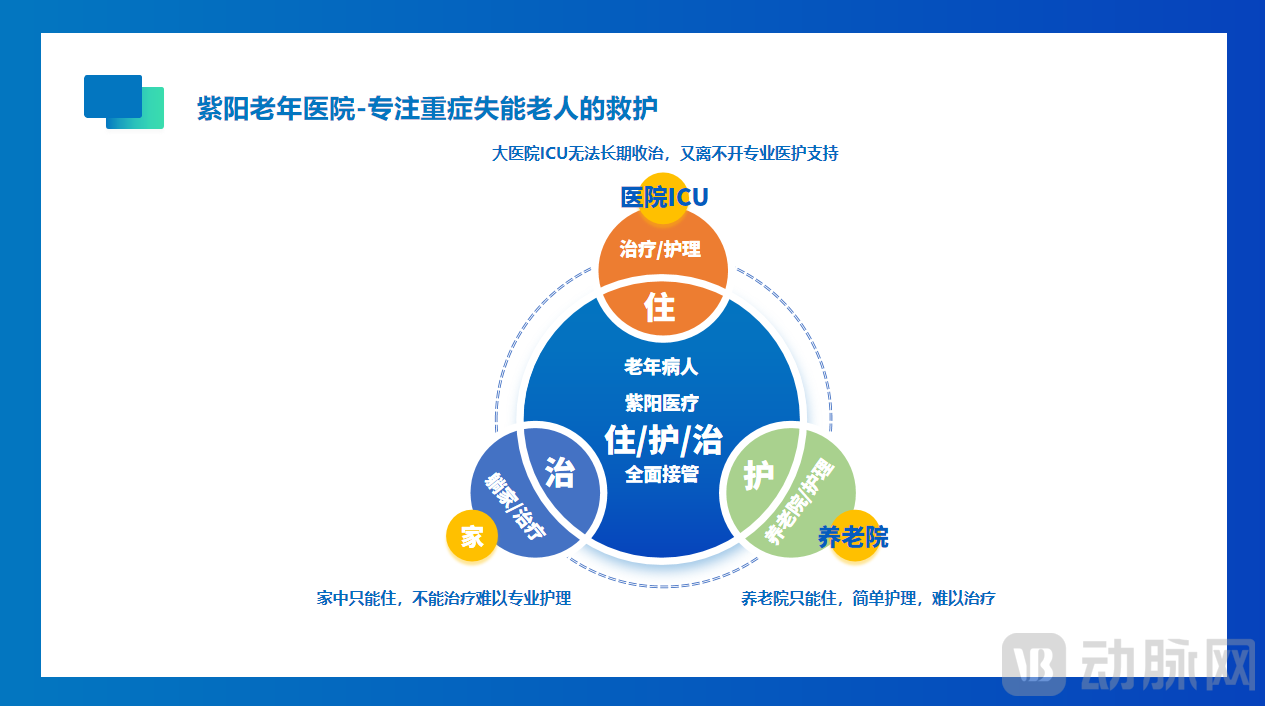
In Zhang Xuejun’s view, the high cost of critical care in China stems from the entanglement of three core needs: hospitalization, treatment, and nursing. Only intensive care units (ICUs) in large hospitals can provide all three services simultaneously, yet bed capacity in these ICUs is extremely limited.According to publicly available information, there are approximately 8.8 million hospital beds nationwide in China, among which intensive care and emergency beds account for only 1.7%, or about 150,000. However, tens of millions of elderly people in China require long-term inpatient care, making it difficult to accommodate them long-term due to the limited number of available beds.
Meanwhile, due to the lack of professional medical and nursing support, home-based and community elderly care institutions can only provide routine caregiving services, leaving them unable to deliver treatment or achieve specialized nursing care. Furthermore, given the higher risks associated with disabled elderly individuals and their greater demands for caregiving capacity and medical attention, some elderly care facilities are willing to accept only self-sufficient seniors.
After identifying pain points in the industry, Zhang Xuejun began drawing on Japan’s experience in emergency care for severely disabled elderly individuals to provide cost-effective emergency care services for this population. He deconstructed the entire industry chain, initially focusing on the operation of emergency care services for severely disabled seniors and the research and development of elderly care products. Leveraging Linhai Ziyang Geriatric Hospital as a foundation, he established Ziyang Medical in 2015, creating a professional chain of hospitals specializing in emergency care for the severely disabled elderly.
Currently, Ziyang Medical has successfully standardized a series of replicable processes, including an ambulance service system, a SaaS platform, and an operational framework. It manages two hospitals with a total of 450 beds through direct operation and trusteeship models, employing over 300 medical and technical staff to ensure comprehensive care for the elderly.
It is understood that the most distinctive feature of Ziyang Medical is its provision of an “open ICU” service. In contrast to intensive care units (ICUs) at Grade 3A hospitals, where daily costs amount to at least RMB 8,000 and the vast majority of items must be paid out-of-pocket, the same equipment and treatment regimens at Ziyang Medical may cost only one-tenth as much, with 85% of the expenses reimbursable through medical insurance.
Ziyang’s Solution: An Integrated Model of Institutional, Community, and Home-Based Care
Ziyang Medical’s solution is straightforward: comprehensively integrate relevant social resources, leverage informatization and smart technologies as the foundation, and build a large-scale, comprehensive, all-age elderly care service model that integrates institutional, community-based, and home-based care.
Specifically,By integrating offline hospitals with online marketplaces, the model leverages operational and service standards to attract strategic capital and support from social institutions, enabling rapid replication and expansion, driving the industry chain, and achieving a diversified business layout.。
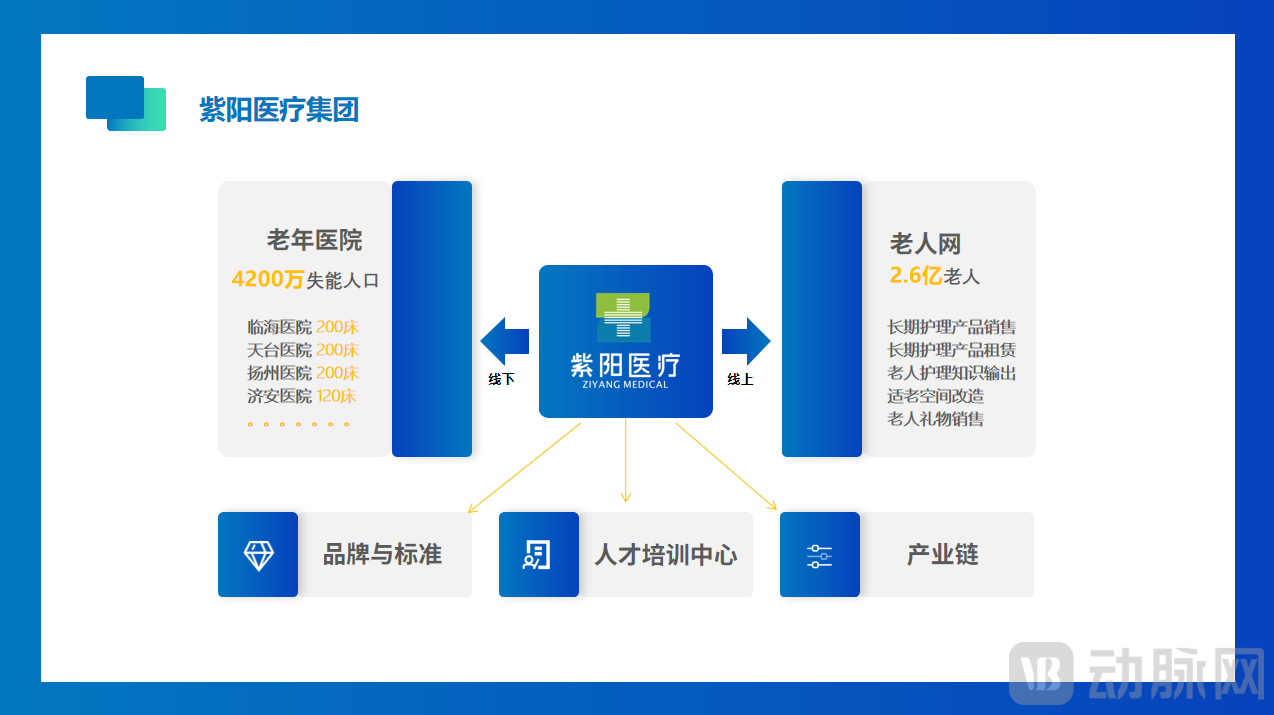
Positioned as a chain of hospitals specializing in critical care and disability support, Ziyang Medical has been committed to enabling more elderly individuals to access cost-effective care services during its development, constantly seeking the optimal balance between professional and inclusive services. Through years of positioning, exploration, and practice in the care service system for elderly patients, Ziyang Medical has gradually formed a development model centered on offline hospitals, with an online marketplace addressing home-based needs. This model covers a wide range of services, including ICU critical care, age-friendly design and renovation, operational management, a nursing supplies e-commerce platform, and talent training.
It is reported that Ziyang Medical, a hospital with 150 beds, has more than 40 ventilators and nearly 100 ECG monitors., coupled with innovative service models, enables the ICU critical care beds at hospitals under Ziyang Medical to achieve significantly lower costs compared to those at Grade 3A hospitals.
In terms of operations, Ziyang Medical primarily expands its chain network through two approaches.:
1) Self-built and self-operated: Ziyang Medical directly funds the construction of the geriatric hospital and manages its operations.
2) Managed Operations: Ziyang Medical will introduce management and operational systems to the client hospital, while providing specialized teams and operational management models to enhance the client hospital’s management efficiency and professional service capabilities.
Offline, Ziyang Medical has successfully established a standardized operational system. For instance, nursing assistants can be deployed after just 45–60 days of training, enabling low-cost, rapid replication. Consequently, Ziyang Medical is well-positioned to achieve swift brand expansion in the near future.
Meanwhile, Ziyang Medical has also implemented a multi-faceted online strategy.。
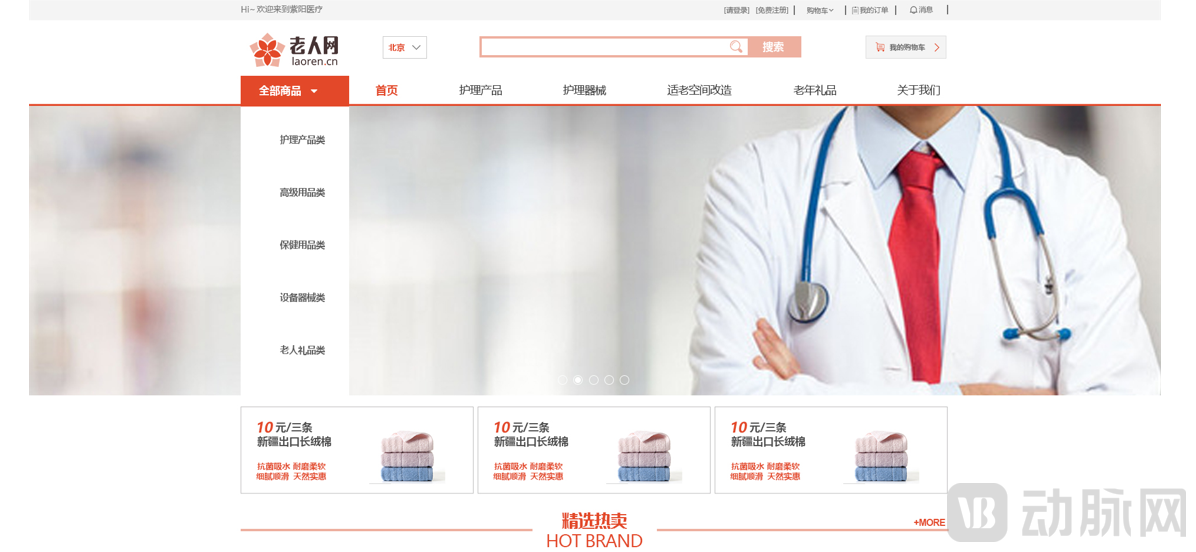
First, given the current elderly care landscape in China, home-based care remains the preferred option for most elderly patients. Therefore, Ziyang Medical has established an online marketplace for elderly care products, “ElderlyNet”, featuring hundreds of manufacturers and brands, and enabling users to access products through purchase or lease.
Secondly, Ziyang Medical also establishedHome Aging-Friendly Renovation ServicesModifications or renovations can be made to passageways, living rooms, kitchens, bathrooms, and other activity areas in the homes of older adults, as well as adjustments to furniture configuration and detailed safety protections. These measures facilitate mobility, bathing, toileting, and resting for elderly individuals, thereby improving the quality of elder care and alleviating the burden on family members.
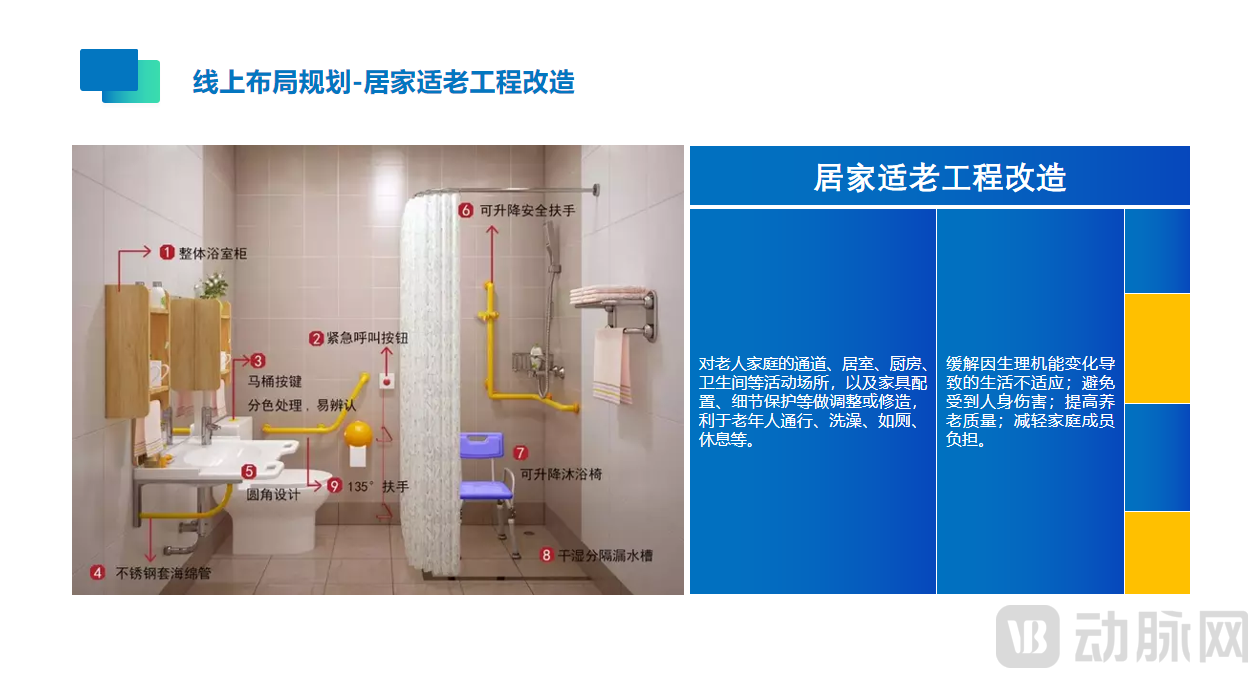
Third, Ziyang Medical has also launchedLong-Term Care Product Rental Services. We offer rental services for electric beds, wheelchairs, oxygen concentrators, ventilators, rehabilitation equipment, and even furniture such as bath/toilet chairs and toilet safety frames, to alleviate patients’ difficulties in daily living caused by changes in physiological functions and prevent personal injury.
In addition to hardware product purchases, Ziyang Medical also provides online services such as popularizing elderly care knowledge and offering age-friendly design and renovation services, thereby meeting the home care needs of elderly patients.
Meanwhile, Ziyang Medical is also actively participating inR&D Initiatives and Public Welfare Undertakings in the Elderly Care Industry, and has successively collaborated with the China Association for Elderly Care and specialists from multiple Grade A tertiary hospitals to establish special research projects. It has also founded a physician group to continuously introduce more efficient and humanistic care services.
In addition, Ziyang Medical also plans to collaborate with insurance companies to launch insurance products tailored to long-term care needs., with the aim of further reducing the financial burden on elderly patients and their families.
Providing medical and nursing care for severely disabled elderly individuals holds not only significant social importance but also substantial commercial value. On one hand, China’s large population base translates into a considerable number of severely disabled elderly people in need of professional critical care services. While the hefty medical bills—often reaching hundreds of thousands of yuan—for elderly ICU care deter many families, the underlying market presents a lucrative opportunity worthy of dedicated investment and development.
Looking Ahead: Seizing the Opportunities in "New Healthcare"
In fact, for a considerable period in the future, leveraging innovative approaches to meet the healthcare demands arising from China’s aging population and social development will remain a major hotspot for entrepreneurship.
In 2017, the National Health and Family Planning Commission issued the “Notice on Deepening the Reform of Streamlining Administration, Delegating Power, Improving Regulation, and Upgrading Services to Stimulate Investment Vitality in the Medical Sector,” proposing to encourage social forces to establish rehabilitation medical institutions and nursing care facilities.On November 8 of that year, the National Health and Family Planning Commission issued the Basic Standards and Management Specifications for Rehabilitation Medical Centers and Nursing Centers (Trial), which set forth requirements for the establishment of rehabilitation medical centers and nursing centers. The document stipulated that these centers should establish collaborative relationships with general hospitals at Level II or above within their respective regions to continuously enhance medical service capabilities and ensure the quality and safety of medical care. Where conditions permit, rehabilitation medical centers and nursing centers may provide home-based services through measures such as home sickbeds and mobile clinic visits.
Private medical institutions like Ziyang Medical, which are community-based and family-oriented, play a significant role in advancing tiered diagnosis and treatment and promoting the integration of medical care with elderly care.。
Since the beginning of this year, the state has vigorously promoted the upgrading of social service infrastructure to “reduce costs” for public welfare. A series of policies have been introduced successively, including slowing down real estate investment, anti-monopoly measures against internet platforms, and reducing burdens on education and training. These measures are expected to drive substantial investment capital to continue flowing into the healthcare sector, providing more opportunities for new business models to emerge and stand out.
Looking ahead, Ziyang Medical has launched a corresponding market expansion plan: it intends to establish 200 directly operated hospitals, expand the scale of managed hospitals, set up training centers to supply high-quality nursing talent to the industry, and initiate an initial public offering (IPO) process at an appropriate time. Ziyang Medical also maintains an open attitude toward capital. It is reported that the company has currently embarked on a new round of financing to drive the rapid expansion of its services in the near future.
"Attracting more social capital, seizing the opportunities presented by healthcare reform, and transforming the medical industry through digitalization, specialization, and branded services to enhance efficiency and create new business models is not only Ziyang Medical’s development path but also its vision for the future."