

Zhongnuo Hengkang's 3D-Printed Titanium Interbody Fusion Cage Approved for Market Launch, Targeting Minimally Invasive Orthopedics

Norcomed
Developer of Minimally Invasive Orthopedic Surgical Instruments
September 2021,National Medical Products Administration (NMPA) Officially Approves Norcomed’s Marketing Application for “3D-Printed Titanium Alloy Interbody Fusion Cage”, thereby making Norcomed the second domestic company to receive NMPA approval for such 3D-printed orthopedic devices.
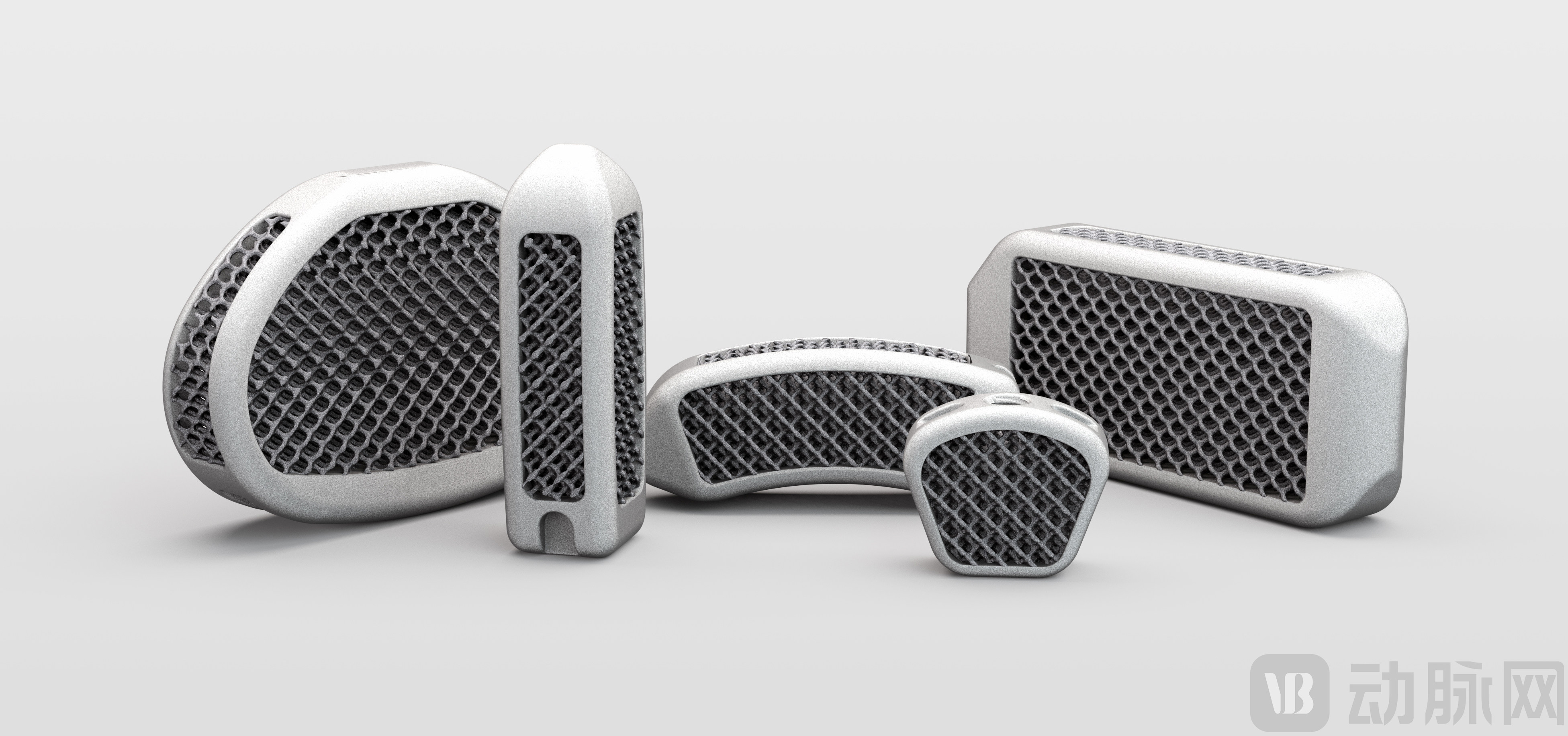 3D-Printed Titanium Alloy Interbody Fusion Cage Source: Norcomed
Norcomed focuses on minimally invasive orthopedic procedures, specializing in the research and development of spinal and spinal cord repair technologies, as well as the production of 3D-printed spinal repair implants. Since its establishment in 2013, the company has completed multiple rounds of financing,Previously received investments from Lenovo Capital, Donghua Software, and others.。
After six years of R&D and clinical validation, Norcomed has launched a 3D-printed titanium alloy interbody fusion cage for the treatment of patients with degenerative spinal diseases.
Spinal degenerative diseases are common conditions among middle-aged and elderly individuals, referring to the physiological and pathological processes of natural aging and degeneration of the spine with advancing age. These conditions encompass a series of disorders caused by degeneration and dehydration of structures such as the posterior longitudinal ligament, anterior longitudinal ligament, and intervertebral discs, including various forms of osteophyte formation, hypertrophy of the ligamentum flavum, and posterior disc herniation.
In recent years, the number of individuals affected by degenerative spinal diseases has increased worldwide, with China alone reporting up to 200 million cases. According to data from the Seventh National Population Census, the proportion of the population aged 60 and above in China reached 18.7%. As China’s population aging intensifies, the demand for treatment of degenerative spinal diseases will continue to grow.
Interbody fusion is the primary treatment for degenerative spinal diseases.During spinal interbody fusion, the degenerated and collapsed intervertebral disc is removed and replaced with an interbody cage and bone graft. The interbody cage restores disc height and physiological curvature, provides initial stability to the affected vertebral segment, promotes interbody bony fusion, and reduces the amount of autologous bone required to some extent.
With the widespread adoption of interbody fusion surgery, interbody fusion cages have undergone multiple innovations, featuring improvements in biocompatibility and mechanical properties of materials, as well as in design aspects such as curvature and stability. The integration of 3D printing technology into the medical field has provided a new avenue for the research and development of interbody fusion cages.
Norcomed leverages 3D printing technology to manufacture titanium alloy interbody fusion cages via electron beam melting (EBM) additive manufacturing. Featuring a biomimetic trabecular structure with a porosity of 70%–80%, which closely resembles human cancellous bone, the product is designed to mimic natural bone and facilitate spinal interbody fusion.This product exhibits good mechanical strength, corrosion resistance, and biocompatibility.
Traditional interbody fusion cages are manufactured from PEEK (polyetheretherketone) or titanium alloy materials. As these materials cannot induce bone ingrowth, the cages typically require large windows to accommodate bone grafting.
Leveraging core 3D printing technology, Norcomed has developed porous interbody fusion cages that biomimic the human trabecular bone structure. This product facilitates unrestricted bone ingrowth, thereby enhancing spinal fusion rates.No bone grafting window is required inside the product., thereby reducing surgical difficulty and lowering the risk of cage infection.
Moreover, Norcomed’s interbody fusion cages feature a porosity of 70%–80%, closely mimicking human cancellous bone to facilitate osseointegration. The vertebral bodies of the human spine are primarily composed of cortical and cancellous bone. The internal cancellous bone exhibits a loose structure with high porosity (75%–90%), demonstrating robust capabilities for osteogenesis and angiogenesis.
Norcomed adjusts the micropore size to enableThe interbody fusion cage product has an elastic modulus similar to that of cancellous bone., high biomechanical compatibility, avoiding stress shielding.
Meanwhile,The interbody fusion cage conforms to the anatomical morphology of the superior and inferior endplates of the vertebral bodies., can fully contact the superior and inferior endplates to avoid cage migration. The surface of the lumbar interbody fusion cage must fit better with the lumbar endplates to reduce stress concentration and maintain intervertebral height.
A critical manufacturing process for 3D-printed interbody fusion cages is surface roughening technology. Norcomed has mastered a unique surface roughening process, enablingInterbody fusion cage products feature surface roughness at the micron and nanometer scales., with a high coefficient of friction against human bone, which promotes mutual anchoring between the bone and the implant surface, thereby improving osseointegration.
Relevant studies have confirmed that the adhesion, proliferation, and differentiation of osteoblasts are correlated with the surface roughness of interbody fusion cages; implants with a rough surface promote bone growth more effectively than those with a smooth surface.
In addition, Norcomed's interbody fusion cage products featureHigh Visibility, clearly visible under X-ray, with no scatter on CT scans and reduced artifacts on MRI, and no scatter from tantalum markers. This facilitates intraoperative and postoperative observation of the interbody fusion cage by physicians, allowing for assessment of the contact between the superior and inferior endplates of the vertebral bodies and the implant, as well as the status of bone fusion.
To adapt to complex and dynamic clinical environments, Norcomed offers a comprehensive range of 3D-printed titanium alloy interbody fusion cages. These devices are suitable for cervical and lumbar interbody fusion procedures and meet the requirements of various surgical approaches, including Anterior Lumbar Interbody Fusion (ALIF), Transforaminal Lumbar Interbody Fusion (TLIF), and Oblique Lateral Interbody Fusion (OLIF).
Orthopedic implants represent one of the most significant applications of 3D printing technology in the medical field, with multinational corporations such as Johnson & Johnson, Medtronic, and Stryker having established their presence in this sector. By leveraging 3D printing technology, companies can manufacture a wide range of complex orthopedic products, such as interbody fusion cages with varying pore sizes, thereby substantially enhancing the production efficiency and quality of customized solutions.
“3D printing technology holds significant advantages in the orthopedics market and is poised to be a key direction for future market upgrades.”
Seizing the opportunity presented by the development of 3D printing technology, Li Peng, who has a clinical background, entered this market and founded Norcomed in 2013.
Behind Norcomed is a multidisciplinary team of experts in healthcare, biomaterials, pharmaceutical sales, finance, and other fields. The company’s founder, Li Peng, graduated from the Second Military Medical University and completed his orthopedic training at the Chinese PLA General Hospital. With 16 years of focus on orthopedics and precision medicine, he has furthered his education at the Business School of Renmin University of China and the Ministry of Science and Technology’s CEO Special Training Program, and holds more than 50 patents. Co-founder Li Yan previously worked at institutions such as SoftBank China Capital and Gome Capital, and served as Chairman of Zhunyou Shares, a listed company, bringing extensive experience in entrepreneurship and investment.
The company is primarily engaged in the research and development, production, and sales of products such as minimally invasive spinal orthopedic procedures, 3D-printed orthopedic implants, and smart surgical solutions. It holds more than 50 patents and has completed the full-line product layout for 3D-printed biomimetic bone materials in spinal applications.
In China’s RMB 10-billion orthopedic device market, Norcomed is primarily pursuing development in two directions. One is minimally invasive spine surgery, focusing on the management of surgical incisions and approaches; the other is 3D printing, where, in addition to upgrading standard 3D-printed products, the company also provides personalized customization services.
Reference Article: "Research Progress on the Clinical Application of 3D Printing Technology in Interbody Fusion"