

How Huitianwei Leverages Cohort Research Platforms to Empower Medical Scientific Research: Participation in Two National Projects and Collaboration with Over 300 Hospitals
“Data evidence is critically important. You will find that in clinical medical research, three dimensions of data are most core: the first is appropriate patient enrollment, the second is a sufficient sample size, and the third is a sufficiently long duration for patient follow-up.”
This represents Ye Genshen, CEO of Beijing Huitianwei Medical Management Consulting Co., Ltd.’s, key insights into cohort study data.
Cohort studies are one of the common methods for exploring disease etiology,"It has a high level of evidentiary strength and can effectively reveal the objectively existing causal relationship between two events."Its design principles are also frequently applied in studies such as disease prognosis and clinical trials.
Cohort Study, also known as group study, longitudinal study, or prospective study, is an observational research method in which a study cohort is divided into an exposed group and a non-exposed group (control group) based on whether they are exposed to a specific factor of interest. The two groups are followed up for an appropriately long period to compare differences in outcomes, thereby determining the presence and magnitude of the association between the exposure factor and the disease. This method holds significant value in clinical research.
However, it also suffers from high labor costs, prolonged time commitments, low physician engagement, difficulties in managing large patient volumes, poor patient compliance with significant attrition rates, patients’ lack of medical knowledge, and challenges in completing follow-up visits., thereby preventing cohort studies from realizing their intended value.
Beijing Huitianwei Medical Management Consulting Co., Ltd. was established in 2015. It is a company that leverages technology and data to integrate scientific research with public welfare, providing healthcare enterprises with operational support for a research-driven public welfare ecosystem.
This ecosystem encompasses four core center models and has independently developed the Magic Cube Intelligent Research Database Platform series. It covers areas such as social work management services for doctors and patients, patient management, and clinical research services. By operating through projects established by multiple foundations, it has created a medical cohort ecosystem operation model with innovative advantages. Its subsidiary, Beijing Huikunhe Medical Research Institute, was founded in 2018 and operates as a medical support platform aligned with the scientific research project needs of the foundations.
After six years of exploration, Huitianwei has gradually established a comprehensive cohort ecosystem and built a scientific research cohort platform, facilitating multi-party collaboration among hospitals, physicians, experts, and enterprises in conducting research projects.
"Aligned with the specialized promotion needs of pharmaceuticals, a six-year exploration of the cohort study ecosystem"
It can be said that the establishment of Huitianwei stemmed from the founder Ye Genshen’s confusion and exploration during his more than ten years in pharmaceutical promotion. Having spent 13 years promoting pharmaceuticals at Merck & Co. and Bayer, he was consistently puzzled by how to achieve specialization, data-driven approaches, and evidence-based practices in drug promotion, and how to enable physicians to gain a deeper understanding of drug characteristics in clinical practice.
“Because pharmaceuticals have their unique characteristics. They are commodities, but they differ from ordinary goods in that they are intended for specific patient populations and require attention to potential adverse reactions after use,” said Ye Genshen when discussing the challenges he faced in pharmaceutical promotion.“So, during the promotion of pharmaceuticals, an insurmountable hurdle is how to ensure that physicians truly recognize the advantages of the drug?”
“Only by presenting evidence—that is, through evidence-based medicine,” Ye Genshen stated unequivocally. “Let the evidence speak, and promote based on evidence.”
However, in the process of seeking evidence, Ye Genshen stated that there are three major challenges in such a clinical study: enrolling suitable patients, obtaining a large sample size, and conducting long-term observational follow-up.“This is also the motivation behind my founding of Huitianwei, with the hope of addressing such issues.”
Over the past six years of entrepreneurship, Ye Genshen stated that Huitianweiye has undergone three stages of development. The first stage involved groping for direction amidst such confusion, with no clear idea of how to proceed, leaving the company in a relatively lost state. During this phase, Huitianweiye undertook a series of fragmented initiatives—such as launching an official WeChat account and developing electronic medical records—that lacked a coherent framework or strategic structure.
In the second phase, after considerable deliberation and exploration, Huitian refocused its primary efforts on database development and platform construction.
This is also because Ye Genshen recognized that, in the course of cohort studies, intelligence can be described as the soul and core element.Place the entire cohort ecosystem under an intelligent research framework to streamline workflows, minimize time waste, and free up human resources for more critical tasks. It also enables the structured, systematic collection, organization, and storage of extensive follow-up data, making physicians’ scientific research and patient management both visualizable and quantifiable.
With this in mind, Ye Genshen joined the Fosun Star Future Startup Camp. When asked about his reasons for joining the Fosun Star Future Startup Camp, Ye Genshen stated that, first, he had a good understanding of Star Future itself, with many founders of innovative and entrepreneurial companies speaking highly of the platform; and second, he hoped to promote the sustained development of digital healthcare projects through industrial synergy and collaboration.
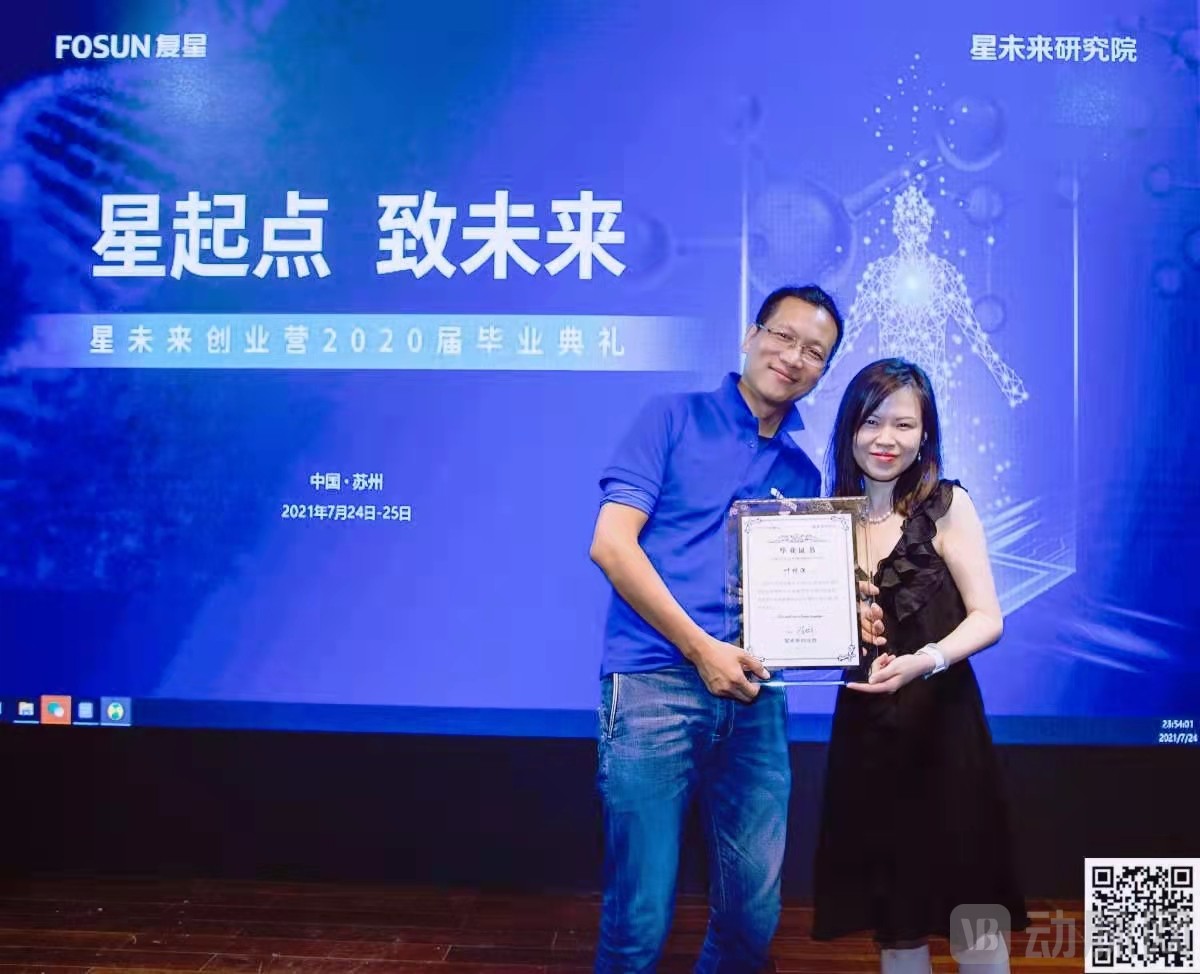
Graduation Ceremony of the 2020 Cohort of Fosun·Star Future Entrepreneurship Camp. Left: Ye Genshen, CEO of Huitianwei; Right: CEO of Star Future Research Institute. (Photo provided by Fosun·Star Future)
It was also during this phase that Huitianwei established its in-house IT team, which subsequently bolstered the company’s later development by streamlining and intelligentizing the entire cohort study process, thereby driving the healthy growth of Huitianwei’s cohort ecosystem.
In the third phase, Huitianwei primarily focused on commercial integration, gaining greater clarity in its development path.
Through its Phase III development, Huitianwei has gradually clarified its developmental trajectory and underlying framework—"Science, Intelligence, Empowerment"—and formulated its top-level logic: "Integrating technology and operations to advance the development of clinical research cohorts in China." It has established a research cohort ecosystem centered on cohort studies, led by a foundation, supported by specialized cohort design teams and an in-house IT support team, and built an intelligent research cohort platform.
That year, Ye Genshen, a graduate of the Fosun Star Future Entrepreneurship Camp, recommended Dr. Fan Wenhui from his team to join the third cohort of the Fosun Star Future Entrepreneurship Camp.
National-Level Project Implementation and Professional Team Support: What Cohort Ecological Research Process Has Huitianwei Established?
High-quality cohort studies provide high-level evidence for clinical practice guidelines. Huitianwei has been committed to advancing high-quality cohort research. Through six years of exploration, Huitianwei has established a comprehensive workflow for cohort-based ecological studies.
A cohort study project, initiated and led through national foundation grants and funded by social capital, encourages Chinese clinicians to digitize routine patient care data. Through additional data curation and effort, these contributions are integrated into the development of valuable clinical patents, thereby providing physicians with reasonable, lawful, and sustainable income while advancing medical progress and the translation of scientific research outcomes.
Specifically, first, medical social workers facilitate physicians’ enrollment in professional data processing platforms and the inclusion of patients into study cohorts; second, physicians digitize patient follow-up information and other data using methods such as optical character recognition (OCR); and third, through quality control and analysis, the data are incorporated into large-scale clinical cohorts and patent research and development.
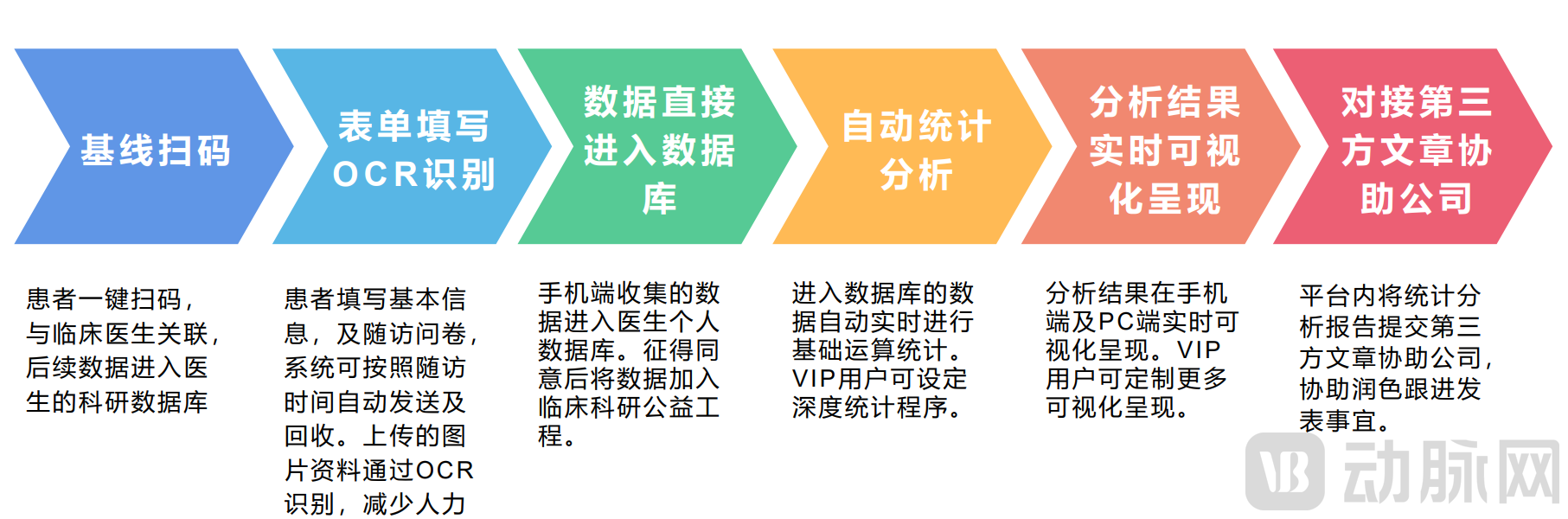
Huitian for Cohort Study Workflow (Image provided by the company)
Projects initiated through national foundations, such as the China Primary Health Care Foundation and the China Social Work Development Foundation, do not distinguish between principal and co-principal investigators (PIs); all physicians may join voluntarily, resulting in higher participation enthusiasm among PIs.
The China Primary Health Care Foundation was jointly initiated by the Chinese Peasants and Workers Democratic Party and the Ministry of Health of the People's Republic of China. With the care of General Secretary Jiang Zemin, Premier Zhu Rongji, and others, as well as strong support from relevant central and state departments, it was approved for establishment on December 30, 1996. It is a non-profit social organization with independent legal personality, dedicated to funding and developing primary health care services in poverty-stricken areas of China.
The China Social Work Development Foundation, approved and professionally supervised by the Ministry of Civil Affairs in 2011, is China’s first public welfare and charitable organization dedicated to supporting and developing social work.
Led by the Foundation, the cohort study project has secured increased corporate support, enabling joint advancement by multiple enterprises within the field to pool resources and generate data and outcomes that drive progress across the industry and sector.
Furthermore, under the foundation’s oversight, enterprise data is siloed and centrally custodied by the foundation, ensuring security, compliance, and reliability. The foundation will also manage and allocate projects to accelerate their progress and enable efficient project management.
Throughout this process, Huitianwei’s medical and IT teams provided comprehensive support for the cohort study. The cohort design was led by Dr. Fan Wenhui, one of Huitianwei’s founders. Liu Bing and Yang Bo, the technical leads, directed Huitianwei’s IT team in developing the intelligent clinical research platform, while the statistics team conducted statistical analyses of the study data.
Fan Wenhui holds master’s and doctoral degrees in neurology from Xuanwu Hospital and serves as an attending physician in the Department of Neurology at Bo’ai Hospital, China Rehabilitation Research Center. From 2010 to 2016, he served as Senior Medical Manager in the Medical Affairs Department of Bayer Pharmaceuticals, where he participated in the design of multiple clinical research projects.
The IT team comprises senior engineers with extensive industry experience. This "golden triangle" of IT, medicine, and statistics ensures that scientific rigor, feasibility, user-friendly intelligent tools, and end-to-end data management are integrated into the cohort study design from the outset.
The advisory expert team for the cohort study comprises leading experts from various fields. The neurological cohort expert advisors include Professor Zhan Siyan, Professor Wang Yongjun, Professor Dong Qiang, Professor Xu Anding, Professor Qi Xiaokun, Professor Liu Chunfeng, Professor Zhang Tong, Professor Zhao Xingquan, Professor He Zhiyi, Professor Fan Dongsheng, and Professor Zeng Jinsheng.
Within the research cohort ecosystem, Huitianwei has also designed a three-terminal service platform to enable intelligent data processing.
On the Doctor's Mobile AppHuitian designed a mobile application for its personalized research database, enabling physicians to conveniently monitor research progress and data analysis results while facilitating multi-party communication. The platform integrates form design, automated distribution and collection of follow-up questionnaires, structured data storage, automatic statistical analysis, and visual presentation. It also supports data upload from physicians’ PC terminals, thereby facilitating online data analysis.
On the patient's mobile app, Huitian ensures the collection of patient follow-up data through its intelligent voice follow-up system. For patients, the system also enables access to health education materials, online consultations, electronic prescriptions, and medication delivery services, thereby meeting their disease management needs.
On the social worker's mobile app, Huitian recruits medical social workers, primarily from among pharmaceutical sales representatives, to assist clinicians in patient follow-up management and facilitate the collection of clinical research data. They verify data processed through OCR and speech recognition technologies to ensure that clinical study data is timely, accurate, and authentic.
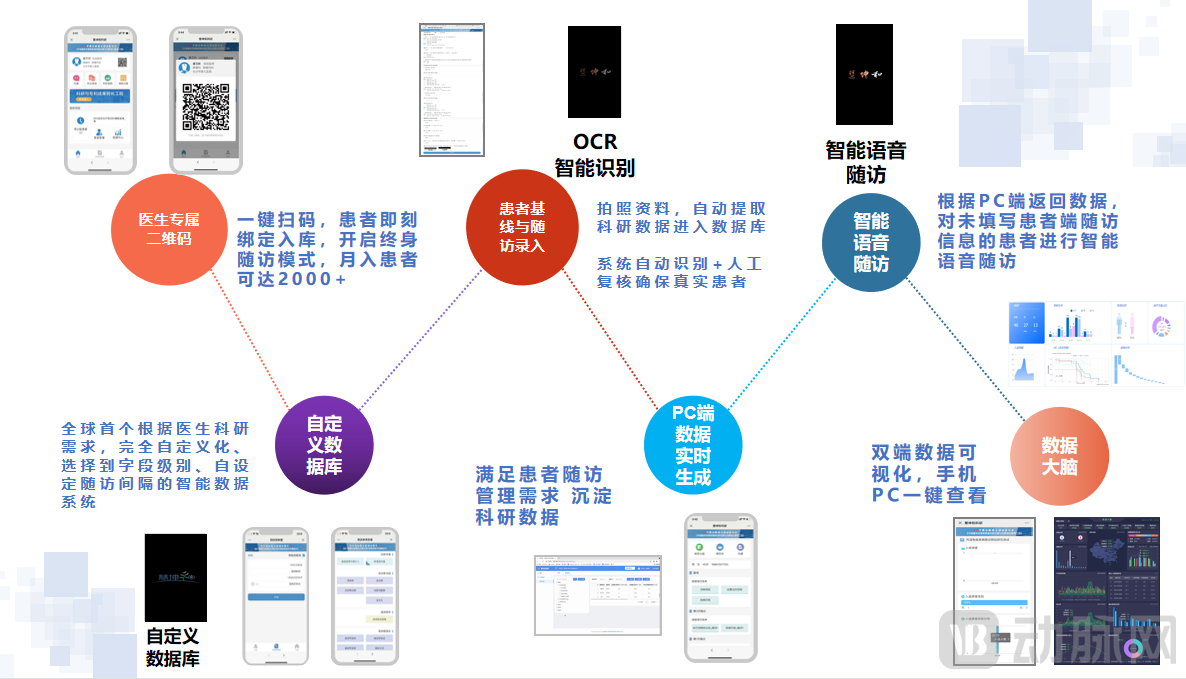
Schematic Diagram of the Three-End Service Platform Operation (Image Provided by the Enterprise)
To date, completed or ongoing cohort projects undertaken by Huitianwei include the Cellular Immunotherapy Project at PLA General Hospital (301 Hospital), the Endometrial Cancer Patient Follow-up Project at Peking Union Medical College Hospital, the Pituitary Adenoma Follow-up Project at Peking Union Medical College Hospital, the Cardio-Cerebral Comorbidity Cohort Study at Beijing Tiantan Hospital, the PD-1/PD-L1 Therapy for Solid Tumors Cohort Study, the IBD-PAP Research Project, and the Southwest Chronic Disease Quality Control Project at Beijing Tiantan Hospital.
Currently, Huitianwei has become a National High-Tech Enterprise, a Huawei Ecosystem Partner, and a Huawei Kunpeng Technology-Certified Enterprise. It has implemented two national-level projects, four real-world studies, and more than 20 clinical trials. The platform’s collaborative network includes over 700 medical social workers, more than 1,200 researchers, and over 30,000 enrolled patients. It partners with more than 300 hospitals, including PLA General Hospital (301 Hospital), Peking Union Medical College Hospital, Beijing Tiantan Hospital, Sanbo Brain Hospital, and Peking University International Hospital, and collaborates with renowned enterprises such as Junshi Biosciences, Hengrui Medicine, and Hisun Pharmaceutical.
Wu Lili, CEO of Fosun Star Future Research Institute, told VCBeat, “Star Future Entrepreneurship Camp is dedicated to fostering mutual empowerment between student enterprises and the Fosun ecosystem.“We are optimistic about the value and empowerment that Huitianwei brings to pharmaceutical companies and have actively recommended Mr. Ye’s team to Fosun Pharma, hoping for good news soon.”
Ye Genshen revealed to VCBeat that Huitianwei has already formed three major profit-generating business segments.Huitianwei is actively advancing research cohort projects focused on specific diseases, targeted therapies, and special populations, with its specialized drug cohorts poised to become a new growth engine for the company. Ye Genshen stated that the company aims to establish ten cohorts across ten therapeutic areas over the next decade and to build a dedicated team of 10,000 medical social workers.
[Fosun · Star Future Entrepreneurship Camp]
Fosun Star Future Entrepreneurship Camp is an incubation and investment platform under Fosun Star Future Capital, established with the support of Fosun and Fosun Pharma. Focused on the broader health sector, it adopts a “community + incubation + investment” model to explore cutting-edge innovation, nurture entrepreneurial talent, and identify and invest in future unicorns at an early stage.
In 2021, Fosun Star Future Entrepreneurship Camp launched its third cohort, targeting entrepreneurs in the healthcare sector and aspiring innovators. The program invited top-tier global mentors and introduced six core incubation modules, offering entrepreneurship courses and services grounded in China’s medical industry background and practical experience.