

The Disappearance of Countless 'Union Hospitals': Dilemmas and Strategic Choices Facing China's Private Healthcare Sector
Regulators Have Finally Taken Tough Action Against Private Hospitals.
Earlier this year, the State Administration for Market Regulation convened a nationwide teleconference and issued a notice requiring all levels of the regulatory system to take proactive measures and fulfill their responsibilities by launching a resolute campaign to address the impersonation of renowned hospitals. This initiative involved verifying, on a case-by-case basis, for-profit medical institutions that include well-known hospital trade names such as “Xiehe” in their registered names. Subsequently, regulatory authorities across various regions promptly took action.
As of October,Data from Qichacha Professional Edition shows that the rate of deregistration for enterprises with "Xiehe" in their names has reached ten times that of last year, leaving only 55 related medical institutions currently.It is worth noting that, according to a 2018 survey by Xinhua News Agency, the figure stood at more than 1,700.
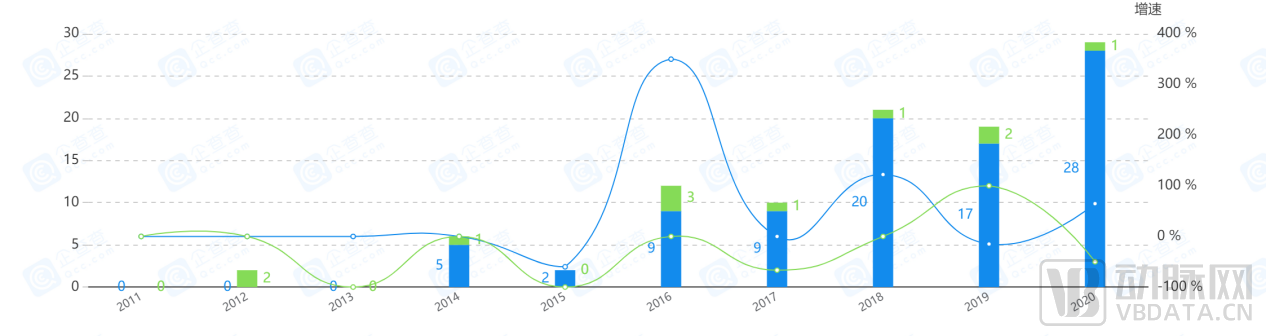 (Trend of Enterprise Deregistration with the Name “Peking Union Medical College Hospital” Over the Past Decade. Image Source: Qichacha Professional Edition)
From a historical perspective, during the more than two decades since the state liberalized the healthcare market, a considerable number of private hospitals in China have appended terms such as “Peking Union,” “People’s,” and “Tongji” to their names to successfully attract patients, leading countless individuals to mistakenly believe they were affiliated with the authentic Peking Union Medical College Hospital or public institutions. The reality, however, is thatOf the thousands of “Xiehe Hospitals” on the market, only three—in Beijing, Wuhan, and Fujian—are genuinely affiliated with the renowned institution.
Well-Known Hospitals “Piggyback” on by Private Hospitals: The Public Often Bears the Brunt.According to a Xinhua News Agency report, in 2018, a patient visited Dingzhou Union Hospital for a check-up while trying to conceive. The doctor informed her that she had cervical polyps that needed to be removed, claiming that pregnancy would not be possible otherwise, and promised that the procedure would be performed without anesthesia. During the surgery, the doctor cited “massive hemorrhage” as a pretext to induce the patient into accepting anesthesia. Unable to endure the pain, the patient reluctantly consented. The final cost of the surgery amounted to 13,000 yuan.
However, in public hospitals, the cost for cervical polyp removal under intravenous anesthesia, including preoperative examinations, is generally around 2,000 yuan. Dingzhou Xiehe Hospital charges six times more than typical public hospitals, despite the fact that severe hemorrhage during cervical polypectomy is “extremely unlikely.” In this incident, Dingzhou Xiehe Hospital prominently displayed signage in its outpatient lobby branding itself as a “National Xiehe Brand Chain Hospital,” claiming affiliation with the same “Xiehe system” as Peking Union Medical College Hospital and highlighting the slogan “Believe in the Power of the Brand” in a conspicuous location. This led the patient to mistakenly believe, upon seeking care at the facility, that she was visiting a “Xiehe”-branded hospital with robust medical resources.
In other words,This patient was duped by a “fake Peking Union Medical College Hospital,” resulting not only in unnecessary expenses but also in more severe harm.It is precisely in view of the market chaos caused by the aforementioned “brand-riding” hospitals,The State Administration for Market Regulation has decided to “step in personally” to address the issue.This, undoubtedly, has brought significant changes to the overall environment of private hospitals.
With a century-long history, Peking Union Medical College Hospital enjoys widespread acclaim both in China and around the world, consistently ranking at the top of best hospital lists published by third-party platforms. Therefore,For industry practitioners and patients alike, the name “Peking Union” is undoubtedly synonymous with “authoritative medical service institutions.”
Thus,In an effort to attract more patients, many private hospitals have adopted “Peking Union” in their names to enhance their perceived authority.A search for the term “Xiehe” on Qichacha yields immediate results such as Xingtai Xiehe Hospital, Chifeng New Xiehe Hospital, Laibin Xiehe Hospital Co., Ltd., and Putian Xiehe Hospital Co., Ltd.
To “pass off as genuine,” these impostor “Xiehe” institutions often claim in their promotional materials that they are affiliated with or have technical collaborations with Peking Union Medical College Hospital (PUMCH), referring to themselves as “PUMCH ×× Branch,” part of the “Xiehe Medical Group,” or “Peking Union Medical College Hospital Chain Hospitals.”
“Some hospitals also claim that their consulting physicians are retired doctors from Peking Union Medical College Hospital (PUMCH), or assert that PUMCH experts serve as their remote consultation specialists, or state that they frequently invite PUMCH experts to provide on-site consultations.” Li Junjie, a fund director who has long focused on healthcare services, told VCBeat that some hospitals even print images of PUMCH’s buildings and its hospital motto on their promotional materials, and link their own websites to the official PUMCH website.These are all violations.”
Private hospitals’ misappropriation of the brand reputation of well-known hospitals is a direct manifestation of their customer acquisition dilemma.There are two primary reasons: first, private hospitals inherently suffer from a significantly lower level of public trust compared to public hospitals; second, there is a widespread lack of confidence among private hospitals regarding the quality of their medical services.
“So unlike public hospitals,”Private hospitals place particular emphasis on marketing, which is a key initiative they undertake to increase patient volume and improve profitability.“The issue, however, is that some private hospitals—particularly small and fragmented ones—allocate an excessively high proportion of their budgets to marketing, thereby squeezing costs for medical services and making it difficult to ensure healthcare quality,” said a president of a private hospital who requested anonymity in an interview with VCBeat. He noted that among the private hospitals he was familiar with, marketing expenses accounted for approximately 40% of total spending. “Leveraging well-known brands can yield better marketing results at a relatively low cost.”
However, the issue is that while “piggybacking on well-known brands” may yield short-term gains in patient acquisition, it is ultimately not a sustainable strategy. After all, it undermines patients’ interests, drives out high-quality providers through adverse selection, and hampers the healthy development of the entire private hospital market.
Data shows that private hospitals have been experiencing strong growth momentum in recent years.According to the National Health Commission’s data on the number of healthcare institutions nationwide, by the end of February 2021, there were 36,000 hospitals in China, including 12,000 public hospitals and 24,000 private hospitals. Compared with the figures at the end of February 2020, the number of public hospitals decreased by 70, while the number of private hospitals increased by 1,357. In addition, compared with the same period in 2016, the number of private hospitals in China grew by nearly 50% over the five-year period.
"It is not difficult to see that private hospitals have already surpassed public hospitals in terms of both scale and growth rate.""As private hospitals continue to multiply, the issue of brand imitation must be addressed to foster a healthy market ecosystem."Li Junjie stated.
Of course, in addition to the regulatory crackdowns aimed at rectifying the industry, how private hospitals can resolve their operational challenges and embark on a path of standardized practices has also become an urgent issue for the industry to address.
On one hand, many private hospitals are facing operational difficulties due to their inability to “ride on the coattails of well-known brands”; on the other hand, several private hospitals are currently pursuing initial public offerings (IPOs).
Last month, Sanbo Brain Hospital, a domestic chain of specialized neurological medical groups, passed the review for its initial public offering (IPO) on the ChiNext board. Meanwhile, private hospital groups such as Kangning Hospital, Lu Daopei Medical Group, Shulan Medical, He Eye Specialist Hospital, Huaxia Eye Hospital, and Purui Eye Hospital have also recently sought public listings. This indicates that some private hospitals have already achieved considerable operational success.
It is worth specifically noting that, although numerous private hospitals have previously listed on the secondary market,The successful IPO review of Sanbo Brain Hospital and the listing last year of Hygeia Healthcare, a tumor medical group, have demonstrated that private hospitals can still carve out a viable path in the field of serious medical care, where they traditionally hold no competitive advantage.
Why have these private hospitals achieved robust growth without leveraging established brand names? Or, what is the core logic behind their rapid development?
“Before private hospitals can validate their business models, they are often compelled by survival pressures to allocate limited funds primarily toward customer acquisition strategies such as online bidding for search engine rankings and leveraging well-known brand affiliations, whereas they frequently”Neglected discipline development, reputation building, and service enhancement.“In Li Junjie’s view, an excessive focus on short-term gains is the crux of why many private hospitals struggle to achieve long-term development.”
According to VCBeat's observations,Although marketing, construction (hospital premises), and medical equipment are essential elements for the development of private hospitals, high-quality physician resources are often the most critical factor.. And this is precisely the challenge commonly faced by private hospitals:Due to the scarcity of high-quality physician resources, which are predominantly concentrated in public hospitals, private hospitals struggle to secure these resources, attract patients, and achieve commercial scalability.
To this end, a number of high-quality private hospitals have begun to actively explore new pathways.
Taking Sanbo Brain Hospital as an example, it adheres to an integrated strategy of “medical care, education, and research” in addressing the issue of physician talent.namely, “extensive medical practice, extensive teaching, and extensive research,” which is the origin of the name “Sanbo.” Specifically, relying on the technical strength, talent pipeline, and management and service experience of its flagship campus, Beijing Sanbo (now a hospital directly affiliated with Capital Medical University), Sanbo Brain Hospital has successfully expanded its layout in regions such as Yunnan, Chongqing, and Fujian through various methods including self-construction, joint ventures, and restructuring.
Within this “medical care, education, and research” framework, Sanbo Brain Hospital has resolved challenges that plague many private hospitals, such as scientific research, teaching, and professional title advancement. The prospectus reveals that more than 75% of clinical physicians at Beijing Sanbo hold a master’s degree or higher, a performance metric that is also excellent compared to the public hospital system.
Aier Eye Hospital also has its own “playbook.”Within Aier Eye Hospital’s management system, technically or managerially skilled professionals with core competencies may serve as cooperative shareholders to jointly establish new hospitals with Aier Eye Hospital, including newly built, expanded, or acquired hospitals.
To incentivize talent, Aier Eye Hospital has implemented various incentive programs, including a partnership model with equity incentives, to enhance management efficiency and accelerate expansion. These partnership and equity incentive plans have provided the company with a robust pipeline of hospital acquisition targets. While boosting the motivation of core personnel, these initiatives also address the challenges of medical talent shortages and attrition associated with the company’s rapid expansion.
It is not difficult to see that, in the process of attracting high-quality medical talent, private hospitals can explore and address challenges in physicians’ career development by adopting modern enterprise management models, thereby attracting and retaining top-tier physicians.
However, merely aggregating high-quality physician resources is far from sufficient.Private hospitals must also recognize that their competitors are not public hospitals; rather, they should establish a differentiated and complementary relationship with public hospitals to improve China’s healthcare ecosystem.
Recently Set for Secondary Listing on the A-Share MarketKangning HospitalThis approach emerged from a differentiation strategy. In the 1990s, public hospitals paid insufficient attention to mental disorders. Kangning Hospital broke away from the traditional design concepts of specialized psychiatric hospitals by creating an environment that featured both open and closed wards.
It is precisely the focus on and deep cultivation of the mental health sector that has enabled Kangning Hospital to achieve continuous breakthroughs. By the end of 2020, the Kangning Hospital Group had more than 30 hospitals under its umbrella, including 24 self-owned hospitals (one of which is an independently established internet hospital), with the number of operational beds increasing to 7,483. Financial data shows that from 2016 to 2020, Kangning Hospital’s revenues were RMB 416 million, RMB 667 million, RMB 746 million, RMB 860 million, and RMB 1.03 billion, respectively, demonstrating steady revenue growth.
Moreover, emphasizing technology is also a key strategy for private hospitals to seek differentiated breakthroughs.
For example,HygeiaWith exclusive independent intellectual property rights and proprietary Gamma Knife systems, the company enjoys a significant cost advantage in equipment configuration. According to a report by Futu NiuNiu, Hygeia’s Gamma Knife system is a fifth-generation model, offering substantially improved treatment precision compared to earlier versions. Furthermore, given that Gamma Knife technology involves radioactive elements and military-grade materials, it is extremely difficult for other companies to obtain product registration certificates for devices containing nuclear radiation materials, thereby creating high barriers to entry.
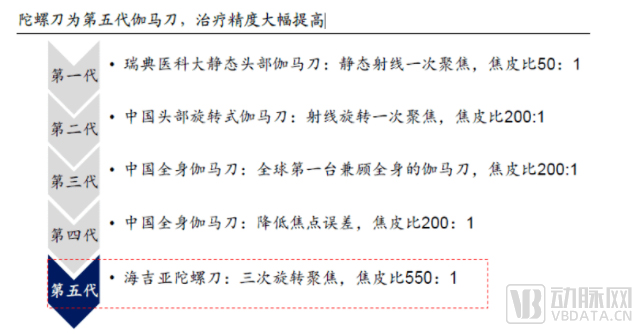 (Image source: Futu NiuNiu)
In summary, although private hospitals face numerous significant challenges, the growth trajectories of high-quality enterprises such as Sanbo Brain Hospital, Hygeia Oncology, and Aier Eye Hospital demonstrate that opportunities for development in the private hospital sector still exist. The key lies in prioritizing long-term value and innovation, as well as attracting and retaining top-tier medical talent.
The phenomenon of “brand imitation” has exposed the difficulties private hospitals face in brand building.
Although many private hospitals have been making continuous efforts to improve the quality of medical services, build talent pipelines, and strengthen their brands,Across the entire private hospital market, there are still too few private hospital brands with exceptionally high public recognition.
In discussions between VCBeat and multiple investors focused on healthcare services, it was believed thatPrivate hospitals can break down their overall branding objectives into three steps, corresponding to different stages of development.
First is the startup phase, during which private hospitals must define their medical and social value and articulate their development vision and goals.“When I met Professor Zhu Yiwen, the founder of Hygeia, he was still a clinician at a public hospital in Shanghai. At that time, I asked him what his plans were. He said he wanted to establish cancer hospitals in third- and fourth-tier cities, and even in counties. My first impression was that this sounded highly impractical, as common sense suggests that cancer patients typically seek treatment in major medical hubs like Beijing and Shanghai.” Jiang Xiaodong, Managing Partner at Changling Capital, previously told VCBeat that it was Hygeia’s original mission—enabling cancer patients to access better treatment more conveniently—that truly resonated with them.
Furthermore, during the phase of rapid business expansion, while building a high-quality operational system, it is also essential to establish its own communication influence.According to research by Halls Medical, 51% of patients consider medical technology to be the primary component of a hospital’s brand, reflecting that public perception of hospital branding remains predominantly centered on medical expertise.
Therefore, during their growth phase, private hospitals should prioritize the enhancement of medical technology and build a strong technical brand. This can be achieved by, for example, pioneering leading diagnostic and therapeutic methods; developing several disciplines or specialized technologies that are widely recognized by the industry and society for their academic influence, healthcare service efficiency, patient catchment area, clinical technical proficiency, and ability to resolve complex cases; and offering superior quality and pricing advantages in the treatment outcomes for specific diseases.
Finally, in the maturity stage of business development, emphasis should be placed on supporting brand building through the sustainability of high-quality medical service capabilities and long-term profitability.This is because the self-financing nature of private hospitals necessitates a focus on long-term profitability, yet they must not compromise the quality of medical services in pursuit of greater profits. Particularly as more enterprises specializing in serious medical care, such as Sanbo Brain Hospital and Hygeia Medical, emerge in the future, the demands for medical service quality will continue to rise. Ultimately, the quality of medical services defines the influence of a hospital’s brand.
Currently, as various capital players flock to the private healthcare sector, private hospitals are aggressively expanding their market share. The competition is intense and the landscape is mixed with both high-quality and subpar providers. Therefore, intermittent regulatory intervention is highly necessary, with the primary focus being on standardization and guidance.
Therefore, the ultimate responsibility for ensuring the long-term, healthy development of the entire private healthcare market rests on each private hospital.