

Midea Unveils LIFE Stream Solution, Painting the Future of Smart Hospitals
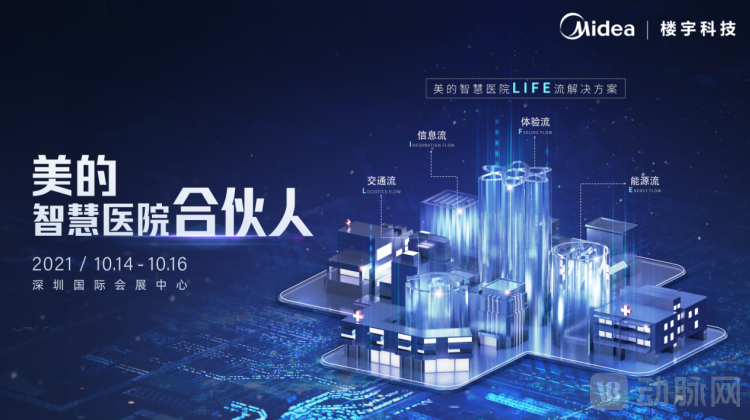
On October 14, at the 22nd National Hospital Construction Conference and China International Hospital Construction, Equipment and Management Exhibition held at the Shenzhen World Exhibition & Convention Center,Midea Building Technologies Officially Launches the “Midea Smart Hospital LIFE Flow Solution”。
Source: Midea Building Technologies Division
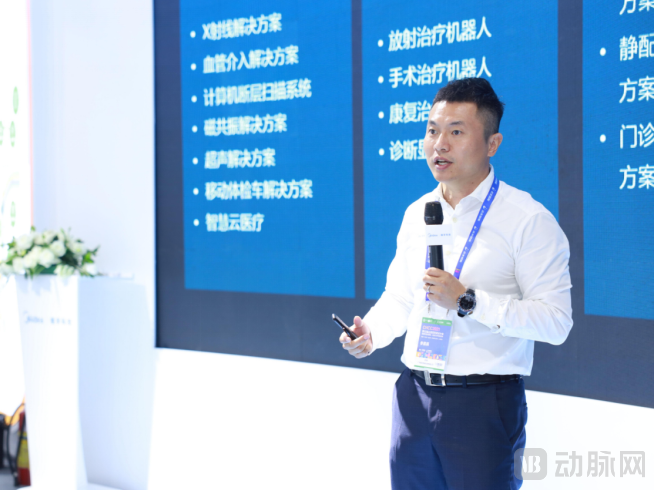
Midea has made significant strategic investments in the smart healthcare industry.On one hand, the “Midea Smart Hospital LIFE Flow Solution” is leveraged to deliver diversified operational value for smart hospitals. Meanwhile, by capitalizing on hardware advantages such as KUKA medical robots, biomedical cold-chain storage, and Wandong Medical’s MRI and CT imaging systems, along with comprehensive service capabilities under a direct-to-user strategy, the company aims to achieve synergy between software and hardware, thereby pursuing a path of differentiated development.
Smart Hospital Development: What Defines "Smart"?
Research on the smart development of hospitals in China and abroad began in 2009; now, in its 12th year, it has entered a third phase of steady growth.In 2019, the National Health Commission of China provided the standard definition of smart hospitals for the first time: Smart Hospital = Smart Medical Care + Smart Management + Smart Services.
Subsequently, the introduction of a series of policies related to ratings, performance evaluations, and incentives accelerated the implementation of informatization in smart hospitals through the approach of “promoting development and application through evaluation.” These policies have provided core momentum for the construction of smart hospitals. Economic support, social promotion, and technological empowerment have all injected strong impetus into this transformation of the healthcare industry.
Source: Midea Building Technologies Division
As the primary drivers of this industrial transformation, hospitals are increasingly recognizing that it is imperative to leverage process optimization, smart technologies, and full-lifecycle management to reduce costs, minimize waste and energy consumption, enhance operational efficiency and market competitiveness, and address the challenges posed by new demands for universal healthcare access.
Patchwork Upgrades: The “Lesion” in the Smart Hospital’s “Organism”
Guided by various policies promoting evaluation, smart healthcare and smart services have become the areas with higher adoption rates of digital applications among the three major sectors of hospital smart construction, while smart management, as the backend, has the lowest adoption rate and the weakest level of informatization.
In the field of smart healthcare,Surgical management and the deepening of intelligent applications are the core priorities for future development, aiming to build efficient, intelligent, and closed-loop business processes.
Smart Services Sector,The objective of informatization in scenarios such as smart nursing and chronic disease management is to elevate the adoption of digital applications to Level 1, while simultaneously achieving full lifecycle patient management.
In the field of smart management, which is still in its nascent stage of development,Information technology construction faces the most significant challenges and difficulties. Taking the intelligent logistics management system as an example, the level of intelligence in the infrastructure project management system, medical equipment operation management system, BIM operation and maintenance management system, and emergency response and public safety management system is relatively low.
Among these, the Security Management System, Building Equipment Management System, and Logistics Service Management System exhibit the highest levels of intelligence within the intelligent logistics management framework; however, they also suffer from significant weaknesses in their implementation. For instance, the intelligence level of systems related to refrigeration and freezing, logistics, medical environments, purification engineering, and wastewater treatment within the Building Equipment Management System is less than 45%. Similarly, the intelligence level of real-time location systems within the Security Management System is below 30%.
Although new technologies and applications for the informatization of the three major sectors of smart hospitals are emerging endlessly, the development of various technological applications remains in a patchwork, fragmented upgrade pattern characterized by “prioritizing the front end over the back end,” “focusing on parts rather than the whole,” and “emphasizing individual units over integration.”
This results in the absence of a unified equipment monitoring and command platform for hospital operations management. The proliferation of subsystems and complex management interfaces, coupled with disconnected data across systems that form data silos, mean that each upgrade of smart hospital products effectively necessitates scrapping previous investments, thereby severely limiting improvements in overall daily operational efficiency.
Smart Hospital Partner: Top-Level Planning Empowers the Smart Living Entity of Hospitals
Upholding Midea’s heritage in high-end manufacturing and leveraging the extensive experience accumulated in the engineering sector, while relying on the Group’s global R&D, manufacturing, and service capabilities, Midea Building Technologies has developed innovative smart ecosystem integration solutions for various application scenarios in the smart building industry. These solutions empower industries to achieve the dual carbon goals of “carbon peaking” and “carbon neutrality.”
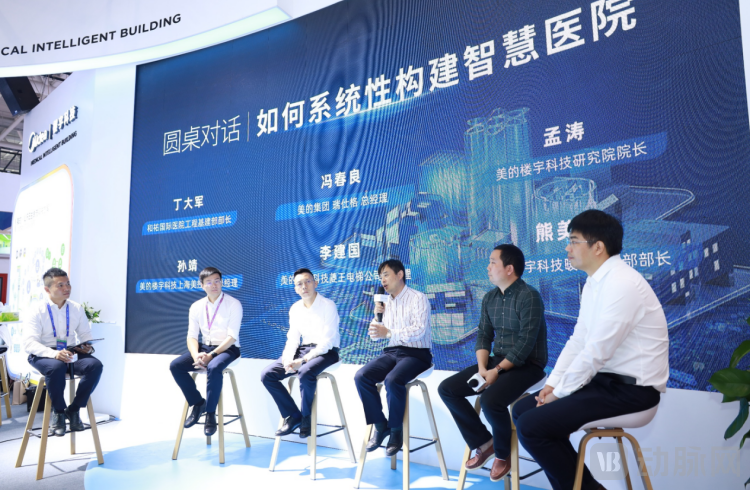
Entering the New Frontier of Smart Hospitals, Midea Building Technologies Positions Itself as a Partner in Smart Healthcare, Delivering Digital Services That Span the Entire Lifecycle of Hospital Operations and Thereby Deeply Engaging in the Sustainable Operational Growth of Smart Hospitals.
Source: Midea Building Technologies Division
To embrace the fully digital era of smart hospital development, Midea Building Technologies has created a hyper-converged system driven by dual cores—“people” and “devices”—to build smart hospitals that are safe, comfortable, low-carbon, and efficient. This system is embodied in the “Midea Smart Hospital LIFE Flow Solution.”
What Is the “LIFE Flow”?
Logistics Flow Traffic FlowThis is achieved through the Renxing Logistics Solutions Matrix, which constructs a more precise, secure, efficient, and standardized smart transportation ecosystem.
Information FlowIt is a digital solution that enables data interconnectivity and spans the entire lifecycle. By breaking down information silos through the IOC platform, it creates hyper-converged applications integrating building automation systems, specialized medical systems, and healthcare IT systems. It provides consulting, equipment, and digital information services throughout the entire process—from design and construction to operation and maintenance—empowering hospitals to achieve efficient operations through data-driven decision support.
Feeling Flow Experience StreamIt is an integration of ultimate user experiences based on four core medical scenarios, aligning with the workflows and experiences of diverse hospital users across different spatial contexts.
Energy FlowGuided by the goals of carbon peaking and carbon neutrality, we have constructed an intelligent, energy-efficient, and environmentally friendly energy system based on four major models: EMC (Energy Management Contracting), BOT (Build-Operate-Transfer), EPC (Engineering, Procurement, and Construction), and High-Efficiency Plant Rooms. By leveraging Midea’s comprehensive portfolio of HVAC products, intelligent control devices, Xbrian optimization algorithms, and systematic energy optimization solutions such as high-efficiency plant rooms, we facilitate business process reengineering and transform energy consumption patterns and behaviors, thereby helping hospitals reduce costs and enhance operational efficiency.
How Does “LIFE Flow” Empower the Construction of Smart Hospitals?
This proposal begins with top-level planning across four dimensions: Logistics Flow, Information Flow, Feeling Flow, and Energy Flow., comprehensively addressing the diverse needs of multidimensional groups—including hospital administrators, medical staff, patients, and logistics personnel—across various spatial contexts.Connected the experiential output links between “people and people.”
Then, through scenario-based system integration,Comprehensively empowering four major application scenarios: outpatient and emergency spaces, operating rooms and medical technology spaces, inpatient wards, and the logistics command center.Bridging the connection between "people and things."
Finally, leverage building technology to optimize the entire HVAC and building automation system.Provide interconnected facilities and equipment,Establishing "thing-to-thing" connections.
Source: Midea Building Technologies Division
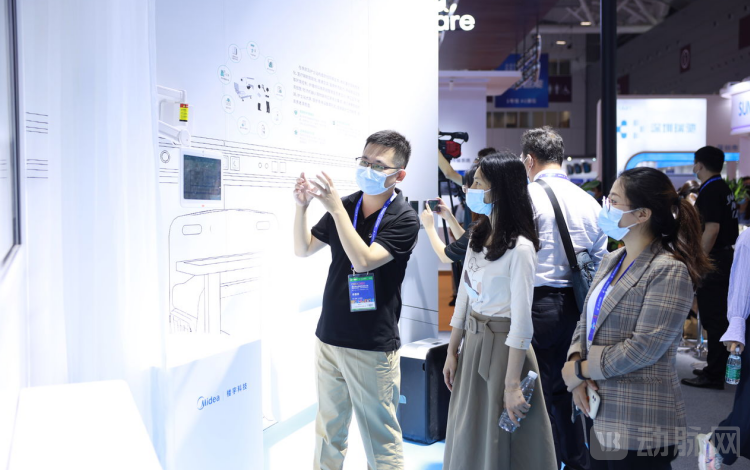
“Midea Smart Hospital LIFE Flow Solution” is grounded in healthcare scenarios and medical operations, delivering multi-dimensional operational value across the hospital’s entire lifecycle while placing greater emphasis on enhancing medical service value that transcends mere building operational value. The solution features“Front-end and back-end integration,” “hyper-converged data,” “meeting the multi-dimensional needs of diverse populations across multiple scenarios,” and “integrated systems”These core value highlights shape a more futuristic application landscape for the intelligent transformation of the healthcare industry.
In such smart hospitals, Midea Building Technologies aims to ensure that hospital administrators, medical staff, logistics and maintenance personnel, and patients alike can enjoy a safe, comfortable, environmentally friendly, and efficient healthcare environment, realizing the vision of “giving time back to medical staff and leaving complexity to Midea.”