

Yuanxin Technology Files for Hong Kong IPO with Over RMB 3.6 Billion in Annual Revenue, Backed by Top-Tier Investors
On October 15, Beijing Yuanxin Technology Group Co., Ltd. (“Yuanxin Technology”) filed an application for listing on the Main Board of the Hong Kong Stock Exchange, with Goldman Sachs and CLSA acting as joint sponsors.
As a “star project” that has attracted significant investor interest since its establishment in 2015, Yuanxin Technology’s investors include such prominent institutions as Tencent, Sequoia Capital, Qiming Venture Partners, E Fund, ABI Capital, Bank of China International, Yingce Capital, CITIC Securities, Kunling Capital, and Future Qichuang. Among them, Tencent and Sequoia Capital have been with the company since its Series A round, while Qiming Venture Partners and OrbiMed have also participated in multiple financing rounds of Yuanxin Technology.
Since its establishment,Yuanxin Technology has established three core business pillars: comprehensive out-of-hospital patient services, supply-side enablement services, and innovative healthcare services., the core logic of the entire business lies in creating a collaborative healthcare platform based on a patient-centered approach throughout the entire medical service cycle, to provide patients with comprehensive, customized, and considerate services.
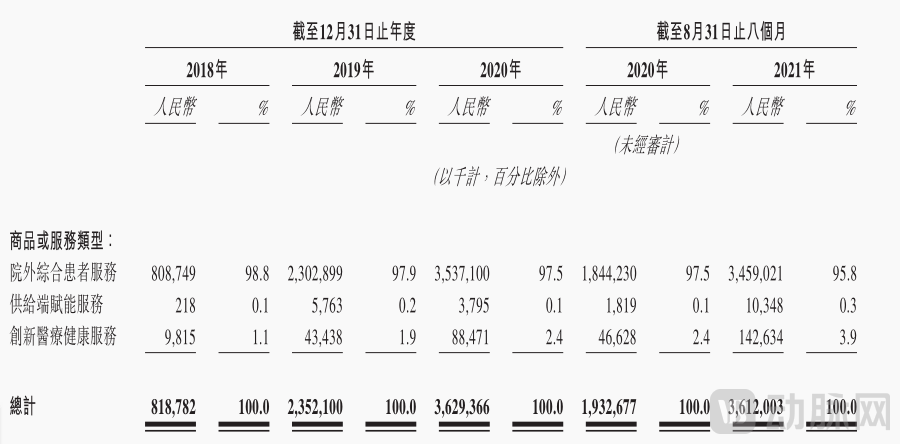 (Yuanxin Technology’s Revenue Data; Image Source: Prospectus)
In terms of revenue, the prospectus shows that Yuanxin Technology’s revenues in 2018, 2019, and 2020 were RMB 818 million, RMB 2.352 billion, and RMB 3.629 billion, respectively, reflecting very rapid growth; additionally, its revenue for the first eight months of 2021 amounted to RMB 3.612 billion, nearly on par with the full-year figure for the previous year. It is worth noting that, according to data from Frost & Sullivan,In 2020, Yuanxin Technology was China’s largest comprehensive healthcare delivery platform focused on prescription drugs by revenue.
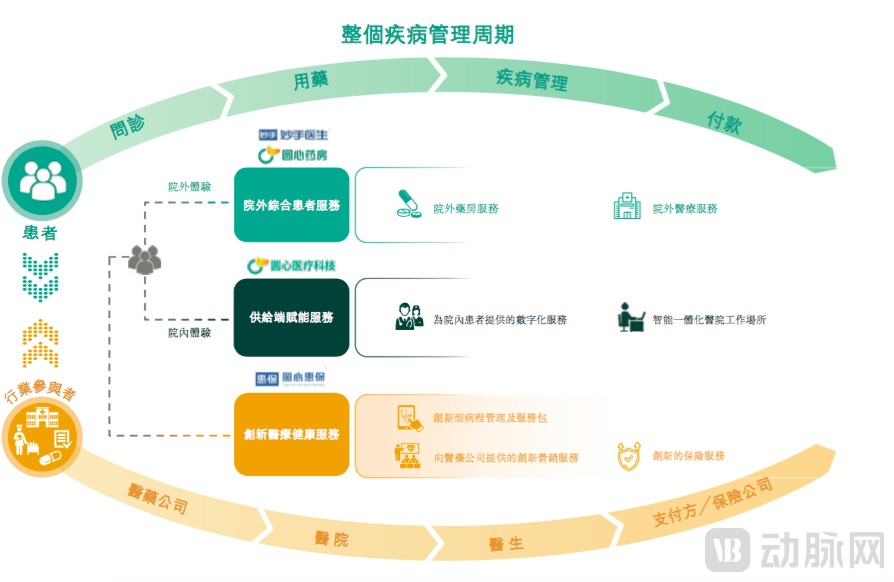 (Business Model of Yuanxin Technology; Source: Prospectus)
Over the six years since its founding, why has Yuanxin Technology consistently attracted investments from high-quality capital? What has it done right? What are its competitive moats? What challenges does it still face? And what is its future direction? To address these questions, we may gain insights by examining Yuanxin Technology’s business layout, corporate financial performance, and other dimensions.
In 2015, the wave of internet healthcare startups was in full swing in China, with astute entrepreneurs flocking to this emerging opportunity.: Guahao.com secured $394 million in financing and rebranded as “WeDoctor,” while Chunyu Yisheng announced the opening of 25 offline clinics across five key cities in China... It was also in this year that Yuanxin Technology was officially established.
In that year, the State Council issued guiding opinions on pilot healthcare reforms, requiring that the drug revenue share in public hospitals be reduced to below 30% in more than 100 pilot cities. This undoubtedly presented a significant opportunity, because the reduction in drug revenue share would restrict hospital medication use and make it difficult for certain drugs to enter the hospital sales system. However, doctors still needed to prescribe medications for patients to treat their conditions; therefore,A large volume of prescription drugs enters the market through channels other than the hospital system, bypassing direct delivery to patients.
Within this trend, the distribution of conventional medications and chronic disease medications will increasingly become socialized, making the out-of-hospital market for prescription drugs a promising entrepreneurial opportunity. Therefore,Yuanxin Technology anchors its prescription drug services, making them a key business link connecting physicians and patients.
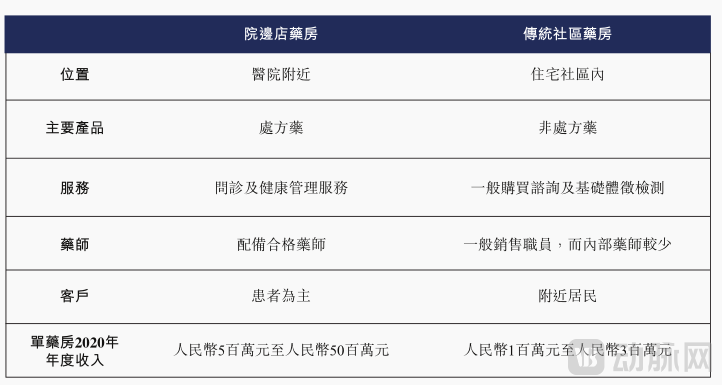 (Comparison Between Hospital-Adjacent Pharmacies and Traditional Community Pharmacies in China. Image source: Prospectus)
It is worth noting that, within the broader landscape of internet healthcare at the time, asset-light models remained the mainstream approach for startups. Offline pharmacies, as a capital-intensive business requiring sustained investment, were not viewed favorably. ButFounder He Tao believes that pharmacies must be located as close to patients as possible to ensure accessibility, thereby truly benefiting them.
Despite encountering numerous setbacks in its business development, Yuanxin Technology has continued to deepen the connection between doctors and patients, and has benefited from more favorable policies. In February 2017, the General Office of the State Council issued the “Several Opinions on Further Reforming and Improving Policies for Drug Production, Distribution, and Use.” The opinions stipulated that medical institutions should prescribe medications using generic names, outpatient patients should be free to choose whether to purchase medications at medical institutions or retail pharmacies, and medical institutions must not restrict outpatient patients from filling their prescriptions at retail pharmacies.In other words, the outflow of prescriptions is guided and protected by national policies.
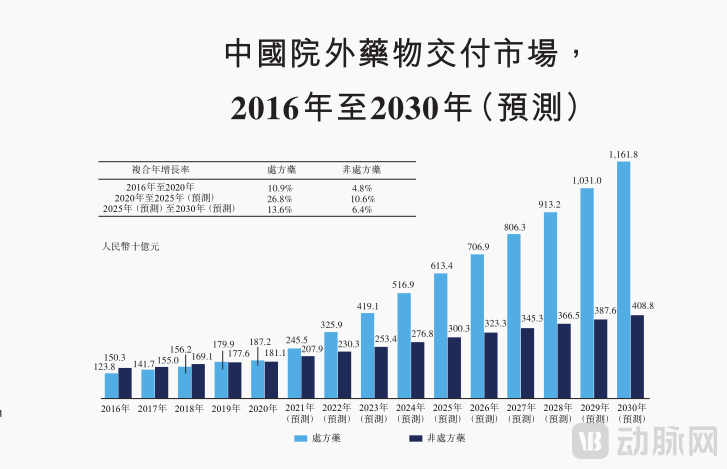 (Image source: Prospectus)
In August 2017, Yuanxin Technology became one of the first internet healthcare companies to obtain an “internet hospital license” issued by the Yinchuan Municipal Government.Since then, Yuanxin Technology’s business model has gradually proven viable: the company is able to meet patients’ needs across the entire care continuum, from online consultations and prescription renewals to medication purchases through both online and offline channels.
Looking at the development of Yuanxin Technology, its rapid growth has been driven not only by consistency in strategy and execution but also by the support and assistance of investment institutions. From 2015 to 2017, Yuanxin Technology received investments from institutions such as Tencent and Sequoia Capital. And 2After 2018, Yuanxin Technology further accelerated its fundraising efforts, rapidly growing into a unicorn in the digital health sector with an average funding frequency of 1.5 rounds per year.
After entering a fast-growth trajectory, Yuanxin Technology, in addition to its Miaoshou Doctor, Yuanxin Pharmacy, and Yuanxin Medical Technology brands, has also built brands such as Yuanxin Huibao, expanding its business to cover areas including internet hospitals, prescription-sharing platforms, and insurance services.
In other words, Yuanxin Technology is building a patient service network covering the entire course of disease, based on the logical chain of “healthcare–pharmaceuticals–insurance.”
As can be seen from the prospectus, the three pillar businesses—comprehensive out-of-hospital patient services, supply-side enablement services, and innovative healthcare services—are built around this logic.
How has Yuanxin Technology performed in building a patient service network that spans the entire course of disease? Next, VCBeat will provide an analysis from two dimensions, using data disclosed in the prospectus.
Dimension 1: Does "drug sales" prop up annual revenue exceeding RMB 3.6 billion?
According to the prospectus, Yuanxin Technology’s revenue surged by 187% from RMB 818 million in 2018 to RMB 2.352 billion in 2019, and further increased by 54% to RMB 3.629 billion in 2020, demonstrating robust growth.
In terms of specific business operations, the revenue from comprehensive out-of-hospital patient services in 2020 was RMB 3.5371 billion, with a gross profit margin of 7.6%; revenue from supply-side enablement services was RMB 37 million, with a gross profit margin of 28.1%; and revenue from innovative healthcare services was RMB 884 million, with a gross profit margin of 72.1%. It can be seen thatComprehensive out-of-hospital patient services currently account for the largest share of revenue. Unlike community pharmacies that primarily focus on over-the-counter (OTC) and standard prescription drugs, approximately 83% of Yuansheng Technology’s sales come from prescription drugs, most of which are not covered by the national medical insurance scheme.
For example, as of August 31, 2021, Yuansheng Technology’s drug portfolio included 59 of the 78 innovative oncology therapeutics approved by the National Medical Products Administration (NMPA) since 2015, and its prescription drug inventory for cardiovascular diseases alone exceeded 1,600 items.
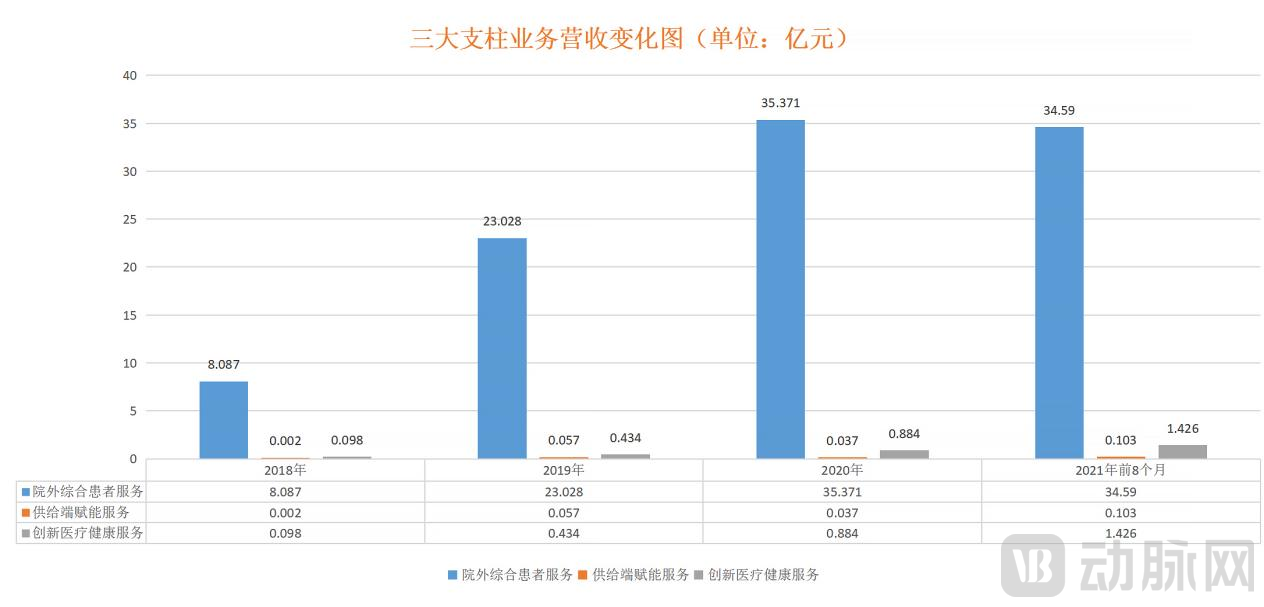
However,Financial observation is not static; rather, it should be conducted over an extended timeframe to monitor dynamic changes and identify trends.Examining Yuanxin Technology’s three core business segments over the period from 2018 to August 31, 2021, reveals that in addition to the growth of its out-of-hospital comprehensive patient services, both its supply-side empowerment services and innovative healthcare services also achieved rapid development.
Notably, the proportion of innovative healthcare services in total revenue surged from 1.1% in 2018 to 3.9% in the first eight months of 2021. Given that Yuanxin Technology’s absolute revenue is already substantial, this growth rate is quite impressive. Additionally, the gross profit margin reached as high as 72.1% (based on 2020 data), offering greater potential for commercial expansion.
Therefore, in terms of business model construction, Yuanxin Technology has already established a leading advantage in its out-of-hospital comprehensive patient services. The company’s subsequent focus will be on consolidating its market position in this area, while innovative healthcare services will become the key strategic priority for Yuanxin Technology in the next phase, offering greater growth potential.
In summary, Yuanxin Technology’s revenue is currently primarily supported by pharmaceutical sales. The capital it provides will help advance its other business segments, and from a medium- to long-term development perspective, the market potential for its supply-side empowerment services and innovative medical and health services will continue to be realized in the future.
Dimension Two: How to Build Full-Course Disease Management Services Integrating Pharmaceuticals, Healthcare, and Insurance?
In the field of internet healthcare, there are many companies that talk about building a "closed loop of medicine, pharmaceuticals, and insurance."This is because the core logic of the “pharmaceutical-medical-insurance closed loop” lies in positioning health insurance as the primary payer for medical services. By purchasing health insurance, users can have their costs for medical treatment and health management reimbursed by commercial insurance companies, thereby forming a triangular closed loop among “healthcare providers–patients–insurance companies.”
Within this closed-loop service model, health insurance product designers, armed with insights into user needs, can theoretically negotiate with pharmaceutical companies and healthcare providers to leverage scale for better pricing. As users’ health improves, insurers benefit from lower loss ratios, while users enjoy more cost-effective services. In other words, the outcome achieves a win-win situation for all parties involved. This aligns precisely with the broader trend of the “Three-Medical Linkage” reform, which integrates medical care, medical insurance, and pharmaceuticals.
From this theoretical perspective, enterprises must demonstrate strong operational performance and connectivity capabilities in three key areas: patient engagement, healthcare service resources, and health insurance.
First, let us examine patient reach.Online, according to the prospectus, Miaoshou Doctor recorded an average of approximately 41.5 million monthly user visits during the eight months ended August 31, 2021, demonstrating strong overall traffic performance. Among these, the platforms under Miaoshou Doctor had accumulated approximately 3.2 million paying users as of August 31 this year, indicating robust customer acquisition and conversion capabilities, as well as high patient recognition.
Offline, most of Miaoshou Tech’s pharmacies are strategically located near hospitals, thereby positioning themselves closest to prescriptions and patients and serving as a complement to in-hospital treatment. In terms of coverage, the Miaoshou Pharmacy brand operates 251 pharmacies across 30 provinces and 91 cities nationwide (as of August 31 this year).
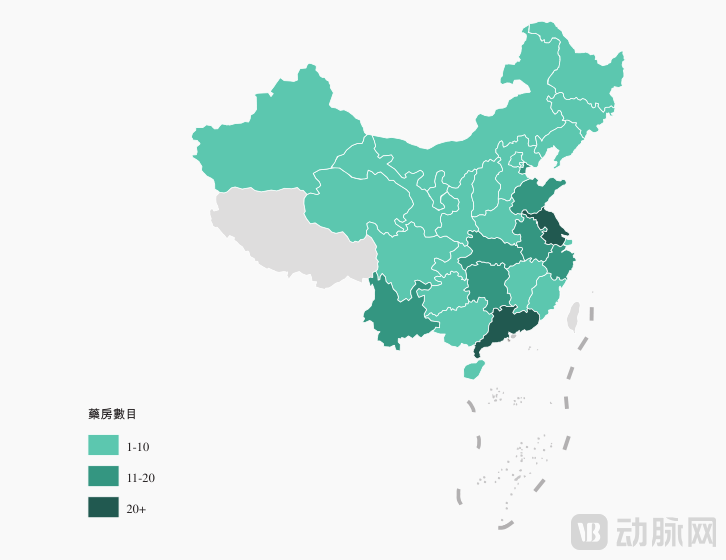 (Map of Yuanxin Technology’s National Pharmacy Network Coverage by Region Source: Prospectus)
Next, let’s examine healthcare service resources.The prospectus reveals that Yuanxin Technology has partnered with more than 340 hospitals, including over 130 Grade III Class A hospitals, to develop online medical service platforms operating via mobile apps, WeChat mini-programs, or official accounts. These platforms provide online hospital functionalities such as virtual consultations, intelligent referrals, and appointment scheduling solutions.
Furthermore, Yuanxin Technology has established a physician community comprising over 760,000 users, providing support for its whole-course patient service network. Each pharmacy is staffed with an average of two professional pharmacists (with more than five years of professional service experience on average), exceeding the industry average, with a focus on infusion services and chronic disease management.
Notably, to enhance patients’ in-hospital experience and address the need for long-term patient management in China, Yuanxin Technology has developed supply-side enablement services that help hospitals intelligentize and optimize their operations, thereby facilitating proactive long-term patient management. Furthermore, Yuanxin Technology is assisting hospitals in actively managing, coordinating, and tracking patients’ entire treatment and rehabilitation journeys.
Finally, let’s look at health insurance (innovative services).Leveraging its innovative insurance technology platform, Yuanxin Huibao, Yuanxin Technology had, as of August 31, 2021, provided services to approximately 70 insurance companies and seven reinsurance companies; collaborated with insurers to launch more than 40 insurance products covering new and specialty drugs; introduced inclusive commercial health insurance in over 60 cities; and distributed a total of 14 health insurance products through its platform, with approximately 2 million policies issued.
Based on the above data, Yuanxin Technology has already gained a significant advantage in building its “pharmaceutical-medical-insurance” ecosystem. The core focus for future development lies in deepening and optimizing the entire service loop—namely, by substantially improving the connection efficiency among patients, healthcare providers, and insurers, reducing operational costs, achieving greater economies of scale, and delivering higher-quality services to benefit a broader population.
Since the emergence of the digital health boom in 2014, China’s digital health industry has generally maintained a trend of rapid development.
From a macro perspective, China’s new healthcare reform, centered on the “tri-medical linkage” model, has entered a deep-water phase after ten years of implementation. In February 2020, the State Council issued the Opinions on Deepening the Reform of the Healthcare Security System,Further clarified the need to accelerate the establishment of a multi-tiered medical security system, and promote reforms in payment methods and supply-side reforms in pharmaceutical and healthcare services.
Driven by strong policy support, China’s healthcare delivery, medication use, and payment systems are accelerating their optimization, moving toward a multi-tiered medical security framework. Markets such as out-of-hospital prescriptions, online consultations, commercial health insurance, and health management are also entering a phase of rapid growth.
According to data from the China Business Industry Research Institute, the market size of China's digital health sector was only RMB 85 billion in 2015. It is projected to reach RMB 597 billion by 2022, with an annual growth rate of approximately 5%, indicating substantial development opportunities.
In the industrial sector, this is reflected in continuous large-scale financing rounds and leading companies rushing to launch initial public offerings (IPOs).On the other hand, significant challenges remain for the industry in establishing a closed-loop ecosystem integrating healthcare, pharmaceuticals, and insurance. Issues such as low specialization, information asymmetry, high claim ratios, and weak profitability continue to pose substantial obstacles to all market participants.Therefore, the industry as a whole will continue to maintain high requirements and expectations for market entrants; hence, innovation and service efficiency must be prioritized.
Take the leading U.S. digital health companies Livongo and UnitedHealth as examples.Livongo is a technology company specializing in the digital management of chronic diseases. Starting with diabetes solutions, it went from founding to initial public offering in just five years. Its core success lies in its relentless focus on user value through continuous iterative innovation. Livongo introduced the concept of “Applied Health Signals” and built an “AI+AI” system to support the delivery of its solutions.
As a component of the U.S. S&P 500 Index, UnitedHealth Group currently generates annual revenues exceeding $240 billion, with its growth trajectory driven by innovation. For instance, in 1988, UnitedHealth pioneered the pharmacy benefit manager (PBM) business model, linking benefit design with retail pharmacy networks and offering mail-order prescription services. In its subsequent development, UnitedHealth continuously expanded its business boundaries and deepened its service offerings. For example, in insurance product design, it added prescription drug coverage to its existing inpatient medical benefits, which helped unlock the senior market. This demonstrates that the key for digital health companies to seize emerging trends lies in continuous iteration and innovation.
Of course, after years of development, China’s digital health industry has partially migrated healthcare services to digital scenarios, leading to varying degrees of improvement in the accessibility, effectiveness, and cost-efficiency of medical care.
Stay tuned for updates.As more high-quality enterprises enter the market and pursue initial public offerings, the digital health industry will bring greater possibilities to China’s entire healthcare ecosystem.
References:
1: Yuanxin Technology Prospectus:
https://www1.hkexnews.hk/app/sehk/2021/103909/documents/sehk21101500097_c.pdf
2: Dr. He Tao of Miaoshou Doctor: Building the Internet Hospital Closest to Patients
https://t.qianzhan.com/daka/detail/190221-ab6c6ee8.html
3: EO Healthcare | Yuanxin Technology’s He Tao: The Yuanxin Practice in Internet Healthcare