

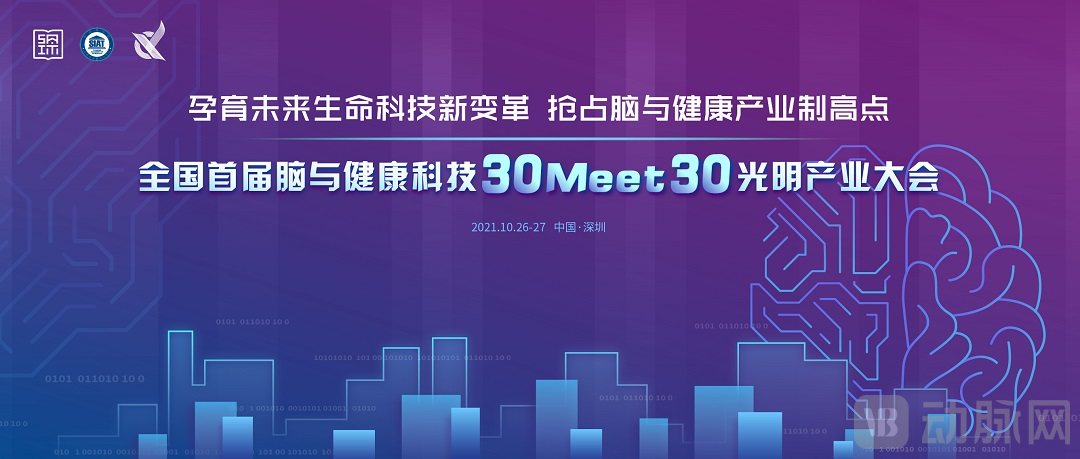
Gathering Brilliant Minds, Building a City of Science: The Inaugural National Brain and Health Technology '30 meet 30' Guangming Industry Conference
Editor’s Note: This article is reposted from the WeChat official account “Brain Science and Brain Technology,” with authorization granted to VCBeat.
The brain is a miracle of biological evolution. It is the most important organ in the human body and possibly the most complex object in the universe. Hundreds of billions of neurons, hundreds of trillions of synaptic connections, and 180,000 kilometers of neural pathways constitute our powerful brain network.
In our daily lives, we bask in the sunlight, listen to the crisp songs of birds, smell the fragrant aroma of flowers, and feel the gentle breeze on our faces. We read, think, and remember, absorbing vast amounts of information; we converse and communicate, accomplishing highly complex tasks; we experience a wide range of emotions—joy, anger, sorrow, and happiness. Each day, all these aspects of life seem taken for granted. In reality, however, this immense and intricate flow of information is processed by our brain, which weighs only 1.5 kilograms. Learning, memory, thinking, and language—all higher cognitive functions—are intimately linked to it.
We engage in brain science research to clarify how the brain functions and processes and integrates information; more importantly, we aim to investigate how humans change when the brain undergoes alterations. Among these, brain injury and abnormalities are the focal points of our research. Neurological disorders such as autism, depression, Alzheimer’s disease, Parkinson’s disease, and stroke all stem from brain injury and abnormalities. These conditions invariably plague us and exert a profound impact on our lives.
● Brain dysfunction imposes a heavy socioeconomic burden: how can neuroscience help us live better?
● Suboptimal Health and Aging Bring Many Problems to Be Solved: How Can Brain Science Help Humans Live Longer?
● Inspiring Future Brain-Inspired Intelligence Technologies: How Can Neuroscience Make Our Lives Smarter?
● From Technology to Market, from Policy to Capital: How Can Brain Science Serve the Healthy China Initiative?
● What role will China/Shenzhen play on the global stage of the future technology industry for brain and health?
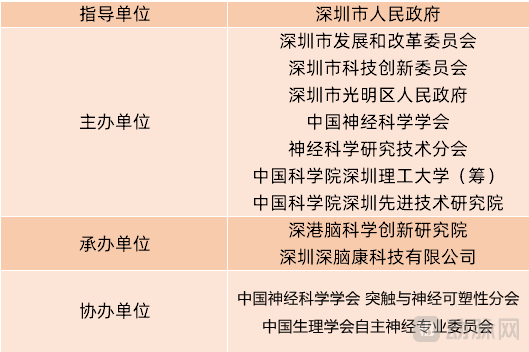
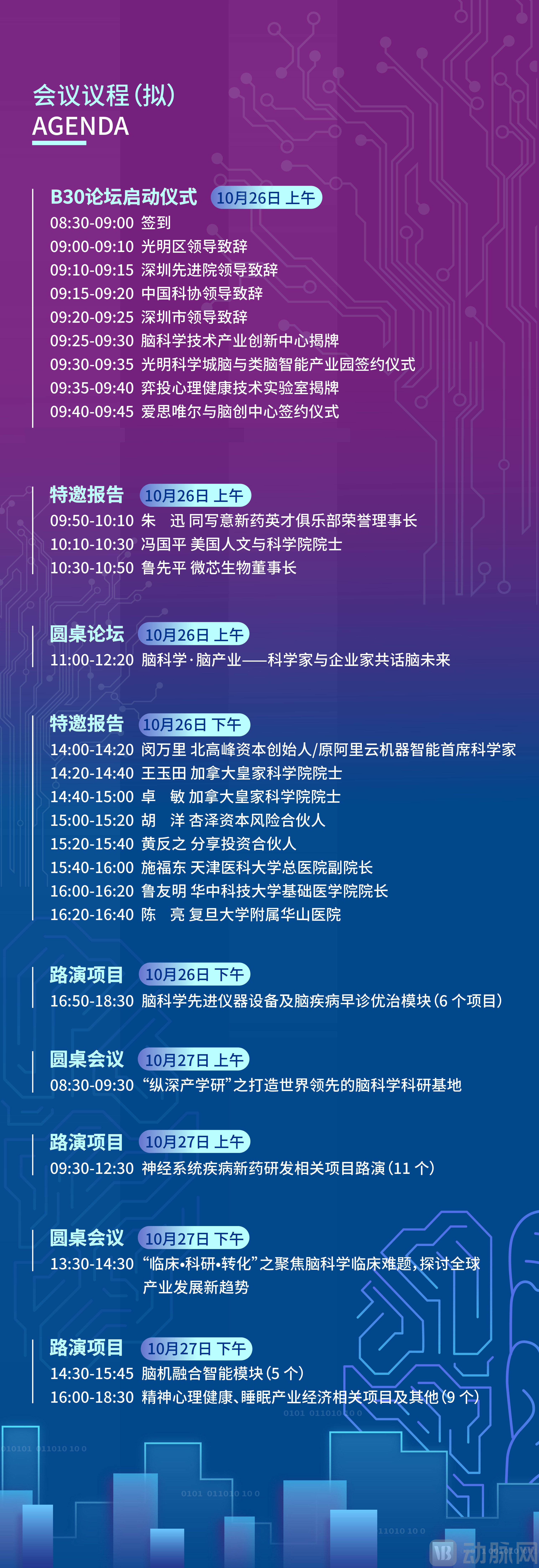
Currently, Shenzhen is at the new starting point of the 14th Five-Year Plan and the comprehensive construction of a modern socialist country, entering a golden period of development driven by and benefiting from the superposition of the “two zones.” To better serve the technological innovation and development of the Guangdong-Hong Kong-Macao Greater Bay Area, accelerate the construction of the pilot zone for the Comprehensive National Science Center, promote the transfer and translation of brain and health technologies, create a new ecosystem for the brain and health industry, and foster the development of the Guangming science and innovation economy, the Shenzhen Institute of Advanced Technology adheres to the philosophy of “Gathering Wisdom for the Brain, Building a City of Science,” with “Pioneering the Next Revolution in Future Life Sciences: Seizing the Strategic High Ground in the Brain and Health Industry” as the theme,The “1st National Brain and Health Technology ‘30 meet 30’ Guangming Industry Conference” will be held on October 26–27, 2021, at the Lecture Hall on the First Floor of Building F, Mingzhu Campus (in preparation) of Shenzhen University of Chinese Academy of Sciences.
This conference will bring together elites from the fields of “technology + capital + industry” to discuss the current state of industrial development, future trends, and industrial policies in the brain and health technology sectors. Invited renowned investment institutions include (but are not limited to) Hillhouse Capital, IDG Capital, Sequoia Capital, Fosun Pharma, Beigaofeng Capital, Fenxiang Investment, Xiantong Capital, Danlu Capital, CITIC Securities, Yi Tou Capital, Jiayin Fund, Cowin Capital, and nearly 30 others. Invited experts and scholars include academicians from the Chinese Academy of Sciences, the U.S. National Academies, and the Royal Society of Canada. Additionally, nearly 30 high-tech enterprises specializing in brain science, brain technology, brain intelligence, brain rehabilitation, and brain health have been invited. Experts from the technology, capital, and industrial sectors will focus on “"Sleep Economy, Mental Health and Well-being, Brain-Computer Interface Intelligence, New Drug R&D for Brain Disorders, Early Diagnosis and Optimized Treatment of Brain Diseases, Gene Therapy Technologies"Exchanges and discussions were held on public livelihood needs across six major sectors, as well as trends in future technologies and industrial development.

Booth for Investment Promotion
Contact Person: Yusen Gao (Phone: 18825249488, ys.gao@siat.ac.cn)
For specific investment promotion information, pleaseClick to view
Transportation and Accommodation
Accommodation: Please arrange your own accommodation, book your preferred hotel in advance, and cover the costs yourself.
Recommended Nearby Hotels:
1. Atour Hotel (Shenzhen Guangming New City Branch), 6.3 km by car, 20 min;
From CNY 482/night for 1 king bed, from CNY 517/night for 2 twin beds. Bookable via Ctrip. Tel: +86-18925218521.
2. Shenzhen Huating Hotel (Guangcui Road Branch), 5.8 km by car, 19 min;
From RMB 161 per night for one king bed; from RMB 229 per night for two twin beds. Bookable via Ctrip. Tel: +86-755-21382666.
3. Xicheng Hotel (Guangming Branch), 6 km by car, 20 min;
From RMB 282 per night for 1 king bed, from RMB 282 per night for 2 twin beds. Bookable via Ctrip. Tel: +86-755-27881118.
4. Kailin Hotel (Guangming Branch), 6.1 km by car, 19 min
From CNY 228/night for 1 king bed, from CNY 247/night for 2 twin beds. Bookable on Ctrip. Tel: +86-755-86029991.
Transportation:
1. Airport – Shenzhen University of Chinese Academy of Sciences (Preparatory), Mingzhu Campus
Taxi: approximately 35 kilometers (55 minutes);
Metro: Line 11 (Airport Station to Songgang Station) → Line 6 (Songgang Station to Loucun Station, Exit C) → Walk approximately 1.1 km to the Mingzhu Campus of Shenzhen University of Advanced Technology, Chinese Academy of Sciences (in preparation).
2. Shenzhen North Railway Station – Mingzhu Campus of Shenzhen Institute of Advanced Technology, Chinese Academy of Sciences (Preparatory)
Taxi: Approximately 27.9 kilometers (38 minutes);
Subway: Line 6 (Shenzhen North Station to Loucun Station, Exit C) → Walk approximately 1.1 km to the Mingzhu Campus of Shenzhen Institute of Advanced Technology, Chinese Academy of Sciences (in preparation).
Epidemic Prevention and Control
Updates will be made in real time according to changes in epidemic prevention and control policies. Currently, visitors who have traveled to or resided in cities with medium- or high-risk areas within the past 21 days will not be admitted (medium- and high-risk areas can be queried via the National Government Service Platform mini-program). Attendees visiting Shenzhen must provide their Health Code and Itinerary Code. Attendees from outside Shenzhen must provide their Health Code, Itinerary Code, and a negative nucleic acid test report issued within 48 hours. Further notice will be given if epidemic prevention requirements are adjusted.
If you are from a medium- or high-risk area, or have any other epidemic prevention-related concerns, please contact the Conference Epidemic Prevention Team promptly. (Wang Yihua: 19129348781)