

Apple's Next-Gen Medical Device: Non-Invasive Glucose Monitoring Set to Redefine Wearable Health Tech

Samsung Electronics
South Korea's largest electronics manufacturing company

Apple
Designers, manufacturers, and sellers of electronic products such as personal computers and software
In the second half of 2021, health wearables witnessed significant functional advancements. After several years of stagnant innovation, leading companies have begun integrating blood pressure monitoring capabilities into their devices. Furthermore, the industry is striving to incorporate additional medical and healthcare features, thereby bringing health wearables closer to serious clinical applications.
VCBeat (WeChat ID: Vcbeat) has reviewed the current state of technological advancements in wearable devices and their future prospects.
The market size of wearable devices has shown a trend of rapid growth in recent years. According to data from IDC's "China Wearable Device Market Quarterly Tracker Report, Q2 2021," global shipments of wearable devices reached 114.2 million units in the second quarter of 2021, a year-on-year increase of 32.3%. Among these, the market shipments of wearable devices in China amounted to 36.14 million units, representing a year-on-year growth of 33.7%.
Prior to this, global wearable device shipments had just hit a record high in the first quarter of 2021, reaching 104.6 million units, a 34.4% increase from 77.8 million units in the same period last year. This also marked the first time that global wearable device shipments exceeded 100 million units in the first quarter. Compared with the first quarter, shipments in the second quarter continued to maintain strong growth momentum.
Previously, some analyses suggested that the peak demand for wearable devices had passed, noting that the compound annual growth rate (CAGR) of global wearable device shipments from 2020 to 2025 was 25%, a significant decline compared to the 44.5% CAGR recorded between 2016 and 2020. However, data from the past two quarters indicate a clearly more optimistic outlook.
Among the three categories of wearable devices, ear-worn devices recorded the highest growth rate, with a year-on-year increase of 58.2%. The reason is straightforward: the widespread removal of traditional audio jacks from smartphones, coupled with declining prices for wireless earphones, has driven significant market expansion. However, this category of devices has not yet been integrated with medical and healthcare applications.
Smartwatches and fitness bands, which have traditionally been closely integrated with health features, showed a clear divergence in growth. Smartwatch shipments maintained robust growth, reaching 19.96 million units in the second quarter of 2021, a year-on-year increase of 30.2%. In contrast, smart band shipments totaled only 6.41 million units, representing a 5% year-on-year decline.
Relatively speaking, although smart bands are more affordable, they typically offer fewer features, generally limited to basic health monitoring functions such as sleep tracking and activity monitoring. Only a select few products provide more advanced health monitoring capabilities; for instance, Amazon’s Halo smart band supports body fat measurement.
Compared to smart bands, smartwatches offer significantly more features. The reason is simple: smartwatches have larger internal space, allowing for the integration of sensors that are critical to various medical and health functions; furthermore, smartwatches are positioned at a higher market segment and command noticeably higher prices, which can financially support the inclusion of costly sensors.
The evolution of the wearable device market is also an inevitable outcome of consumption upgrading. With the integration of more advanced sensing technologies and enhanced functionalities, wearable devices will see further promotion in health monitoring applications. Whether breakthroughs can be achieved in watch-based sensor technology and successfully commercialized will not only determine the future trajectory of the wearable device industry and reshape the existing competitive landscape, but also have a significant impact on the healthcare and medical industries.
Driven by advancements in sensor technology, the health features of wearable devices have undergone several significant improvements. Taking smartwatches as an example, early models offered limited health functionalities; for instance, the first-generation Apple Watch provided heart rate monitoring. However, most users merely experimented with this feature out of curiosity a few times before leaving the device unused.
Due to their relatively limited and homogeneous functionality, most users at the time opted for smart bands over smartwatches. For the majority of people, smartwatches were perceived more as expensive toys. This positioned wearable devices primarily toward a younger user demographic. However, most of these individuals are in good health and do not require continuous monitoring of their vital signs.
Meanwhile, due to the immaturity of sensor technology, coupled with the lengthy clinical trials required for medical device certification and the need to undergo stringent regulatory oversight, wearable devices were not yet suitable for patients who truly required continuous vital sign monitoring. Consequently, it was inevitable that wearables would quickly fade into obscurity after their initial surge in popularity.
Apple brought good news with the release of the Apple Watch 4 in 2018, becoming the first to introduce ECG functionality. Combined with its existing heart rate monitoring feature, the Apple Watch 4 can detect cardiac rhythm in the background and promptly alert users when atrial fibrillation is detected. Additionally, the device offers fall detection; if it senses that a user has fallen and remains immobile for one minute, it will automatically activate the emergency SOS feature.
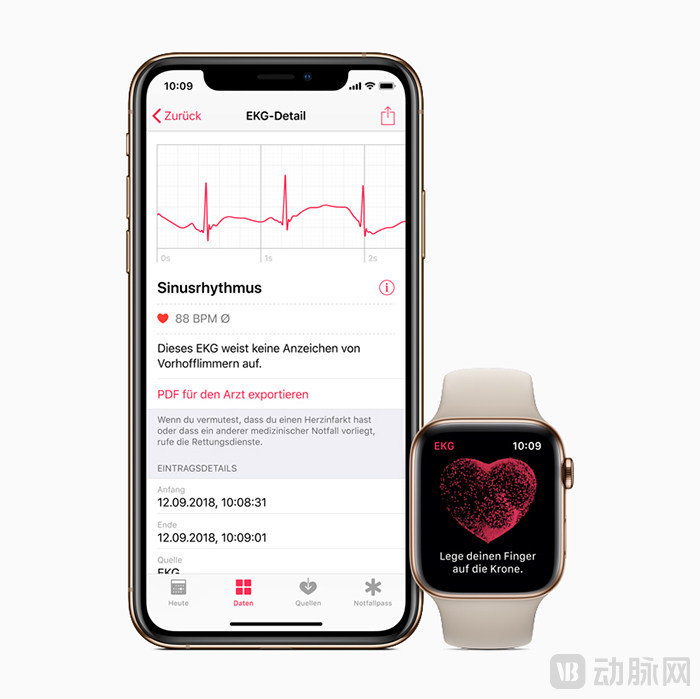
Apple Watch Series 4’s single-lead ECG received approval from the FDA and NMPA (Image source: Apple official website)
More importantly, Apple’s single-lead ECG and atrial fibrillation notification features have received FDA clearance as “Breakthrough Devices.” This makes it the world’s first over-the-counter product directly marketed to consumers that can detect electrocardiograms from the wrist. Clearance as a medical device signifies that the product’s accuracy has reached the level required for medical devices, making it suitable for medical use.
It is worth noting that Apple’s formal FDA approval for this feature was not granted until 2020. Meanwhile, due to varying regulatory policies across different regions, the feature was not launched globally in a synchronized manner. For instance, it was not until 2021 that Apple’s ECG app and atrial fibrillation notification feature received approval from China’s National Medical Products Administration (NMPA), enabling their use in China. On one hand, this highlights how advanced Apple’s feature was at the time, as there were no comparable medical devices available on the market; on the other hand, it underscores the lengthy timeline required for rigorous medical device regulatory approvals.
Heart rate monitoring in mainstream wearable devices is based on the principle of photoplethysmography (PPG), a non-invasive method that uses optoelectronic techniques to detect changes in blood volume within living tissue.
When light of a specific wavelength irradiates the skin surface at the fingertip, the vasoconstriction and vasodilation accompanying each heartbeat affect either light transmission (light passing through the fingertip in transmission PPG) or light reflection (light near the wrist surface in reflection PPG). As light penetrates the skin tissue and is reflected back to the photosensitive sensor, it undergoes a certain degree of attenuation.
Provided there is no significant movement at the measurement site, the absorption of light by human muscles, bones, veins, and other connective tissues remains essentially constant. Due to the pulsatile nature of blood flow in the arteries, their light absorption varies accordingly. By employing photoelectric conversion and algorithmic processing, heart rate can be accurately calculated.
Electrocardiography (ECG) is a technique that records the heart’s electrophysiological activity over time via the thoracic cavity. By placing electrodes on the surface of the skin, it can detect the propagation of electrical potentials in the heart. Measuring ECG signals often requires connecting sensor electrodes to multiple sites on the body. Currently, medical devices can achieve up to 12-lead ECG recordings. In contrast, wearable devices represented by the Apple Watch Series 4, which can only accommodate a single sensor electrode, are limited to single-lead ECG functionality.
ECG functionality can be considered the first “killer app” for wearable devices in the realm of medical and health features, enabling patients who require continuous vital sign monitoring to benefit from technological advancements, thereby unlocking the vast market of individuals with chronic diseases. Soon, other wearable device manufacturers followed suit, incorporating ECG functionality into their own devices and obtaining medical device certifications, thus making ECG a standard medical and health feature in wearable devices.
Blood oxygen monitoring is another key health feature offered by wearable devices. In 2020, Apple introduced blood oxygen monitoring on the Apple Watch Series 6. Subsequently, smartwatches with blood oxygen measurement capabilities were released in rapid succession—nearly all flagship smartwatches from mainstream brands now include this feature.
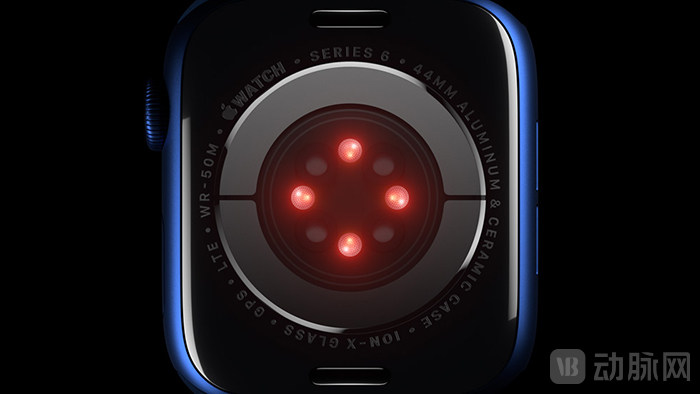
Apple Watch Series 6 debuted blood oxygen monitoring (Image from Apple's official website)
Major brands did not hastily add this feature simply because Apple offered it; rather, they had long been preparing for it, as product development inevitably takes time. In fact, even Apple itself had already integrated optical sensors capable of detecting pulse blood oxygen saturation into the first-generation Apple Watch, meaning the technology for blood oxygen monitoring was already feasible. However, due to the requirements for medical device certification and considerations regarding data accuracy and reliability, this feature has only just been made available.
Blood oxygen monitoring primarily assesses health status by measuring arterial blood oxygen saturation. Blood oxygen saturation specifically refers to the proportion of hemoglobin bound to oxygen in the blood, i.e., the concentration of blood oxygen. Generally, a blood oxygen saturation level below 94% is considered indicative of insufficient oxygen supply. Many clinical conditions can lead to hypoxia, directly impairing normal cellular metabolism and, in severe cases, posing a life-threatening risk. Therefore, blood oxygen monitoring is of significant importance in clinical medicine.
For instance, during the COVID-19 pandemic, blood oxygen saturation has become an auxiliary diagnostic tool for COVID-19; continuous monitoring of blood oxygen levels via wearable devices, combined with heart rate data, can help identify potential sleep apnea issues.
The principle of non-invasive blood oxygen monitoring is based on the differential absorption rates of red and infrared light by oxyhemoglobin (HbO2) and deoxyhemoglobin (Hb) in the blood. Optical sensors emit red and infrared light onto the skin, capture the light reflected from the subcutaneous blood vessels, and then calculate blood oxygen concentration and saturation using algorithms. Currently, this technology is highly accurate and reliable, and has long been widely adopted in medical institutions.
It should be noted that medical institutions primarily obtain blood oxygen monitoring signals by collecting data from the fingertip. In contrast, common wearable devices mainly adopt a wrist-worn form factor. Since the wrist is not as “transparent” to light as the finger, ensuring the accuracy and reliability of data monitoring presents greater challenges. This is one of the reasons why Apple did not officially enable its blood oxygen monitoring feature until several years later.
It is evident that blood oxygen monitoring primarily relies on photosensitive sensors, functioning in a manner similar to heart rate monitoring. However, the two require light of different wavelengths: heart rate monitoring typically uses green light, whereas blood oxygen monitoring requires red light. Therefore, in theory, supporting both heart rate and blood oxygen monitoring simultaneously necessitates at least two optical sensors. Nevertheless, with technological advancements, integrated sensors capable of performing both functions have emerged, significantly promoting the widespread adoption of blood oxygen monitoring in wearable devices.
Nevertheless, constrained by the current level of technological development, there remains a certain gap between the accuracy of blood oxygen monitoring in wearable devices and that of medical-grade equipment. The industry is striving to improve the precision of blood oxygen monitoring through several approaches. First, enhancing the accuracy of optical sensors; second, incorporating additional sensors; and third, focusing on ear-worn wearable devices—since the human ear offers better light transmittance than the wrist, it may represent a viable option for improving accuracy.
From ECG to blood oxygen monitoring, Apple has led the industry in exploring health features for wearable devices. As time goes on, other wearable manufacturers are catching up—with blood pressure monitoring being the most prominent example.
Since 2021, leading wearable device brands such as Samsung, Huami, and Huawei have successively introduced blood pressure monitoring functionality into their wearables. At Huawei’s All-Scenario Launch Event in May 2021, Huawei announced that its first smartwatch supporting blood pressure measurement had passed medical device registration testing. The company stated it would collaborate with professional medical institutions to initiate registered clinical trials, with expectations of obtaining approval from the National Medical Products Administration (NMPA) and officially launching the product in the second half of the year.
According to foreign media reports, Huawei’s smartwatch, named Watch D, has appeared on the new market launch list of European regulatory authorities and is described as a serious medical health device, such as “medical analysis, heart rate monitor, arterial blood pressure measurement device, and sphygmomanometer.”
In July 2021, Huami launched the PumpBeats blood pressure monitoring engine and the BioTracker 3.0 PPG sensor. Wearable devices equipped with this combination enable users to measure their blood pressure anytime and anywhere, with the entire process requiring only a 30-second press. The Amazfit GTR Pro 3 smartwatch, featuring this technology, was also released on October 16. It is among the first smartwatches in China to utilize photoplethysmography (PPG) sensors for wrist-based blood pressure measurement.
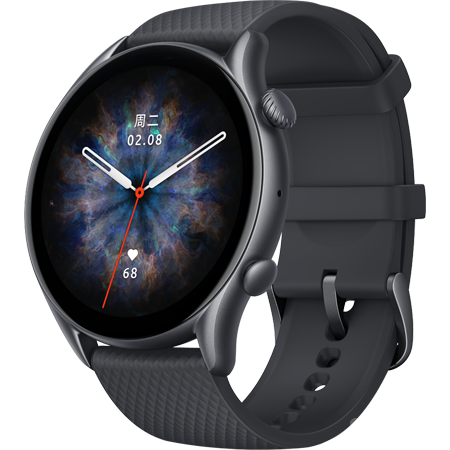
Amazfit GTR Pro 3 Smartwatch with Blood Pressure Monitoring Function (Image from Huami Official Website)
Blood pressure measurement using smartwatches is a global challenge, primarily due to the stringent requirements for measurement accuracy. Heart rate monitoring is relatively easy to implement on wearable devices because it only requires tracking the frequency of pulse wave beats. It does not heavily rely on the structural, morphological, or other related information of the pulse wave itself; as long as the corresponding frequency is obtained and analyzed in the frequency spectrum, the heart rate can be calculated.
Implementing blood pressure monitoring using photoelectric sensors requires not only monitoring the pulse wave frequency but also capturing waveform information. However, optical sensor measurements of pulse waves are susceptible to various environmental factors, as well as individual characteristics such as skin tone (currently, Huami’s feature does not support individuals with dark skin), body hair, and sitting posture. Consequently, the sensor degrades the pulse waveform data to filter out other interferences; if the waveform quality is compromised excessively, the reliability of the measurement will deteriorate.
In addition to algorithms, this method of measuring blood pressure using optical sensors also places high demands on the sensors themselves. Huami’s BioTracker adopts a six-channel design; the higher the quality of the underlying optical signals, the stronger its anti-interference capability. Combined with the latest AI-based blood pressure algorithm, this configuration delivers more accurate and reliable measurement results.
Currently, the first phase of the clinical trial conducted by Huami in collaboration with Peking University First Hospital has been completed. Analysis of blood pressure monitoring data from enrolled patients demonstrated that Huami’s Blood Pressure Engine achieved a mean absolute deviation of less than 5.14 mmHg for systolic blood pressure and less than 4.88 mmHg for diastolic blood pressure, indicating high reliability.
This feature can also facilitate screening for masked hypertension; meanwhile, Huami Technology will continue to advance 24-hour continuous blood pressure monitoring, thereby enabling nighttime sleep monitoring and passive blood pressure monitoring.
However, this feature has not yet obtained medical device certification and is not available to the general public. Users must join the joint research project between Huami and Peking University First Hospital and sign an informed consent form before they can use it. Additionally, this feature requires calibration every 28 days using a certified blood pressure monitor. The blood pressure measurement function for this smartwatch is expected to launch in November.
Samsung also launched the Galaxy Watch4 in August, which can analyze body composition (skeletal muscle mass, basal metabolic rate, total body water, and body fat percentage) and offers advanced health features such as ECG, atrial fibrillation detection, blood oxygen monitoring, and blood pressure monitoring.
A major highlight of the Galaxy Watch4 is its new tri-sensor chip, which integrates three key health sensors into a single unit: an optical heart rate sensor, an ECG sensor, and a bioelectrical impedance analysis (BIA) sensor for blood pressure measurement.
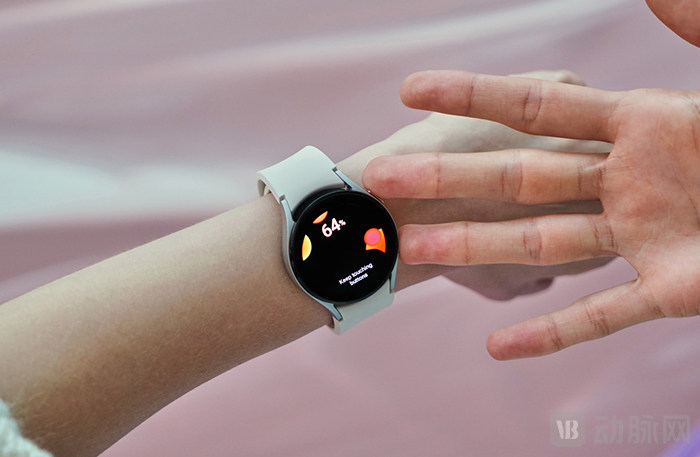
Samsung Galaxy Watch4 Enables Blood Pressure Monitoring (Image from Samsung's Official Website)
However, since Samsung’s blood pressure monitoring feature has obtained medical device certification only in select countries and regions, it is not available everywhere. Currently, this feature has not been launched in China. Meanwhile, similar to Huami’s approach, Samsung also requires users to calibrate the device every four weeks using a traditional cuff-based blood pressure monitor that has received medical device certification.
Although blood pressure monitoring has not yet received medical device certification and still requires calibration with traditional sphygmomanometers, this health feature holds immense potential overall. In the near future, major wearable device manufacturers will progressively incorporate this functionality. Once the technology matures and large-scale adoption drives down costs, cuffless non-invasive blood pressure measurement technology will have exceptionally broad application prospects in the future.
Beyond health features such as heart rate, ECG, blood oxygen, and blood pressure monitoring, what other health functionalities might wearable devices incorporate in the near future? Advances in non-invasive biosensors suggest that continuous non-invasive glucose monitoring and lactate monitoring may become key areas of focus in the future.
Non-invasive blood glucose monitoring, in particular, holds immense market potential. According to data released by the International Diabetes Federation, the number of diagnosed diabetes patients in China reached 116 million in 2019; it is projected that the diabetic population in China will reach 200 million by 2030. The “Digital Innovation Report on Diabetes Management” published by VCBeat·VBInsight indicates that the diabetes market in China will reach RMB 134.9 billion by 2025.
Diabetic patients require multiple daily blood glucose tests, which necessitate blood sampling and result in poor user experience as well as a certain risk of infection. Therefore, the industry has been striving to achieve non-invasive blood glucose monitoring, which can significantly improve user experience.
Sampling body fluids such as sweat, tears, saliva, and interstitial fluid, followed by chemical analysis of their contained biomarkers, has been the primary research direction for non-invasive blood glucose monitoring. However, this approach relies on highly specific bioreceptors capable of recognizing target biomarkers and their corresponding concentrations in complex samples under physiological conditions.
Meanwhile, the widespread adoption of this technology also demands a deep understanding of the biochemical composition of body fluids, such as sweat or tears, and their relationship with blood chemistry. Additionally, to achieve non-invasive sampling without causing discomfort to the wearer, biosensors must utilize advanced materials and designs to provide the necessary flexibility and stretchability.
For wrist-worn wearable devices, significant progress has been made in transdermal dialysis-based non-invasive glucose monitoring technology that relies on sweat and interstitial fluid (ISF) sampling, particularly in device integration, sensing accuracy, sweat/ISF generation and replenishment, signal transduction, data transmission, and multiplexed sensing. Concurrently, advances have also been achieved in related flexible materials and self-healing materials.
However, this technology still requires extended operational duration, enhanced correlation between sensor response and concurrent blood concentration analysis, effective and controlled sampling of biological fluids, as well as improved sweat sampling and transport, to increase detection reliability and enable dynamic monitoring of concentration changes.
Precisely because of the immense difficulty, progress in this field has been limited over the years. As early as 2015, Verily, a sister company of Google, attempted to develop a contact lens capable of non-invasive blood glucose monitoring via tears. However, after multiple efforts, the product failed to materialize and was ultimately abandoned by Verily.
Another non-invasive blood glucose monitoring technique involves the use of near-infrared and mid-infrared spectroscopy to monitor blood glucose levels. Spectroscopic techniques primarily leverage the unique spectral characteristics of substances by measuring the interaction between a specific substance and light waves of various wavelengths to determine the concentration of that substance. When substances interact with light of different wavelengths, they exhibit varying absorption and reflection rates, and may also emit light at different wavelengths following absorption.
By investigating the response characteristics of specific substances at different wavelengths, their unique spectral features within a particular optical band can be obtained. By emitting light at specific wavelengths and using sensors to capture the reflected light, the concentration of a substance can be estimated by comparing its unique spectral signature. Theoretically, detection of specific biochemical markers can be achieved provided that light sources with sufficient signal intensity and highly precise wavelengths are available.
Essentially, this technology follows the same trajectory as heart rate, blood oxygen saturation, and blood pressure monitoring in wearable devices. The primary challenge lies in addressing the difficulties posed by the spectral characteristics of blood glucose for device implementation. Such devices often need to overcome significant hurdles related to power efficiency, signal strength, spectral coverage, and resolution.
Taking blood glucose as an example, its spectral characteristics are most pronounced under near-infrared (600–2500 nm wavelength) and mid-infrared (2500–16000 nm wavelength) irradiation. However, light in these two bands cannot penetrate most human tissues. Therefore, it is necessary to measure the spectrum of light reflected from the tissue, rather than the spectrum of light transmitted through the tissue, to determine blood glucose levels in the human body.
Near-infrared light exhibits stronger tissue penetration than mid-infrared light; however, the spectral specificity of blood glucose in the near-infrared range is weaker than that in the mid-infrared range. Mid-infrared light is hailed as the “fingerprint” of the spectrum due to its high specificity. Nevertheless, given the stringent requirements for mid-infrared emission devices and its inability to penetrate human tissues, progress in achieving non-invasive blood glucose monitoring using optical techniques has been slow.
Although Apple lags slightly in blood pressure monitoring, it holds promise for regaining its lead in non-invasive glucose monitoring. Rockley Photonics, a supplier of silicon photonics chips and modules and one of Apple’s key sensor suppliers, announced in July 2021 that it was on the verge of developing a non-invasive glucose monitoring sensor.
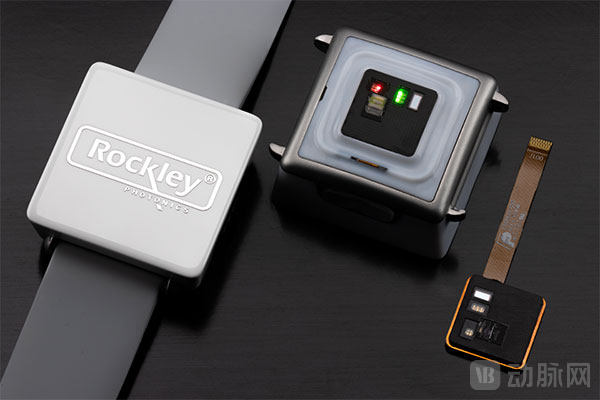
Rockley Photonics’ Silicon Photonic Sensor (Image from Rockley Photonics’ Official Website)
Rockley Photonics’ integrated silicon photonic sensors use photonic integrated circuit (PIC) chips to generate a large number of discrete, narrow-linewidth lasers within specific spectral ranges. Compared with traditional LED-based sensors, they offer three major advantages.
First, high spectral resolution. Silicon photonic lasers feature an extremely narrow linewidth, which can significantly enhance spectral resolution to a level comparable to that of monochromators.
Second, high integration density. Its high-density laser integration technology enables laser emission from a compact chip while covering an exceptionally broad spectral range.
Third, high spectral power efficiency. Because it emits light at precisely defined laser lines, its emission spectrum is much narrower than that of LEDs; the optimal horizontal optical power emitted by its proprietary laser diodes requires only a few milliwatts to meet demand.
Since Rockley Photonics’ silicon photonics chips cover a broad spectrum and theoretically offer sufficient precision and signal strength, they could, in theory, enable the monitoring of additional biomarkers beyond blood glucose in the future, such as lactate, hydration levels, and alcohol concentration.
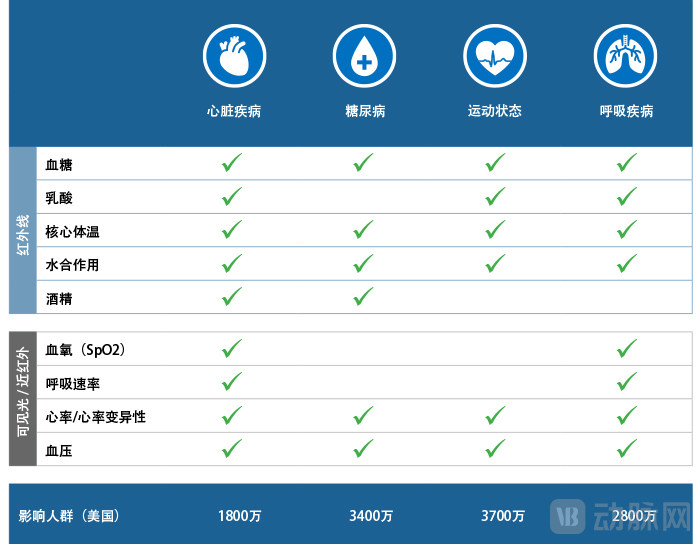
Potential Applications of Rockley Photonics’ Silicon Photonics Platform (Image from the official Rockley Photonics website)
Based on timeline projections, the next-generation Apple Watch, set to be released next year, may feature Rockley Photonics’ silicon photonics platform, thereby transforming the device into a veritable “clinic on the wrist.”
Sensing technology is the foundation of wearable device development. By leveraging more accurate sensing technologies and computational methods to obtain richer vital sign data, smartwatches will expand their capabilities in health monitoring and chronic disease management beyond existing features such as heart rate, blood oxygen, and ECG, to include blood pressure and blood glucose monitoring. This advancement will also lay the data groundwork for the enrichment and growth of the application ecosystem.
Wearable devices have gradually expanded from monitoring body temperature and heart rate to include electrocardiography (ECG), blood oxygen saturation, and blood pressure, and are now evolving toward tracking more diverse physiological markers such as blood glucose and lactate. With the integration of cloud computing and artificial intelligence (AI), these vast amounts of health data can drive a qualitative leap from quantitative accumulation, enabling the exploration of new approaches to disease prevention and treatment.
VCBeat will also continue to monitor the development of health wearables, bringing readers the latest reports.
References:
Shenzhen Bay: “Heart Rate, ECG, Blood Oxygen, and Medical Big Data: A Comprehensive Review of Apple Watch’s Health Journey & Next-Generation Predictions | Feature Article”
Leiphone: “Blood Oxygen Sensors Become the New Favorite in Smartwatches Overnight: How High Is Their Actual Value?”
VCBeat: In-Depth | A Comprehensive Comparison of the Latest Global Non-Invasive Blood Glucose Monitoring Technology Roadmaps
Rockley Photonics:Real-Time, Non-Invasive Biomarker Sensing on the Wrist