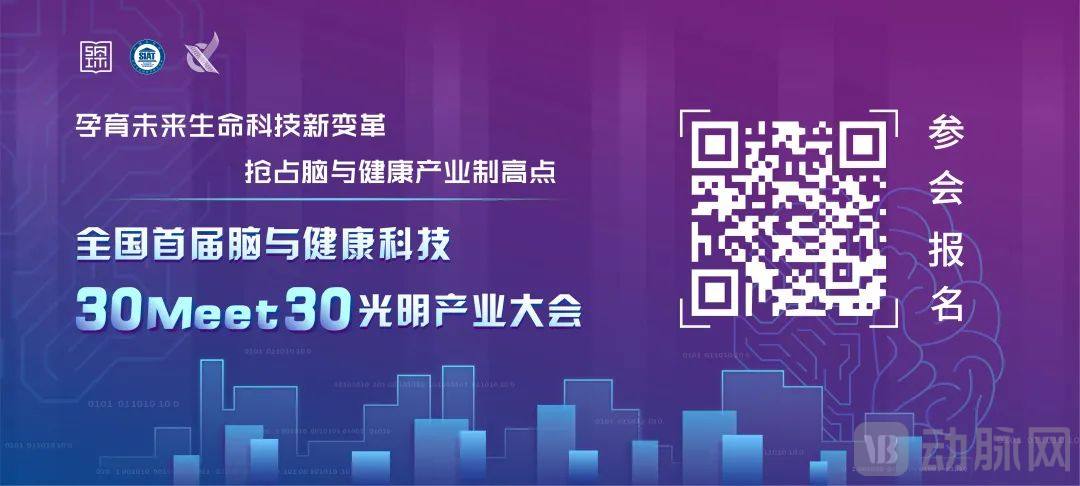
China's First Brain and Health Technology '30 meet 30' Guangming Industry Conference to Unveil Emerging Opportunities in the Trillion-Yuan Brain Science Sector
Brain science, regarded as the “final frontier” of human scientific inquiry, is the most elusive pearl in the crown of scientific research.Since the launch of the U.S. BRAIN Initiative in 2013, countries and regions such as the United States, the European Union, Japan, Australia, and South Korea have successively introduced their own brain science research programs. Brain science and brain-inspired research have become a hotspot in the current international frontier of science and technology, regarded by nations as a new engine for future economic growth and a transformative force leading technological innovation.
From the perspective of the industry life cycle,2021 was undoubtedly a new starting point for innovation in China’s brain science field.
First, in terms of policy. In"14th Five-Year Plan"In China, it is explicitly stated that we should target frontier fields such as brain science.Implement a batch of forward-looking, strategic national major science and technology projects, and in frontier technology fields such as brain-inspired intelligence and key areas of industrial transformation, organize and implement incubation and acceleration programs for future industries, while strategically planning and laying out a batch of emerging industries.
On the other hand, the long-awaited"China Brain Project"Finally entered the actual implementation phase this year. The Ministry of Science and Technology officially released"Guidelines for Project Declaration in 2021 under the Major Program 'Brain Science and Brain-Like Research' of Science and Technology Innovation 2030", and project applications commenced on October 9.
It is reported that the “China Brain Project” will focus onAnalysis of the Principles of Brain Cognition, Pathogenesis and Intervention Technologies for Major Brain Disorders Associated with Cognitive Impairment, Brain-Inspired Computing and Brain-Machine Intelligence Technologies and Applications, Brain and Intellectual Development in Children and Adolescents, and Technical Platform ConstructionFive aspects comprising 59 research directions, with estimated funding to be allocated by the state3.148 billion yuan. In addition, according to the Ministry of Science and Technology, the state will allocate in the futureRMB 54 billion, and fully advance the development of the China Brain Project.
It can be seen that, after decades of accumulation, brain science is entering a period of explosive application.A Brand-New, Brain Science-Based Trillion-Dollar Industry Is Rapidly Taking Shape.However, China is still in the exploratory stage regarding how to better expand the brain science industry and further unleash its development potential. It requires the joint participation and discussion of all parties across the industrial chain, striving to identify a path for industrial transformation—from inception to completion—within a short timeframe.
Along this line of thought, a remarkable “idea” is taking shape.The inaugural National Brain and Health Technology “30 meet 30” Guangming Industry Conference will be held at the Mingzhu Campus of Shenzhen University of Advanced Technology, Chinese Academy of Sciences (in preparation), on October 26–27, 2021.
This conference is hosted by the Shenzhen Municipal Development and Reform Commission, the Shenzhen Municipal Science and Technology Innovation Commission, the People’s Government of Guangming District (Shenzhen), the Neuroscientific Research Techniques Branch of the Chinese Society for Neuroscience, the Shenzhen Institute of Advanced Technology, Chinese Academy of Sciences (preparatory), and the Shenzhen Institutes of Advanced Technology, Chinese Academy of Sciences. It is co-organized by the Shenzhen-Hong Kong Institute of Brain Science and Technology Innovation and Shenzhen Shen Naokang Technology Co., Ltd., with support from the Synapse and Plasticity Professional Committee of the Chinese Society for Neuroscience and the Autonomic Nervous System Professional Committee of the Chinese Physiological Society.
It is reported that the conference will bring together elites from the “technology + capital + industry” sectors to conduct comprehensive discussions on the current state of industrial development, future trends, and industrial policies in the field of brain and health technologies.
A New Trend, A New Industry, A New Coordinate
Never before has brain science, represented by innovative technologies, garnered such widespread attention, emphasis, and participation from society at large.
On the policy front.In a series of key national strategies represented by the “14th Five-Year Plan,” brain science has been prominently featured as a focal industrial sector for future national prioritization and expansion.
On the other hand, it is on the capital side.According to authoritative statistical data,Over the past five years, brain science enterprises in China have raised approximately $1.13 billion (equivalent to RMB 7.2 billion) in financing., has gradually become one of the most lucrative emerging segments in specialized medical fields.
However, focusing on the present, we still have much to do. As a new source of industrial vitality,For brain science to achieve rapid practical application, it must be integrated with regional industrial development. Following this core logic, we have identified numerous possibilities in Shenzhen, a national forefront of reform and opening-up.
Currently, Shenzhen stands at a new starting point marked by the commencement of the 14th Five-Year Plan and the launch of a new journey to build a modern socialist country in all respects, entering a golden period of development driven by the synergy of the Guangdong-Hong Kong-Macao Greater Bay Area and the Shenzhen Pilot Demonstration Zone of Socialism with Chinese Characteristics.
In addition, as an integral part of the Guangdong-Hong Kong-Macao Greater Bay Area, Hong Kong is simultaneously undertaking “revolutionary” initiatives. On October 6, Carrie Lam, Chief Executive of the Hong Kong Special Administrative Region, formally proposed in her fifth Policy Address delivered during her tenure to develop the northern part of Hong Kong into a livable, business-friendly, and tourism-oriented metropolitan area covering 300 square kilometers, encompassing the Shenzhen-Hong Kong border economic belt stretching from west to east and its more extensive hinterland.
The Greater Bay Area is undergoing rapid, profound, and revolutionary changes in subtle ways.Standing at this critical juncture, Shenzhen has focused intensively on the frontier field of brain science, proactively planning and constructing a series of major scientific and industrial projects, including the Major Science and Technology Infrastructure for Brain Analysis and Brain Simulation, the Brain Science Technology and Industry Innovation Center, and the Brain and Brain-Inspired Intelligence Industrial Park, all aimed at comprehensively building“Basic Research + Technological Breakthroughs + Industrialization of Achievements + Sci-Tech Finance + Talent Support”of the entire innovation ecosystem for brain science, thereby fostering a robust new model of technological development, further driving the vigorous growth of the brain and health industries in Guangming District, and establishing it as a global source of brain science innovation and a hub for industrial clustering.
Guangming District, as the core area of innovation in Shenzhen, will continue to leverage the innovative development advantages of specialized research institutions such as the Shenzhen-Hong Kong Institute of Brain Science and Technology and the Institute of Brain Cognition and Brain Diseases at the Shenzhen Institutes of Advanced Technology, Chinese Academy of Sciences, to promote the rapid translation and implementation of the brain science industry.
Industry Leaders Gather to Discuss the New Future of the Brain Science Industry
It is foreseeable that a “chemical reaction” is about to occur between Guangming District and brain science, and this“China’s First Brain and Health Technology ‘30 meet 30’ Guangming Industry Conference”will become the “catalyst” driving its progress.
It is reported that the conference will uphold“Harnessing Collective Wisdom, Building a City of Science”core philosophy, themed “Fostering a New Revolution in Future Life Sciences and Seizing the High Ground in the Brain and Health Industry,” to further explore the future potential of integrating Guangming District’s industries with brain science.
The conference featured numerous highlights.First, in terms of attendees, the conference primarily focuses on three key groups: experts and scholars, enterprises, and investment institutions.In terms of expert attendees, the conference has invited multiple academicians from the Chinese Academy of Sciences, the American Academy of Arts and Sciences, and the Royal Society of Canada, who will focus on cutting-edge perspectives to present core insights in the field of brain science.Xuanwu Hospital, Tiantan Hospital, Xiangya HospitalSenior executives from leading Chinese medical institutions, as well as department heads and experts in neurology, neurosurgery, psychiatry, and psychology, will also be invited to attend the conference.
Secondly, for investment institutions, the conference has invited, includingSequoia Capital, Hillhouse Capital, IDG Capital, Shenzhen Capital Group, Fosun Pharma, Cowin Capital, Lenovo Capital, Xiantong Capital, Danlu Capitalnearly 30 leading domestic investment firms, among others. In addition, the conference has invited more than 30 high-tech enterprises and innovative technology teams in the fields of brain science, brain technology, brain intelligence, brain rehabilitation, and brain health; directors and chiefs from departments such as neurology, neurosurgery, and psychiatry/psychology at leading domestic medical institutions will also be invited to attend the conference.
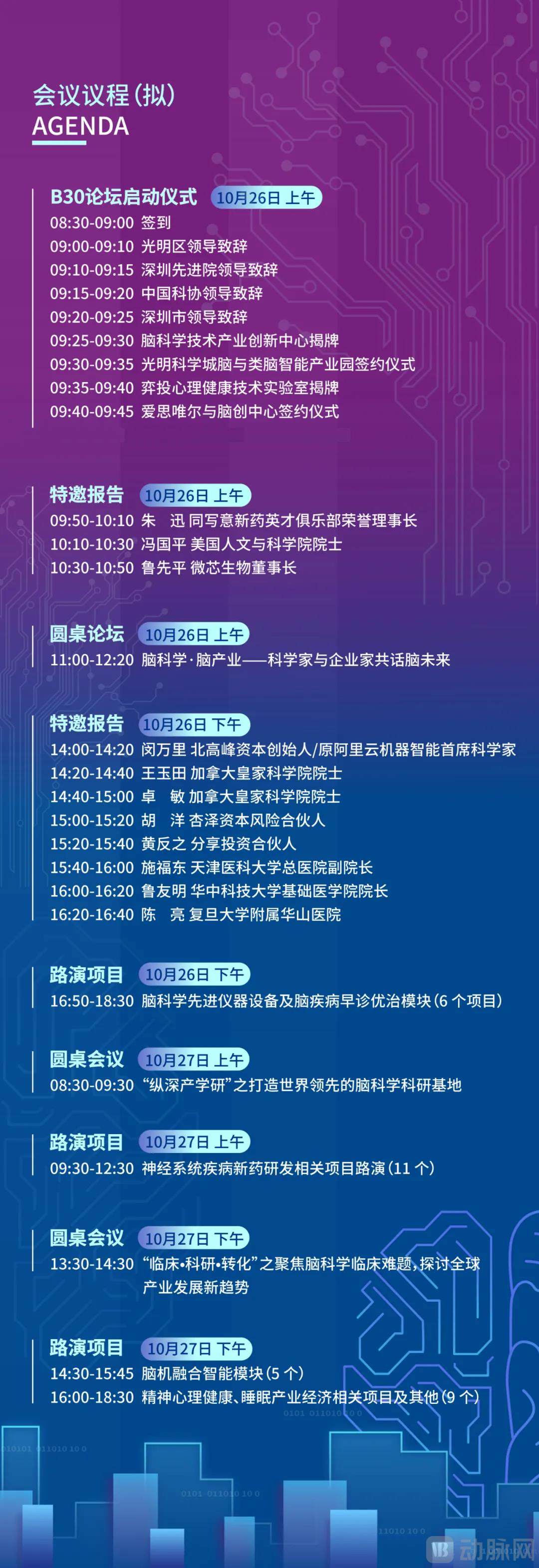
Another major highlight lies in the format of the event. It is reported that, over the course of the two-day conference, sessions were established toOpening Ceremony, Keynote Speeches, Roundtable Forum, Pitch Projectskey focal points. The launch ceremony included the unveiling of the Brain Science Technology and Industry Innovation Center, the signing ceremony for the Guangming Science City Brain and Brain-Inspired Intelligence Industrial Park, the strategic cooperation agreement among Elsevier Group, Mingnao Community, and Shenzhen Institute of Advanced Technology, as well as the unveiling of the Yitou Mental Health Technology Laboratory.
Additionally, during the exchange session, deep participants in the brain science industry ecosystem—Technology, Capital, and IndustryExperts will engage in exchanges and discussions centered on public livelihood needs, future technologies, and industrial development trends across six key areas: the sleep economy, mental health, brain-computer interface intelligence, new drug development for neurological disorders, early diagnosis and optimized treatment of brain diseases, and gene therapy technologies.
After a period of accumulation and consolidation, the field of brain science has transcended its incubation phase and is entering a new stage, with related scientific achievements and industrial applications and investments continuously being implemented.
This marks a brand-new beginning. On this track brimming with imagination and boundless challenges, Guangming District has positioned itself at the forefront of innovation. We sincerely invite more “partners” to join us in exploring the vast frontiers of brain science, propelling Guangming District’s brain science industry toward high-quality, high-level, and high-standard development.
Conference Agenda
Attendee Guide
To facilitate travel arrangements and ensure that all guests can attend the conference smoothly and safely, we have prepared the following participation guide and highlighted several key pieces of information:
Epidemic Prevention Guidelines:
Epidemic prevention requirements will be updated in real time according to changes in epidemic prevention and control policies:
1. All attendees must provide their health codes and travel history codes.
2. Participants who have traveled outside Shenzhen within the past 14 days or are from other cities must provide their health code, travel itinerary code, and a negative nucleic acid test result obtained within 48 hours.
3. As new outbreaks have recently emerged in Gansu and Xi'an, individuals whose travel history codes indicate visits to these locations are also required to provide a negative nucleic acid test result obtained within 48 hours.
4. In accordance with current epidemic prevention and control requirements, visitors who have traveled to or resided in cities with medium- or high-risk areas within the past 21 days will not be admitted at this time (medium- and high-risk areas can be queried via the National Government Service Platform mini-program).
Notice will be given if epidemic prevention requirements are adjusted.
If you are from a medium- or high-risk area, or have any other epidemic prevention-related inquiries, please contact the Conference Epidemic Prevention Team promptly. (Wang Yihua: 19129348781)
Transportation Guide:
1. Airport – Shenzhen University of Chinese Academy of Sciences (Preparatory) Mingzhu Campus
Taxi: Approximately 35 kilometers (55 minutes);
Subway: Line 11 (Airport Station to Songgang Station) → Line 6 (Songgang Station to Loucun Station, Exit C) → Walk approximately 1.1 km to the Mingzhu Campus of Shenzhen University of Advanced Technology, Chinese Academy of Sciences (Preparatory).
2. Shenzhen North Railway Station – Mingzhu Campus of Shenzhen Institute of Advanced Technology, Chinese Academy of Sciences (Preparatory)
Taxi: approx. 27.9 km (38 minutes);
Subway: Line 6 (Shenzhen North Station to Loucun Station, Exit C) → Walk approximately 1.1 km to the Mingzhu Campus of Shenzhen Institute of Advanced Technology, Chinese Academy of Sciences (under preparation).
Hotel Accommodation:
1. Atour Hotel (Shenzhen Guangming New Town Branch), 6.3 km by car, 20 min;
From RMB 482 per night for one king bed, from RMB 517 per night for two twin beds. Bookable via Ctrip. Tel: +86-18925218521.
2. Shenzhen Huating Hotel (Guangcui Road Branch), 5.8 km by car, 19 min;
From RMB 161 per night for one king bed; from RMB 229 per night for two twin beds. Bookable via Ctrip. Tel: +86-755-21382666.
3. Xicheng Hotel (Guangming Branch), 6 km by car, 20 min;
From RMB 282 per night for one king bed; from RMB 282 per night for two twin beds. Bookable via Ctrip. Tel: +86-755-27881118.
4. Kailin Hotel (Guangming Branch), 6.1 km by car, 19 min;
From CNY 228/night for 1 king bed, from CNY 247/night for 2 twin beds. Bookable via Ctrip. Tel: +86-755-86029991.