

Zhejiang University Returnee Breaks Through 'Neck-Bottleneck' Technologies in Diabetes Care, Secures Billion-Dollar IPO Backed by Qiming Ventures and Tencent

MicroTech Medical
Developer of Medical Device Products for Diabetes Management
Today, a domestic company achieved an IPO in the CGM (Continuous Glucose Monitoring) and insulin pump market, which has long been dominated by overseas enterprises.
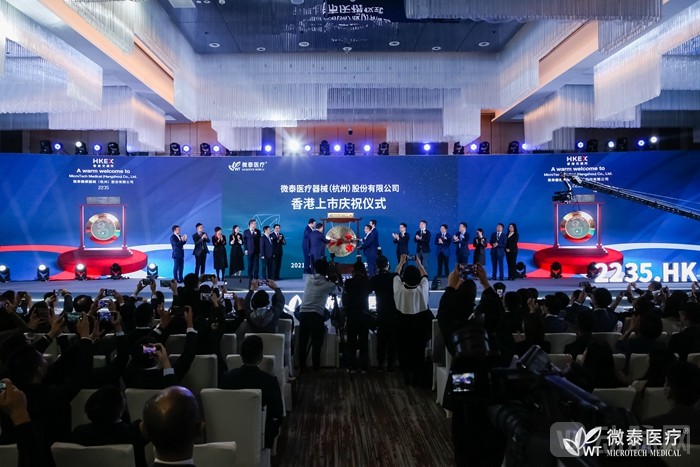
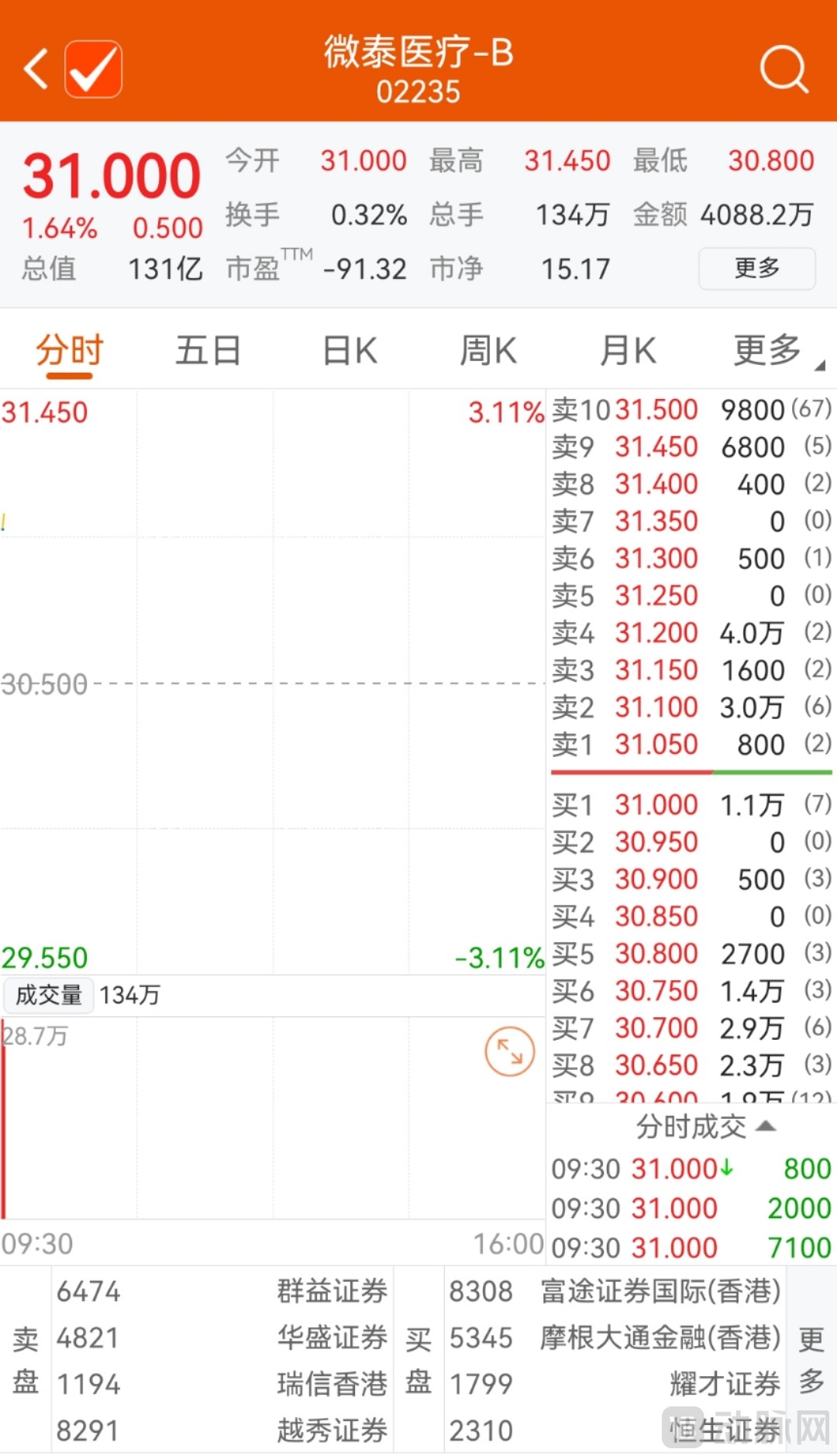
VCBeat (WeChat ID: vcbeat) has learned that MicroTech Medical listed on the Hong Kong Stock Exchange on October 19, with an issue price of HK$30.50 and an opening price of HK$31, representing a 1.64% increase at the open, and a market capitalization of HK$13.1 billion.
In 2011, Dr. Zheng Pan, founder of MicroTech Medical, decided to return to China to start a business, aiming to develop more cost-effective insulin pump products for Chinese patients using his proprietary technology. He subsequently established MicroTech Medical in Hangzhou. Over the past decade, MicroTech Medical has gained recognition from multiple investment institutions, including Qiming Venture Partners, Taikang, Tencent, and IDG Capital.Breakthroughs in the R&D technology of patch insulin pumps have made it the only company in the world with approved and marketed patch insulin pumps and calibration-free continuous glucose monitoring systems.
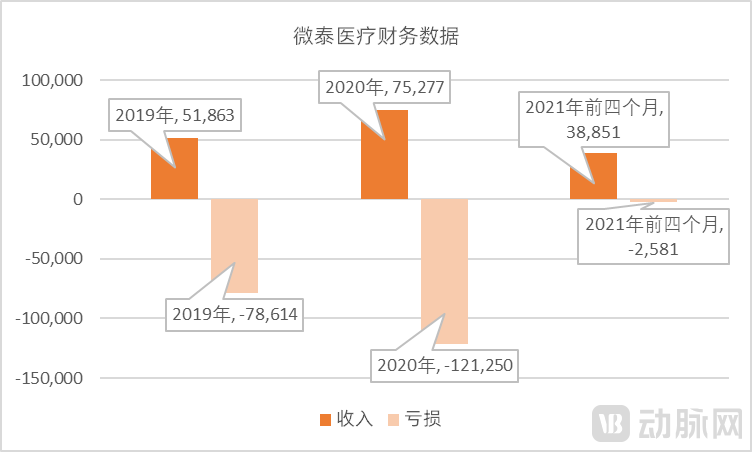
In addition to achieving technological breakthroughs, MicroTech Medical is also entering a harvest period in terms of commercialization. Driven by its core product, the Equil insulin pump, MicroTech Medical generated revenue of over RMB 75.27 million in 2020 and RMB 38.85 million in the first four months of 2021, representing a year-on-year increase of 118%. As revenue expands rapidly, the company’s losses are gradually narrowing; the loss for the first four months of 2021 decreased by 37% compared to the same period last year.
The CGM (Continuous Glucose Monitoring) and insulin pump markets have long been dominated by giants such as Abbott and Medtronic. Although China has no shortage of blood glucose monitoring companies, it has been difficult for them to capture market share from these industry leaders. How did MicroTech Medical achieve a surprise breakthrough in the glucose management market? What new solutions will MicroTech Medical bring to diabetic patients worldwide in the future? VCBeat (WeChat ID: vcbeat) provides an analysis.
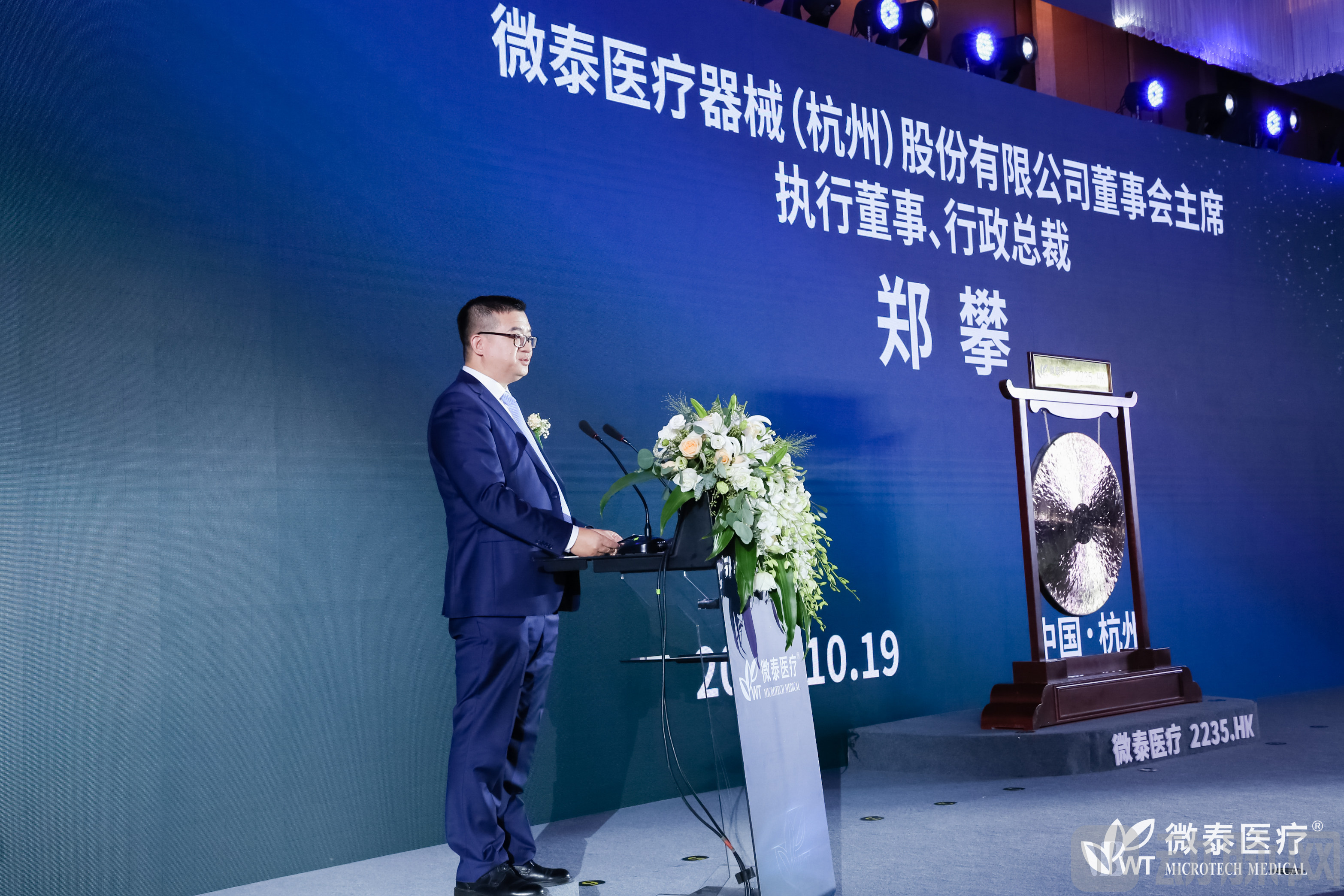
Dr. Zheng Pan, the founder of MicroTech Medical, is a native of Zhejiang Province. An academic high achiever since childhood, Dr. Zheng attended Zhejiang University of Technology due to inappropriate college application choices, despite scoring 100 points above the cutoff for key universities in the national college entrance examination. After completing his undergraduate studies, he was admitted to Zhejiang University for graduate studies. Following his master’s degree, Dr. Zheng served as a civil servant in provincial government agencies for several years before deciding to pursue further studies in the United States. In 2004, he earned his Ph.D. in Mechanical Engineering from Florida State University.
After earning his Ph.D., Dr. Zheng Pan worked in medical device research and development in the United States, holding positions at Centurion Wireless Technologies and Flextronics. During his time abroad, Dr. Zheng specialized in micro-electromechanical systems (MEMS) and their applications in the field of medical devices.
In 2010, Dr. Zheng Pan reached another turning point in his life. Observing the large base of diabetic patients in China and the continuously rising incidence rate, coupled with the high prices of insulin pumps in the domestic market and the resulting significant market gap, he decided to return to China to launch a startup leveraging his technical expertise.
Deciding to return to China to start a business, Dr. Zheng Pan also began recruiting talent. In 2011, Dr. Zheng Pan even persuaded his former U.S. employer, Dore Chin Mark, to join MicroTech Medical’s venture. To this day, Dore Chin Mark remains a core member of MicroTech Medical’s R&D team. According to Dr. Zheng Pan, the only thing that attracted Dore Chin Mark was simply showing him photos of Hangzhou’s scenery.
Before returning to China to start his business, Dr. Zheng Pan had worried that funding would be an issue. However, having chosen the right sector and armed with proprietary technology, he found that investors were plentiful; the real challenge was how to decline the numerous investment offers.
MicroTech Medical garnered favor from Eli Lilly Asia Fund during its Series A financing round and secured investment from Qiming Venture Partners in its Series B round. Following its participation in the Series B financing, Qiming continued to invest in every subsequent round. In later financing rounds, MicroTech also attracted investments from several top-tier institutions, including Taikang Investment, Tencent, and IDG Capital.
Why is MicroTech Medical viewed favorably? Hu Xubo, Managing Partner at Qiming Venture Partners, stated: “There are several distinctive companies in this field. Dexcom is a global pioneer in factory-calibrated continuous glucose monitoring (CGM) systems, with a current market capitalization exceeding $50 billion. Insulet is a global pioneer in patch insulin pumps, with a current market capitalization of $20 billion. The collaboration between Dexcom and Insulet enables Insulet to use an algorithm that automatically adjusts insulin delivery based on glucose data. This represents a highly significant approach to product development. MicroTech Medical is the only company globally with both approved and marketed patch insulin pumps and factory-calibrated CGM systems. The company’s core technologies will help it develop superior products and become a global leader.”
MicroTech Medical secured early capital recognition largely by choosing the right track. The diabetes management market is vast and crowded with participants.
In 2019, the number of people with diabetes in China was 118 million, and it is expected to reach 140 million by 2030. The blood glucose management market is one of the few hundred-billion-dollar markets in the medical device sector. The market size is projected to increase from $47.8 billion in 2020 to $111.1 billion in 2030, with a compound annual growth rate (CAGR) of 8.8%. Specifically, the Chinese market alone is expected to grow from $2.4 billion in 2020 to $9.5 billion in 2030, representing a CAGR of 14.7%.
MicroTech Medical’s second major competitive advantage lies in its sufficiently high moat.MicroTech Medical has mastered the production capabilities for both continuous glucose monitoring (CGM) systems and patch insulin pumps. CGM systems enable continuous blood glucose monitoring over multiple days, while patch insulin pumps achieve miniaturization of insulin infusion devices. Both product categories present high barriers to entry in manufacturing.
The overall structure of insulin pumps is complex. Therefore, integrating numerous components into a more compact device presents significant technical challenges. Achieving miniaturization while balancing costs to ensure affordability for the majority of patients remains another major hurdle. For continuous glucose monitoring (CGM) systems to achieve effective continuous blood glucose monitoring, there are stringent requirements for their selective inner membrane layer, enzyme layer, mass transfer-limiting layer, semi-permeable outer membrane layer, and algorithms.
There are few companies worldwide with the simultaneous capability to manufacture both insulin pumps and CGMs; Medtronic is the first, and MicroTech Medical is the second.
In the CGM sector, MicroTech Medical benchmarks itself against Dexcom, which has a market capitalization exceeding $50 billion; in the insulin pump sector, it benchmarks itself against Insulet, valued at $20 billion.
Competing alongside globally leading companies in blood glucose management devices, MicroTech Medical has also assembled a team with leading R&D capabilities. In addition to Dr. Zheng Pan, Mr. Dore Chin Mark, mentioned above, has successfully led the overseas launch of a series of medical device products and is the inventor of more than 10 issued U.S. patents and designs. Dr. Yu Fei, R&D Director at MicroTech Medical, is a distinguished scientist in the field of bioelectrochemistry. Dr. Yu has accumulated many years of experience in the research and development of medical devices for diabetes management. He is the inventor of more than 10 issued patents related to biosignal detection.
Under the leadership of the MicroTech Medical team, the commercialization of its technological products has progressed rapidly. In 2014, clinical trials were initiated for Equil, MicroTech Medical’s core product—a patch insulin pump. In 2017, Equil received market approval in China and obtained CE certification. In 2018, clinical trials began for AiDEX G7, MicroTech Medical’s continuous glucose monitoring (CGM) product. The product entered the National Medical Products Administration’s green approval channel in 2020 and obtained CE certification in 2021.
Currently, MicroTech Medical’s product portfolio covers multiple product lines, including patch insulin pumps and continuous glucose monitoring (CGM) systems—which form the foundation for closed-loop artificial pancreas systems—as well as in vitro diagnostic (IVD) devices, such as blood glucose monitoring systems and point-of-care testing devices.
Although China has over 150 million diabetes patients and a large user base for CGM and insulin pumps, MicroTech Medical’s CGM and patch insulin pumps must confront dual commercialization challenges to achieve significant market expansion domestically.
First, the traditional CGM and insulin pump markets are dominated by imported brands; second, CGMs and patch insulin pumps are priced relatively high, resulting in low penetration in the Chinese market, making market expansion a significant challenge.
First, let us examine the insulin pump market. The domestic insulin pump market in China is currently dominated by Medtronic, which holds a 56% market share for tubed insulin pumps. At present, the Chinese insulin pump market remains dominated by tubed devices. The market shares of patch insulin pumps and tubed insulin pumps in China were 1.1% and 98.9%, respectively, in 2018, and 3.3% and 96.7%, respectively, in 2020.
Moreover, the current ceiling for insulin pumps in China is limited; even Medtronic’s insulin pump products have seen relatively steady sales growth in the Chinese market, with a compound annual growth rate (CAGR) of 7% from 2018 to 2020.
Traditional medical devices for diabetes treatment, such as insulin syringes, are cost-effective and still hold the majority of market share. In China, Equil is retailed at RMB 28,800 per unit; patients using Equil incur an average daily cost of approximately RMB 32 to RMB 36, whereas those using traditional insulin syringes and insulin pens spend an average of approximately RMB 7 to RMB 10 and RMB 8 per day, respectively.
Can the more convenient design of patch insulin pumps unlock the Chinese insulin pump market? What market share can patch insulin pumps capture within the overall insulin pump market?
From the perspective of overseas market development, globally, patch insulin pumps and tubed insulin pumps accounted for 6.7% and 93.3% of the insulin pump market share in 2015, respectively; 11.8% and 88.2% in 2018, respectively; and 17.2% and 82.8% in 2020, respectively. The proportion of patch pumps in the global market is projected to remain below 30% by 2030.
Although the overall market size for patch insulin pumps is relatively smaller, the higher technical barriers and limited number of manufacturers in this segment have allowed Insulet, a producer of patch insulin pumps, to remain the second-largest insulin pump manufacturer globally.
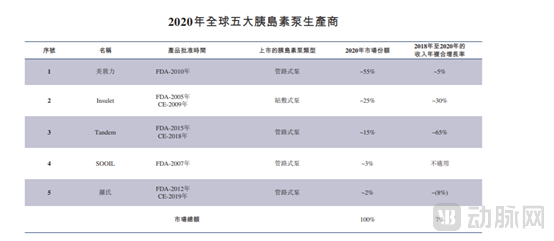
In line with the development trends in overseas markets, the market share of patch insulin pumps within the overall insulin pump market is expected to increase. MicroTech Medical can replicate the growth trajectory of Insulet. Currently, MicroTech Medical is ramping up its sales investments to enhance product penetration. In the first four months of 2021, its cost of sales increased by 105% year-on-year.
To increase the penetration rate of its patch-type insulin pumps, MicroTech Medical has adopted a multi-pronged marketing strategy. The company plans to conduct more post-market studies to enhance brand awareness. MicroTech Medical is also seeking inclusion in public medical insurance schemes to expand product penetration, while simultaneously partnering with Taikang and other commercial insurance providers to diversify its commercial channels. Furthermore, MicroTech is adjusting its business model; in the fourth quarter of 2019, it began selling patch-type insulin pumps to distributors, allowing them to lease the devices to patients requiring intensive insulin therapy via insulin pumps.
Turning to the CGM market, Abbott currently dominates the domestic landscape in China, holding over 90% of the market share. Within this sector, it is widely believed that the key to capturing market share lies in reducing costs while elevating product experience and quality to match the standards set by overseas giants.
Can MicroTech Medical Break Through in the CGM Market? Currently, MicroTech Medical’s CGM product, AiDEX G7, entered the NMPA’s Green Approval Channel in May 2020 but has not yet received approval.
Compared with major global CGM products, MicroTech Medical’s breakthroughs lie in two aspects: first, it has achieved calibration-free technology, enhancing the user experience; second, it enables real-time readings. In terms of clinical performance, the Mean Absolute Relative Difference (MARD) for real-time reading frequency is approximately 9.0%–10%, whereas Abbott’s retrospective-reading MARD stands at 12.1%. MARD, or Mean Absolute Relative Difference, represents the average absolute error between the measured values and reference values of a continuous glucose monitoring system. A lower MARD indicates higher accuracy; MicroTech Medical’s MARD is 9.1%.
It is worth noting that a major challenge for CGM lies in mass production. If MicroTech Medical can achieve large-scale mass production while keeping costs under control, it has the opportunity to become a key player in China’s CGM market.
Prior to the approval of its CGM products, another major revenue source for MicroTech Medical was its traditional blood glucose monitoring systems. However, the market for conventional finger-prick blood glucose testing is relatively mature, resulting in lower gross profit margins. In the first four months of 2021, the gross profit margin for MicroTech Medical’s Equil product was 78.5%; that for its continuous glucose monitoring system was 77.3%, while the gross profit margin for its traditional blood glucose monitoring system stood at only 20.6%. Nevertheless, through sales of its finger-prick blood glucose monitoring systems, MicroTech Medical has been able to establish a distributor network and sales channels.
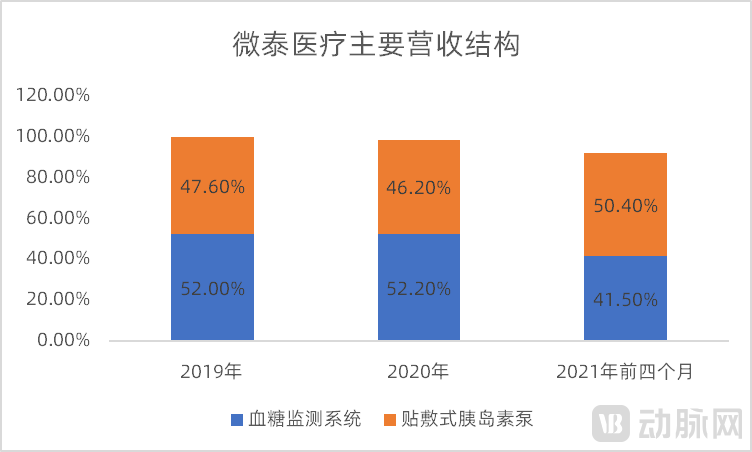
In terms of commercialization potential, another major highlight of MicroTech Medical worth noting is its closed-loop artificial pancreas under development,Artificial Pancreas Device System refers to a device system that highly mimics the blood glucose regulation function of a healthy pancreas. The artificial pancreas device consists of three main components: (1) a glucose sensor/monitor, (2) an insulin pump for storing and infusing insulin, and (3) a control algorithm for calculating insulin dosage and facilitating communication between the sensor and the pump.
Continuous glucose monitoring systems can be integrated with insulin pumps to function as an artificial pancreas. The artificial pancreas automates treatment and monitoring, thereby reducing hyperglycemia (high blood sugar levels) and minimizing the incidence of hypoglycemia (low blood sugar), with minimal or no manual intervention required from the patient.
The major global players in the artificial pancreas market include Medtronic, Dexcom, and Tandem. Among companies developing artificial pancreas systems, MicroTech Medical is the only one with both the manufacturing capability for patch insulin pumps and the development capability for continuous glucose monitoring (CGM) systems. In the future, MicroTech Medical’s artificial pancreas product will become a globally leading closed-loop diabetes management solution.
MicroTech Medical’s other major strategy is to expand into the global market, leveraging a diversified portfolio to advance diabetes monitoring, treatment, and management practices worldwide.
In terms of product portfolio, MicroTech Medical’s core products are striving to obtain regulatory approvals in multiple countries. The company has already sold its patch insulin pump product, Equil, in more than 20 countries across the Asia-Pacific region, Europe, the Middle East, Africa, and Latin America.
The European market features low entry barriers and well-established distribution channels, providing MicroTech Medical with the opportunity to capture a significant market share by leveraging its cost advantages. Key players in the European patch insulin pump market include Insulet, Roche, and MicroTech Medical.
Insulet’s Omnipod patch insulin pump has a three-day wear time and is disposable. In contrast, Roche’s Accu-Chek Solo patch insulin pump has a four-month wear time and features a reusable pod. MicroTech Medical’s pump pod offers a service life of up to four years, resulting in lower usage costs. Looking ahead, MicroTech Medical is well-positioned to achieve widespread commercial success in the European market.
In addition, MicroTech Medical is actively expanding into the U.S. market; in 2021, Equil submitted an application to the FDA, with its core products expected to launch in the United States in 2022.
Overall, MicroTech Medical boasts globally leading R&D capabilities in the diabetes management sector, with its products broadly addressing blood glucose management needs across various levels. China’s CGM industry and insulin pump market are still in their early stages of development; given the vast patient base, they are poised for explosive growth, making MicroTech Medical’s future commercialization potential highly promising.
References:
Aiming for the Peak, Finding Joy in the Climb — Zheng Pan, General Manager of MicroTech Medical Equipment — China Qiaowang