China Digital Therapeutics White Paper 2.0: Uncovering Key Success Factors from R&D to Commercialization
“At its peak, we met with five investment firms in a single day..” This is the concern of the CEO of a leading digital therapeutics company.
"Riding the gentle breeze, soaring high into the sky in one leap.". Undoubtedly, digital therapeutics are at the forefront of investment trends. But are they merely “pigs in the wind,” destined to fall once the gust subsides, or are they “eagles in the wind,” capable of sustained flight? Only time will tell. Yet history has repeatedly demonstrated that while trends are fleeting, value endures.
In May this year, VCBeat, in collaboration with the Digital Therapeutics Systems Engineering Professional Committee (Preparatory) of the China Association for Promotion of Rehabilitation Technology Transformation and Development, and Yuanyi Capital, jointly released the first edition of the "White Paper on China's Digital Therapeutics Industry," proposingFrom Connection to Interventionof the subject. As the industry experiences rapid growth, it faces new challenges; based on the latest research findings, we are officially launching the second edition.“China Digital Therapeutics White Paper 2.0: Harnessing the Wind to Soar High”,From R&D to CommercializationIdentify Key Success Factors Across the Entire Process.
This article distills ten core insights from the report, offered as a starting point for further discussion.
>>>>
The essence of digital therapeutics is the digitization of services.
In the first edition of the "China Digital Therapeutics White Paper 2021," VCBeat defined digital therapeutics asCore Elements: Software-Driven, Evidence-Based Medicine, Interventions, the core function is toPrevention, Treatment, or Management of Diseases。
Traditional interventions for diseases include pharmaceuticals, medical devices, services, and others. Medical services are provided by physicians based on their professional knowledge and experience, but they face challenges such as inconsistent quality, lack of reproducibility, and limited per-capita efficiency.
The essence of digital therapeutics is the digitization of services.. Transform physicians' expertise into software, continuously iterate and optimize through data accumulation, and ultimately convert all digitizable service offerings into digital therapeutics.
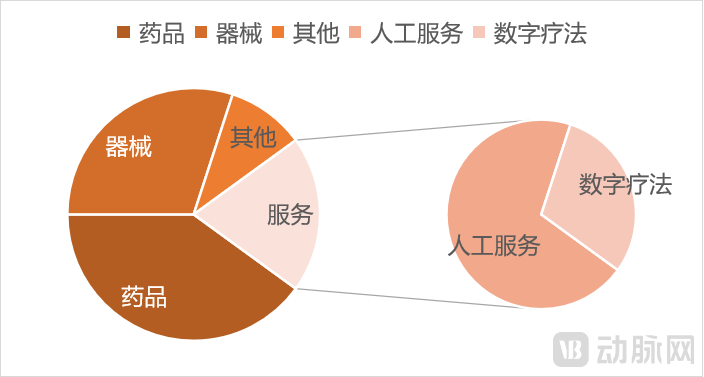
The Essence of Digital Therapeutics Is the Digitalization of Services
Compared with traditional services, digital therapeutics offerReplicable, Accumulable, Lower-Cost, and More Convenientadvantages such as accessibility. Its drawback lies in the inability to provide high-complexity services (e.g., surgery), onlyPartial Replacement of Manual Services。
Digital therapeutics can be divided into three sub-concepts: digital vaccines, digital drugs, and digital medical orders.
Prevention, diagnosis, treatment, and rehabilitation are the four core components of healthcare. Digital therapeutics leverage digital technologies to reconstruct core medical processes and patient engagement interfaces, progressively penetrating every stage of the diagnostic and therapeutic workflow to achieve end-to-end digital intervention.
Among these, the diagnostic phase falls within the scope of medical artificial intelligence; its core function is to identify problems rather than resolve them, and thus it does not constitute digital therapeutics. The other three phases can all be incorporated.Digital Therapeutics (Core Focus: Problem-Solving), we define them respectively as:Digital vaccines, digital drugs, and digital medical orders,Corresponding to the three functions of prevention, treatment, and rehabilitation, respectively.
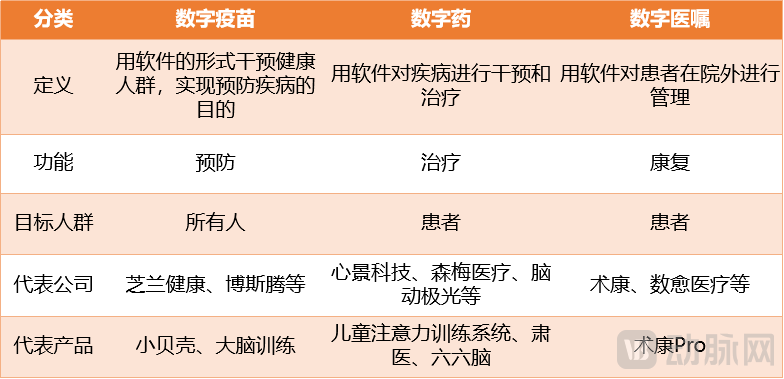
Three Categories of Digital Therapeutics: Digital Vaccines, Digital Drugs, and Digital Prescriptions
Traditional drug targets refer to the binding sites where drugs exert their effects in the body, including genetic loci, receptors, enzymes, ion channels, nucleic acids, and other biological macromolecules. To date, approximately 500 drug targets have been identified.
Although digital therapeutics do not involve specific pharmacological agents administered into the body, they have their own therapeutic targets. They primarily exert effects on patients through informational modalities (such as text, images, and videos within mobile applications) and physical agents (such as sound, light, electrical currents, magnetic fields, and combinations thereof).
During the intervention, changes may occur in certain organs or substances, thereby affecting the disease course.The target of digital therapeutics is the key substance in this human biological pathway.。
For instance, the therapeutic target of digital therapeutics for diabetes is HbA1c (glycated hemoglobin), while that for ADHD (attention-deficit/hyperactivity disorder) digital therapeutics is dopamine.
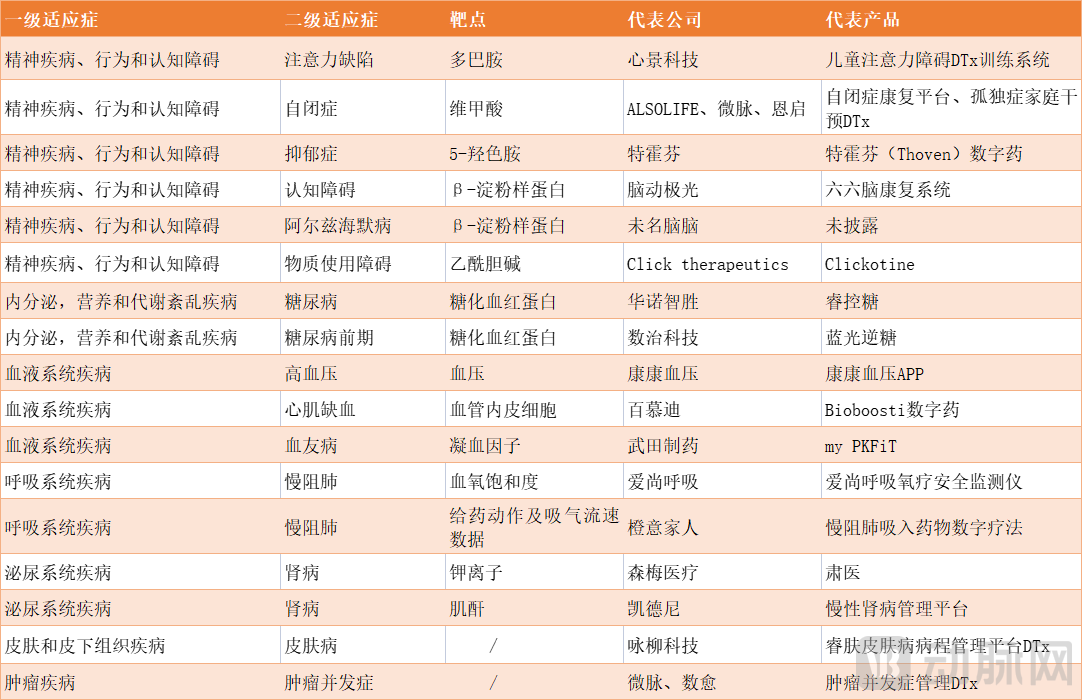
Targets of Digital Therapeutics (Partial Excerpts)
Digital therapeutics also include digital forms of “Digital Active Ingredients" and "Digital Adjuvants“The active ingredients of digital therapeutics” are primarily responsible for delivering clinical therapeutic benefits, while “excipients” include virtual assistants, natural language processing systems, digital incentive mechanisms, digital medication reminders, communication with physicians and other patients, as well as clinical diagnosis and treatment records. “Excipients” are essential elements to ensure patients receive an optimal experience and adhere to digital therapeutics over the long term.
As of September 2021, there were 73 digital therapeutics companies in China, including those without medical device registration certificates. They are categorized into eight major types based on primary indications.
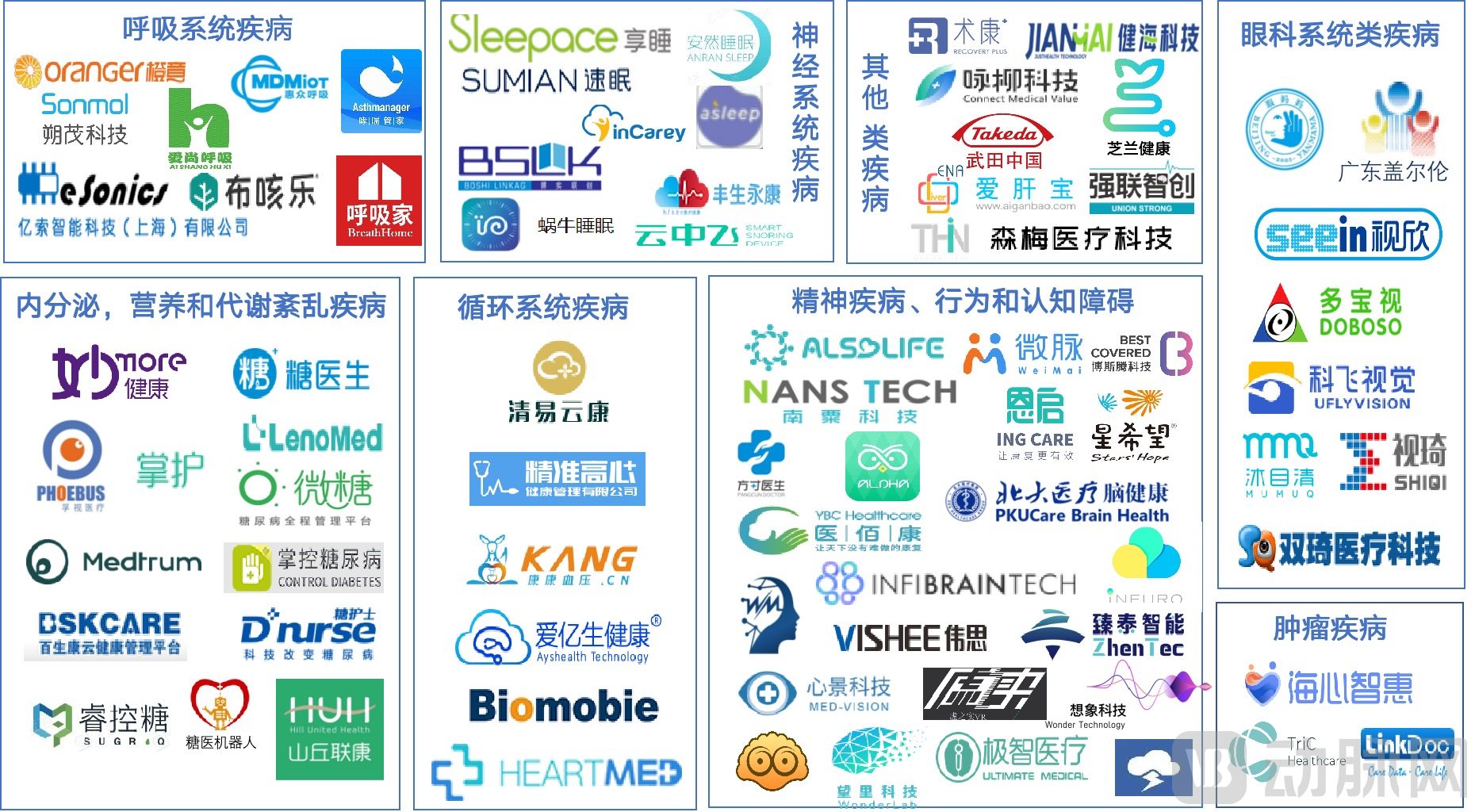
Panoramic Landscape of China’s Digital Therapeutics Companies in 2021
Psychiatric disorders, endocrine system diseases, and neurological disorders are the primary indications for digital therapeutics, consistent with the observations in the first edition of the white paper.
For secondary indications, the product pipeline of digital therapeutics is more broadly distributed. To facilitate statistical analysis, VCBeat Research Institute analyzed the most representative product from each company and derived the following pipeline distribution chart. Compared with 2020, there are more specific indications for digital therapeutics this year, with a gradual expansion into major chronic diseases such as cancer and cardiovascular and cerebrovascular disorders.
In the World Health Organization’s ICD-11 classification of diseases, which comprises 28 chapters and a total of 27,500 diseases, which conditions are suitable for digital therapeutics?
Based on the current product pipeline and nearly 100 indications, VCBeat has summarized that indications suitable for digital therapeutics possess the following characteristics:
(1) Long-Term Management
Refers to chronic diseases characterized by a prolonged course of development and requiring long-term management. Representative conditions include cardiovascular and cerebrovascular diseases (such as hypertension, coronary heart disease, and stroke), diabetes, malignant tumors, chronic obstructive pulmonary disease (including chronic bronchitis and emphysema), as well as mental, psychological, and neurological disorders. These diseases are marked by a protracted clinical course, complex etiologies, and significant adverse impacts on both individual health and society.
(2) Multiple interventions
There are numerous therapeutic interventions for this disease, particularly post-discharge interventions. In addition to traditional pharmacological and device-based treatments, other modalities can be employed, such as information (text, images, and videos on mobile apps) and physical agents (sound, light, electrical currents, magnetic fields, and their combinations). These interventions are well-suited for implementation in software-based or integrated hardware-software formats.
(3) Clear clinical guidelines
This disease should follow clear clinical guideline pathways, i.e., based on evidence-based medicine rather than empirical medicine. The development of digital therapeutics products should adhere to the same clinical guidelines, transforming traditional human-delivered services into digital products.
(4) Low patient adherence and self-management capabilities
Diseases characterized by low patient medication adherence or self-management capabilities, such as diabetes, mental health disorders, asthma, and chronic obstructive pulmonary disease (COPD). These conditions are associated with low rates of medication adherence, and treatment decisions often rely excessively on patients’ retrospective self-reports.
(5) Primarily internal medicine conditions, supplemented by surgical conditions
Digital therapeutics are primarily indicated for internal medicine conditions, emphasizing non-invasive treatment approaches, such as psychiatric disorders, ophthalmic diseases, and respiratory conditions. They serve a supplementary role in surgical conditions, mainly focusing on postoperative rehabilitation management and side effect control, such as managing side effects of cancer chemotherapy.
We believe that digital therapeutics are not limited by the types of diseases, but rather have certain limitations in the diagnosis, treatment processes, and intervention methods. They can only digitize a portion of services, replacing manual interventions with digital therapeutic approaches.
“Evidence-based medicine” is one of the core features that distinguish digital therapeutics (DTx) products from traditional digital health (or digital wellness) products, and scientifically rigorous clinical trial data are fundamental to evidence-based medicine. Therefore, genuine digital therapeutics products must be validated through clinical trials.
However, obtaining a medical device registration certificate is not always mandatory; this largely depends on the product’s business model. While the 2H and 2G models generally require such certification, the 2C, 2B, and 2I models do not necessarily need it.
In addition to traditional randomized controlled trials (RCTs), real-world studies (RWS) can serve as a complementary validation for clinical trials of digital therapeutics. RWS can monitor adherence, which is a critical factor influencing the efficacy of digital therapeutics.
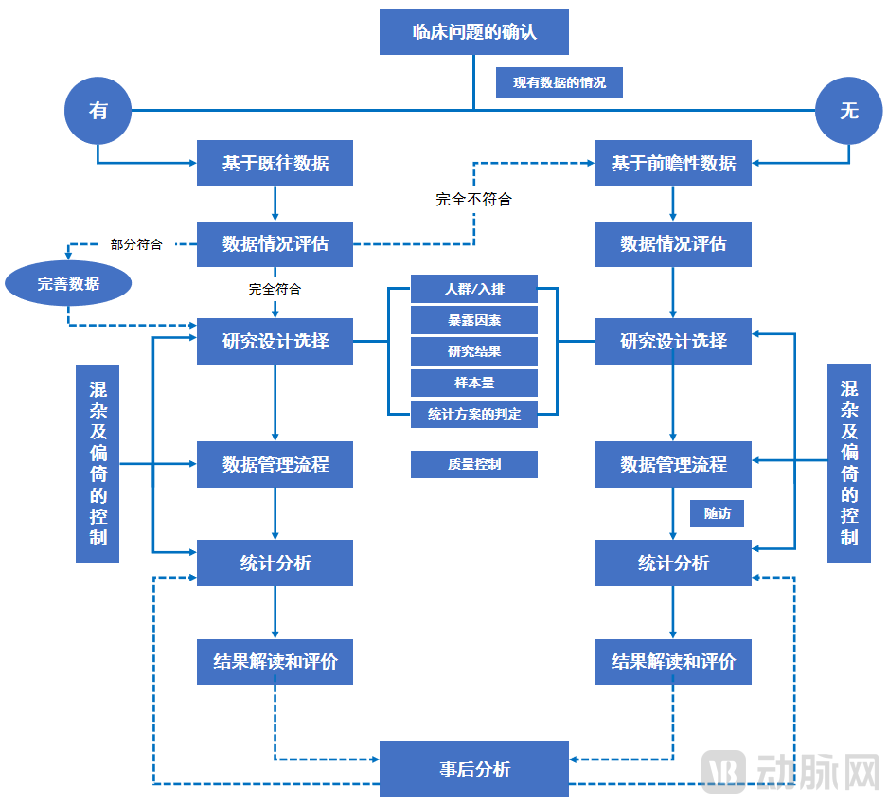
Clinical Trial Process for Digital Therapeutics
As shown in the figure above, the conduct of clinical trials must begin with the identification of clinical questions and the assessment of existing data, utilizing either retrospective historical data or prospectively collected data. This is followed by steps including the selection of study design, determination of statistical analysis methods, data management, statistical analysis, interpretation and evaluation of results, and, as needed, the decision on whether to incorporate post hoc analyses.
At this stage,China has not yet implemented specific regulations or issued relevant guidelines for digital therapeutics products., the regulation and registration of similar products shall be conducted in accordance withMedical Device Software...relevant policies and procedures for approval.
Regulatory oversight and registration approval for relevant products shall comply with the Regulations on the Supervision and Administration of Medical Devices, the Measures for the Administration of Medical Device Registration, the Operational Specifications for Registration Approval of Domestically Produced Medical Devices (the “Specifications”), the Technical Guidelines for Clinical Evaluation of Medical Devices, and the Measures for the Supervision and Administration of Medical Device Production. Specific implementation shall primarily follow the Technical Review Guidelines for the Registration of Medical Device Software and the Technical Review Guidelines for the Registration of Mobile Medical Devices.
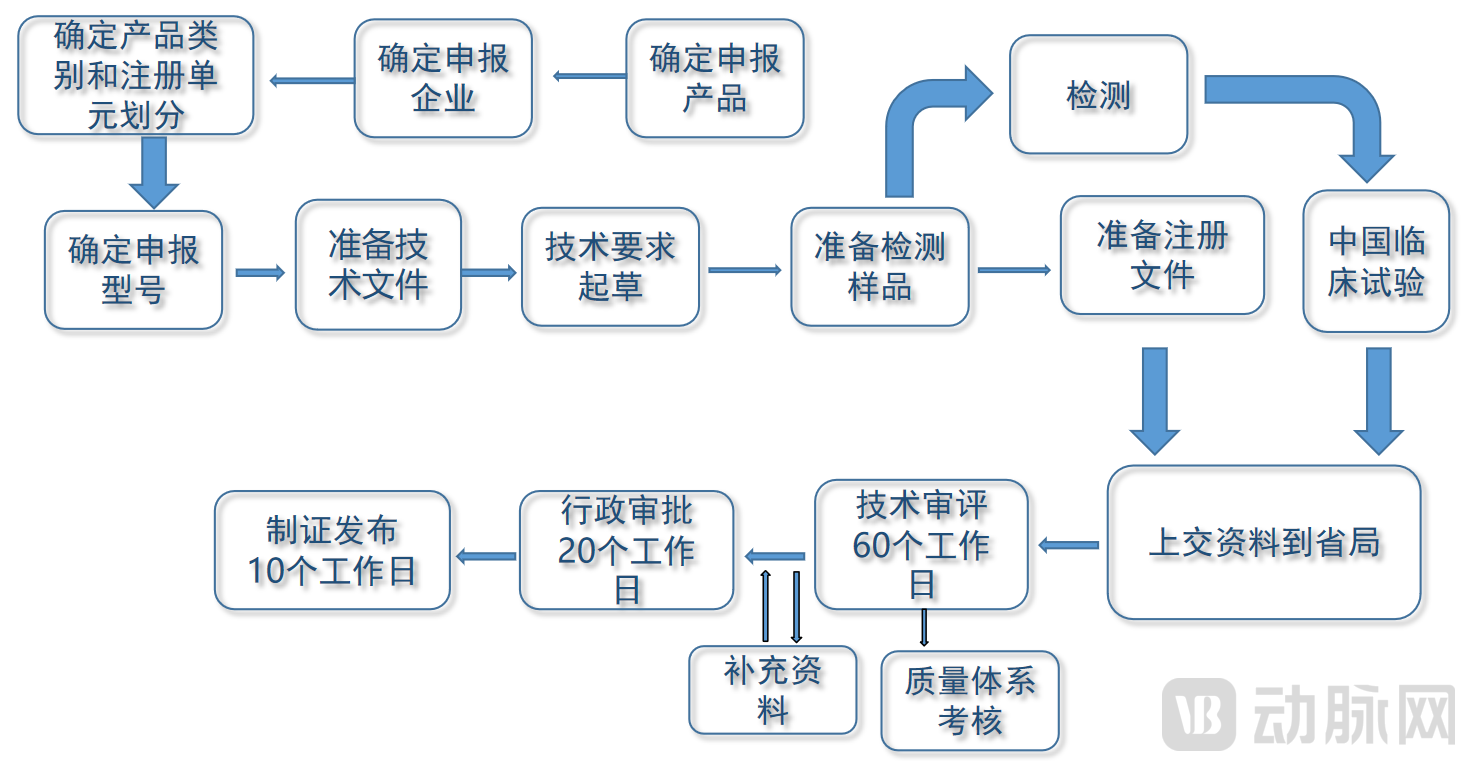
Registration and Certification Process for Digital Therapeutics, Source: Zhilan Health
The figure above illustrates the initial registration and certification process for digital therapeutics. If supplementary materials are required, the review period will be extended by 60 working days; such materials must be submitted within one year. The quality system assessment takes 30 working days, and the time required for expert review meetings is excluded from this timeline.
As of September 2021, more than 17 digital therapeutics products (approved as medical device software) had received medical device registration certificates in China. With the exception of Takeda’s myPKFit, which holds a Class III medical device registration certificate, all others hold Class II medical device registration certificates.
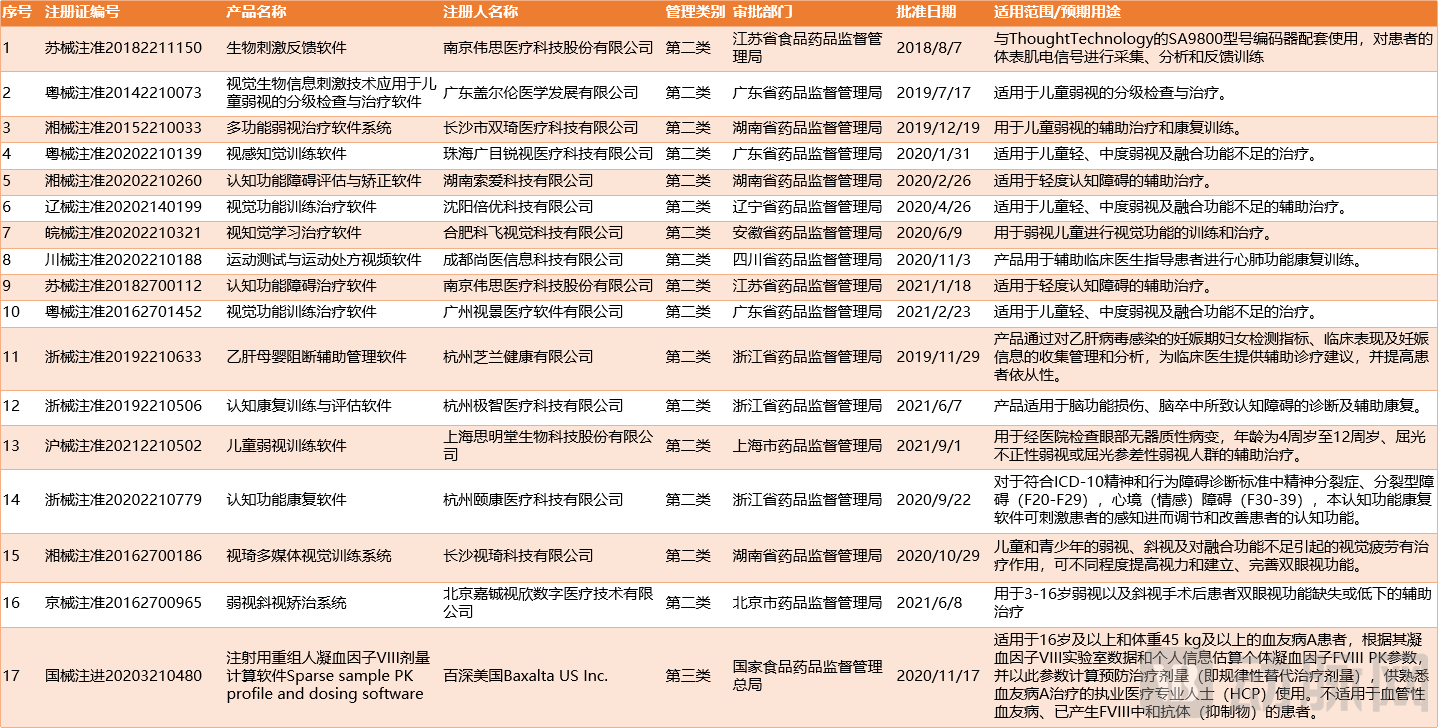
NMPA Approval Status of Digital Therapeutics Products (as of September 2021)
By analyzing the current registration and certification status of digital therapeutics, VCBeat has found that among the approved digital therapeutic products,Products for treating vision-related diseases account for the largest share, at nearly 50%., followed by products for cognitive function therapy.
From the perspective of the provinces to which the approving authorities belong, the registration and certification of digital therapeutics products have not yetNo geographic clustering was observed.,However, the number of approvals in cities along the southeastern coast is significantly higher.Since 2020, the registration and approval of digital therapeutics (DTx) products have accelerated, with approximately 11 products approved to date. Discussions regarding medical device registration and certification for digital therapeutics have also become increasingly prominent.
Based on different payers, digital therapeutics (DTx) feature five business models: B2C (consumer), B2H (hospital), B2B (enterprise), B2G (government), and B2I (insurance). Currently, the direct B2C model dominates, while the B2H2C model is viewed favorably for future growth.
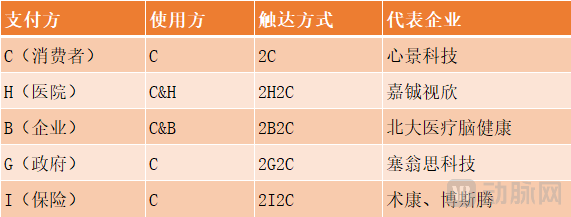
Five Business Models of Digital Therapeutics
C-end payment: The alignment of users and decision-makers is currently the dominant business model.
Before being formally included in the coverage of commercial insurance and national medical insurance, consumer payment is the primary business model for digital therapeutics products. Based on different access channels, consumer payment models can be categorized into 2H2C, direct-to-consumer (2C), and 2B2C.
In the 2H2C model, digital therapeutics should be qualified as medical devices, with their clinical value already validated. Similar to prescription drugs, physicians hold greater decision-making authority, and patients use them in accordance with medical advice.
In the direct-to-consumer (DTC) model, one can draw references from current chronic disease management or digital products; the distinction lies in the greater medical value of digital therapeutics, although they still face monetization challenges in the early stages. Under the business-to-business-to-consumer (B2B2C) model, digital therapeutics typically offer significant benefits in enhancing the market competitiveness of a company’s existing business or products.
H-End Hospital Payment: Leveraging Official Channels to Enhance the Medical Attributes of Products and Jointly Promote Market Education
Digital therapeutics operating under the medical device model offer distinct advantages in the early stages of industry development:
1) Digital therapeutics products can gain endorsement from hospital credibility; 2) Patients regularly visit the hospital to receive digital therapeutics treatment and professional medical service evaluation guidance, enhancing their sense of benefit and acceptance; 3) In the offline in-hospital model, patients use the products under the supervision of medical staff, allowing doctors to promptly monitor post-treatment responses, effectively control risks, and make dynamic adjustments.
B2B Enterprise Purchasing: Deeply Understand Enterprise Pain Points and Needs to Achieve Close Value Alignment
Abroad, the primary logic of the B2B2C model is as follows: 1) With mature health insurance markets and well-established compensation systems, employers bear substantial insurance expenditures and other indirect costs due to employee health issues.
2) Forming an integrated solution with traditional treatment methods. Traditional medications remain the core of disease treatment, while digital therapeutics serve as management tools to address complications and enhance overall patient benefits. For instance, Sanofi collaborates with the digital therapeutics company Happify to provide patients with medications for multiple sclerosis (MS), while Happify offers digital therapeutic products to alleviate mood disorders associated with MS, ultimately achieving improved treatment experiences and outcomes for MS patients.
In China, the B2B2C model differs slightly from that abroad, leaning more toward the second logic and achieving deep integration with corporate value formation based on industry-specific pain points and demands.
G-End Government Procurement: A large patient base or demand in specialized fields, with national special fund support being key
2G2C refers to a model in which the government purchases digital therapeutics and distributes them to patients. The prerequisites for this model are: 1) the clinical efficacy of digital therapeutic products can be verified; and 2) there is dedicated government funding support. In the healthcare services sector, regardless of which department ultimately provides the funding, there are already existing programs purchased by the government and provided to patients free of charge.
A more typical example of state-procured digital therapeutics occurs in the context of addiction treatment, where the purchasers are state-run compulsory drug rehabilitation centers. Currently, companies such as Xinjing Technology, Wangli Technology, and Saiwengsi have all begun commercial implementation in this field. Government procurement is also possible in other areas. For instance, in the field of autism, on May 30, 2018, the State Council’s executive meeting reviewed and approved the Rehabilitation Assistance System for Children with Disabilities. Supported by China’s improving assistance system for children with disabilities, the China Disabled Persons’ Federation provides subsidies to families of affected children (approximately RMB 12,000 per year in Nanjing). These subsidy funds are disbursed directly to designated rehabilitation institutions, which in turn waive tuition fees for the children.
Reimbursement from Insurers: Both commercial insurance and public health insurance funds are potential payers, but the path forward remains long and arduous.
The core logic of insurance reimbursement for digital therapeutics (DTx) is that DTx interventions control disease progression or incidence, thereby reducing medical expenditure and achieving cost containment for insurers. There are two primary models for insurance reimbursement: 1) Insurers purchase DTx products and distribute them to policyholders, encouraging and monitoring active usage to help policyholders maintain better health outcomes, thus achieving cost containment. 2) Insurers, as the ultimate payers, include DTx products in their coverage formularies to encourage patients to adopt these solutions.
In the commercialization of digital therapeutics products, there are many uncertainties arising from innovation itself.
As a type of medical device, digital therapeutics (DTx) play a crucial role in the diagnosis, progression monitoring, and prognosis of patients’ conditions. However, due to the distinct software-based nature of DTx compared to traditional medical devices, conventional approval processes are not directly applicable, leading to significant uncertainties in commercialization. Currently, the regulatory landscape for digital therapeutics faces three major challenges: how to standardize the approval and certification processes; how to establish the safety and efficacy of DTx; and how to foster industrial innovation while delivering beneficial medical products to patients.
Challenge 1: Classification of Digital Therapeutics—Class II or Class III?
The difficulties in approving digital therapeutics are primarily attributed to two factors: first, the absence of clear industry standards leaves no reference for establishing approval guidelines; second, regulatory agencies have limited understanding of digital therapeutics, making it challenging to conduct comprehensive and systematic risk assessments.
The advantage of Class II certification lies in its lower difficulty in application and approval compared to Class III certification, which can accelerate the product launch process for enterprises; the advantage of Class III certification is that it has stringent clinical requirements and enjoys higher recognition among professionals such as experts and physicians. According to respondents surveyed by VCBeat Research Institute,Companies typically expect their products to be commercialized and launched on the market as quickly as possible. Therefore, when a product qualifies for classification as either Class II or Class III medical devices, they often choose to pursue Class II certification first.thereby enabling product launch and subsequent consumer-facing marketing, followed by obtaining Class III medical device certification during later product iterations to secure stronger clinical endorsement, which facilitates subsequent hospital-side marketing and promotion.
Challenge 2: Significant Variability in Clinical Trial Protocols Across Companies, with No Unified Industry Standards Currently in Place
Among digital therapeutics for the same medical condition, some products undergo randomized controlled trials, while others conduct single-arm trials. The number of enrolled participants also varies significantly, ranging from dozens to thousands. Furthermore, clinical endpoints are defined differently across studies, and there is currently no unified standard for the management of trial processes.
The lack of unified industry standards has posed certain obstacles to the subsequent promotion of products. As an emerging field, digital therapeutics requires understanding and acceptance from physicians. During the process of physician education and market cultivation, the absence of standardized frameworks has slowed progress. Taking several prevalent disease areas as examples, the wide variety of digital therapeutic products and the inconsistency of clinical data make cross-product comparisons impossible. Consequently, physicians struggle to differentiate the clinical efficacy of these products, which further hinders patient education and product adoption.
Challenge 3: The business model for digital therapeutics is not yet mature, facing pressure to achieve scalable revenue.
Various sales pathways leading to scalable revenue prospects each have their strengths and weaknesses. Comparatively, whether a digital therapeutic product can achieve robust scalable revenue depends entirely on its own clinical performance. Business model design based on the product, along with daily operations and promotion, serves as a means to empower product sales. Regardless of the business model pathway adopted, safety and efficacy validated over time will lead to greater familiarity and acceptance of digital therapeutics. In pursuit of the vision for scalable revenue, industry practitioners must remain patient and let time work in their favor.
Challenge 4: Digital therapeutics remain in the technology adoption phase, and market cultivation will be a long-term endeavor
Currently, the majority of participants in the digital therapeutics (DTx) sector are small and medium-sized enterprises (SMEs), with large corporations remaining a minority. Many investors and industry players describe DTx as “low-hanging fruit.” Its promising commercial prospects have attracted intensifying competition, particularly from large multinational pharmaceutical companies. As major corporations enter the market, will smaller innovative firms face significant pressure? Will the endgame of DTx competition result in a highly concentrated oligopolistic landscape? The relationship between large pharmaceutical companies and SMEs in the DTx field is evolving alongside market development and can be examined in three distinct phases.
Call to Action 1: Clarify the Classification of Digital Therapeutics and Accelerate the Approval Process
VCBeat Research Institute believes that clarifying the regulatory approval standards for digital therapeutics is key to policy-driven, long-term, and sound development of this sector. The first step in establishing clear approval guidelines is to precisely define digital therapeutics from a policy perspective and create a dedicated classification system. Building on this foundational definition, policymakers can then gradually refine and deepen regulatory content based on practical experience, establish a comprehensive approval process for digital therapeutics, and ultimately set up an expedited approval pathway specifically for these products.
Call 2: Establish DTx Clinical Trial Bases to Promote Health Economics Benefit Research
Research into the health economic benefits of digital therapeutics should be actively promoted. Health economics research can empower national healthcare insurance cost containment efforts and provide a foundational basis for B2B and B2I business models. Digital therapeutics are essentially the digitization of medical services, and digitization is inherently a powerful tool for reducing costs and improving efficiency. The application of digital therapeutics not only addresses deficiencies in existing traditional medical practices but also fills gaps within them. Both scenarios demonstrate promising prospects from a health economics perspective.
Call to Action III: Policy Support for Industrial Innovation and Diversified Development to Revitalize SMEs
Industrial innovation in digital therapeutics requires policy support and safeguards. It is recommended to establish a special industrial fund for digital therapeutics, complemented by dedicated digital therapeutics industrial parks, to foster regional clustering. Small and medium-sized enterprises (SMEs) face challenges during the innovation process, including high R&D costs, prolonged commercialization cycles, and difficulties in achieving scalable revenue.
Call 4: Strengthen the protection of intellectual property rights, particularly by enhancing regulatory oversight and penalties for software-related infringement
For innovative products, we expect policies to encourage development and actively promote industrial diversification. By standardizing approval processes and other measures, a comprehensive public understanding of digital therapeutics should be established. Meanwhile, intellectual property protection must be strengthened, particularly through enhanced oversight of infringement involving software-based products, and more responsive mechanisms should be established to provide companies affected by infringement with rapid and effective avenues for rights enforcement.
The above constitutes the main content of the report. The table of contents is as follows. Scan the mini-program at the end of the article to read the full report for free:
1. Software as a Service, Redefining Digital Therapeutics
2. Product Design: Blueprint of the Disease Spectrum for Digital Therapeutics
3. Clinical Trials: An Essential Path of Continuous Optimization
4. Registration and Certification: A Double-Edged Sword in Commercialization
5. Business Model: Select payers by integrating disease characteristics with market demand pain points
6. Digital Therapeutics Poised to Unlock Vast Market Potential
7. Difficulties and Challenges Facing Digital Therapeutics
8. Policy Advocacy for Digital Therapeutics