

Nearly 1,000 Pilot Projects Highlight the Development Trends of 5G in Healthcare: Insights from Peking Union Medical College Hospital and West China Hospital
5G in Healthcare: There are no clear metrics to measure its value. As a result, for a long time, many people considered it merely an enhanced version of 4G that offers faster internet speeds.
However, just as the disruption brought by 4G lay in leading people from the era of text and images to the video era, this new type of communication technology that breaks through spatial limitations is subtly introducing innovative applications in the medical field.
Recently, the General Office of the Ministry of Industry and Information Technology and the General Office of the National Health Commission issued a notice announcing 987 pilot projects for “5G+ Healthcare” applications. The key applications of 5G technology were categorized into eight priority areas: emergency care, remote diagnosis, remote treatment, remote intensive care unit (ICU) monitoring, traditional Chinese medicine (TCM) diagnosis and treatment, hospital management, intelligent disease control, and health management. For instance, Peking Union Medical College Hospital is leading the implementation of the pilot project titled “Establishment of a 5G-Enabled Multi-Disciplinary, Multi-Modal Intelligent Remote Diagnosis Model and Application.” Meanwhile, Ruijin Hospital affiliated with Shanghai Jiao Tong University School of Medicine is striving to build a “5G-Based Smart Ultrasound Remote Diagnosis Empowerment Platform.” As the technology matures, large-scale pilot programs are being launched.
To clarify the current state of 5G development and gain insights into industry trends, VCBeat conducted a comprehensive analysis of the 987 5G pilot projects included in its database, ultimately seeking to provide answers to the following five questions.
5G + Healthcare: What’s Hottest?
Who are the participants in the R&D process?
What Have Traditional Healthcare IT Companies and New AI Innovators Done in This Wave?
Although authoritative bodies have categorized pilot applications into nine segments, data from the call for proposals indicates that three key areas—5G-enabled emergency care, remote diagnosis, and health management—accounted for 65% of the nearly 1,000 pilot projects, with 196, 225, and 215 cases, respectively. After all, compared to in-hospital scenarios equipped with high-speed private networks, out-of-hospital settings exhibit a natural affinity for 5G technology.
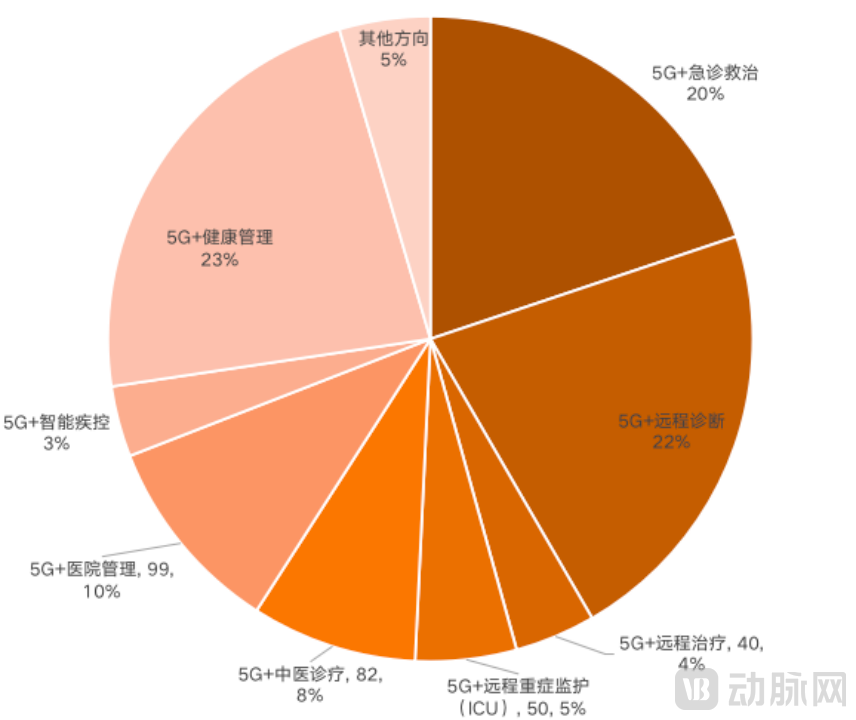
987 5G Pilot Projects Categorized
“5G+ Emergency Diagnosis and Treatment”
“5G+ Emergency Care” is one of the 5G applications with the widest adoption and most rapid implementation. Among the 31 regions participating in the 5G pilot program, all have submitted project proposals for the two scenarios of emergency care and remote diagnosis.
Based on the specific pilot projects implemented across various regions, the core of “5G+ Emergency Care” lies in establishing emergency rescue platforms, strengthening the emergency response system for cardiovascular and cerebrovascular diseases, and optimizing emergency dispatch models. Its essence is to maximize the “golden hour” for emergency care, enhance quality control in emergency services, and extend the operational reach of emergency centers.
Pre-hospital emergency care requires continuous, real-time transmission of multi-dimensional data throughout the complete workflow of “patient onset – ambulance dispatch – on-site emergency care – in-ambulance treatment – remote consultation – in-hospital treatment,” thereby establishing a multi-party collaborative system for remote emergency care, remote consultation, and remote decision support. As the city with the fastest emergency response speed in China, Shanghai recorded an emergency response time of 12.4 minutes in 2019; however, when including the patient transport phase to the hospital, the total emergency care duration is significantly prolonged.
Therefore, by front-loading certain diagnostic procedures, promptly linking to patients’ electronic medical records to obtain their past medical history, and providing remote guidance from professional emergency physicians, the “golden hour” can be effectively extended; this is precisely where the value of 5G lies.
Intuitively, Shanghai deployed 1,062 ambulances in 2020, an increase of 82 from 2019, in an attempt to keep response times within 12 minutes (a reduction of ≥ 0.4 minutes). However, due to traffic conditions and the distribution of hospitals, the marginal benefit of reducing emergency response time by adding more ambulances is diminishing. In this context, 5G technology can shorten the time patients receive care from the backend of emergency services, thereby saving more lives.
To date, 5G-enabled ambulances have been deployed at scale. The emergency medical equipment onboard has been upgraded from basic disinfection supplies and standard medications to advanced devices such as defibrillators, electrocardiogram (ECG) monitors, and ultrasound systems. Pilot programs indicate that many initiatives continue to leverage the high bandwidth, low latency, and high stability of 5G networks, developing informatics applications on this foundation to add capabilities such as remote examinations and teleconsultations, while optimizing vehicle dispatch and route planning. The ultimate goal is to achieve a scenario where “being aboard a 5G ambulance is equivalent to arriving at the emergency center.”
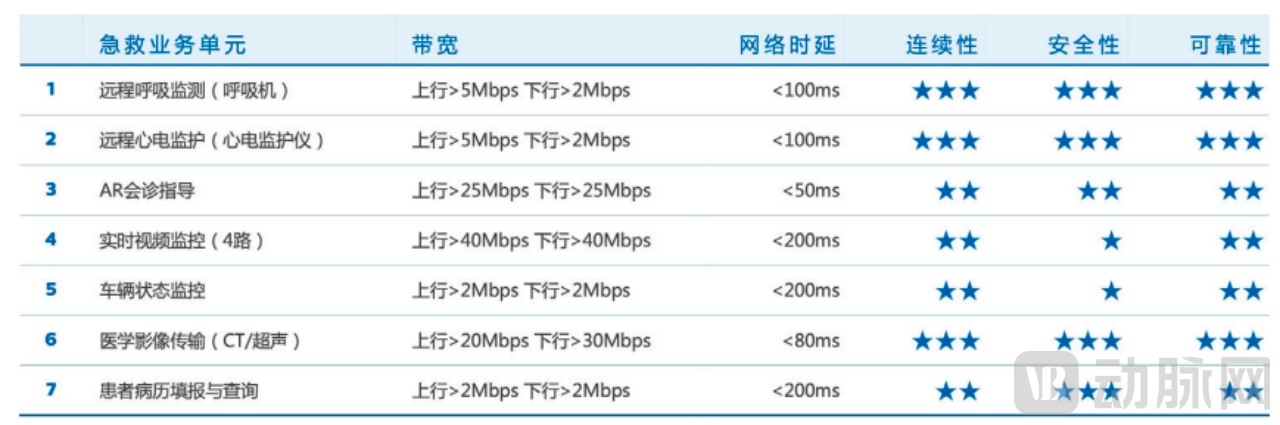 Network Performance Requirements for 5G Smart Emergency Medical Services Systems (Data Source: White Paper on Full-Process 5G Smart Healthcare Services)
“5G + Remote Diagnosis”
In contrast, the value of “5G + Remote Diagnosis” lies, on the one hand, in addressing the uneven distribution of medical resources in China, where residents in rural or remote areas struggle to access timely, high-quality healthcare services, and on the other hand, in providing patients with a more convenient way to seek medical care.
The high-speed characteristics of 5G networks support remote high-definition consultations in 4K/8K resolution, as well as the rapid transmission and sharing of medical imaging data. This enables experts to conduct consultations anytime and anywhere, improving diagnostic accuracy and guidance efficiency, while facilitating the decentralization of high-quality medical resources.
In this pilot program, the “5G + Remote Diagnosis” initiative covers projects including intelligent decision-making for hepatobiliary tumors, remote ultrasound robotics, cervical and cerebrovascular ultrasound, VR ophthalmology, remote ECG diagnosis, remote dermatology diagnosis, prenatal diagnosis, and corresponding remote diagnosis platforms, making previously unfeasible procedures—limited by bandwidth constraints—possible.
Taking ultrasound as an example, 4G networks cannot support remote ultrasound procedures because their bandwidth is insufficient for the real-time upload of high-definition ultrasound images. Common ultrasound terminal image resolutions in hospitals include 640×480, 800×600, and 1280×1024, typically displayed with 256-level grayscale at frame rates ranging from 15 to 75 frames per second.
In practical applications of remote ultrasound consultation, excessively high frame rates consume significant network bandwidth resources. Therefore, a frame rate of 25 frames per second (fps) is generally selected to ensure both smoothness and clarity in remote ultrasound consultations. The White Paper on Full-Process Services for 5G Smart Healthcare provides a preliminary estimate, indicating that remote ultrasound at 25 fps requires a bandwidth of 750 Mbps, whereas the peak bandwidth of 4G networks is only 100 Mbps.
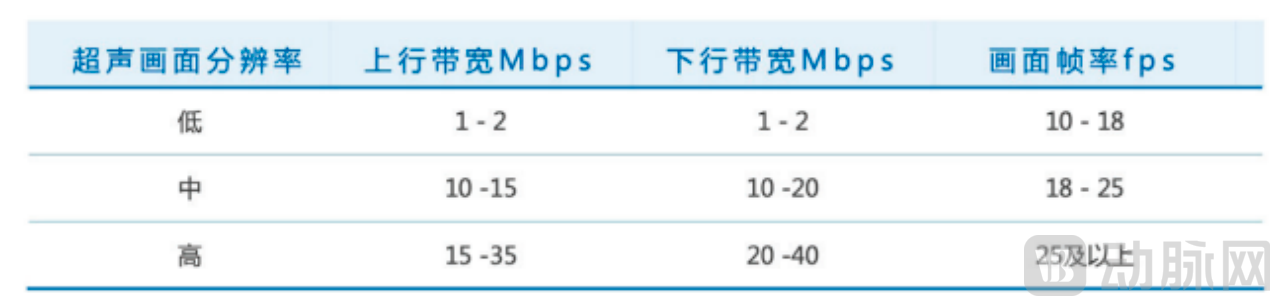
Correlation Between Ultrasound Image Resolution and Bandwidth Requirements (Source: White Paper on Full-Process 5G Smart Healthcare Services)
“5G + Health Management” and Other Directions
“5G + Health Management” is also a key focus of this pilot, with applications spanning follow-up care for patients of all ages and conditions, the development of 5G-enabled smart health management systems, and community health initiatives. However, compared to the other two areas, project descriptions under “5G + Health Management” show less differentiation, as home-based services such as sleep monitoring and chronic obstructive pulmonary disease (COPD) monitoring can already be supported by fiber-optic networks. Therefore, the specific outcomes of the pilot will require time to be validated.
Scenarios involving 5G-enabled Traditional Chinese Medicine (TCM) diagnosis and treatment, as well as intelligent disease control, are relatively limited in scope. The implementation of 5G remote therapy presents significant challenges, placing high demands on both network infrastructure and clinicians’ technical proficiency. In contrast, 5G support creates opportunities for exploring new models in remote intensive care unit (ICU) monitoring and hospital management. For healthcare systems with multiple campuses, 5G technology enables the exploration of innovative approaches to patient and hospital management. Notable examples include West China Hospital’s pilot project, “Construction and Comprehensive Application Demonstration of a 5G-Enabled Cross-Regional Intelligent Monitoring and Early Warning System for Critical Care,” and Sir Run Run Shaw Hospital, Zhejiang University School of Medicine’s pilot project, “Human-Centered Construction of 5G IoT Smart Wards.”
Given the infrastructure-intensive nature of 5G, the development of “5G + Healthcare” is not entirely enterprise-led. Based on a summary of the 987 pilot projects, VCBeat categorizes the lead entities in 5G medical applications into five groups: large hospitals, primary healthcare institutions, universities, enterprises, and research institutes.
Large hospitals are the main entities undertaking 5G pilot projects, with a total of 647 related projects, accounting for 66%. Among the 100 hospitals listed in the 2019 China Hospital Rankings, 78 participated in 5G pilot projects, covering all directions.
The deployment of 5G infrastructure in hospitals relies heavily on corporate support. In this dataset, a total of 246 enterprises participated as lead organizations in medical 5G pilot projects. These initiatives either focus on building tailored information platforms to meet hospital needs or leverage corporate R&D capabilities to develop new 5G-based applications.
It is worth noting that the proportion of pilot projects for primary healthcare, which should have generated massive 5G demand, remains relatively low. VCBeat speculates that since medical 5G pilots are still in the early stages of application, they are currently concentrated mainly in large hospitals. As 5G commercialization continues to advance, this technology will increasingly empower primary healthcare, helping to address issues such as the unequal distribution of medical resources.
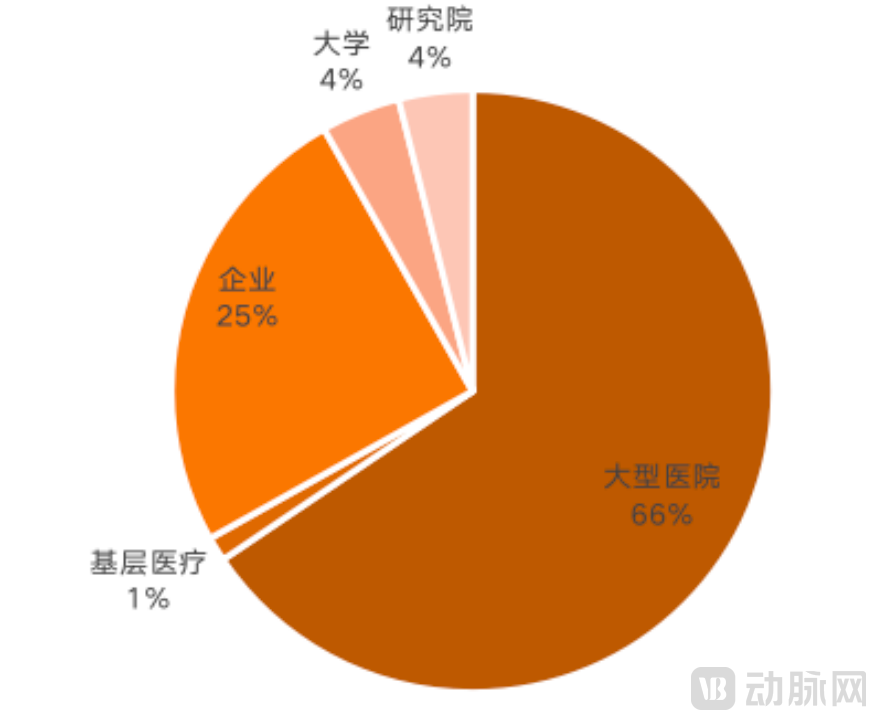
Composition of the Lead Organization
Currently, more than 200 companies are facing a market whose scale is difficult to determine. At this stage, 5G adoption is primarily commercial, with telecommunications service providers offering hospitals 5G infrastructure deployment and communication services. Built upon this 5G foundation, technology companies assume three roles in this process: First, as builders of 5G application platforms, they provide hospitals with information technologies such as the Internet of Things (IoT) and cloud platforms, connecting hospital-to-hospital, hospital-to-doctor, and doctor-to-patient interactions. Second, as providers of terminal applications, they supply medical devices compatible with 5G communications to hospitals and patients, facilitating user access to 5G networks. Third, as providers of incremental services, they embed 5G technology into existing applications to create new scenarios with added value, such as offering remote AI-assisted ultrasound diagnosis services based on AI-assisted ultrasound diagnostic capabilities.
A further breakdown of the 246 enterprise-led pilot projects revealed that 67 companies currently have no healthcare-related business operations.
Telecom, Unicom, and Mobile have effectively expanded their control over healthcare operations through 5G projects. Among the 67 companies, 47 are affiliated with these three giants, covering all sectors except “Traditional Chinese Medicine (TCM) Diagnosis and Treatment.” They have even pioneered research related to “5G+ICU.” In this process, telecommunications service providers have primarily assumed the first two types of roles.
The remaining 20 companies are also involved in a wide range of areas. Companies with a telecommunications background excel at building 5G smart healthcare platforms, bearing some resemblance to medical IT solutions. Meanwhile, companies with an industrial background are attempting to develop IoT terminal devices such as robots, striving to achieve precise control of terminal equipment under complex instructions. Each type of player is represented.
“5G + Smart Healthcare” development is essentially about building hospitals’ IT infrastructure, a process in which the involvement of medical IT and AI innovation enterprises is indispensable. The specific details from VCBeat are presented in the table below:
Enterprise | Project | Direction |
Winning Health | 5G+ Remote Ultrasound Diagnosis and Ultra-High-Definition Consultation System | Remote Diagnosis |
B-Soft | 5G-Based Intelligent IoT Monitoring Platform for Medical Devices | Hospital Management |
Hangzhou Lianzhong | 5G+ Infectious Disease Surveillance, Early Warning, and Emergency Coordination Platform | Intelligent Disease Control and Prevention |
Lianren Health | Key Technological Innovations in 5G-Enabled Remote Clinical Diagnosis of Breast Cancer | Remote Diagnosis |
Wonders Information | Application Demonstration of the 5G-Based Telemedicine Collaboration Platform in the Core Demonstration Zone for the Integrated Development of the Yangtze River Delta | Remote Therapy |
Ka Yi | 5G+ Remote Diagnosis | Remote Diagnosis |
Jianhai Technology | 5G + AI Follow-up | Health Management |
Lianzhong Wisdom | Research on the Application of Cloud-Network Integrated Full-Closed-Loop Health Management under the Medical Community Model in the Yangtze River Delta Integration Demonstration Zone | Health Management |
Yinjiang Co., Ltd. | 5G-Based Smart Healthcare Management Platform for Chronic Diseases in the Elderly | Health Management |
Das Jiuxin | 5G+ Remote Intensive Care Unit (ICU) Healthcare Application Pilot | Remote ICU |
AISpeech | Suzhou 5G+ Smart Emergency Rescue System | Emergency Treatment |
Heart Medical International | Multi-tiered Telemedicine Cloud Platform Based on 5G Applications | Tele-diagnosis |
Neusoft Xikang | 5G Telemedicine Service Platform Project | Remote Diagnosis |
UnitedHealth | 5G+ Elderly Home Health Passport Contracting Service Platform | Other Directions |
JD Health | 5G+ Health Management for Cancer Patients | Other Directions |
Zhongpuda | 5G+ Smart Ward Development and Promotion | Hospital Management |
Zhongyang Health | 5G-Based Intelligent Remote Medical Imaging Service Platform | Remote Diagnosis |
Zhongdi Medical | 5G+Remote Diagnosis | Remote Diagnosis |
Changhong Smart Health | Health Management Applications Based on 5G IoT Big Data | Health Management |
Northern Health Big Data | 5G+ Full-Cycle Smart Health and Elderly Care Application Demonstration | Health Management |
Pilot Status of Healthcare IT Enterprises (and Their Subsidiaries)
Regarding the pilot programs of various medical IT enterprises, the traditional medical IT industry is leveraging the opportunities presented by 5G to expand into auxiliary diagnosis, health management, and remote diagnosis, thereby extending its business scope from the foundational layer to the application layer. Amidst the trends of increasing customization and declining gross margins in the medical IT sector, capitalizing on the momentum of 5G to develop department-level applications and even B2B businesses may yield surprising results for these companies.
Enterprise | Project | Direction |
United Imaging Healthcare | 5G+ Smart Radiotherapy Cloud Pilot | Teletherapy |
ZhuZheng Robotics | Application Demonstration of 5G-Network-Based Orthopedic Treatment Equipment in Xinjiang under the Belt and Road Initiative | Remote Therapy |
Kangduo Robot | Research on the Application of 5G-Based Remote Robotic Surgery | Remote Therapy |
iFLYTEK | Prototype Development of a Non-Contact Movement Disorder Assessment System | Health Management |
Jianpei Technology | 5G-Based Smart Healthcare Service Management Platform for Residents | Health Management |
Jiufeng Smart Healthcare | 5G+AI Primary Care Respiratory Infectious Disease Surveillance and Early Warning System Platform | Intelligent Disease Control and Prevention |
Weigao Surgical Robot | Construction of a Remote Surgery Application Model for 5G-Enabled Medical Minimally Invasive Surgical Robot Systems | Health Management |
Anhan Technology | Pilot Application of the 5G+ Remote Diagnosis Platform for Gastrointestinal Health | Remote Diagnosis |
WingSpan Tech | Application Research on 5G-Enabled Remote Diagnosis of Medical Imaging | Remote Diagnosis |
Pilot Status of Medical Device Companies (and Their Subsidiaries) in Fields Such as Medical Artificial Intelligence
Medical device companies, such as those specializing in medical AI, are leveraging their respective strengths to develop 5G capabilities. Take United Imaging Healthcare, which started with diagnostic equipment, as an example: it already possesses mature remote diagnostic capabilities and is now looking to further expand these capabilities into the realm of remote treatment.
Pilot programs for surgical robotics companies also hold significant value. If Anhan Technology’s capsule robots can be utilized via remote diagnosis, their application scenarios could potentially extend beyond hospitals in the future, reaching broader settings and further expanding the population covered by diagnostic services.
Through a comprehensive analysis and review of the entire table, VCBeat has summarized its findings into four key points:
I. Just as AI, big data, and the Internet of Things (IoT) have experienced, 5G technology must identify genuine needs within healthcare and transform scenario workflows in a disruptive rather than merely enhancing manner to move from concept to practical implementation. An analysis of pilot data suggests that emergency care, remote diagnosis, remote treatment, and remote intensive care unit (ICU) monitoring are the most likely areas for the future deployment of 5G technology. After all, beyond 5G, existing technologies such as 4G and private networks can already support business operations in the other four areas, meaning 5G is not an absolute necessity at this stage.
II. As the commercialization model for 5G applications remains undefined, corporate involvement in research is primarily concentrated at the application level, making it difficult to generate profits directly from 5G technology. Under these circumstances, healthcare continues to be the main driver of 5G pilot projects. However, with the maturation of certain 5G initiatives and the continuous exploration of incremental value, 5G technology is expected to create new business models in areas such as remote diagnostics and remote treatment, thereby empowering existing products.
III. Although companies from outside the industry have entered the market by leveraging 5G technology, their current numbers remain small, and their scale is insufficient to impact employment dynamics within the healthcare sector.
IV. The advancement level of regional hospitals determines the pace of 5G implementation. However, given the current state of healthcare in China, the most pressing issue remains the uneven distribution of medical resources, which makes it difficult for residents in rural or remote areas to access timely, high-quality medical services. Therefore, primary healthcare institutions should accelerate the deployment of 5G infrastructure, leveraging wireless networks to distribute premium medical resources to more underserved areas where they are needed most.