

Tongxin Medical Intelligence Secures NMPA Certification for AI-Powered Clinical Decision Support System, Advances IPO Filing
Since 2015, artificial intelligence has sparked successive waves of enthusiasm in the field of medical auxiliary diagnosis. A large number of startups have emerged in areas such as cardiovascular and cerebrovascular diseases, oncology, and orthopedics. Although they focus on different disease types, they share the same original aspiration: to leverage AI technology to make the diagnosis and treatment process more intelligent, assist physicians in making better clinical decisions, and thereby reshape the healthcare industry.
As a company positioning itself as an AI platform for neurology, Tongxin Medical Alliance, founded in 2014, is developing its own artificial intelligence diagnostic and computer-aided diagnosis products for major neurological conditions, including cerebrovascular diseases, neurodegenerative disorders, and brain tumors.On October 19, Tongxin Yilian’s independently developed software covering three disease categories (aneurysms, Alzheimer’s disease, and acoustic neuromas)—the Tongxin Gewu System Neosoph—received NMPA certification., further accelerating the commercialization process of Tongxin Medical Alliance and marking a significant step forward in its development toward Clinical Decision Support Systems (CDSS).
In July last year, Tongxin Medical Union obtained a medical device registration certificate for medical imaging., with the newly approved medical device registration certification, Tongxin Medical Union has completed its product portfolio spanning from image recognition to clinical decision support.Why Did Tongxin Medical Alliance Choose to Develop in the Direction of Assisting Clinical Decision-Making? What Insights Can They Offer?
Focusing on AI Products in Neurology: From Imaging Recognition to Clinical Decision Support
According to statistics from VCBeat, among the publicly tendered medical AI products over the past year, quality control and CDSS (Clinical Decision Support System) AI products predominated, accounting for 29% and 28%, respectively; AI-based image recognition products followed closely, representing 24%.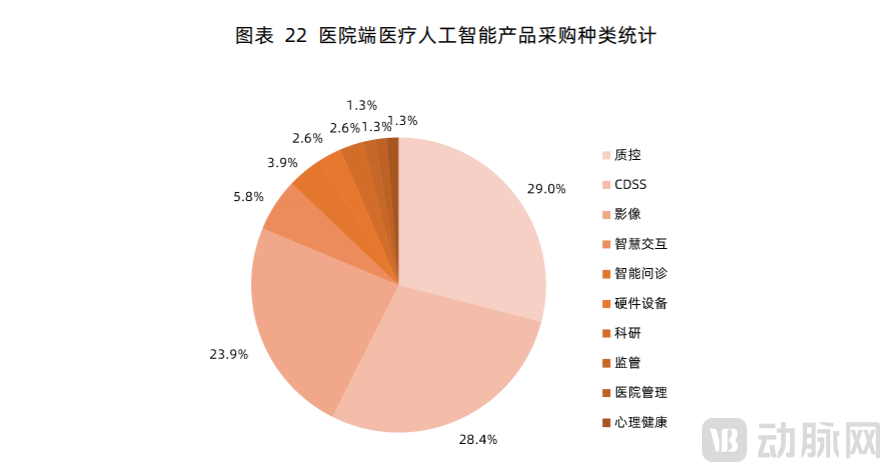
Source: VCBeat Institute's "2021"Medical Artificial Intelligence Industry Report"
AI-powered imaging recognition products have carved out a niche in the field of medical artificial intelligence. As exploration and development in this sector continue to deepen, more industry professionals are realizing thatCompared with AI-based image recognition, the field of AI-assisted clinical decision-making, which poses relatively greater technical challenges, offers broader market potential and development prospects.
On the one hand, physicians at primary healthcare institutions currently lack experience, making them hesitant to readily provide diagnostic and treatment plans for patients. As a result, patients are forced to seek referrals, which further exacerbates doctor-patient conflicts at tertiary hospitals. According to the “Implementation Opinions on Deepening the Promotion of the Sanming Model in Fujian Province and Furthering Healthcare System Reform,”In the future, the country will vigorously promote the balanced distribution of high-quality medical resources, ensuring that major and critical illnesses are treated within the province, common and frequently occurring diseases are managed at the city and county levels, and minor ailments such as headaches and fevers are addressed in rural areas.AI-assisted clinical decision-making is a key approach to realizing this vision.
On the other hand, according to Liu Weiqi, CEO of Tongxin Medical Alliance, due to the deepening of medical insurance cost containment, with the implementation of cost-control measures such as volume-based procurement and diagnosis-related group (DRG)/Diagnosis-Intervention Packet (DIP) payment systems,Hospitals and physicians will transform traditional clinical practices by adopting products that enable precise patient diagnosis and support clinical decision-making. This approach helps identify patients who truly require treatment, select appropriate therapeutic pathways, and ultimately reduce healthcare costs.Furthermore, “given the complexity of diagnosing and treating neurological disorders, physicians are paying greater attention to questions such as ‘what are the risks associated with different diagnostic and treatment plans, and how can treatment be delivered with precision?’ In the broader context of healthcare cost containment under medical insurance schemes, the previous trend of overutilization of medical services is bound to undergo significant changes.”
In light of this, Tongxin Medical Alliance began its strategic layout at an early stage,Having accumulated over 33 million imaging medical records and clinical data from more than 130,000 patients through years of operating an internet hospital, we have leveraged this foundation to explore the development of AI-assisted clinical decision support products.Tongxin Medical Alliance, dedicated to developing AI-powered clinical neurology products to assist physicians in making precise diagnostic and treatment decisions, more than 40 product prototypes have been developed to date, with subsequent phased entry into the clinical regulatory approval stage,The product can be applied in multiple scenarios, including intelligent diagnosis and treatment of patients, surgical planning, and early screening.
1. Tongxin Gewu – Aneurysm-Assisted Diagnosis and Treatment System
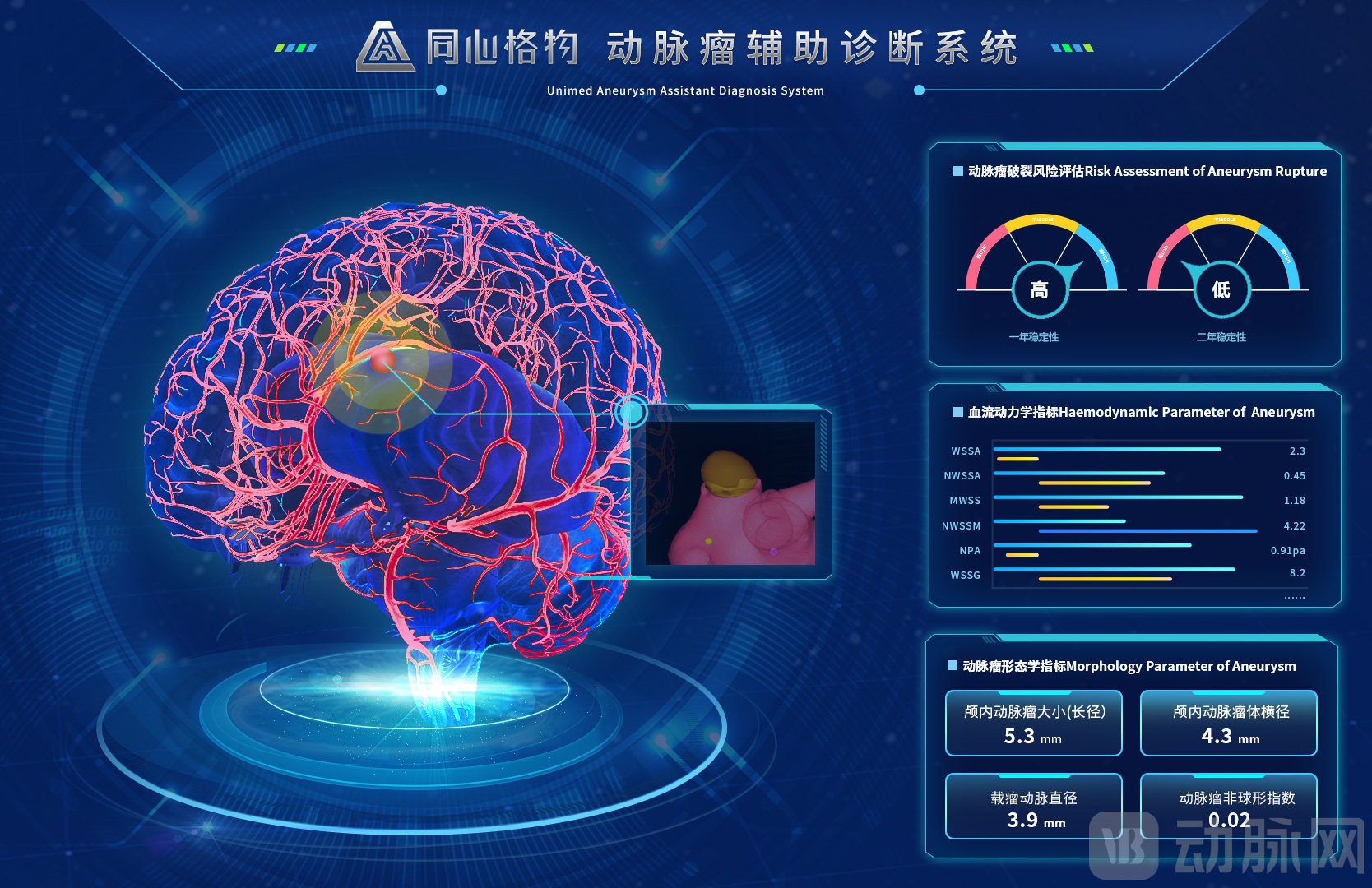
Stroke is the leading cause of death in China, with aneurysmal rupture being a major subtype of hemorrhagic stroke.The aneurysm intelligent diagnosis and treatment system developed by Tongxin Medical Union is a comprehensive clinical decision support system that integrates auxiliary aneurysm diagnosis, risk assessment, surgical planning, and postoperative evaluation.This system can improve the detection rate of aneurysms, particularly microaneurysms, through intelligent recognition; identify patients who truly require treatment by assessing aneurysm stability risks; and help physicians reduce the risk of intraoperative and postoperative complications by formulating targeted surgical plans.
2. Tongxin Gewu – Assisted Diagnosis and Treatment System for Vestibular Schwannoma
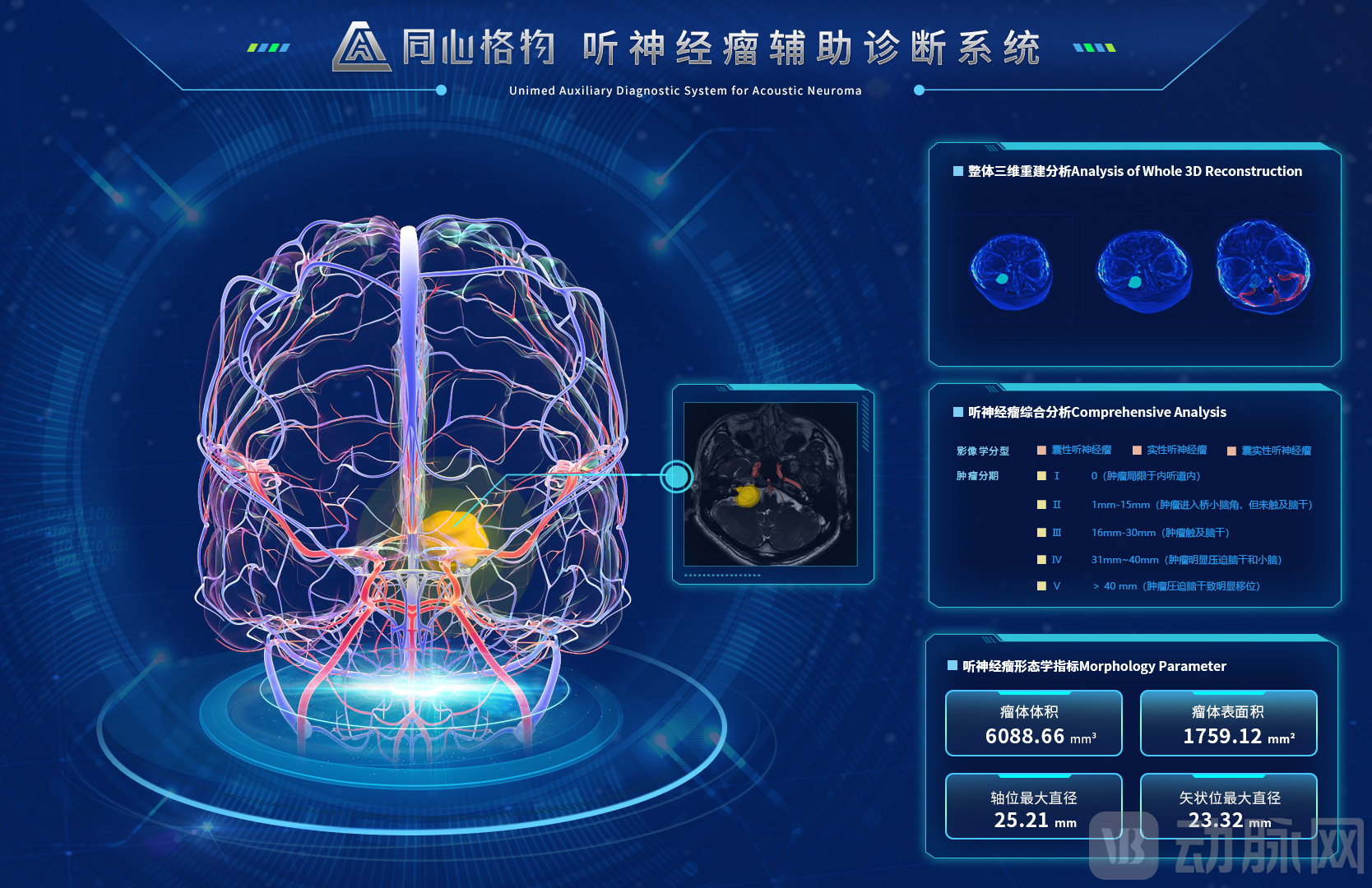
For patients, more than half of brain tumors are malignant, and surgery is the primary treatment modality. However, due to the complex anatomy of the brain, tumor resection is extremely challenging.Tongxin Yilian’s brain tumor product enables precise preoperative diagnosis and accurate analysis of the spatial relationships among arteries, veins, and nerves. It provides recommendations for surgical planning, reduces the risk of intraoperative bleeding and tissue damage, and improves postoperative outcomes for patients.
3. Tongxin Gewu – Early Screening System for Alzheimer's Disease
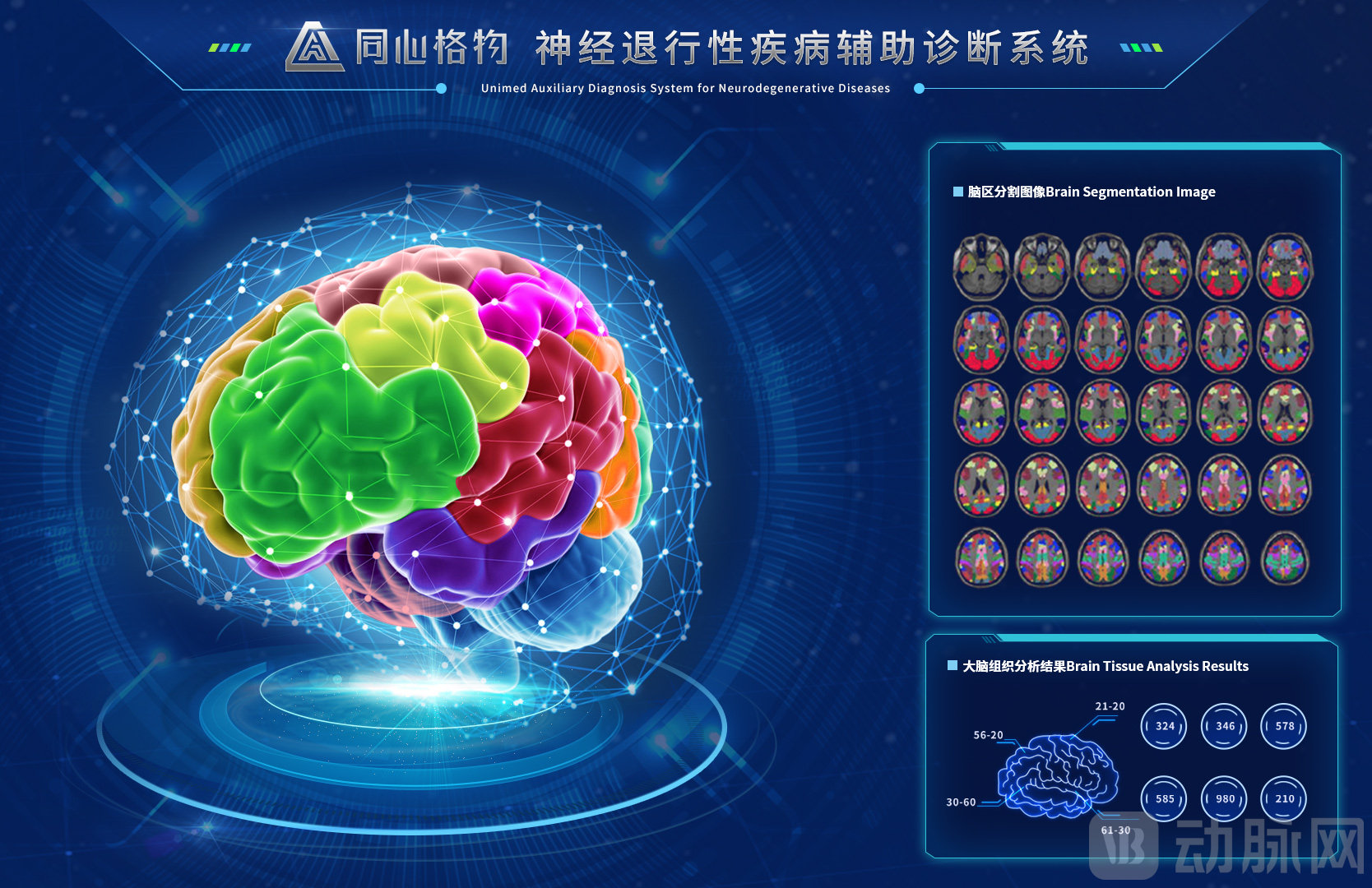
Currently, there are as many as 10 million patients with Alzheimer’s disease in China. Alzheimer’s disease imposes a substantial burden on families and society. The Outline of the Healthy China 2030 Planning explicitly states that the focus of disease management should be shifted upstream, adhering to the principle of “prevention first.” Early prediction and early intervention can reduce the potential risk of developing the disease or slow its progression.By precisely quantifying changes in brain tissue volume and cerebral blood flow, Tongxin Medical Union can effectively predict the risk of Alzheimer's disease, enabling early intervention.
Covers multiple neurological disorders, providing integrated diagnostic and therapeutic solutions
Liu Weiqi remained remarkably calm about the approval of these products, as this had long been factored into the product registration and approval roadmap. In addition to the aforementioned products,Tongxin Yilian currently has multiple AI-powered neurology products undergoing clinical registration for medical devices. Meanwhile, the company is also developing several other products, including 3D reconstruction and analysis of the entire cerebrovascular system, risk assessment and prediction of cerebral infarction, and risk assessment and prediction of cerebral hemorrhage.
For Tongxin Medical Alliance, the established direction of being driven by clinical needs will remain unchanged. Tongxin Medical Alliance will “focus on addressing physicians’ pain points, and by integrating medical imaging with artificial intelligence technologies, continue to provide high-quality Clinical Decision Support System (CDSS) products for both physicians and patients, including various risk assessments for ischemic stroke and clinical pathway decision support for intracerebral hemorrhage, thereby covering a broader range of neurological disorders.”
In addition to strengthening its own capabilities, Tongxin Medical Alliance is also intensifying its collaborations with medical institutions. Over the past seven years, Tongxin Medical Alliance has established long-term, in-depth partnerships with top-tier neurology teams at Beijing Tiantan Hospital, Xuanwu Hospital, and Peking Union Medical College Hospital, collaborating on research projects and product development.The aneurysm project titled “Personalized Risk Assessment of Aneurysm Rupture Based on Advanced Deep Learning and Computational Fluid Dynamics,” jointly submitted by Tongxin Medical Union and the Chinese Academy of Sciences, has received support from the Key Special Project on Strategic Scientific and Technological Innovation Cooperation under the National Key R&D Program of the Ministry of Science and Technology, further highlighting Tongxin Medical Union’s technical prowess in this field.
With the approval of its medical device certification, Tongxin Yilian will further accelerate product commercialization by actively collaborating with hardware equipment manufacturers and surgical instrument producers to provide hospitals with integrated diagnostic and therapeutic solutions. In supporting clinicians’ decision-making, the company continues to advance its mission: “To make life’s journey less painful and more dignified.”