

Are ADCs on Fire, PDCs Smoldering, and SMDCs, RDCs, ISACs the Next Big Thing? An Overview of Emerging Conjugation Technologies
Traditional chemotherapy, aside from surgery, primarily relies on cytotoxic agents such as platinum-based drugs, alkylating agents, and taxanes. Although these chemotherapeutic agents can effectively inhibit or slow the growth of malignant tumors and remain widely used as first-line clinical treatments, a significant proportion lack the ability to specifically target tumor cells. Consequently, they are often associated with systemic toxicity and considerable adverse reactions.
How to Enhance Efficacy While Reducing Side Effects? Conjugation Technology May Offer a Solution. By employing conjugation technology, cytotoxic molecules are linked with tumor-targeting components to create a complex composed of multiple interconnected molecules, thereby developing targeted cytotoxic therapeutics that can effectively address the aforementioned challenges.
The key to conjugation technology lies in the development of novel targeting molecules, such as specifically targeted and derivatized proteins, DNA, RNA, and carbohydrates. Conjugation technology has broad applications in tumor therapy, disease diagnosis, and high-throughput screening, making it a research field with promising prospects.
Among these, drug conjugates have emerged as a hot area of development in recent years. When discussing drug conjugates, antibody-drug conjugates (ADCs) are most frequently mentioned. However, beyond antibody-based conjugation, conjugates of peptides (peptide-drug conjugates, PDCs), nucleic acid aptamers (aptamer-drug conjugates, ApDCs), and polymers (polymer-drug conjugates) with toxic moieties also demonstrate promising and broad application prospects in mediating targeted drug delivery.
Today, we will provide a detailed analysis of antibody-drug conjugates (ADCs), whose development is currently flourishing; discuss the rising peptide-drug conjugates (PDCs); and explore and forecast other emerging conjugated therapeutics.
When it comes to conjugated drugs, how can we not mention ADCs?
This ancient drug research technique dates back more than a century.
In 1913, Nobel laureate Paul Ehrlich proposed the “magic bullet” concept of using antibodies for targeted disease therapy. This theory, which posits that drugs can be delivered to specific sites via these “bullets,” is regarded as the original conception of antibody-drug conjugates (ADCs).
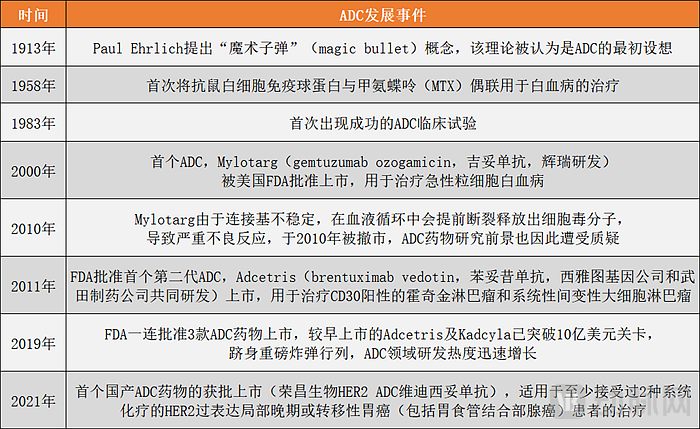
Development History of ADCs, Compiled from Public Sources
To date, the history of ADC research has spanned over a century. The technology has undergone several iterations, and ADC development has currently entered its third phase.
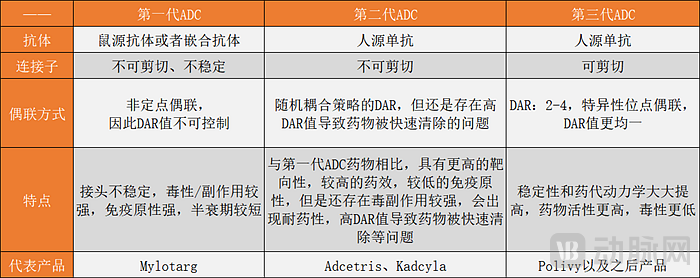
Comparison of the Development of Three Generations of ADCs, Compiled from Publicly Available Data
The first-generation antibody-drug conjugates (ADCs), represented by Pfizer’s Mylotarg, are characterized by drawbacks such as low antigen specificity, high toxicity and adverse effects, unstable linkers, and short half-life.
Second-generation ADCs are represented by Seattle Genetics’ Adcetris and Roche’s Kadcyla. Compared with first-generation ADCs, second-generation ADCs offer advantages such as stronger antigen specificity, higher potency, and lower immunogenicity; however, they still face challenges including significant toxic side effects, drug resistance, and high drug-to-antibody ratio (DAR) values.
Third-generation ADCs utilize site-specific conjugation and novel targets to achieve homogeneous, uniform ADCs with more effective cytotoxic payloads, higher precision, and lower toxicity.
From the successive technological iterations of ADCs, it is evident thatADC Drug Development Technology Is Closely Linked to Five Key Elements.
First is the selection of targets.ADC drugs are primarily used in the field of oncology treatment, thus requiring antigen targets to be highly expressed on tumor cells and lowly or not expressed in normal tissues, or only expressed in specific tissues. Additionally, it is essential to ensure that the target antigen is present on the cell surface so that antibodies can recognize and bind to it. The antigen target should also have a certain endocytic capacity to trigger the transport of the antigen-antibody complex into the cell.
However, the limited number of surface antigens on tumor cells and the typically low efficiency of internalization of antigen-antibody complexes make target selection challenging.
2. Antibody selection.Antibodies in ADC drugs should possess high affinity and high specificity. Early ADCs utilized murine or chimeric antibodies, which exhibited strong immunogenicity; currently, ADC development employs humanized or fully human antibodies, which demonstrate higher affinity.
Furthermore, antibodies should possess characteristics such as low immunogenicity, low cross-reactivity, appropriate conjugation properties, and a long half-life. Currently, all existing ADC antibodies are IgG molecules, which exhibit high affinity for target antigens and have a prolonged half-life in the bloodstream.
3. Selection of cytotoxic molecules.Cytotoxic molecules are key determinants of the potency of antibody-drug conjugates (ADCs). In addition to exhibiting extremely high toxicity, they must also possess adequate water solubility and stability in serum. Currently, cytotoxic drugs used in clinical practice can be classified into two categories based on their mechanisms of action: microtubule inhibitors and DNA-damaging agents.
Among them, microtubule inhibitors mainly include auristatin derivatives (such as MMAE, MMAF, and MMAD), geldanamycin and its derivatives (such as DM1 and DM4); DNA-damaging agents mainly include calicheamicin, duocarmycins, anthracyclines, and calicheamicin.
4. Selection of Linkers, currently mainly divided into cleavable linkers and non-cleavable linkers. The linker is the foundation for ADCs to effectively deliver cytotoxic drugs; therefore, the linker must remain stable in blood circulation and rapidly release the active cytotoxic drug upon entering tumor cells to kill cancer cells.
5. Selection of Conjugation Methods, primarily categorized into non-site-specific conjugation and site-specific conjugation. Early methods employed non-site-specific conjugation, resulting in significant heterogeneity among the produced ADCs. Site-specific conjugation is currently the predominant approach, achieving specific conjugation through genetic engineering sites, thereby yielding more homogeneous ADCs.
In addition to the five key factors mentioned above, issues such as the antibody’s drug-to-antibody ratio (DAR), determination of drug dosage, in vivo pharmacokinetic studies, and tissue penetration capability of ADCs also require continuous optimization.
Furthermore, due to the relatively late start of ADC drug development in China, there is a phenomenon of crowded research and development around specific targets and indications.In terms of R&D targets, competition for the HER2 target is currently the most intense in China; however, drug development efforts also extend to other targets such as c-Met, EGFR, Trop-2, CD20, and BCMA. Regarding indications, the focus remains on oncology, mirroring the therapeutic areas targeted by ADC drugs abroad.
Overall, 13 ADC drugs have been approved for marketing worldwide to date.More than 40 domestic companies are active in this sector, including RemeGen, Allist Pharmaceuticals, Lepu Biopharma, Keymed Biosciences, Genor Biopharma, Bio-Thera Solutions, Zhejiang Medicine, Duoxi Biotech, Kelun-Biotech Biopharmaceutical, Crosslinking Therapeutics, Miracogen, Hengrui Medicine, Hansoh Pharmaceutical, BeiGene, Shanghai Pharma, Zhangjiang Bio-Pharm, Henlius, and Puzhong Discovery, among others, reflecting a vibrant and thriving landscape.
In terms of market sizeAccording to Nature’s projections, the total sales of the 10 ADC products launched before 2020 will exceed $16.4 billion by 2026. China’s ADC market was initiated in 2020 and is expected to reach RMB 7.4 billion and RMB 29.2 billion in 2024 and 2030, respectively, with a compound annual growth rate (CAGR) of 25.8% from 2024 to 2030.
From the perspective of development trends,, according to a report released by PatSnap, global innovation in antibody-drug conjugate (ADC) drugs is gradually entering a golden period of development. ADC drugs have become a key focus for innovative pharmaceutical companies worldwide, and a new peak may be reached in the next 3-5 years.
Thus, continuous innovation and breakthroughs are the key to unlocking the future of this golden sector.
Compared to the ADC market, which is already showing signs of becoming a red ocean, the PDC field remains an untapped area with significant potential. Compared to ADC drugs, PDC drugs offer advantages such as superior tumor penetration, lower immunogenicity, reduced production costs, and greater ease of synthesis and optimization.
The basic components of a PDC are threefold: a peptide, a cytotoxin, and a linker.
First is the selection of peptides.In recent years, the rapid advancement of technologies such as proteomics, phage display, and solid-phase peptide synthesis has led to the discovery and rational design of an increasing number of novel peptides, significantly promoting the development of peptide-drug conjugates (PDCs).
Peptide molecules used in peptide-drug conjugates (PDCs) are generally classified into cell-penetrating peptides (CPPs) and cell-targeting peptides (CTPs). The former facilitate drug transport across the cell membrane, while the latter specifically bind to receptors on target cells. Literature reports indicate that CPP-drug conjugates can enter cells via transport mechanisms or receptor-mediated, energy-independent non-endocytic transport pathways.
Commonly used CPPs include the trans-activator of transcription (TAT), transportan, penetratin and its derivatives, or other membrane-penetrating peptides. Commonly used CTPs include arginine-glycine-aspartic acid (RGD) motif peptides, luteinizing hormone-releasing hormone (LHRH) analog peptides, and novel tumor-targeting peptides identified through phage display technology.
Next is the selection of cytotoxic drugs.Cytotoxic drugs used for peptide-drug conjugate (PDC) coupling are typically chemotherapeutic agents, such as paclitaxel, doxorubicin (DOX), and camptothecin (CTP), which exert antitumor effects by interfering with or blocking cell proliferation. However, classic commonly used chemotherapeutic drugs often lack selectivity and exhibit poor tumor-targeting capability, easily causing damage to normal cells and tissues. Forming PDCs can enhance the targeting of these drugs to tumor tissues and reduce their distribution in normal tissues, thereby mitigating adverse reactions.
Next is the selection of linkers.Linkers serve as effective bridges connecting peptides and drugs, and they can influence the function of either the peptide or the drug. Similar to antibody-drug conjugates (ADCs), linkers in peptide-drug conjugates (PDCs) are classified into cleavable and non-cleavable types. An ideal linker should possess characteristics such as low molecular weight, appropriate length, suitable stability, and proper polarity.
Based on the above three elements, PDC offers the following advantages.
In terms of technologyPDC is a novel class of conjugated drugs. Its design principle is partially similar to that of antibody-drug conjugates (ADCs), primarily used for drug delivery and tumor targeting. The key difference lies in the replacement of the antibody component in ADCs with peptide molecules that serve as targeting ligands.
Precisely because PDCs replace antibodies with peptides, they have a lower molecular weight compared to ADCs. As a result, PDC drugs exhibit superior vascular, tissue, and cellular permeability, enabling them to penetrate deeply into tumors without eliciting immunogenic responses.
Furthermore, PDC drugs are rapidly eliminated by the kidneys and exhibit lower toxicity to bone marrow and liver. On the other hand, unlike bacteriophages, adenoviruses, or other microorganisms used specifically for drug delivery, PDC drug carriers do not contain infectious agents.
In terms of process, PDCs target tumor cells via peptide chains of approximately 10 amino acids. By modulating the amino acid sequence of the peptide chain, their conjugated hydrophobicity and ionization can be controlled, both of which influence in vitro and in vivo bioavailability.
Compared with the complex manufacturing processes involved in antibody production, PDCs can be mass-produced using solid-phase synthesis. The synthesis, purification, storage, and quality control of PDCs are relatively straightforward, and they exhibit superior stability both in vitro and in vivo, thereby effectively reducing the costs associated with large-scale production.
As of now, two PDC drugs have been launched globally.
In January 2018, Lutathera, developed by Advanced Accelerator Applications S.A., a subsidiary of Novartis, received FDA approval for marketing. Lutathera is the world’s first peptide-drug conjugate (PDC) and is a peptide receptor radionuclide therapy (PRRT) agent indicated for the treatment of somatostatin receptor-positive gastroenteropancreatic neuroendocrine tumors (GEP-NETs).
In February 2021, Oncopeptides announced that Pepaxto (melphalan flufenamide, also known as melflufen) had received FDA approval for marketing. Melflufen is a targeted aminopeptidase peptide-drug conjugate (PDC) anticancer agent used to treat multiple myeloma. It couples an alkylating agent with a peptide that targets aminopeptidases. Aminopeptidases are present in all human cells and are overexpressed in various tumors, including multiple myeloma.
Today, the PDC drug sector has attracted strategic investments from various biopharmaceutical companies, including major pharmaceutical giants such as Novartis, AstraZeneca, and Roche, as well as several Chinese companies like Akeso Biopharma, Mainstream Biotech, Tongyi Medicine, and Tailikang Biotech.
Globally, PDC drugs are primarily indicated for major refractory cancers, including brain tumors, metastatic non-small cell lung cancer, multiple myeloma, pancreatic tumors, and advanced solid tumors. In China, the indications for PDC drugs under development mainly include recurrent tumors, gastrointestinal cancers, prostate cancer, lung cancer, digestive system cancers, and breast cancer.
Overall, with the advancement of technologies for screening target-specific peptides or cell-penetrating peptides with targeting capabilities, the development and application of Peptide-Drug Conjugates (PDCs) will become increasingly broad. It is anticipated that PDCs will carve out a distinct path amidst the flourishing landscape of Antibody-Drug Conjugates (ADCs), thereby enhancing the prominence of conjugated therapeutics.。
Everything Can Be Conjugated: SMDC, RDC, ISAC, FDC…
A Blossoming Landscape of Dozens of Novel Conjugated Drugs
In addition to well-known conjugated drugs such as ADCs and PDCs, which have seen rapid development and widespread adoption, several lesser-known conjugated drug modalities are also advancing rapidly.
Dozens of novel conjugated drug technologies, such as Small Molecule-Drug Conjugates (SMDC), Radionuclide-Drug Conjugates (RDC), Immune-Stimulating Antibody Conjugates (ISAC), Fragment-Drug Conjugates (FDC), Antibody-Cell Conjugates (ACC), Virus-like Drug Conjugates (VDC), Antibody-Oligonucleotide Conjugates (AOC), Antibody-Biopolymer Conjugates (ABC), Antibody-Degrader Conjugates (ADeC), Prodrug-Drug Conjugates (Pro-DC), nanoparticle-conjugated drugs, and bicyclic peptide-conjugated drugs, have emerged in rapid succession, blossoming competitively in the garden of conjugated therapeutics.
The following lists only a few conjugate drugs compiled from publicly available sources.
SMDC: No Products Approved for Market Launch Yet, but Chinese Companies Have Already Made Strategic Moves
Small Molecule-Drug Conjugates (SMDCs) are formed by conjugating small-molecule targeting ligands with cytotoxic drugs.
Similar to the structure of antibody-drug conjugates (ADCs), SMDCs comprise three key components: a small-molecule targeting ligand, a cytotoxic payload, and a linker. Their mechanism of action is also analogous to that of ADCs; however, SMDCs can distribute more rapidly and uniformly within tumor tissues, while offering lower costs and no immunogenicity.
Currently, there are no marketed SMDC drugs; the primary challenge in their development lies in the difficulty of obtaining small-molecule ligands, which has constrained their progress.
In 2014, vintafolide (vinblastine–folate conjugate), an SMDC drug developed through a collaboration between Merck & Co. and Endocyte, received conditional marketing authorization; however, its Phase III clinical trial failed (with specific reasons not disclosed), leading Merck and Endocyte to withdraw their application for conditional marketing authorization for vintafolide from the European Union.
To date, the history of small molecule-drug conjugate (SMDC) drug development has been relatively short, with only a few companies domestically and internationally having established a presence in this field. Representative foreign companies include Endocyte, Tarveda, and Bind Therapeutics, while within China, only Borui Biology has publicly disclosed its involvement in SMDC drug development.
RDC: Leveraging Radionuclide Imaging and Therapy, Poised to Become a New Trend in Tumor Diagnosis
Radionuclide Drug Conjugates (RDCs) primarily consist of a targeting ligand, a linker, a chelator, and a cytotoxic/imaging agent (radioisotope).
The primary distinction between RDCs, ADCs, and SMDCs lies in the drug payload. Instead of small molecules, RDCs are loaded with radionuclides. By utilizing different medical radionuclides, RDCs can serve diagnostic imaging or therapeutic purposes, with certain radionuclides offering both capabilities. Leveraging these functions, RDCs hold the potential to emerge as a novel technology for tumor diagnosis, imaging, and therapy.
Currently, international players in this field include Novartis, Bayer, the University of California, RadioMedix, and Curium; among domestic companies, Grand Pharma has made significant strides in this sector.
ISAC: Innovent, Hengrui, and BeiGene All Have Strategic Layouts
In August 2021, Innovent Biologics and Bolt (NASDAQ: BOLT) announced a collaboration to license Bolt’s Immune-Stimulating Antibody Conjugate (ISAC) technology for the joint development of three candidate drugs.
ISACs are a class of conjugated drugs that share functional similarities with antibody-drug conjugates (ADCs). However, they differ in their ability to drive both innate and adaptive immunity, and can convert immunologically "cold" tumors into "hot" tumors by activating CD4+/CD8+ T cells via Toll-like receptors (TLRs). ISACs achieve therapeutic efficacy against cancer by modulating the tumor immune microenvironment and providing immune stimulation.
Currently, overseas companies with R&D layouts in this field include Novartis, Bolt Biotherapeutics, Silverback Therapeutics, and Mersana Therapeutics. In China, in addition to Innovent Biologics conducting R&D through collaborations, Hengrui Medicine and BeiGene are also actively positioning themselves in this field through independent R&D.
Whether it is the ADCs that have gained significant prominence in recent years, the emerging PDCs, or other less common “X-conjugated drugs,” the family of conjugated drugs has demonstrated its therapeutic potential in the field of major diseases as technology advances.
In the future, we may witness a boom where “everything can be conjugated.” We look forward to a future where conjugate drugs flourish and yield abundant results, offering superior solutions for the treatment of human diseases.
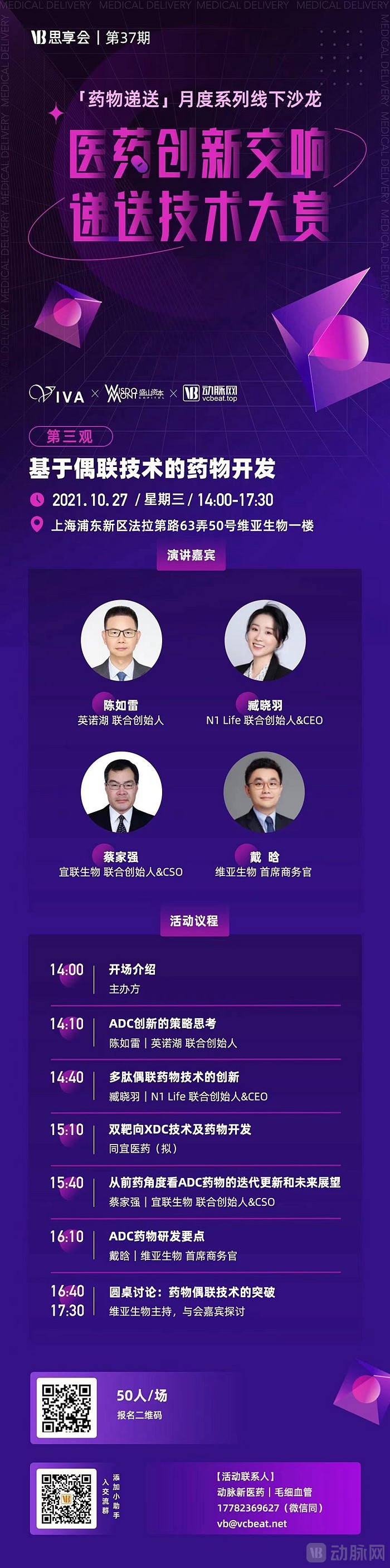
Therefore, VCBeat/VCBeat New Medicine, in collaboration with Shengshan Capital and Viva Biotech, presents the 37th edition of the offline salon series [VB Thought Sharing Session]. Distinguished experts will convene to discuss industry development and delve into core technologies surrounding drug development using conjugation techniques. Scan the QR code below to register immediately.
References:
1. Wang Yuheng, “ADC Drugs Have Broad Development Prospects—Domestic Enterprises Must Pursue a Path of Differentiated Development,” China Medical News, July 14, 2021, Page 004.
2. Xia Jianghua, Feng Jun. Research and Development of Peptide-Drug Conjugates. World Clinical Drugs, Vol. 35, No. 9.
3. Chen Wenjie, Miao Xianfeng. Analysis of the Current Status of Domestic R&D and Corporate Distribution of Antibody-Drug Conjugates. Chinese Journal of Biotechnology, 2021, 41(6): 105-110.
4. Zhou Jianfen, Lu Weiyue. Research Progress on Prodrugs for Tumor-Targeted Therapy. Chinese Journal of Pharmaceuticals, 2021, 52(5).
5. Guo Lihong, Wang Jinpeng, Zhai Lihai, Zhang Guimin. Research Progress on Antibody-Drug Conjugates and Small-Molecule Drug Conjugates. Chinese Journal of Pharmaceuticals, 2019, 50(8).
6. Li Mingying, Wang Lin, Ma Ningning. Application of Site-Specific Conjugation Technology in Antibody-Drug Conjugates. Progress in Pharmaceutical Sciences, 2021, 45(3): 180-187.
7. Chen Hu, Zhang Xinling, Kong Nana, Luo Wenting, Li Lele, Liu Lina, Huang Changjiang, Jiang Jing. Clinical Research Progress and Challenges of Antibody-Drug Conjugates Based on Site-Specific Conjugation Technology. Progress in Pharmaceutical Sciences, 2021, 45(3): 167-179.