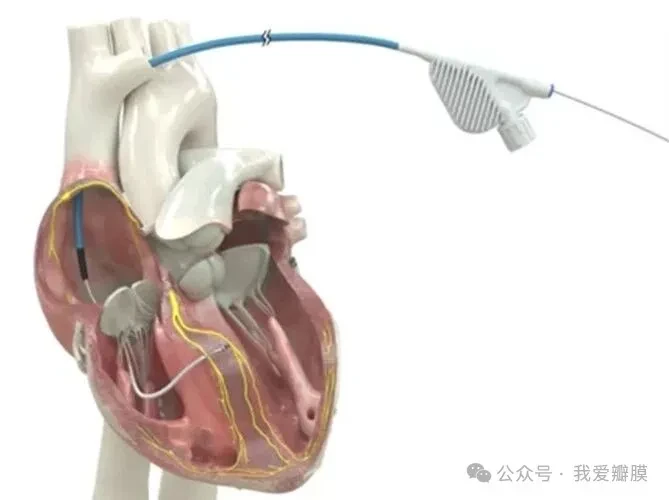
The heart is the human body's never-stopping "engine," and arrhythmia is like an "electrical circuit fault" in the engine — mild cases may cause palpitations and shortness of breath, while severe cases can lead to sudden cardiac arrest, taking one’s life.On March 23 (local time), an inspiring piece of news spread through the medical community: The U.S. Food and Drug Administration (FDA) officially approved the expanded indication for Medtronic's OmniaSecure defibrillation lead, allowing its implantation in the left bundle branch (LBB) region! This marks the first time in FDA history that a defibrillation lead has been approved for use in the LBB region. More importantly, it is also the world’s smallest leadless defibrillation lead, with a diameter of just 1.6mm—thinner than a pencil lead ✨This breakthrough not only sets a new record for the size of defibrillation leads but also offers countless patients with arrhythmia a safer and more precise treatment option, completely breaking the limitations of traditional therapies. 01First, let's understand: what's so impressive about this "hair-thin" lead? Many people are unfamiliar with "defibrillation leads," but they are the "core link" of implantable cardioverter defibrillators (ICDs) or cardiac resynchronization therapy defibrillators (CRT-Ds). They are responsible for precisely conducting electrical currents to the heart to correct abnormal rhythms and can deliver life-saving shocks when critical, acting as a "guardian of life" for the heart.The emergence of OmniaSecure directly addresses two major pain points of traditional defibrillation leads, gaining popularity through its strength:✅ World's Smallest: 1.6mm Diameter, Minimally Invasive and SaferWith a diameter of only 4.7 French (approximately 1.6mm), equivalent to the thickness of a pencil's graphite core, OmniaSecure is currently the world's smallest leadless defibrillation lead. Traditional defibrillation leads typically have diameters ranging from 7 to 8 French, which can easily irritate blood vessels during implantation and increase the risk of complications such as venous occlusion and tricuspid regurgitation.Its slim design not only reduces vascular injury but also fits narrower blood vessels, even offering treatment possibilities for adolescent patients over 12 years old, providing more younger high-risk groups vulnerable to sudden cardiac death with a chance for treatment. More remarkably, through material innovation, Medtronic has managed to reduce the size while maintaining the flexibility and fatigue resistance of the lead, avoiding potential issues like lead fractures.✅ Indication Upgrade: FDA First Approval, Suitable for More PatientsThis lead wire was not approved for the first time — In April 2025, it had already received FDA approval for implantation in the right ventricle; after this expansion of indications, it has become the world's first defibrillation lead that can be implanted in the left bundle branch (LBB) area.What does this mean? Simply put, it can not only fulfill the "life-saving" mission of traditional defibrillation leads by treating fatal arrhythmias such as ventricular tachycardia, ventricular fibrillation, and bradycardia, but also achieve "conduction system pacing" and even be used for Left Bundle Branch Optimization Cardiac Resynchronization Therapy (LOT-CRT).For patients who need both defibrillation and pacing, multiple devices might have been required in the past. Now, a single OmniaSecure can handle it all, simplifying the surgical process and making the heartbeat closer to its natural physiological state, reducing cardiac function damage. 02Clinical Data Speaks: Safe and Effective, Outperforming Traditional SolutionsAny medical breakthrough ultimately needs to prove its worth through clinical data. As early as the 2025 Heart Rhythm Society (HRS) Annual Meeting (Heart Rhythm 2025), researchers unveiled early data on OmniaSecure's implantation in the LBB region, with subsequent findings published in the *Heart Rhythm* journal.This study, which covered more than 300 patients with an average age of nearly 65, delivered stunning results:
The implantation success rate is as high as 95.4%, and almost all patients can successfully complete the surgery, breaking through the technical bottleneck of complex implantations.
Three months after the surgery, 97.9% of patients had no major device-related complications, significantly lower than the 3%-5% complication rate associated with traditional LBBAP procedures.
No adverse events such as leadless fractures or oversensing throughout the process, with maximum safety;
The subsequent supplementary LEADR LBBAP study further demonstrated a 100% defibrillation success rate, far exceeding the preset standard of 88%, with excellent defibrillation threshold stability at 12 months post-operation."This solid clinical evidence demonstrates that OmniaSecure can achieve physiological pacing through the left bundle branch area while providing reliable defibrillation effects, offering patients dual protection," said Dr. Pugazhendhi Vijayaraman, cardiac electrophysiologist at Geisinger Wyoming Valley Medical Center and principal investigator of the LEADR LBBAP study. 03More Than "Small": Redefining the Future of Arrhythmia Treatment Trevor Cook, Vice President and General Manager of Medtronic's Defibrillation Solutions business, said: "Conduction system pacing is a rapidly evolving therapy for patients who require pacemakers. The approval of OmniaSecure provides an excellent option for patients needing both defibrillation and pacing — it can safely deliver life-saving defibrillation therapy while activating the heart’s natural electrical system to achieve more synchronized physiological rhythms."It is reported that OmniaSecure defibrillation leads have been commercially available in the U.S. since January 2026 and are currently being gradually rolled out globally. Their introduction not only reflects Medtronic's technical expertise in rhythm management (optimized based on 20 years of clinically proven pacing leads) but also marks a new era of "minimally invasive, precise, and personalized" treatment in cardiac electrophysiology.Globally, approximately 3 million patients at high risk of sudden cardiac arrest (SCA) rely on ICD therapy. However, complications associated with traditional leads have long hindered the widespread adoption of this treatment. The approval of OmniaSecure undoubtedly opens a new door of hope for these patients—thinner leads, enhanced safety, and broader compatibility make "precise heart-saving" no longer a challenge. 04Summary A thin wire of 1.6mm, carrying the life hopes of countless patients with arrhythmia; a breakthrough FDA approval, rewriting the global pattern of defibrillation therapy.From "Minimum Diameter" to "Bionic Pacing," the breakthrough of OmniaSecure represents not only an advancement in medical technology but also the best interpretation of "Life First." With the popularization of this technology, it is believed that more patients will benefit from this "precise protection" in the future, staying away from the threat of arrhythmia and allowing the heart to beat more securely and powerfully ❤️