

Hematopoietic Stem Cell Transplantation Standard Dataset (2021 Edition) Officially Launched to Establish Foundation for Standardized Research and Effective Data Management
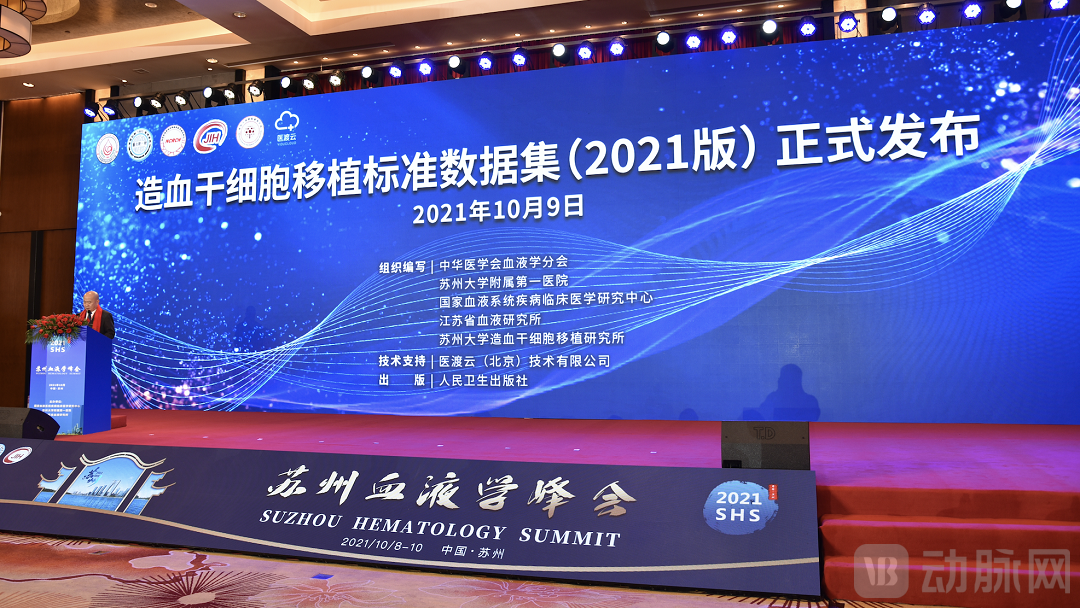
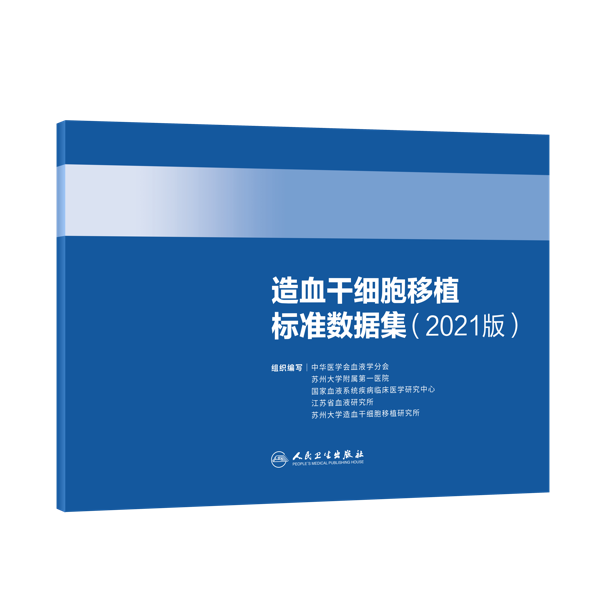
On October 9, the 14th Suzhou Hematology Summit, hosted by the National Clinical Research Center for Hematologic Diseases, the First Affiliated Hospital of Soochow University, the Jiangsu Institute of Hematology, and the Suzhou Medical Association, was held. Hundreds of hematology experts from China and abroad gathered to conduct in-depth discussions on key issues such as the research and development of new hematologic drugs, advances in diagnosis and treatment, and the construction of big data platforms. During the opening ceremony, experts and scholars reviewed the achievements and future prospects of the field of hematology, witnessed the inauguration of the Chinese Hematology Museum, and officially released the Standard Data Set for Hematopoietic Stem Cell Transplantation (2021 Edition). This data set was published by People’s Medical Publishing House, compiled under the organization of the Hematology Branch of the Chinese Medical Association, the First Affiliated Hospital of Soochow University, the National Clinical Research Center for Hematologic Diseases, the Jiangsu Institute of Hematology, and the Institute of Hematopoietic Stem Cell Transplantation of Soochow University, with technical support provided by Yidu Cloud (Beijing) Technology Co., Ltd.
Hematopoietic Stem Cell Transplantation (HSCT) represents a significant milestone in the development of modern medicine. Following preconditioning regimens involving total body irradiation, chemotherapy, and immunosuppression, normal hematopoietic cells from either allogeneic donors or autologous sources are infused into patients to reconstitute normal hematopoietic and immune functions. In 1957, Professor E.D. Thomas first reported the therapeutic approach of sequential bone marrow infusion following radiochemotherapy, thereby inaugurating the era of hematopoietic stem cell transplantation. Over the past half-century, HSCT has been widely applied to treat various hematologic disorders, including acute leukemia, aggressive lymphoma, myeloma, myelodysplastic syndromes, severe aplastic anemia, and thalassemia. This has offered the potential for cure in hematologic malignancies, bone marrow failure syndromes, and certain congenital diseases, significantly improving patient prognosis. Currently, tens of thousands of allogeneic or autologous HSCT procedures are performed worldwide each year. Concurrently, related clinical and basic scientific research is flourishing. As a critical foundational resource for transplantation research, the standardized collection and management of HSCT data are receiving increasing attention.
Over the past two decades, with the rapid expansion of the China Marrow Donor Program (CMDP) and the continuous maturation of haploidentical transplantation techniques, both the clinical scale and research standards of hematopoietic stem cell transplantation (HSCT) in China have improved significantly, establishing the country as a significant force in the international HSCT community. Meanwhile, Chinese scholars have placed great emphasis on the collection of transplantation data. Through the Chinese Blood and Marrow Transplantation Registry (CBMTR), the Hematology Branch of the Chinese Medical Association has continuously collected and organized annual HSCT-related data from 2007 to the present, providing a crucial evidence base for guiding the development of HSCT in China.
However, due to the uneven distribution of medical research resources across regions, variations among transplant centers, and divergent perspectives, China still lacks a standardized protocol for primary data collection. The breadth and depth of hematopoietic stem cell transplantation (HSCT) data collection remain inconsistent, posing certain obstacles to the in-depth mining of “real-world” big data accumulated in clinical practice.
Professor Wu Depei, Chairman of the Hematology Branch of the Chinese Medical Association, Executive Deputy Director of the National Clinical Research Center for Blood System Diseases, and Director of the Department of Hematology at the First Affiliated Hospital of Soochow University, stated, “Data on hematopoietic stem cell transplantation (HSCT) constitute a critical foundation for conducting clinical and translational research. To promote standardized and effective management of HSCT data in China, the ‘Standard Dataset for Hematopoietic Stem Cell Transplantation (2021 Edition)’ is officially released today. We hope this dataset will contribute to the safer, more rational collection, protection, and utilization of domestic transplantation data resources.”
“During the compilation process, we based our work on current standardized medical terminology, drew upon advanced domestic and international experience and frameworks in HSCT data management, and integrated relevant guidelines, consensus statements, and specific practices in China. The release of the Standard Dataset for Hematopoietic Stem Cell Transplantation (2021 Edition) will promote the standardization and normalization of HSCT data management in China, providing an effective tool for in-depth mining of ‘real-world’ big data accumulated in clinical practice,” emphasized Professor Wu Depei.
It is reported that the "Standard Dataset for Hematopoietic Stem Cell Transplantation (2021 Edition)" was compiled with reference to international and domestic terminology standards such as ICD-10, ATC, and LOINC, electronic medical record specifications (HL7 CDA), and international and domestic clinical practice guidelines for diseases (e.g., NCCN). The dataset comprises 17 standard modules, including patient demographic information, overview of diagnosis and treatment, diagnosis, MICM testing, transplantation therapy, and efficacy assessment, encompassing a total of 853 data elements.
This dataset holds significant importance for advancing standardized diagnosis and treatment, improving data quality, effectively integrating domestic transplant medical record resources, enhancing China’s capacity for clinical research on hematopoietic stem cell transplantation (HSCT), accelerating the translation of research findings, and breaking down “information silos.” It provides a more robust data foundation for clinical and basic scientific research on HSCT, as well as for the formulation of policy plans.