

Edwards Lifesciences Unveils Expanded China Strategy Amid $70 Billion Valuation

Edwards Lifesciences
Cardiovascular Surgical Equipment Provider
Globally, structural heart disease is the most closely watched medical device sector.
How crowded is this sector? On the Hong Kong Stock Exchange alone, four structural heart disease companies are queued for IPOs. Yet none of the participants, large or small, have managed to challenge Edwards Lifesciences’ dominance in this market.
In the global valve market, Edwards Lifesciences currently holds a market share of nearly 70%, dominating the structural heart disease market with an absolute advantage.
What Is the Value of Dominating the Structural Heart Disease Market? A review of the development of global medical device giants shows that most companies have adopted horizontal M&A for expansion to maintain high-speed growth. In contrast, since its founding in 1958 and the creation of the first artificial heart valve, Edwards Lifesciences has never deviated from its core focus on this field. After 63 years of deep cultivation, the company has achieved a market capitalization of $72.057 billion, with revenue reaching $4 billion in 2020. In Q2 2021, its operating revenue was $1.4 billion, representing a year-on-year increase of 48.76%.
In the highly competitive medical device market, Edwards has become a global giant by focusing on two key sectors: structural heart disease and critical care. This year marks the 20th anniversary of Edwards Lifesciences’ entry into the Chinese market, coinciding with the dawn of a golden age for the domestic structural heart disease market.
Edwards Lifesciences CEO Mao Sailin stated, “China is a strategic market for Edwards Lifesciences, and we attach great importance to China.”
Structural heart disease represents the fastest-growing segment within the cardiovascular field and stands as one of the few niche markets valued at over RMB 100 billion. Edwards Lifesciences is a strong player in this space. How will Edwards Lifesciences engage with this market in the future, and how will its business in China develop? VCBeat interviewed senior executives from Edwards Lifesciences’ Greater China region.
Unlike most multinational giants operating in China, Edwards Lifesciences has a relatively straightforward business portfolio. The company’s global operations are divided into four major segments: Transcatheter Aortic Valve Replacement (TAVR), Surgical Valve Replacement, Transcatheter Mitral and Tricuspid Therapies (TMTT), and Critical Care. The first three segments fall within the field of structural heart disease, while the latter belongs to the critical care sector.Edwards derives more than 80% of its revenue from the structural heart disease sector.
In China, not all of Edwards’ businesses have entered the market. Currently, Edwards has three major business segments in China: Critical Care and Advanced Hemodynamics (CCV), Transcatheter Heart Valve (THV) therapy, and Surgical Structural Heart disease therapy.
Since its inception, Edwards Lifesciences has focused on the field of structural heart disease. In 1958, Miles Lowell Edwards, the founder of Edwards Lifesciences, developed the world’s first artificial heart valve. As an engineer who had personally suffered from rheumatic heart disease, he commercialized the device two years later, transforming the history of structural heart disease treatment. This breakthrough propelled Edwards to prominence amidst fierce competition, enabling it to dominate the artificial heart valve sector for decades.
Edwards has generated billions of dollars in revenue globally through its heart valve products.The structural heart disease market itself is a vast market with significant unmet needs, and Edwards Lifesciences has led the way through two eras: surgical prosthetic valves and transcatheter heart valves.
The structural heart disease market warrants in-depth development for the next 50 years, primarily because artificial heart valves play an indispensable role in sustaining life. The human heart has a total of four valves: the mitral valve, tricuspid valve, aortic valve, and pulmonary valve. These valves regulate blood flow within the heart by opening and closing. Both rheumatic heart disease and degenerative conditions can lead to valvular pathology.
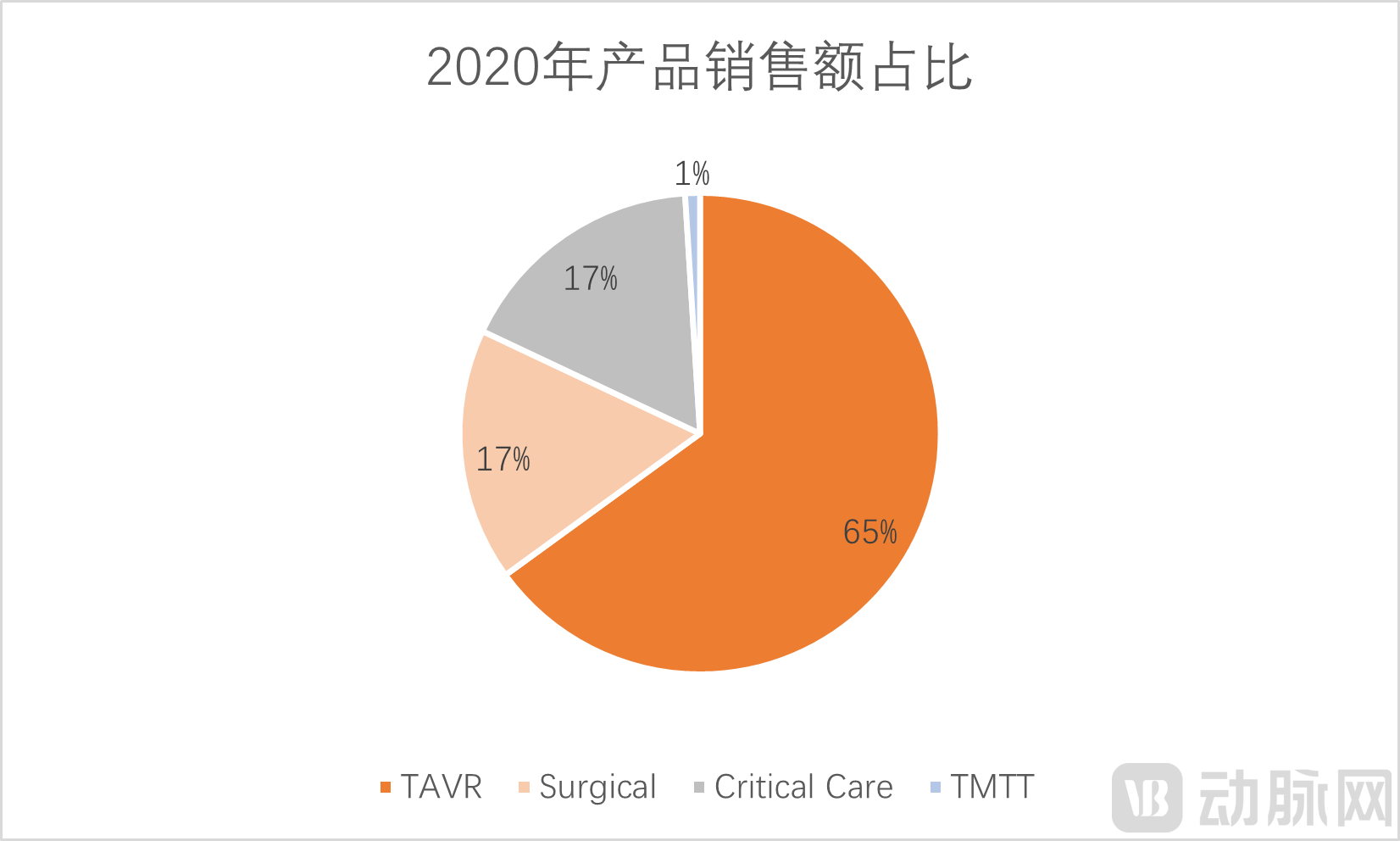 Data source: Edwards Lifesciences Annual Report
Second, the large patient population with valvular heart disease and the low treatment rate collectively indicate a substantial market size for structural heart disease.Valvular heart disease is a common age-related condition; as the population ages, the number of individuals affected by valvular heart disease will continue to rise.
Third, transcatheter valve interventions have become the key to unlocking the billion-dollar market for structural heart disease, thanks to their multiple advantages.Historically, the treatment of valvular heart disease was predominantly surgical. In the future, transcatheter interventional therapy is expected to become a key direction in the management of cardiac valve diseases, owing to its advantages of lower procedural risk, minimal invasiveness, shorter postoperative hospital stays, and reduced incidence of postoperative complications.
Taking the treatment of aortic stenosis as an example, transcatheter aortic valve replacement (TAVR) has become one of the therapeutic options for patients with severe aortic valve stenosis in the aortic field, particularly for those who are not candidates for conventional surgical intervention. In August 2019, the U.S. Food and Drug Administration (FDA) approved TAVR for patients at intermediate and low surgical risk. It is anticipated that Chinese regulatory authorities will follow a similar trend and approve TAVR for intermediate- and low-risk surgical patients in China in the future.
The TAVR product market is regarded as having significant growth potential. In this sector, three Chinese companies have gone public: Venus Medtech, Peijia Medical, and MicroPort CardioFlow. According to Frost & Sullivan data, the size of China’s TAVR market was RMB 392 million in 2019. The TAVR market is projected to grow rapidly at a compound annual growth rate (CAGR) of 53.1%, reaching RMB 5.055 billion by 2025.
As TAVR emerged as the prevailing trend in the treatment of aortic valve disease, Edwards Lifesciences, then primarily focused on surgical prosthetic heart valves, decisively capitalized on this shift through acquisitions, thereby securing its competitive advantage in the field of structural heart disease.
In the global market, Edwards Lifesciences’ TAVR business has sustained rapid growth, with over 500,000 Edwards SAPIEN series implants performed overseas. In Q2 2021, Edwards’ TAVR sales reached $902 million, representing a 48% year-over-year increase and a two-year compound annual growth rate (CAGR) of 14%.
How Can the China Market Replicate Its Growth Myth?
In the highly promising field of interventional valves, multiple domestic companies such as Venus Medtech, Peijia Medical, HeartFlow Medical, and Bairen Medical have established their presence. How can Edwards Lifesciences replicate its global market success in China?
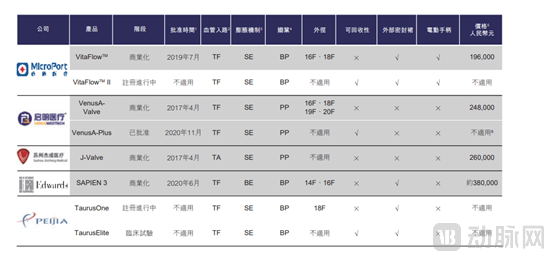
Major TAVR Products in China
From a strategic perspective, Edwards Lifesciences is optimistic about the Chinese market. Liu Bei, Director of Surgical Structural Heart Valve Disease Therapy Business at Edwards China, shared this story: During the product development process at Edwards, engineers from the R&D department would specifically fly to China to seek opinions from senior Chinese experts. Even during the pandemic, R&D engineers maintained online communication with clinical experts in China.
In its commercialization efforts, Edwards Lifesciences has actively leveraged its expertise in the valve sector to promote the broader adoption of transcatheter aortic valve replacement (TAVR) procedures in China, thereby increasing their penetration rate.
In June 2020, Edwards launched its SAPIEN 3 transcatheter aortic valve system in China. Although multiple TAVR products have been marketed domestically, Edwards’ SAPIEN 3 still offers various differentiated advantages.
First, regarding the delivery system, it differs from the TAVR products of other domestic companies.SAPIEN 3 is the only balloon-expandable transcatheter aortic valve product.
The key challenge in TAVR procedures is positioning, as physicians must securely anchor the transcatheter valve within the patient’s heart. Rather than relying on surgical sutures, anchoring depends on the radial support force generated by the valve’s own structure to secure it around the annulus and prevent displacement by blood flow. Insufficient radial support may fail to achieve a tight seal with the annulus, easily leading to serious postoperative complications such as paravalvular leak. Balloon-expandable valves provide greater radial support, enabling physicians to anchor them more safely and securely within the patient’s heart. Furthermore, Edwards’ SAPIEN 3 delivery system features controllable and adjustable curvature, offering superior cross-valve capability.
Tianli Tan, Business Director of Edwards Lifesciences China’s transcatheter aortic valve therapy division, revealed: “Since entering the Chinese market, SAPIEN 3 has been used in nearly 200 procedures in China, achieving an immediate procedural success rate of >99%. Our rate of major vascular complications was 0. Meanwhile, post-procedural coronary access remained completely unobstructed, the incidence of disabling stroke was 0, and only four cases required permanent pacemaker implantation. Furthermore, after valve deployment in the aorta, the incidence of moderate-to-severe paravalvular leak with our product was only 0.5%, approaching zero. These performance metrics represent very high standards within the industry.”
In China, due to the relatively short history of TAVR procedures, a major constraint on the current scale-up of TAVR surgeries is the shortage of hospitals qualified to perform them.
In 2019, there were 604 hospitals in China qualified to perform TAVR procedures, but only 156 hospitals actually performed TAVR. Fewer than 50 hospitals consistently performed TAVR, with at least one procedure per month.
How to Increase the Penetration Rate of TAVR Procedures: While Introducing Its Products to China, Edwards Lifesciences Also Places Great Emphasis on Standardized and Regulated Procedural Training.
Edwards’ TAVR has been on the U.S. market for over a decade. Edwards insists on providing in-procedure support for every case to ensure surgical success and benefit patients. In China, where Edwards’ TAVR products are used in clinical procedures, the company has invited three European experts to be based in China on a long-term basis to guide Chinese operators and help medical teams better master TAVR procedures. Looking ahead, Edwards is also exploring the establishment of a TAVR training system in collaboration with domestic heart centers.
In the future, Edwards Lifesciences will continue to expand its presence in China’s structural heart disease market. It is reported that the company’s mitral valve repair product has already entered clinical trials in China and is expected to be commercialized and launched within the next three to five years.
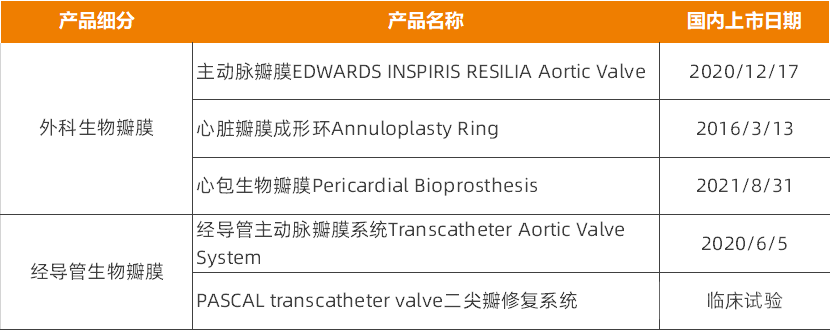
Edwards Lifesciences' Major Valve Products in China
In addition to transcatheter heart valves, Edwards Lifesciences continues to innovate in surgical implantable valves and critical care, bringing revolutionary products to the market.
In the field of surgical heart valves, Edwards has introduced the INSPIRIS RESILIA aortic valve, which offers enhanced durability, to the Chinese market. Examining the development patterns of the global healthcare industry, when an industry undergoes technological upgrades, a number of former market leaders often fall behind due to their failure to adequately embrace new technologies. However, Edwards Lifesciences has consistently remained an industry leader in both traditional surgical prosthetic heart valves and transcatheter valve therapies. This sustained leadership is underpinned by Edwards Lifesciences’ extensive technological expertise and accumulation in the field of heart valves.
One of the core criteria for evaluating prosthetic heart valves is valve durability. Mainstream bioprosthetic valve materials are categorized into bovine pericardium and porcine pericardium. In the field of surgical valves, extensive data have demonstrated that bovine pericardium offers superior durability compared to porcine pericardium. Furthermore, anti-calcification treatment of animal tissues directly determines their in vivo durability. The innovation of INSPIRIS RESILIA lies in its adoption of a novel anti-calcification technology.
Edwards’ third notable business segment is its critical care division. In the field of critical care, Edwards Lifesciences’ core products focus on critical care and advanced hemodynamic monitoring. These products primarily assist surgeons, anesthesiologists, and intensivists in making clinical decisions through hemodynamic monitoring.
A Review of Edwards Lifesciences’ Development in the Critical Care Sector in the Chinese Market. Initially, in 2007, Edwards launched its pulmonary artery catheter products in China, which are used for hemodynamic monitoring in critically ill patients. Currently, Edwards’ primary product in the domestic critical care market is the EV1000A clinical monitor. This high-end monitoring device can display intermittent/continuous hemodynamic measurements related to oxygenation parameters and the assessment of oxygen delivery and consumption balance. It can be used in conjunction with Edwards’ disposables to assist physicians in decision-making and enable early detection of intraoperative hypotension.
Intraoperative hypotension is prone to causing myocardial injury and acute kidney injury. Worldwide, more than 300 million patients undergo surgical procedures each year, with the incidence of intraoperative hypotension events reaching as high as 87%. Minimizing perioperative hypotensive events has long been a focus of attention and a significant challenge.
In 2021, Edwards Lifesciences unveiled the HemoSphere hemodynamic monitoring platform in China, which can revolutionarily predict the likelihood of impending hypotension in patients.
Historically, the primary approach to managing intraoperative hypotension has been early detection and intervention. Edwards Lifesciences has continuously upgraded its hemodynamic monitoring technologies from invasive to non-invasive methods. With the rapid advancement of artificial intelligence (AI) in medicine, machine learning techniques may enable earlier prediction of hypotension. The Critical Care division of Edwards Lifesciences is among the few worldwide to hold AI licensure for its critical care products.
An analysis of Edwards Lifesciences’ business reveals that, despite its streamlined portfolio, the company has achieved product excellence within its niche. Continuous innovation has enabled Edwards Lifesciences to maintain its leadership in the two specialized fields of structural heart disease and critical care.
How will Edwards develop in the future? Can a specialized strategy sustain Edwards’ rapid growth in the years to come?
In Edwards’ annual report, Edwards CEO Michael Mussallem emphasized that while many other medical technology companies have diversified, we remain focused. This is because we know there are still many patients with structural heart disease and critically ill patients in urgent need of life-saving interventions.
Currently, the global heart valve sector is crowded with participants, particularly in the transcatheter valve space, where numerous companies of varying sizes are active. The key to Edwards Lifesciences’ sustained competitive advantage lies in its diversified product portfolio in the field of structural heart disease.Interventional therapies in the mitral and tricuspid valve fields will become new growth drivers for Edwards Lifesciences.
In the field of mitral valve disorders, mitral regurgitation is a common condition. The global market size for transcatheter mitral valve interventions is projected to reach USD 17.4 billion (or RMB 117 billion) by 2030, ultimately growing to three to four times the size of the TAVR market. The global market for transcatheter tricuspid valve implantation products is expected to grow from USD 210 million in 2020 to USD 11.6 billion in 2030, while the combined Chinese and global markets for transcatheter tricuspid valve intervention products are anticipated to reach RMB 26.4 billion by 2030.
In the field of transcatheter aortic valve replacement, Edwards’ primary competitors are Medtronic and Abbott; in the areas of transcatheter mitral and tricuspid valves, its main competitor is Abbott; in surgical structural heart disease, key competitors include Medtronic, Abbott, and CryoLife. In the critical care sector, Edwards Lifesciences’ main competitors include ICU Medical, Pulsion Medical Systems, and Baxter International.
How to Maintain a Competitive Edge in a Fiercely Competitive Market? Edwards Continues to Increase R&D Investment to Consolidate Its Dominant Position in the Valve Market. In 2020, Edwards intensified its R&D efforts, with R&D expenditures accounting for 20% of its revenue. The primary focus of this investment is on transcatheter therapies for valvular heart disease. In the TAVR field, Edwards is currently dedicated to developing new products to further improve and simplify transcatheter aortic valve replacement (TAVR) procedures, as well as developing a pulmonary platform to expand treatment options for patients with congenital heart disease. Edwards Lifesciences has positioned two products in the interventional treatment space for mitral and tricuspid valves: the PASCAL edge-to-edge repair system and the Cardioband direct annuloplasty system. Both products have received CE marking and are currently undergoing clinical trials in the United States and China.
In addition to its internally developed projects, Edwards has also made external investments in several independent companies developing minimally invasive therapies for structural heart disease.
In the critical care product line, Edwards R&D is developing next-generation non-invasive and minimally invasive hemodynamic monitoring systems and monitoring platforms,
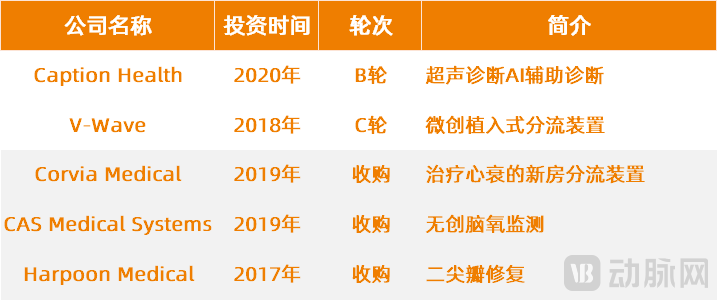
Edwards Lifesciences’ Recent Overseas Investments and Mergers & Acquisitions
As structural heart disease assumes an increasingly significant share of the cardiovascular market, Edwards Lifesciences, an industry leader dedicated to this field, is entering a period of substantial rewards. The development trajectory of Edwards Lifesciences suggests that in an era characterized by intense competition, continuous diversification serves as a survival strategy, while extreme focus also constitutes a formidable strength.