

Fabo Laser Files for IPO: Pioneering Thulium Laser-Based Integrated Surgical Solutions

FIB Medical lasers
Developer, Manufacturer, and Distributor of Surgical Equipment
According to the 2019 Edition of the Chinese Guidelines for the Diagnosis and Treatment of Urological Andrological Diseases (hereinafter referred to as the “Guidelines”), benign prostatic hyperplasia (BPH) is the most common disease causing voiding dysfunction in middle-aged and elderly men, manifesting as symptoms such as urinary frequency, urgency, incontinence, nocturia, dysuria, and incomplete bladder emptying.
Meanwhile, the Guidelines state that the histological incidence of benign prostatic hyperplasia (BPH) increases with age, generally occurring after the age of 40. The prevalence of BPH exceeds 50% in men aged 60 and reaches as high as 83% by age 80. Based on these figures, it is estimated that there are tens of millions of BPH patients in China.Moreover, with the aging of the population, this patient cohort is gradually increasing and will become a significant challenge for clinical urology practice in China in the coming decades.
Surgery is a major treatment modality for benign prostatic hyperplasia (BPH), primarily including transurethral resection of the prostate (TURP), transurethral incision of the prostate (TUIP), and open prostatectomy. TURP is considered the “gold standard” for BPH treatment. However, TURP has a relatively steep learning curve and may lead to complications such as intraoperative and postoperative hemorrhage and transurethral resection syndrome. In particular, patients with cardiac disease or coagulation disorders are at increased risk of significant blood loss.
With the advancement of new technologies, laser therapy has begun to demonstrate advantages in this field. Laser surgery is characterized by minimal intraoperative blood loss, making it suitable for patients with high-risk factors such as advanced age, anemia, and impaired function of vital organs.
FIB is a developer of laser medical devices, founded in 2013 and headquartered in Hangzhou. The company is primarily engaged in the research, development, and manufacturing of all-fiber laser surgical treatment systems operating in the 2-micron wavelength band.
In 2020, FIB’s all-fiber thulium laser treatment system obtained the Class III medical device registration certificate from the National Medical Products Administration (NMPA). A search on the NMPA’s official website revealed that only two companies have received approval for thulium laser products indicated for the treatment of benign prostatic hyperplasia (BPH), with FIB being one of them. Based on this information, VCBeat conducted an interview with FIB.
In the 1990s, lasers began to be applied in the treatment of benign prostatic hyperplasia (BPH). Since then, exploration into the use of laser technology for BPH treatment has been ongoing. With technological advancements, a more comprehensive understanding of the performance characteristics of various lasers has been achieved, leading to an expansion in their clinical applications.For any laser application, the core lies in its physical properties, such as wavelength and depth of thermal injury.
In recent years, thulium laser has become a focal point in urology, particularly in the surgical treatment of benign prostatic hyperplasia (BPH). Because the wavelength of thulium laser is close to the 1.94 μm absorption peak of water in tissues, its thermal energy is primarily absorbed by water molecules within the tissue, resulting in a penetration depth of only approximately 0.2 mm.
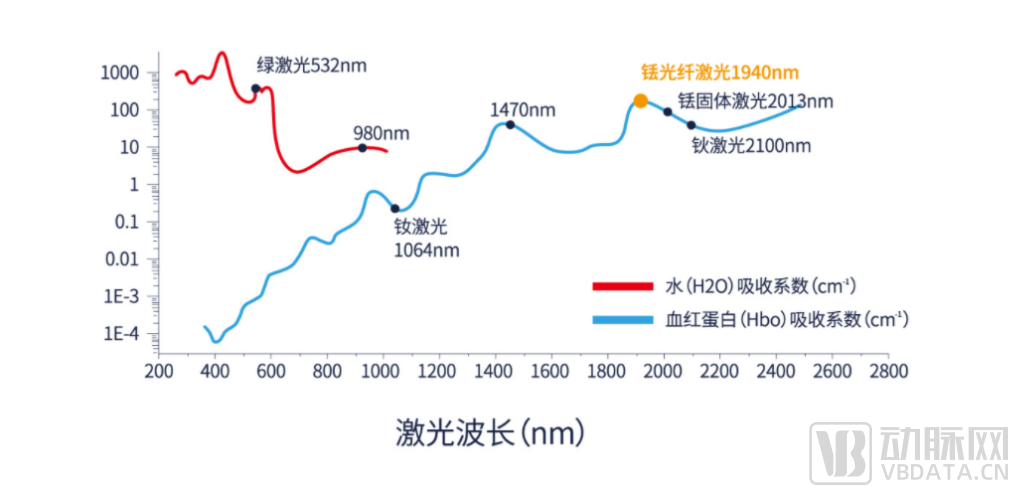
Source: FIB Laser
Therefore,The main advantages of thulium laser surgery are:First, it offers highly efficient and precise cutting, minimizing damage to surrounding tissues, while providing excellent intraoperative hemostasis and reducing postoperative complications such as infection. Second, the thulium laser features both continuous and pulsed wave modes, which can be switched according to clinical needs. The continuous mode is used for soft tissue cutting, while the pulsed mode is employed for ablation and lithotripsy.
Thulium laser, as a medical laser technology, was approved by the FDA for clinical use in 2004 and received CE marking in the European Union in the same year; it was approved for entry into the Chinese market in 2005. Thulium laser therapy for benign prostatic hyperplasia (BPH) has been increasingly accepted by physicians. For instance, Xia Shujie, Deputy President of Shanghai General Hospital affiliated with Shanghai Jiao Tong University and Director of the Clinical Medical Center for Urology, along with his colleagues, first proposed the thulium laser “orange-peeling” enucleation technique in 2005, demonstrating the safety and efficacy of thulium laser treatment for BPH. The First Affiliated Hospital of the Chinese PLA General HospitalDeputy Director of Urology, Yang Yong, et al. applied transurethral 2-μm laser fractional vaporization and resection for the treatment of BPH.
In addition to its application in the treatment of benign prostatic hyperplasia (BPH), the use of thulium laser for upper urinary tract lithotripsy has also gained recognition. For instance, thulium laser vaporization lithotripsy pulverizes stones into fine powder, facilitating easy irrigation and resulting in a shorter stone clearance time. However, thulium laser has limitations, as its lithotripsy efficiency for hard stones remains to be improved.
Thulium lasers have long been a powerful tool in the hands of Chinese urologists for treating BPH; however, the development of domestically produced thulium laser treatment systems and related products has remained relatively slow.
FIB’s all-fiber thulium laser therapeutic system—Laseheal—is designed for use with endoscopes in soft-tissue procedures such as surgery for benign prostatic hyperplasia (BPH) and resection of urinary tract tumors, enabling cutting, ablation, and hemostasis during the procedure.This product was approved in 2020, becoming the second product from a domestic manufacturer to obtain a registration certificate. Meanwhile, it became the first product selected as a key area of equipment manufacturing industry in Zhejiang Province.
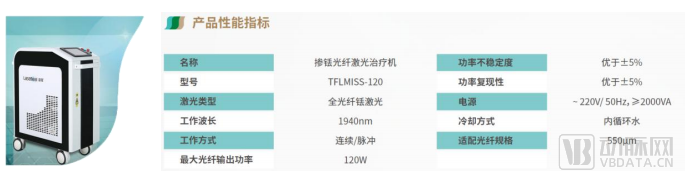
Source: FIB
FIB's all-fiber thulium laser offers the following advantages:
In terms of beam quality, near-single-mode laser output can be achieved. Combined with FIB’s laser fiber coupling technology, it enables 120 W laser output through a 200 µm fiber.
Utilizing semiconductor pumping, with a lifespan of up to 100,000 hours, eliminating the need for frequent pump source replacement.
High wall-plug efficiency reduces heat generation in optical fibers, thereby lowering the thermal load on cooling systems and enabling the development of higher-power products.
Currently, FIB Laser has established collaborations with dozens of hospitals, including Zhejiang Provincial People's Hospital, Sir Run Run Shaw Hospital Affiliated to Zhejiang University, West China Hospital of Sichuan University, Jiangsu Province Hospital, Hunan Provincial People's Hospital, Shanghai General Hospital, Qingdao Municipal Hospital in Shandong Province, and Shangqiu Municipal Hospital in Henan Province.
FIB’s R&D of thulium laser products does not stop here. FIB is developing its next-generation thulium laser product—the super-pulsed thulium laser surgical system. FIB informed VCBeat that the next-generation device will feature enhanced performance in power and other aspects, creating a versatile, all-in-one system capable of both soft-tissue resection and lithotripsy. The prototype has already been completed and is poised to enter the testing phase.
Furthermore, driven by the superior soft-tissue surgical outcomes afforded by the unique physical properties of thulium lasers, an increasing number of surgeons are investigating and exploring their applications in various surgical procedures. For instance, the Department of Thoracic Surgery at Xuanwu Hospital of Capital Medical University has performed thoracoscopic thulium laser wedge resections of the lung, achieving favorable outcomes in the resection of pulmonary nodules.
FIB is also collaborating with clinical departments at several renowned hospitals in China on thulium laser surgeries. While bringing technological benefits to a broad patient population, thulium laser technology has demonstrated its significant application prospects and commercial value.
Long before the establishment of FIB, its core team members had already forged strong ties with laser technology. Consequently, at its inception, FIB was a purely technical team composed of experts from prestigious institutions such as the Chinese Academy of Sciences, the Shanghai Institute of Optics and Fine Mechanics, the University of Shanghai for Science and Technology, and Zhejiang University.
During the research and development of laser surgical equipment, FIB recognized that the product ecosystem complementary to laser devices should not be overlooked. Guided by this insight, the company structured its product architecture and strategic layout, embarking on a challenging path. FIB’s product portfolio extends beyond laser surgical systems to include associated peripheral surgical instruments.
Its peripheral product portfolio includes disposable flexible ureteroscopes and robotic-assisted systems for flexible ureteroscopy.More specifically, it is a tripartite layout comprising laser surgical equipment, flexible ureteroscopes, and surgical assistant robotic arms.
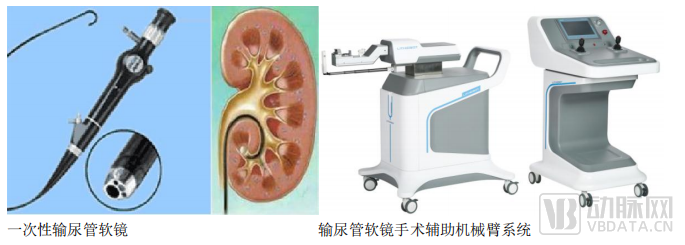
Source: FIB
Disposable Flexible Ureteroscope Combined with Thulium Laser: Focusing on Dusting Lithotripsy in the Upper Urinary Tract.One of the key features of this flexible ureteroscope is its single-use design. FIB Laser disclosed that the expected price of this product under development will be one-tenth that of currently available imported reusable flexible ureteroscopes, offering significant cost-control advantages. Another notable feature is its integration of lithotripsy, stone extraction, and intrarenal pressure monitoring into a single system. R&D progress is advancing steadily, with regulatory registration expected to be completed by 2022.
Flexible Ureteroscope Surgical Robotic Arm System, currently undergoing registration testing. FIB stated that this product under development focuses on certain essential dimensions in surgical procedures, targets the low-price segment of the market, and can fill the gap for robotic products in the low-price range.
Utilizing thulium laser equipment as the energy platform, flexible endoscopes as the delivery channel and therapeutic medium, and surgical assistance robotic arms as the manipulation mechanism, this constitutes FIB’s preliminary integrated tripartite surgical solution, which also defines the company’s overall business strategic direction.
Overall, the development prospects for laser medical devices are broad. In addition to the substantial patient demand in the urology sector, domestic manufacturers of laser medical devices will experience rapid growth under favorable policy conditions, driven by the trend toward substituting imported medical equipment with domestically produced alternatives. For instance, the recently issued “Guidance Standards for Reviewing Government Procurement of Imported Products,” jointly released by the Ministry of Finance and the Ministry of Industry and Information Technology, specifies a 100% procurement recommendation ratio for domestic products in the case of thulium laser treatment systems.
FIB stated that multiple companies have successively entered the thulium laser surgical equipment industry. As an early entrant, FIB is also actively promoting its products and brand,Recently, the company is preparing for financing to promote the expansion and upgrade of its R&D and marketing efforts.