

Targeted Protein Degradation Sector Heats Up as Global and Domestic Capital Accelerates Investment
Targeted Protein Degradation Therapy (Targeted Protein Degradation (TPD) is an emerging small-molecule drug discovery technology designed to combat diseases by targeting pathogenic proteins for degradation. With the disclosure of positive preclinical data from both in vitro and in vivo studies, along with demonstrated safety and efficacy profiles of lead candidates from top-tier companies in clinical trials, TPD has shown tremendous potential in treating cancer, metabolic disorders, and inflammatory diseases, thereby attracting increasing attention from the industry.
Structurally, protein-degrading drugs are bispecific small molecules composed of three parts: an E3 ubiquitin ligase-specific binding ligand (E3 ligase binding ligand), a target protein-specific binding ligand (POI ligand), and a linker connecting the two. These drugs tag target proteins with ubiquitin, enabling recognition by the proteasome and subsequent degradation, thereby effectively reducing target protein levels rather than merely inhibiting their function.
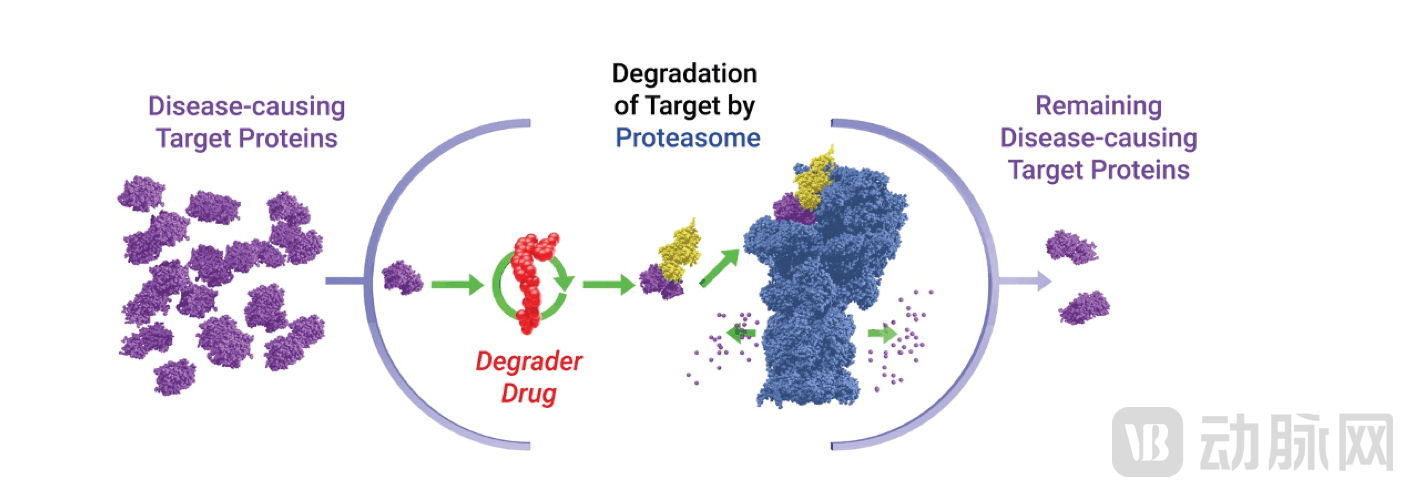
Like small-molecule drugs, protein degraders exhibit favorable tissue distribution and targeting capabilities. Their unique event-driven pharmacological properties mean that molecular design does not require high-affinity binding pockets; binding sites with moderate affinity are sufficient to achieve targeted degradation. This enables many traditionally “undruggable” proteins—which constitute 85% of all human proteins—to become new drug targets. Meanwhile, the catalytic nature of protein degraders can continuously induce rapid and efficient degradation of disease-causing proteins, significantly raising the barrier against the development of target-mediated drug resistance. Although targeted protein degradation (TPD) offers the aforementioned advantages and considerable potential, compound design is by no means straightforward. Challenges abound in optimizing drug-like properties, including high molecular weight, non-compliance with the traditional Rule of Five, and difficulties in improving oral bioavailability and pharmacokinetics (PK). However, as stable breakthroughs in oral bioavailability are gradually being achieved, protein degraders have emerged at the forefront of innovation in small-molecule therapeutics.
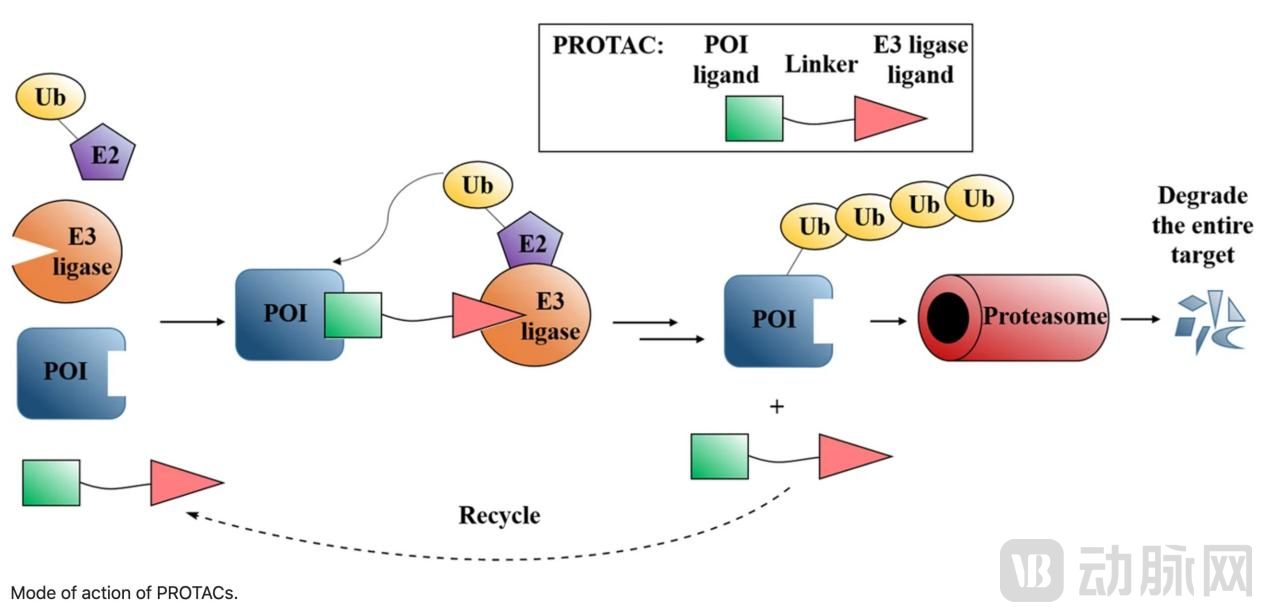
Mechanism of Action of PROTACs
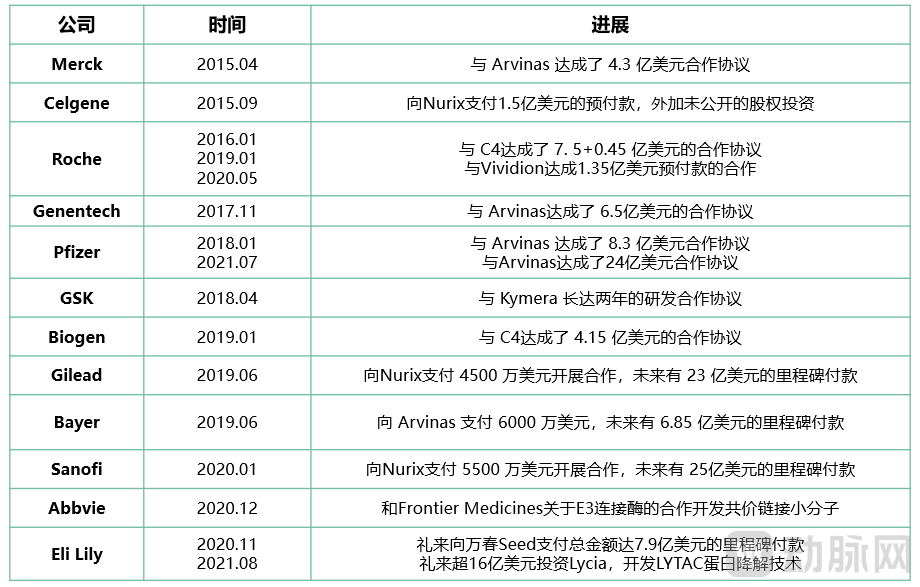
The surge of interest in the protein degradation field began in late 2019 with the disclosure of safety and pharmacokinetic (PK) data for ARV-110 by industry leader Arvinas, which significantly bolstered confidence in this novel therapeutic modality. In 2020, the successive public listings of pioneering protein degradation drug developers—Nurix, Kymera, and C4 Therapeutics—further fueled momentum. This trend reached its peak by the end of 2020, when Arvinas disclosed clinical efficacy data for ARV-471. According to incomplete statistics, nearly $5 billion in primary and secondary market investments had flowed into biotechnology companies in the protein degradation space by July 2021. This figure excludes the extensive collaborations between major international pharmaceutical companies and leading targeted protein degradation (TPD) biotech firms. The scale, depth, and financial magnitude of these partnerships underscore the high expectations that big pharma holds for this sector, even hinting at concerns among major pharmaceutical companies about missing out on a key future area of drug development.
China’s protein degradation sector is closely keeping pace with international developments, ushering in a period of explosive growth. A diverse landscape has emerged, characterized by strategic initiatives from established pharmaceutical companies and the founding of emerging biotechnology firms, including Cullgen, Kintor Pharmaceutical, Haisco Pharmaceutical, BeiGene, Jiangsu Hengrui Medicine, HaiChuang Pharmaceuticals, Haihe Biopharma, Lintai Biopharma, Hejing Medicine, Biaoxin Biology, InnoCare Pharma, Wuyuan Biologics, Meizhi Pharma, Linko Therapeutics, Jiaxing Youbo, Fendi Tech, Duoyu Biologics, Tongyuan Kang, Vanchure Seed, Rannuo Biologics, and Kangpu Biologics. Notably, Kintor Pharmaceutical’s AR protein degrader, Haisco Pharmaceutical’s BTK protein degrader, and BeiGene’s BTK protein degrader have all entered Phase I clinical trials. The rapid progress in China’s protein degradation field suggests a strong potential to overtake competitors on the curve.
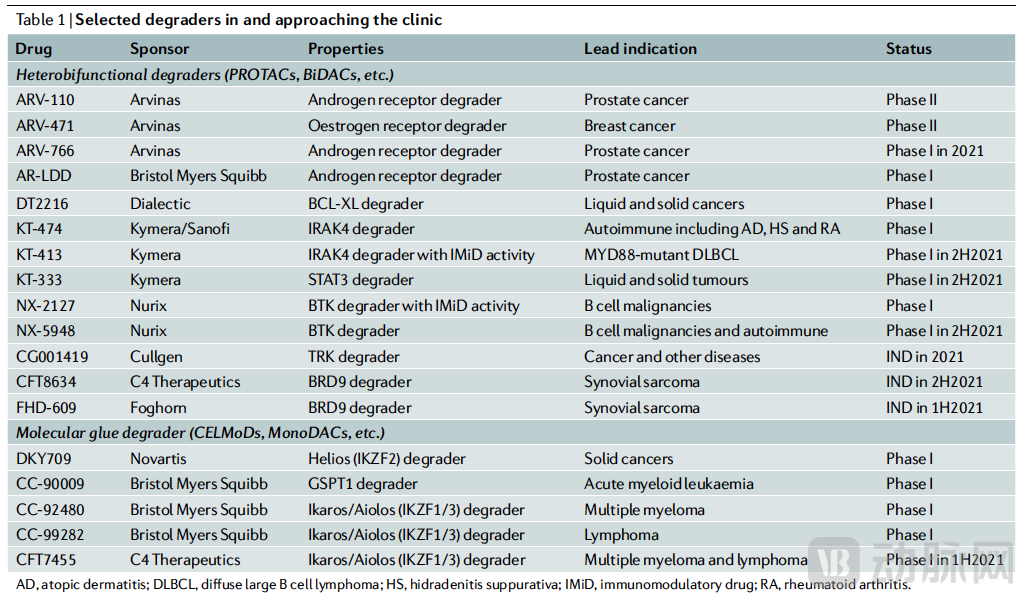
According to incomplete statistics, there are currently more than 60 R&D pipelines based on PROTAC technology worldwide. Among them, Arvinas’s AR-targeting ARV-110 for the treatment of prostate cancer and ER-targeting ARV-471 for the treatment of breast cancer have both entered Phase II clinical trials. Meanwhile, Nurix’s BTK-targeting NX-2127, Kymera’s IRAK4-targeting KT-474, C4 Therapeutics’ IKZF1/3-targeting CFT7455, and the TPD pipelines from the three aforementioned Chinese companies have also entered Phase I clinical trials. According to Nature Reviews Drug Discovery, it is expected that more than ten protein degraders will enter clinical trials by the end of 2021.
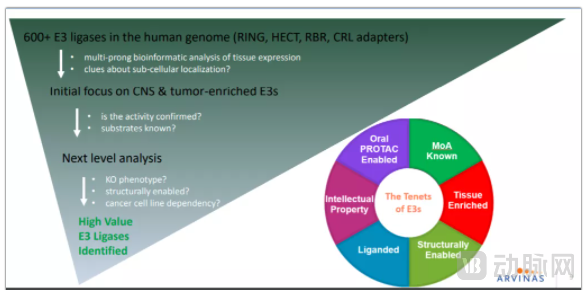
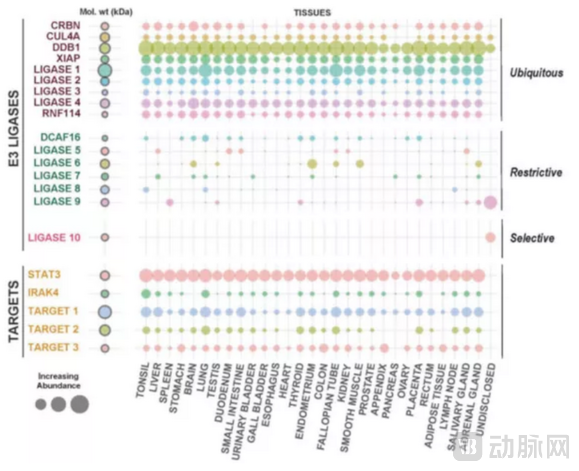
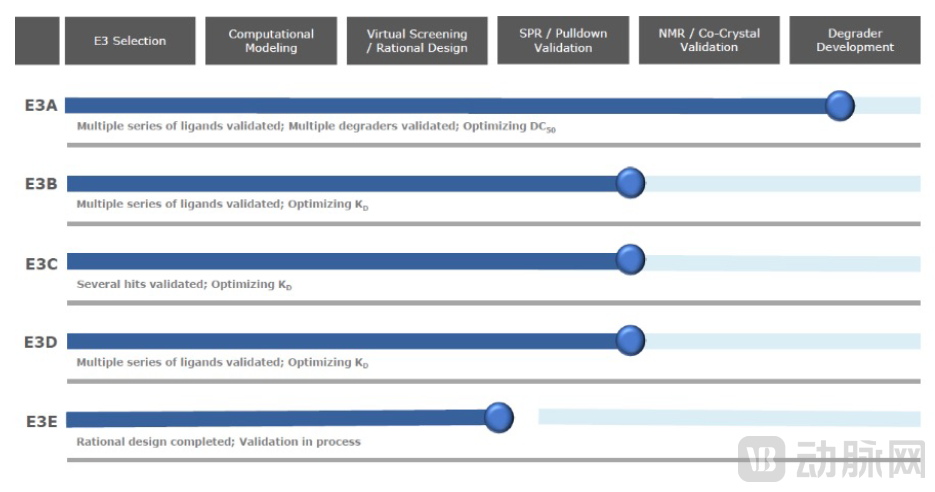
Beyond the development of structures targeting the POI end for different protein targets, the other end of protein degraders—the E3 ligase and its ligand structure—has garnered increasing attention. Demand and focus on novel E3 ligases and their ligands are rising within the industry. This trend is driven partly by the current scarcity of tools; among the more than 600 E3 ligases in the human body, only four, such as CRBN and VHL, are commonly used, alongside considerations related to patents. More importantly, there is a pressing need to avoid drug resistance and toxicity caused by non-specific binding of protein degraders. Research from scientists at AbbVie and Roche has separately demonstrated that long-term, high-dose treatment with targeted protein degradation (TPD) therapeutics can lead to resistance mutations at the E3 ligase end. Numerous studies also suggest that pharmaceutical developers must consider the potential unexpected toxicity arising from non-specific binding of E3 ligases and their ligands themselves. Arvinas and Kymera have already begun laying the groundwork for screening new E3 ligases (as shown below). In particular, Kymera’s E3 Ligase Whole-Body Atlas platform reflects the forward-thinking approach of leading companies. In China, Cullgen has established a solid and leading position in this area. Leveraging its internationally advanced, systematic platform for discovering new E3 ligases, built over many years, and its pipeline layout featuring multiple new E3 ligases and ligands, Cullgen has completed the screening of E3A, the first ligand for a novel E3 ligase, and achieved initial proof-of-concept for protein-degrading molecules.
Meanwhile, Cullgen is actively advancing the preclinical and clinical development of multiple candidate protein degraders. Leveraging its robust uSMITE™ (ubiquitin-mediated, Small Molecule-Induced Target Elimination technology) platform, Cullgen’s lead pipeline asset, the broad-spectrum anticancer novel drug CG001419, is approaching Investigational New Drug (IND) application submission.
With its robust first-in-class (FIC) pipeline and deeply integrated new E3 ligase discovery platform technology, Cullgen has emerged as a leading player in China’s protein degradation industry. The company is currently advancing a pre-IPO crossover financing round and plans to file for an initial public offering on the Nasdaq. In February of this year, Cullgen completed a $50 million Series B financing round, attracting five new investors, with the healthcare-focused specialized fund Baicao Capital serving as the lead investor.
Bencao Capital is also one of the investors in C4 Therapeutics, a top-tier international company in the field of protein degradation. It is reported that long before the protein degradation sector became highly sought-after, Bencao Capital, which focuses on global first-in-class (FIC) novel drugs, had already recognized the medical value of this new modality of drug development. Since making contact with C4 at a protein degradation academic conference in 2019, Bencao began conducting research and mapping out the protein degradation industry, and became an investor in C4 in 2020. This investment strategy—starting with top-tier overseas companies and then extending to leading domestic players—has drawn our attention, prompting us to engage in dedicated discussions with Bencao Capital.
Regarding the investment in Cullgen, Dr. Yan Shixiang, Partner at Bencao Capital, stated: “Our due diligence on C4, coupled with our investment and ongoing oversight as a board observer, has significantly deepened our understanding of the protein degradation industry. As a novel drug discovery paradigm, targeted protein degradation (TPD) compounds differ substantially from traditional small-molecule drugs in many aspects, including design and optimization, requiring considerable accumulation of time and experience. Cullgen is a domestic leader in this field. Its robust R&D engine empowers a rich pipeline of first-in-class candidates, complemented by an emerging new E3 ligase discovery platform that represents the future direction of protein degradation. We believe Cullgen will secure a prominent position in the global protein degradation landscape.”
As evidenced by the cases of C4 Therapeutics and Cullgen, Bencao Capital, leveraging its professional acumen and learning agility, had already keenly recognized the revolutionary pharmaceutical value of Targeted Protein Degradation (TPD) technology long before it became a hot trend. The firm closely monitored R&D developments both domestically and internationally and took the lead in investing in leading companies globally and in China.
Finally, we look forward to the TPD field living up to expectations, yielding more effective therapeutics to benefit human health.