

Tianjin's Grassroots Digital Health Community Praised at the 10th National Primary Healthcare Conference
On October 22, at the 10th National Conference on Primary Health Care held in Sanming, Fujian Province, Guo Yipeng, Director of the Primary Health Division of the Tianjin Municipal Health Commission, delivered a report titled “Innovatively Building the ‘Four Clouds’ Platform to Comprehensively Advance the Development of Digital Health Communities at the Primary Level.” The presentation provided a comprehensive overview of Tianjin’s practical achievements in leveraging digital empowerment to enhance primary healthcare service capabilities and improve the primary healthcare service system through the establishment of digital health communities. His remarks garnered widespread attention and acclaim from attending experts and scholars.
Against the backdrop of the national government’s vigorous promotion of the Sanming healthcare reform model and the accelerated advancement of coordinated reforms across medical services, health insurance, and pharmaceuticals, this conference is themed “Entering a New Track for High-Quality Development of Primary Healthcare.” It features in-depth discussions and exchanges on key issues such as the Sanming reform experience and primary healthcare management, coordination among medical services, health insurance, and pharmaceuticals alongside health insurance payment mechanisms, the “Quality Primary Care Initiative” and county-level medical consortia, as well as collaborative management of hypertension, hyperglycemia, and hyperlipidemia (“Three Highs”) and standardized diagnosis and treatment, thereby fostering high-quality development in primary healthcare.
Tianjin’s Grassroots Digital Health Consortium, honored as one of the “Top Ten New Initiatives in 2020 for Advancing Healthcare Reform and Serving Public Health,” represents a landmark innovative practice that draws on the experience of Sanming’s healthcare reform to promote high-quality development of primary care. Zhan Jifu, the chief architect of Sanming’s healthcare reform, has noted that the “Health Accountability System” established by Tianjin’s Grassroots Digital Health Consortium is highly aligned with the objectives of Sanming Healthcare Reform 3.0.
In his conference report, Guo Yipeng stated that Sanming is the birthplace and core area of China’s new healthcare reform, making it particularly significant to present Tianjin’s grassroots digital health consortium and its achievements in Sanming.According to Guo Yipeng, building on the requirements for comprehensively advancing tiered diagnosis and treatment, developing medical consortiums, and promoting the construction of close-knit medical communities, the Tianjin Municipal Health Commission has organized the development of a Digital Health Community for primary healthcare institutions. This initiative is centered around the “Strategic Cooperation Agreement on Digital Health” signed between the Tianjin Municipal People’s Government and WeDoctor Group. Led by Tianjin WeDoctor General Hospital (also known as Tianjin WeDoctor Internet Hospital), the project explores an operational model described as “anchoring at the grassroots level while reversing the traditional leadership structure,” thereby ushering in the 3.0 era of internet-based medical consortium development.

As previously reported, in January 2021, the Tianjin Municipal People’s Government and WeDoctor Group signed the “Strategic Cooperation Agreement on Digital Health,” reaching agreements on joint initiatives such as building a Digital Health Community. Tianjin became the first provincial-level administrative region in China to comprehensively launch digital health development. In April 2021, under the leadership of the Tianjin Municipal Health Commission, the Tianjin Grassroots Digital Health Community—a tightly integrated internet-based medical consortium led by Tianjin WeDoctor General Hospital and involving 267 primary healthcare institutions across the city—officially commenced its construction.
In his report at this conference, Guo Yipeng further elaborated that the Tianjin Grassroots Digital Health Community primarily focuses onPromote the informatization of primary healthcare, enhance the service capacity of primary medical institutions, strengthen the supply guarantee for essential medicines at the grassroots level, and improve the intensive allocation of medical and health resources.Four dimensions: digitally empowering grassroots healthcare through the implementation of the “Four Clouds” platforms—“Cloud Management,” “Cloud Services,” “Cloud Pharmacy,” and “Cloud Diagnostics.”
Promote the informatization of primary healthcare and build a "Cloud Management" platform.By establishing a city-level cloud Hospital Information System (HIS) and a cloud public health system, the Healthcare Community has promoted the interconnectivity between basic medical care and basic public health services. Currently, pilot primary healthcare institutions have completed the deployment of data management and operational platforms, initially equipped with statistical, aggregation, and visualization capabilities. This has achieved preliminary data interoperability among the basic medical care system, the basic public health system, and the family doctor contract signing system. Building on this foundation, the “Cloud Management” platform employs a combination of intelligent and manual review to ensure full traceability of the prescription audit process, further standardizing clinical medication practices and effectively reducing the misuse and waste of medical insurance funds.
Enhance the capacity of primary healthcare services and build a “Cloud Services” platform.By leveraging mobile smart devices such as cloud-based mobile clinic vehicles and portable cloud diagnosis kits, the Healthcare Community delivers services directly to residents’ homes, including family doctor contract signing, health risk screening, chronic disease follow-up, and medication guidance. This approach expands the service radius of family doctors and advances the development of a service system that brings healthcare “into communities” and “to doorsteps.” Meanwhile, the “Cloud Service” platform equips visiting medical staff with medical liability insurance, accident insurance, and body-worn video recorders to ensure their safety. Currently, 98 primary care institutions within the Healthcare Community have launched special-needs services. Adopting an “online application, offline service” model, these institutions provide 58 types of specialized home-visit services—such as venous blood collection, urinary catheterization, and insertion or replacement of nasogastric tubes—to individuals with mobility impairments and other special populations requiring home-based nursing care.
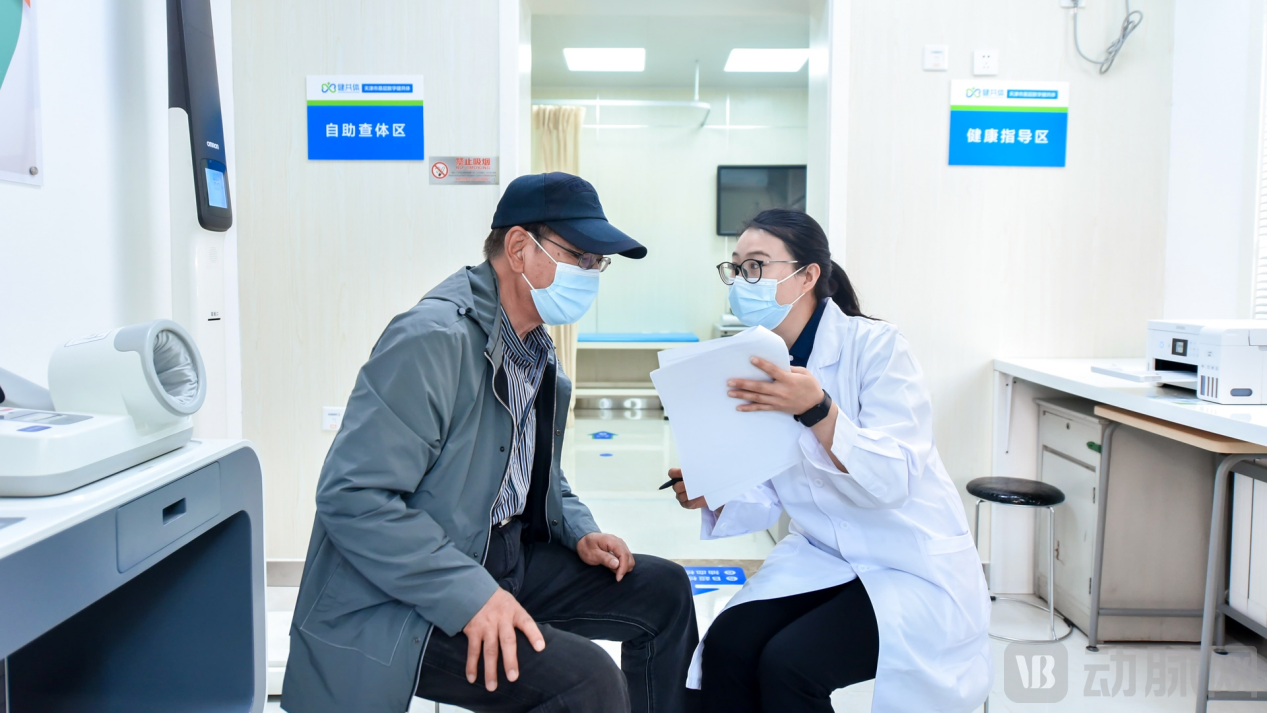
StrongStrengthen grassroots drug supply and build a "Cloud Pharmacy" platform.By introducing the “Internet + Pharmaceutical Supply” service model, the Health Community has established a city-wide unified “Cloud Pharmacy” platform. It addresses issues such as insufficient pharmaceutical supply in primary healthcare institutions by strengthening prescription review and regulation, facilitating prescription outflow, and leveraging modern logistics for drug delivery. Meanwhile, the “Cloud Pharmacy” platform has formed pharmaceutical care teams to provide residents with targeted pharmaceutical information services, medication guidance and follow-ups, personalized medication management, and personal health records, thereby meeting the diverse medication needs of community patients with chronic diseases. Currently, pilot primary healthcare institutions within the Health Community have achieved internal prescription circulation, intelligent prescription auditing, medical insurance settlement, and unified drug supply. To date, over 370,000 Cloud Pharmacy prescriptions have been issued, with free home delivery provided to 20,000 patients.
Optimize the intensive allocation of medical and health resources and build a “Cloud Examination” platform.By deploying cloud-based mobile clinics and portable diagnostic kits, the Health Consortium enables on-site physical examinations, including height and weight measurements, blood pressure monitoring, and routine blood and urine tests. Examination results are synchronously uploaded to the Basic Public Health Platform, thereby standardizing primary care diagnostic capabilities and achieving interoperability of laboratory information, consistent quality, and mutual recognition of results. Furthermore, the “Cloud Examination” platform is designing a comprehensive implementation strategy for cloud-based diagnostics. It will initiate pilot construction in selected districts, establish partnerships with third-party providers, and gradually extend coverage to all primary healthcare institutions in phases, thereby advancing the service model of “primary-level examination and upper-level diagnosis.”
“With the goal of enabling residents to access fair, equitable, and systematically continuous integrated health services—encompassing prevention, diagnosis, treatment, management, and wellness—close to their communities, Tianjin’s grassroots digital health consortium has played a significant role in improving the primary healthcare service system,” stated Guo Yipeng in his conference report. He noted that with the rapid implementation and refinement of the health consortium initiative, Tianjin has initially established a primary healthcare service system characterized by shared responsibility, unified management, standardized services, and shared benefits.
At the level of shared responsibility, with top-level design led by the Tianjin municipal and district governments to coordinate the planning and construction of the Health Community. Currently, all 267 primary healthcare institutions in the city have signed the "Tianjin Primary Digital Health Community Cooperation Agreement" and are gradually launching business operations for the Primary Digital Health Community. As the lead and pilot institution, Tianjin Weiyi General Hospital has clarified respective responsibilities, rights, and obligations through agreements, establishing a responsibility community with clear goals, well-defined rights and responsibilities, collaborative division of labor, and integrated online-offline services.
At the level of unified management, the operational monitoring dashboard for the Healthcare Community has been deployed, providing municipal and district-level Health Commissions in Tianjin, as well as primary healthcare institutions, with operational data from the grassroots digital Healthcare Community. It fully reflects the delivery of medical services, the implementation of health management, and residents’ health status, thereby offering an accurate basis for decision-making by competent authorities and establishing a management community.
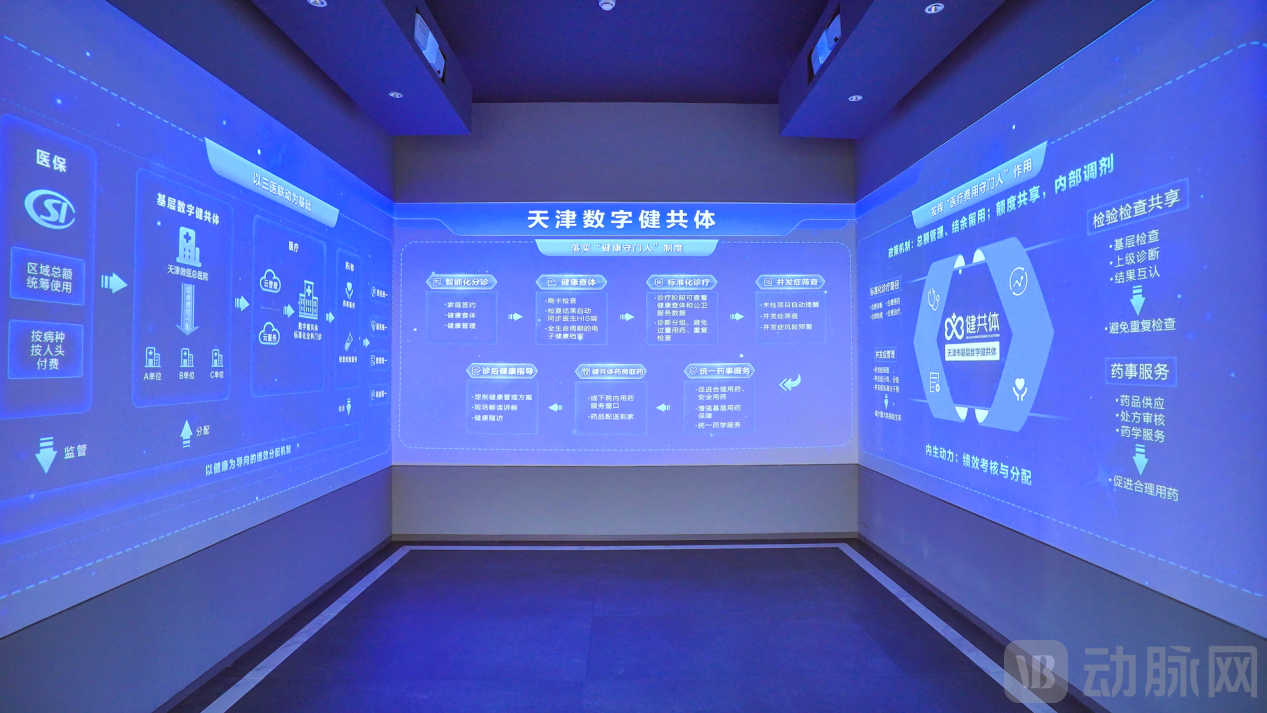
At the level of service homogeneity,Integrate health consortium-based health management services with standardized general practice outpatient clinics to establish standardized service workflows and content within the health consortium. By building a grassroots “cloud service” platform featuring centralized operations, unified management, division of responsibilities, and tiered service delivery, the system centrally processes residents’ requests for family doctor contracting, in-home specialized medical services, home hospital bed establishment, and “Internet + Nursing” services, thereby forming a service community.
At the level of benefit sharing,By promoting a performance-based incentive mechanism centered on health services, the Medical Community has established a performance assessment incentive fund pool that is decoupled from revenues generated by pharmaceuticals, medical consumables, and diagnostic tests and examinations. Adhering to the principle of “more pay for more work and better compensation for superior performance,” it uses health service behaviors and outcomes as the primary assessment indicators. The assessment results are linked to fund distribution, thereby mobilizing the enthusiasm of primary healthcare institutions and medical personnel to deliver services and fostering a community of shared responsibility.
On the foundation of a well-developed primary healthcare service system, Guo Yipeng introduced that Tianjin’s Primary Digital Health Consortium is exploring the establishment of standardized chronic disease specialty clinics at the primary care level. This initiative integrates the capitation-based bundled payment policy for special outpatient chronic diseases and encompasses improvements such as strengthening training systems, standardizing clinical pathways, upgrading software and hardware, and enhancing screening equipment capabilities. These measures aim to improve the capacity and efficiency of chronic disease management services at the primary care level, build a comprehensive, full-cycle standardized process system for chronic disease management, provide a closed-loop service covering “prevention, diagnosis, treatment, management, and health promotion” for patients with chronic diseases, and guide patients to return from large hospitals to primary care institutions.
In the next phase of work, refining the performance-based distribution mechanism will become a key focus in the development of the Healthcare Community. In his report, Guo Yipeng introduced that Tianjin’s Grassroots Digital Healthcare Community has been exploring and implementing an incentive and constraint mechanism of “retaining surpluses and providing no additional funding for deficits.” This approach aims to increase physicians’ transparent, legitimate income while encouraging them to proactively deliver substantive chronic disease management services.
Furthermore, the Health Community is accelerating the establishment of an internal distribution mechanism based on the family doctor responsibility system, centered on health management performance, and adhering to the principles of “more pay for more work” and “higher pay for better performance.” This mechanism involves forming a Performance Assessment and Distribution Management Committee within the Health Community, developing performance assessment and distribution plans, building an information system for assessment and distribution, steadily advancing standard workload assessments, and disbursing performance-based funds in accordance with the performance plan. These measures aim to motivate primary care medical staff and ultimately improve residents’ health indices.
When summarizing the practical achievements of Tianjin’s grassroots digital health consortium, Guo Yipeng stated,The Tianjin Grassroots Digital Health Community is a path of grassroots medical and health reform explored according to local conditions in Tianjin, based on the experience of the “Sanming Medical Reform.”Through more than a year of practice, Tianjin’s Primary Care Digital Health Consortium has gradually established a new type of integrated primary healthcare and public health service system, supported by digital informatics, aimed at full-lifecycle health management, and centered on a health accountability mechanism. Against the backdrop of the national vigorous promotion of the Sanming healthcare reform experience, the Tianjin Primary Care Digital Health Consortium will continue to develop and improve, making more valuable explorations to accelerate the “three-medical linkage” reform.