

Beijing Inclusion of Borcher's Cancer Early Detection Tests in Medical Insurance Marks a Milestone for National Screening Payment Reform
In recent years,Calls are growing louder to include early cancer screening and diagnostic products in national health insurance coverage.Healthcare security administrations across various regions are actively exploring the inclusion of cancer early screening and diagnosis programs in medical insurance coverage.
In 2020, Fujian Province included the Septin9 gene methylation test for colorectal cancer using blood samples in its medical insurance coverage, pioneering the inclusion of early screening and diagnosis of colorectal cancer in China's medical insurance system.
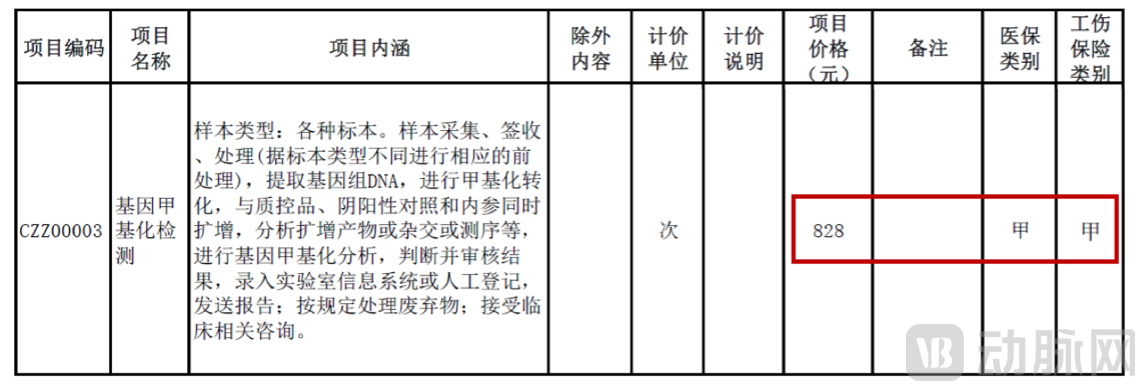
The Beijing Medical Insurance Bureau is also taking proactive steps. On October 23, the “Notice on Standardizing and Adjusting Prices for Medical Service Items Including Physical Therapy” issued by the Beijing Medical Insurance Bureau officially came into effect, formally including gene methylation testing in the Class A medical insurance service items and Class A work-related injury insurance items. The price is set at RMB 828, and insured individuals can have the full cost of the test reimbursed.
Biochain’s methylation-based early gastric cancer diagnostic product, SiBowei®and the early colorectal cancer diagnostic product, Siboding®All are included in the scope of Beijing's medical insurance coverage this time, andSiBowei®It is the only gastric cancer early diagnosis product covered by China's national medical insurance.
VCBeat interviewed Dr. Han Xiaoliang, Chief Technology Officer of Biochain (Beijing) Science-Technology Inc., on the positive impact of including Biochain’s early cancer diagnostic products in the national medical insurance scheme.
Inclusion in medical insurance is an effective way to increase the coverage and popularity of early screening and diagnosis for cancer.
Dr. Han Xiaoliang analyzed, “In our clinical practice over the past many years, although early cancer screening and diagnosis have been implemented in numerous hospitals and health examination centers, individuals at high risk for cancer and patients with early-stage cancer are generally asymptomatic. Consequently, their willingness to undergo out-of-pocket early cancer screening and diagnosis is low. Physicians are also concerned about imposing additional financial burdens on participants. This is one of the primary reasons for the low coverage and penetration rates of early cancer screening and diagnosis, leading to a situation where many cancer patients are diagnosed at advanced stages, resulting in very low cure rates.”
“Covering the costs of early cancer screening and diagnosis through medical insurance is the breakthrough to resolving the “last mile” challenge in implementing these services."Offering cancer early screening and diagnosis to participants free of charge or at a minimal cost not only increases their willingness to undergo proactive early detection, but also makes physicians more likely to recommend these programs, thereby significantly improving adherence to cancer early screening and diagnosis."
Drawing on overseas experience, the colorectal cancer early screening product Cologuard was included in Medicare in 2014, subsequently rapidly expanding its presence in the U.S. market. By the end of 2019, approximately 3.56 million Cologuard tests had been performed, significantly contributing to the reduction of colorectal cancer mortality in the United States. According to a report released by the American Cancer Society in 2021, the overall cancer mortality rate in the U.S. declined continuously by 31% from 1991 to 2018.
Furthermore, the high cost of treating advanced-stage cancer imposes a substantial economic burden. It is reported that medical expenses for early detection and timely treatment differ by more than tenfold compared to those for late-stage diagnosis and subsequent treatment.Early screening and diagnosis can effectively prevent cancer from progressing to advanced stages, reduce the high treatment costs incurred in later stages, and lower the overall expenditure on cancer-related medical insurance coverage.It has clear health economic implications.
Given the positive impact of early cancer screening and diagnosis on the Healthy China Strategy and medical insurance cost containment, it has become an inevitable trend to include early cancer screening and diagnostic products in the national medical insurance coverage.Biochain’s SiboWei, an early gastric cancer diagnostic product®and the early colorectal cancer diagnostic product SiboDing®Inclusion in the Beijing Municipal Medical Insurance Program is a concrete manifestation of this trend.
SiBoWei®It is the only gene methylation product approved in China for early gastric cancer detection and gastric cancer risk monitoring in high-risk populations.It enables convenient and rapid detection of early-stage gastric cancer. Clinical trials have confirmed that the product has a sensitivity of 61.76% and a specificity of 85.07% for gastric cancer detection, with a positive rate of 40% for Stage 0 gastric cancer (high-grade intraepithelial neoplasia). This performance is unattainable by traditional screening methods such as tumor markers. Furthermore, its detection rate for early-stage gastric cancer (Stage I and Stage II) is 5–10 times higher than that of conventional tumor markers.
Siboding®It is the first gene methylation detection product approved by the NMPA in China for the early detection of colorectal cancer.In 2015, it received the evaluation of "the first in China with significant clinical application value" from the National Medical Products Administration (NMPA). It is also the only colorectal cancer early diagnosis product that has simultaneously obtained CE, FDA, and NMPA certifications, and has been included in the cancer screening, diagnosis, and treatment guidelines of both China and the United States. Clinical indicators show that Siboding®With a specificity of 95.9% and an overall sensitivity of 76.6%, the test achieved sensitivities of 64.9% and 72.7% for stage I and stage II colorectal cancer, respectively, thereby addressing the limitations of traditional detection techniques in the early diagnosis of colorectal cancer.
VCBeat believes that in November 2020, Spoding®Becoming the first colorectal cancer early diagnosis product included in Fujian Province's medical insurance coverage nationwide, as well as SiBowei®Hesiboding®The inclusion of both products in the Beijing Medical Insurance scheme in 2021 sent a positive signal to the cancer early screening and diagnosis industry:Medical insurance is making significant strides toward disease prevention, with methylation detection programs—represented by early cancer screening and diagnosis—poised for nationwide inclusion in China’s medical insurance coverage.
Furthermore, Dr. Han Xiaoliang pointed out: “Given China’s vast territory and varying income levels, the rapid increase in the coverage of early cancer screening and diagnosis relies heavily on diversified payment models. Beyond basic medical insurance, collaborations between companies specializing in early cancer screening and diagnosis and commercial insurers are also developing rapidly.”"Medical insurance covers high-risk cancer populations, commercial insurance covers a larger volume of the general population, and a health-conscious segment opts for out-of-pocket testing; multiple payment models will coexist."
With the expansion of health insurance coverage, the commercial environment for early cancer screening and diagnosis will gradually mature and rapidly penetrate into primary care settings.
Dr. Han Xiaoliang believes: “The cancer early screening and diagnosis industry is in a transitional phase from R&D to commercialization."In this process, companies with strong technological capabilities and robust distribution channels that can offer first-to-market products are expected to stand out. Companies capable of integrating the development of both PCR and NGS technology platforms may gain a leading position."
Furthermore, Dr. Han Xiaoliang specifically pointed out: “Price and the level of automation determine whether cancer early screening and diagnosis products can be widely deployed,and key factors for its widespread adoption at the primary care level.”
Biochain has been deeply engaged in the field of gene methylation for over a decade, upholding the “Keeping More People Away from Cancer and Major Diseases” mission, targeting cancer types with high incidence rates in China and a lack of effective early diagnostic methods, has reservedEsophageal Cancer, Multiple Gastrointestinal Cancers, NGS Pan-Cancer Screeningmultiple pipelines; it is also actively promoting the application of automated testing equipment.
In the future, Biochain will continue to strengthen product R&D, enhance marketing and product adoption, and promote early detection, diagnosis, and intervention of cancer.