

Jinhao Medical, First Stock Listed on Beijing Stock Exchange, Surges 43% on Debut as Domestic Hearing Aid Sector Gains Momentum Amid Import Substitution
Hidden Champions Are Emerging in the Multi-Billion-Dollar, Essential-Needs Sector of Hearing Assistance Devices.
On October 25, Jinhao Medical, a domestic company specializing in hearing aids, was officially listed on the Select Tier of the Beijing Stock Exchange, with its share price surging by 43% on the first day. Jinhao Medical is a major Chinese exporter of hearing aids; in 2020, its export sales accounted for 12% of China’s total hearing aid export revenue. In 2020, Jinhao Medical’s hearing aid sales reached RMB 155 million.
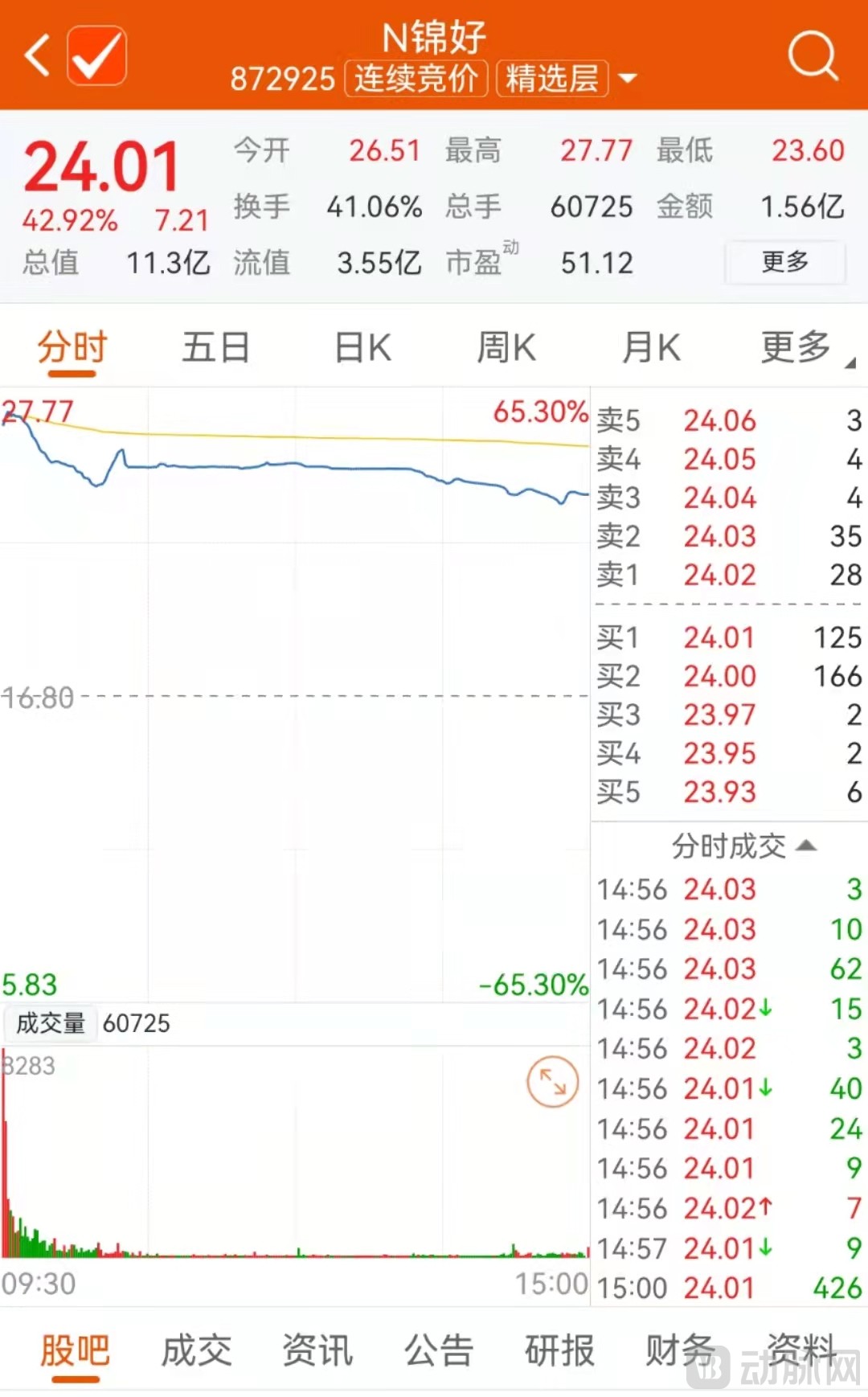
Although Jinhao Medical has attracted market attention by virtue of its status as the first listed company on the Beijing Stock Exchange, it has yet to break into the mid-to-high-end segment of the hearing aid industry. Analog hearing aids account for more than 87% of Jinhao Medical’s revenue, with sales driven primarily by overseas ODM business, and the gross profit margin for hearing aids stands at 48.46%.
The World Health Organization’s World Report on Hearing indicates that one in five people worldwide currently experiences hearing loss, affecting over 1.5 billion individuals globally. Among them, 430 million people have moderate or greater hearing loss in their better-hearing ear. By 2050, it is projected that one in four people will have hearing problems, with nearly 2.5 billion individuals suffering from some degree of hearing loss, at least 700 million of whom will require rehabilitation services. Notably, approximately 1.1 billion young people aged 12–35 years worldwide are at risk of irreversible hearing loss.
For a long time, the domestic high-end hearing assistance device market has been dominated by imported brands. The six major imported brands in the high-end hearing aid market account for over 90% of the market share; in the cochlear implant market, the Australian company Cochlear alone holds more than 70% of the domestic market share.
This essential-demand market has consistently attracted capital attention. The hearing aid sector has quietly seen several significant financing rounds, with bets placed by multiple top-tier investment firms. In September this year, Hanxing Venture Capital, an affiliate of Xiaomi, invested in the hearing aid company ZhiTing Technology, acquiring a 10% equity stake. In 2020, Nurotron, a cochlear implant manufacturer, also received strategic investments from Hillhouse Ventures and Superstring Fund.
Following discussions with industry insiders, VCBeat has found that the hearing aid market has long been dominated by imported products. Beyond technical factors, the consumer-oriented nature of hearing aids necessitates sales through professional fitting centers, a traditional channel also controlled by foreign companies.
Currently, the hearing aid market is being reshaped by multiple trends. In terms of market participants, the entry of consumer brands such as Apple and Bose has diminished the medical attributes of hearing aids; meanwhile, numerous domestic hearing aid brands are accelerating technological upgrades and increasing R&D investment in chips and algorithms. Regarding distribution channels, the rise of e-commerce is rewriting the industry landscape.
The Hearing Aid Market Is Reaching a Tipping Point.
The ears are vital sensory organs among the five senses, yet the market for hearing assistance devices has not grown to the hundred-billion-dollar scale seen in ophthalmology and dentistry.
An industry insider told VCBeat, “The hearing aid sector is not a highly profitable industry; 70% of the costs in the hearing aid industry are incurred in the distribution channel.”
He crunched the numbers: the primary sales channel for professional hearing aids is hearing aid dispensing clinics. The industry’s average annual revenue per store is approximately RMB 500,000. After deducting rent, labor, and procurement costs, a typical clinic nets only about RMB 100,000 in profit per year.
The fundamental reason limiting the growth of store sales revenue is that the penetration rate of hearing assistance devices in China remains at a very low level.
According to EuroTrak data, in 2018, the penetration rate of hearing aid products exceeded 20% in most European countries, with rates surpassing 40% in the United Kingdom, France, and other regions, whereas China’s hearing aid penetration rate remained below 5%.
Why Is the Hearing Aid Adoption Rate So Low in China? Li Peng, founder of Aiting Technology, a domestic hearing aid R&D and manufacturing company, told VCBeat that there are three main reasons:
First, there are differences in consumption concepts.The primary users of hearing aids are the elderly. The current elderly population in China was mostly born before the 1950s and differs from their counterparts in developed countries in terms of expectations for their standard of living. With the trend of population aging, individuals born in the 1960s will become the main consumer base for hearing aids, demonstrating higher acceptance and greater purchasing power.
Dr. Liang Qi, CEO of Ai'er Shidai, holds a Doctor of Audiology (AuD) degree from the United States. She stated, “Many older adults perceive hearing decline as a natural part of aging and do not prioritize it sufficiently. Coupled with limited access to medical care, this has caused many elderly individuals to miss the optimal intervention window for hearing aids.”
The second factor is the high cost of hearing aids.For consumers purchasing hearing aids in China, there are often only two options: either buy inexpensive analog hearing aids, which deliver poor performance. Industry insiders refer to these low-end analog devices as “drawer units,” as they are rarely used and fail to provide adequate hearing protection. In contrast, professional hearing aids cost an average of RMB 4,000–5,000 per unit, with imported models priced at over RMB 10,000 each.
Dr. Liang Qi also pointed out that the hearing aid product chain is relatively long, which results in higher unit prices. In Europe and the United States, commercial insurance and subsidies provide support, whereas China lacks a comprehensive subsidy policy.
The third factor is the low penetration rate of existing sales channels.Professional hearing aids are primarily sold through brick-and-mortar stores. Currently, there are approximately 110,000 hearing aid dispensing outlets across China, but they are mainly concentrated in first- and second-tier cities; many county-level cities in northern China do not even have a single hearing aid store. In terms of population distribution, 55% of China’s elderly population resides in rural areas, meaning the traditional retail model fails to achieve broad user coverage.
Among these factors, the higher price levels are correlated with a distribution model dominated by specialty stores. Approximately 70% of the cost of hearing aids is incurred in the circulation channel. Due to the low sales volume of the traditional single-store model, it cannot support price reductions. To maintain gross profit margins, the traditional single-store model also tends to prioritize the sale of imported hearing aid products with higher average transaction values.
Although the market sizes differ, the competitive landscape of China’s hearing aid market is not significantly different from that of the global market.
The global hearing aid market is highly monopolized, dominated by air-conduction hearing aids. The top five global hearing aid groups account for nearly 90% of the global market share and possess the most advanced core technologies in the industry. Leading brands primarily focus on high-end digital and custom-made models, emphasizing offline professional fitting and sales channels, with relatively high product prices.
In the hearing aid market, there are six major global brands: Siemens (Germany, now Signia), Phonak (Switzerland), GN Resound (Denmark), Oticon (Denmark), WIDEX (Denmark), and Starkey (United States). All six companies have entered the Chinese market. Currently, foreign brands account for more than 90% of the market share in China's hearing aid industry.
Meanwhile, numerous small and medium-sized enterprises (SMEs) collectively account for approximately 10% of the market share, primarily serving the mid-to-low-end segment with lower-priced products that can be purchased without in-person fitting. Given China’s large population base, the hearing aid market holds immense potential. As the domestic hearing aid industry gradually matures and develops, local Chinese manufacturers have steadily gained a certain market share and rapidly established a foothold in the international market.
Major domestic hearing aid brands include Jinhao Medical, Zhongde, and Muguang Hearing Aids, which primarily focus on analog devices, as well as companies specializing in professional hearing aids, such as Aiting Technology, New Sound Technology, and Otophonix.
In the past, under the stranglehold of traditional distribution channels, domestic brands struggled to break through and capture significant market share. However, the emergence of e-commerce has reshaped this market landscape, with hearing aid products experiencing explosive growth through online channels.
E-commerce once single-handedly boosted the market for analog hearing aids in China.
Hearing aids can be classified into analog hearing aids and digital hearing aids based on the method of amplifying signal processing.
Analog hearing aids consist of circuits made from semiconductor-based electronic components and employ analog circuitry to amplify analog signals. The price of domestically produced analog hearing aids ranges from 100 to 300 yuan.
Analog Hearing AidIts operating principle is to amplify sound, multiplying the gain regardless of the degree of hearing loss in the low or high frequencies. This approach can result in excessive amplification of sounds that are already audible, potentially causing secondary damage to hearing.
Digital Hearing AidsUtilizing a DSP (Digital Signal Processing) chip, the system performs frequency-band-specific processing on signals acquired by the microphone. Algorithms such as Wide Dynamic Range Compression (WDRC), noise reduction, and acoustic feedback suppression are employed to enhance the refined processing of audio signals, thereby achieving high-quality sound output.
According to national standards, the criterion for distinguishing between analog and digital hearing aids is whether chip-based signal processing is employed. However, industry insiders state that the core distinction lies in the presence of wide dynamic range compression (WDRC), which is the primary factor driving price differences. Other core features of digital hearing aids include acoustic feedback suppression and noise reduction. High-end hearing aids often incorporate additional functionalities such as directionality and beamforming.
Professional digital hearing aids can reasonably control and amplify sounds across different frequency bands, with the key distinction lying in how many bands are used for processing. Clearly, dividing the signal into 20 frequency bands allows for more refined processing and better sound quality than using only two bands. In hearing aid terminology, these frequency bands are referred to as “channels.” In the current market, each channel typically adds around RMB 1,000 to the price.
Ten years ago, the analog hearing aid market was in overall decline within the broader hearing aid market segmentation.The technical principle of analog hearing aids is to amplify all sounds, resulting in a poor user experience and short wearing duration. As they fail to provide hearing protection, the market share of analog devices continues to decline.
However, around 2017, as policies governing the e-commerce sales of medical devices were relaxed, sales of simulators began to experience explosive growth.The reasons behind the surge of hearing aid simulators in e-commerce channels are twofold: on one hand, these devices do not require offline fitting, making them more suitable for online sales; on the other hand, their price range of approximately RMB 100 to 200 presents a relatively low barrier to purchase.
An industry insider stated, “A number of manufacturers of arcade-style gaming machines were already struggling and actively seeking transformation; the emergence of e-commerce has arguably given these companies a new lease on life.”
The ramp-up in simulator volume can be viewed as a process of market education.
The development trajectory of China’s hearing aid industry is likely to begin with a first phase characterized by high-volume sales of low-priced products, dominated by analog devices or non-fitted digital hearing aids. As the majority of users gain experience with these devices, demand for quality will rise in the second phase, shifting the domestic hearing aid market back toward a focus on mid-to-high-end digital hearing aids.
In the United States, on October 19, 2021, the FDA also issued a landmark proposal requiring the establishment of a new over-the-counter (OTC) category for hearing aids. These products could be purchased through OTC channels, such as pharmacies, online platforms, and mail-order services, without the need for sales by authorized personnel. This move will help break monopolies, encourage more companies to participate in the hearing aid industry, improve access to hearing aid technology for millions of Americans, and reduce costs.
It is foreseeable that future sales channels for hearing aids will become more diversified, with fitting centers, pharmacies, and e-commerce platforms all having the potential to serve as distribution channels.
How Chinese Companies Are Responding to the New Market Wave: VCBeat Identifies Three Major Trends
First, mastering core technologies and reducing product costs is the general trend.As mentioned earlier, one of the primary factors constraining the size of China’s hearing aid market is price. Whoever can drive down prices will hold a competitive advantage, whether in traditional distribution channels or e-commerce platforms. The reason for historically high prices lies in the fact that the key components of hearing aids are controlled by multinational corporations. During the transition from analog to digital hearing aids, there are two core technological barriers: chips and algorithms. Most domestic companies in China need to purchase these two critical components from external suppliers.
Taking JinHao Medical as an example, its digital hearing aid chips are currently primarily sourced from external suppliers. In 2020, JinHao Medical increased its R&D investment in chips and algorithms. In August 2020, the company established a new controlled subsidiary, Hunan XinHaiLing Semiconductor Co., Ltd., which is mainly dedicated to the research of hearing aid chips and related algorithms. If the self-developed chips are successfully realized, the chip cost will be reduced to approximately one-third of the cost under the procurement model.
In terms of mastering chips and algorithms, Aiting Technology in China has achieved independent research and development of its own chips and algorithms, and has realized productization and commercialization.
The second major trend is that companies are beginning to adjust product designs according to market demand, focusing on e-commerce channels to seize the opportunities presented by consumption upgrades within these channels.Taking Aiting Technology as an example, the company is transforming professional digital hearing aids into products suitable for e-commerce sales. Aiting Technology has integrated audiometer functionality into its hearing aids. After purchasing a hearing aid, users can connect it to a mobile app, complete a hearing test through simple interactions to obtain an audiogram, and have the app perform automatic fitting based on the results. If the automatic fitting does not adequately meet the user’s needs, they can request one-click remote assistance for one-on-one fitting by a remote expert.
The third major trend is the push into overseas markets; amid fierce competition in the domestic market, some companies are also striking gold abroad.China’s hearing aid industry has seen continuous improvements in production capacity, with the sector overall maintaining a net export position. The volume of hearing aid exports from China reflects international demand for devices manufactured by domestic companies. According to Wind data, China’s hearing aid export volume grew from 10.014 million units in 2014 to 18.3123 million units in 2019, representing an increase of 82.87% and a compound annual growth rate (CAGR) of 12.83%. Overall, hearing aid exports have maintained a trend of relatively rapid growth.
Jinhao Medical’s products are primarily sold overseas, with business operations spanning more than 90 countries and regions across Europe, America, South America, the Middle East, and South Asia. Overseas sales revenue accounts for over 80% of its total main business revenue. In 2020, Jinhao Medical’s hearing aid export volume represented more than 12% of China’s total domestic hearing aid exports. Besides Jinhao Medical, another major Chinese hearing aid company focused on overseas sales is New Sound Technology.
Of course, it is worth mentioning that these three major trends are not isolated; domestic hearing aid companies often adopt a multi-pronged strategy.
Based on global trends in the hearing aid industry, how will hearing aid products continue to evolve in the future?
Current product innovations are primarily focused on two major directions, the first being algorithmic innovation.How to achieve better noise reduction, improved feedback suppression, higher speech recognition rates after compression, binaural-based speech processing algorithm synthesis, a higher number of channels for wide dynamic range compression, and algorithmic innovations such as directional synthesis based on varying signal-to-noise ratios in complex environments.
In this area, Sequoia Capital has invested overseas in Whisper, an AI-powered hearing aid company. Whisper leverages AI technology to process audio functions in hearing aids, enabling real-time adjustment of the sounds heard by the wearer in response to environmental changes.
The second major area of innovation is functional innovation,Including smartphone connectivity, with additional features derived from this integration, as well as integration with wearable devices—for example, incorporating heart rate and blood pressure monitoring into hearing aids.
In this direction, many consumer brands have begun to participate in the research and production of hearing aids, including Apple, BOSE and other brands. Their entry will not only dilute the stigma of wearing hearing aids, but also mean that the hearing aid industry will be more diversified.
In addition to hearing aids, the cochlear implant sector also warrants attention. According to the "Research Report on Market Operation Status and Investment Directions of China's Cochlear Implant Industry (2020-2025)" released by Huajing Industrial Research Institute, the market size of China's cochlear implant industry grew from RMB 2.2 billion in 2013 to RMB 5.5 billion in 2017, with a compound annual growth rate (CAGR) of 25.7%.
According to the most recent national sample survey on persons with disabilities, there are 27.8 million individuals with hearing disabilities in China, including 3 million patients with severe to profound hearing loss who require cochlear implantation. Literature reports indicate that the incidence of neonatal hearing impairment is 1–3 per 1,000 live births. Based on these figures, it is estimated that approximately 15,000 cochlear implant surgeries are performed annually in China.
Cochlear implants have a higher R&D threshold than hearing aids, resulting in significantly fewer domestic companies specializing in cochlear implants compared to those in the hearing aid sector. In this high-barrier market characterized by substantial depth and long-term growth potential, Nurotron, a Chinese manufacturer, has achieved a 20% market share.
China’s hearing aid industry is still in its nascent stage. It is foreseeable that over the next decade, as domestic hearing aid manufacturers master core technologies, establish brand recognition, and diversify sales channels, and as the substitution of imported cochlear implants with domestically produced alternatives accelerates, the hearing assistance device sector will enter a golden age of development.