

From Rose Pharmacy to Global Family Enterprise: B. Braun Reports €7.4 Billion in Sales and Files Prospectus

B.Braun
Professional Medical Equipment Manufacturer and Distributor
On an ordinary day in 1839, Julius Wilhelm Braun stepped into a pharmacy named Rose Pharmacy in the small town of Melsungen, Germany. He looked the pharmacy up and down, his mind racing with plans.
Shortly thereafter, 31-year-old Julius decisively purchased the pharmacy for 14,000 thalers. His goal was clear: to expand the small “Rose Pharmacy” as planned. Yet he could not have foreseen that more than 180 years later, this pharmacy would evolve into a global company—B.Braun.
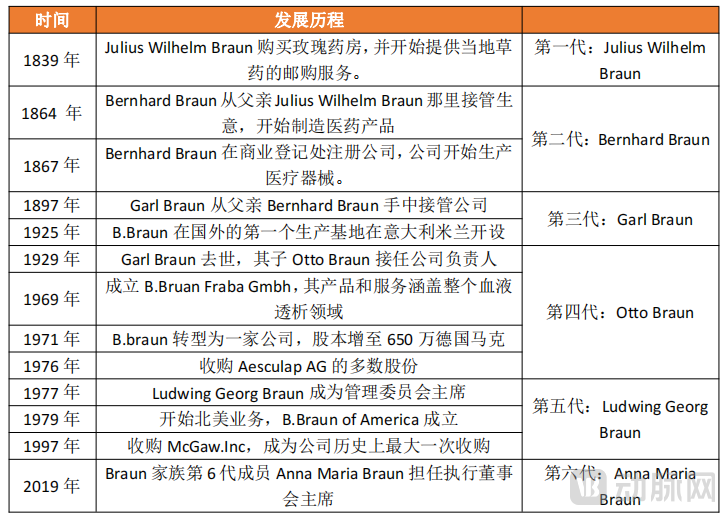
Passing the Torch: Six Generations of Management in the B.Braun Family
Julius, who acquired the pharmacy, expanded its operations by leveraging Rose Pharmacy’s specialty—herbal therapy—through the mail-order sale of herbs.
Inspired by his father’s business innovation and passion for the pharmacy trade, Julius’s eldest son, Bernhard Braun, followed in his footsteps and began to continuously expand the pharmacy’s scope of business. He targeted the production of migraine sticks for treating headaches, adhesive bandages for scraped knees, and related pharmaceuticals. In 1867, Bernhard registered the company with the Commercial Register and commenced the manufacturing of medical devices.
If Bernhard’s foray into the medical device sector was merely a tentative step, then his son, Carl Braun, embarked on the journey of large-scale production of medical products for B.Braun. Subsequently, under the leadership of two successive generations—Carl’s son, Otto Braun, and his grandson, Ludwig Georg Braun—the company continued to thrive and expand its global presence.
As of today, Anna Maria Braun, a sixth-generation member of the Braun family, has assumed leadership at B.Braun. As a family-owned enterprise with a history spanning over 180 years, B.Braun stated, “We will continue to operate as an independent, family-run company.”
Since the 19th century, spanning six generations, “innovation, efficiency, and sustainability” have been the three core values guiding B.Braun’s management and brand stewardship. Its mission is “to protect and improve the health of people worldwide by continuously developing high-quality innovative products and services for healthcare systems through constructive dialogue with customers and partners.”
Source: B.Braun Official Website
Under the family-owned holding structure, B. Braun SE serves as the operational parent company that directly or indirectly holds shares in B. Braun Melsungen AG, Aesculap AG, and B. Braun Avitum AG. The B. Braun Group comprises 290 fully consolidated companies and, through its subsidiaries and affiliated enterprises, operates in 64 countries and regions with a workforce of over 64,000 employees.
Stable operations, with sales maintaining at €7.4 billion
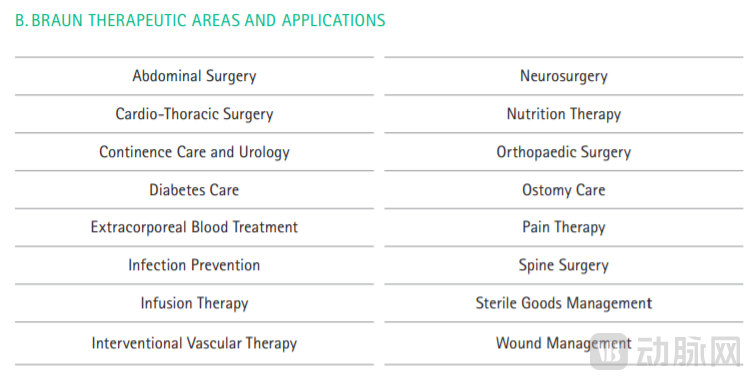
B.Braun is one of the world’s leading suppliers of medical devices, pharmaceutical products, and healthcare services. Currently, its products and services span 16 categories, including cardiothoracic surgery, incontinence care and urology, degenerative spinal conditions, diabetes care, extracorporeal blood processing, general surgery, infection prevention, infusion therapy, interventional vascular diagnostics and treatment, minimally invasive surgery, neurosurgery, nutritional therapy, joint replacement, pain management, ostomy care, and wound management.
Source: B.Braun 2020 Annual Report
In its medical product portfolio, B.Braun currently offers approximately 5,000 products. Of these, 95% are manufactured in-house, with the company’s main production facilities located in the European Union, Switzerland, the United States, Brazil, Vietnam, and Malaysia.
In healthcare delivery, B.Braun provides services and consulting to hospitals, kidney care centers, and other medical institutions through systematic solutions to optimize treatment processes; meanwhile, it also offers direct services to patients and their family members to help them prepare for home care.
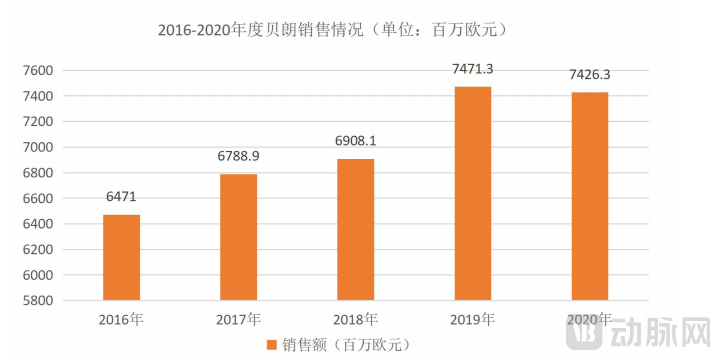
According to the 2020 annual report, B.Braun's sales revenue in 2020 was €7.4 billion.At constant exchange rates, sales grew by 2.2%; however, impacted by the depreciation of the US dollar and other currencies, sales figures in local currency terms declined by 0.6%. Nevertheless, given the impact of the pandemic, B.Braun considers the sales trend demonstrated in 2020 to be satisfactory, and these figures reflect the company’s strong business management capabilities.
For instance, amid rising freight costs caused by the pandemic, B. Braun optimized its sales and logistics structure by reducing participation in trade fairs and events, thereby cutting costs. In 2020, its ratio of selling expenses to sales revenue decreased by 1.6 percentage points. B. Braun stated that it would continue to control costs through measures such as process optimization. A key focus is to further expand its shared services organization while increasing process automation, with its robotic process automation (RPA) initiatives already underway.
Source: B.Braun Official Website
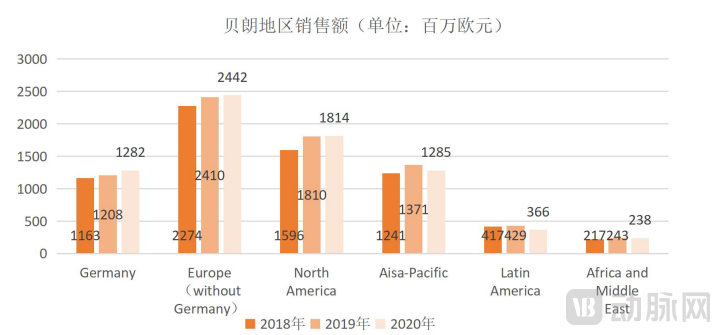
In terms of regional distribution, the European market accounts for the largest share of B.Braun’s performance, followed by North America, Asia-Pacific, Germany (domestic), Latin America, and Africa & the Middle East.
According to its annual report, despite the impact of the pandemic, B.Braun maintained a robust growth trajectory in its domestic German, European, and North American markets. Notably, the growth rate in its home market of Germany reached 6.1%.
However, other markets, including the Asia-Pacific region, showed a downward trend compared to 2019. In the Asia-Pacific region, B.Braun failed to match the previous year’s sales at constant exchange rates, declining by 4.4%. In Latin America, sales in euros decreased by 14.7% year-on-year due to significant adverse foreign exchange fluctuations. Affected similarly by exchange rate movements, sales in Africa and the Middle East also declined.
Source: B.Braun 2020 Annual Report
Integration of Four Major Business Units: Braun Hospital Care, Aesculap, and B. Braun Avitum Form a Tripartite Structure
From the perspective of specific business scope, B.Braun's products and services in 2020 were primarily managed by four business divisions:B. Braun Hospital Care, B. Braun Aesculap (Aesculap Division), B. Braun Outpatient Market, and B. Braun Avitum.
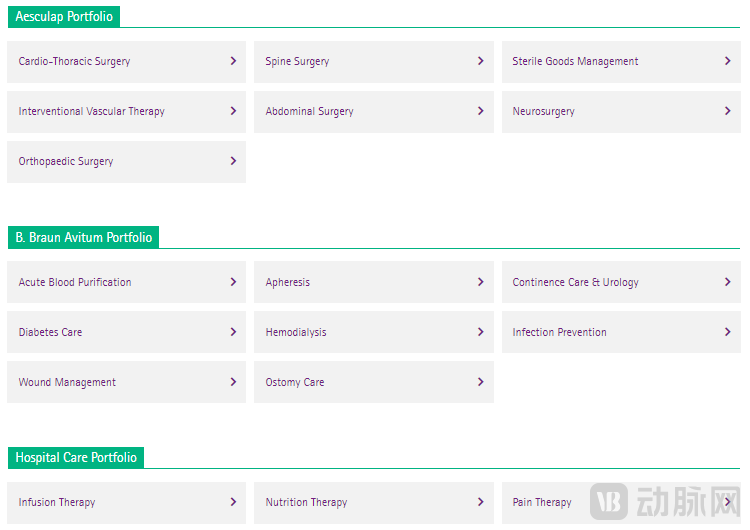
B. Braun Hospital Care:Primarily provides services and products related to infusion, nutrition, and pain management.
Aesculap Division:It primarily provides products and services related to surgical and interventional therapies, with focus areas including abdominal surgery, cardiothoracic surgery, orthopedic surgery, spinal surgery, neurosurgery, vascular intervention, and sterile item management.
B. Braun Out Patient Market:Primarily focused on meeting the needs of patients with chronic diseases, providing products and services in therapeutic areas such as hygiene management, incontinence care, urology, wound management, ostomy care, and diabetes management.
B.Braun Aesculap:Provides dialysis products and services for patients with chronic and acute renal failure, focusing on three areas: hemodialysis, acute dialysis, and apheresis therapy.
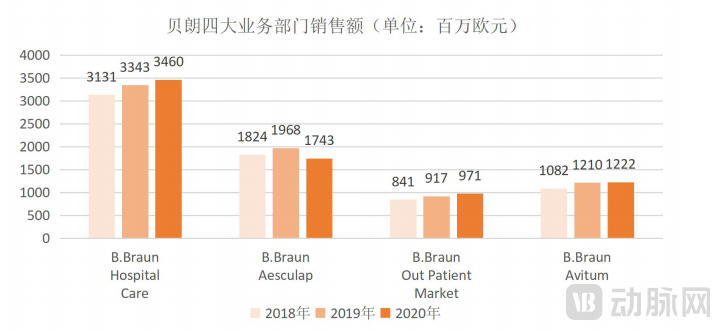
Source: B.Braun 2020 Annual Report
According to the 2020 annual report, the sales of B. Braun Hospital Care, B. Braun Outpatient Market, and B. Braun Aesculap showed growth, increasing by approximately 3.5%, 5.8%, and 1.0%, respectively; however, the Aesculap division was significantly impacted due to the postponement of many surgeries caused by the pandemic, resulting in an 11.4% decline in sales.
In early 2021, under B. Braun’s new strategic deployment, the company adjusted its business structure by merging B. Braun Out Patient Market into Aesculap, thereby integrating its strengths in nephrology, cardiology, and care for patients with chronic diseases. Through this streamlining of its corporate structure, B. Braun aims to accelerate the market launch of new products and reduce startup costs.
Therefore,B. Braun’s current new business structure comprises B. Braun Hospital Care, the Aesculap Division, and B. Braun Avitum.
Source: B.Braun Official Website
B.Braun’s Next Decade: Under the Influence of New Technologies and Digital Transformation
Digitalization is expanding across various sectors, and the healthcare industry is no exception. Numerous healthcare enterprises have been dedicated to developing innovative digital solutions, making digitalization the new normal. In 2020, amid the impact of the pandemic, B.Braun also faced significant challenges in digital transformation. In response, it addressed these challenges from three aspects: sales, training, and remote work.
In terms of sales, B.Braun adopts a “hybrid sales” model, integrating virtual and physical channels. Online methods can streamline processes and accelerate progress. However, for the sales and consultation of highly complex products that cannot be fully digitized, B.Braun enhances efficiency and strengthens customer proximity by combining virtual and real-world approaches.
In terms of training, B. Braun launched online training to offer new learning modalities. Through the Aesculap Academy, B. Braun has consistently introduced healthcare professionals worldwide to the latest technologies and procedures for device usage. During the pandemic, B. Braun developed online training courses, transforming the Aesculap Academy’s digital platform into a hub for medical professionals; in 2020, registered users on its digital platform grew from 70,000 to 400,000. In addition to traditional in-person lectures, B. Braun also leverages technologies such as virtual reality to provide innovative learning approaches.
In Remote Group Management, the impact of the pandemic has presented B. Braun with the dual challenge of expanding production capacity and implementing remote production management. However, it is precisely due to the pressure exerted by the pandemic crisis that digitalization has now extended to B. Braun’s production management operations.
B.Braun stated that new technologies and digital transformation are crucial to shaping the medical technology and healthcare industries.As 2020 came to a close, B. Braun established a new strategic framework, “B. Braun – The Next Decade,” with a horizon extending to 2030.
Over the next decade, it will continue to drive digital advancement and optimize its structure through digital systems, while leveraging key technologies such as robotics and biotechnology to foster corporate growth, thereby continuing to contribute to the protection and improvement of people’s health worldwide.
B. Braun believes that the Internet of Medical Things (IoMT) will bring an increasing number of online medical technologies in the future. Its divisions will continue to focus on building digital health cloud platforms, better supporting customers by leveraging intelligent systems for intensive care therapy and digital solutions for operating rooms. For instance, medical devices such as the Aesculap Aeos digital surgical microscope are connected to online applications, enabling not only data storage and analysis but also optimization of logistics and treatment processes.
Furthermore, B.Braun will deliver more targeted products and services by continuing to ramp up investment in new production and R&D projects and optimizing its global sales organization.
Over €1 Billion Invested in New Production and R&D Projects, Focusing on Innovation in Key Areas
In 2020, B.Braun invested over €1 billion in new production and R&D projects. Of this amount, €364.5 million was allocated to research and development, representing an increase compared to 2019.
Its research and development activities are focused on its own key areas:
Expand production, i.e., enhance production capacity within its business domain and provide more customized solutions for patients.
Advanced Materials: Leveraging the Properties of Advanced Materials to Deliver User Value.
Sensors: Safeguarding Patient Health Through Data Recording.
Robots, i.e., providing support to healthcare professionals through robotic solutions.

Source: B.Braun Official Website
For example, according to its 2020 annual report,B. Braun Hospital Care, B. Braun integrates its new generation of infusion pumps into the hospital ecosystem, enabling seamless treatment documentation in patients' electronic health records, precise execution of personalized dosage recommendations, and effective reduction of potential medication errors.
AtAesculap Division, B. Braun has completed several key development projects, such as 3D-printed hip replacement implants and robot-assisted 3D visualization using the Aesculap Aeos surgical microscope.B. Braun Out Patient MarketThe focus is on enhancing product tolerability and environmental friendliness, as exemplified by its improved Actreen urinary catheter, which is lighter than comparable products, free of polyvinyl chloride (PVC), and 100% recyclable.
B.Braun AesculapThe goal of its R&D activities is to improve the quality and efficiency of dialysis treatment. In 2020, faced with the situation where the kidneys became the second most affected organ in severe cases during the pandemic, B.Braun rapidly developed innovative therapies. For acute dialysis, its enhanced treatment approach combines renal replacement therapy with the removal of carbon dioxide from patients’ blood, reducing the stress caused by mechanical ventilation and allowing the lungs a certain degree of rest.
B. Braun’s research and development activities are concentrated in its Centers of Excellence (CoEs). Through these CoEs, B. Braun closely integrates research, development, manufacturing, and regulatory affairs functions within specific therapeutic areas to accelerate project advancement. Its Centers of Excellence are located in Germany, France, Malaysia, Switzerland, Spain, and the United States.
Overall, B.Braun integrates and manages the group’s innovation projects through its Innovation Center.The Innovation Center is a network composed of employees from various departments within the company, who maintain close ties with university research groups, hospitals, and startups, continuously providing the Group with information and corresponding assessments on cutting-edge technologies and innovative projects.
B. Braun collaborates with startup incubators such as High-Tech Gründerfonds and Trendlines to ensure the Group gains early access to innovative ideas, technologies, enterprises, and business models. Furthermore, B. Braun has established its own innovation accelerator, the B. Braun Accelerator, which launched its first cohort in 2017.
B.Braun’s accelerator provides tailored support to selected startups in the form of expertise, market access, and capital investment, thereby accelerating the transformation of innovative ideas into viable business models and delivering solutions to the market.
Tailored to Personalized Needs.
Provide support at different stages.
Establish sustainable business relationships and partnerships.
B.Braun in China
In 1985, B.Braun officially launched its operations in the Greater China region. After more than 30 years of development, B.Braun has established multiple independent legal entities in China, with its headquarters located in Shanghai.
B.Braun primarily manufactures and sells professional medical devices, pharmaceutical products, and perioperative products in China. Currently, it has over 2,200 employees in China, with its business presence spanning more than 70 cities nationwide, and has invested in building large-scale production bases in Suzhou, Jiangsu Province, and Zibo, Shandong Province.
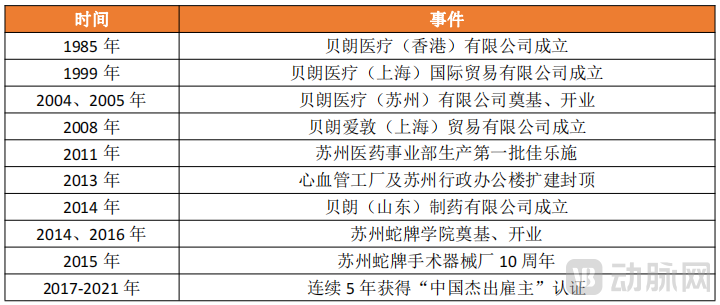
Source: B.Braun China Official Website
Since entering the Chinese market in 1985, B. Braun has been committed to instilling its corporate value of “Professional Sharing” in China, introducing German production processes and management philosophies.
Meanwhile, “rooted locally, grounded in China” is the principle of B.Braun Greater China.B. Braun’s localized production in China focuses on core areas such as sterile pharmaceutical formulations, active medical devices, surgical instrument processing, and cardiovascular products. To meet the demands of the local Chinese healthcare market, the company has successively introduced multiple localized production lines for large-volume parenterals, surgical instruments, cardiovascular products, and fat emulsions at its manufacturing facilities in Suzhou and Zibo.
For example, in 2016, B.Braun proposed the “Made in China” localization production strategy, and the Dezhi hemodialysis machine project was officially initiated. In June 2020, Dezhi officially commenced production.
Furthermore, B.Braun keeps pace with the development of China's healthcare market.Notably, in 2018, B. Braun Precision Medical Technology (Shanghai) Co., Ltd. was unveiled in Shanghai, marking a significant milestone for B. Braun as it advances into China’s precision medicine and emerging healthcare services sectors.
China’s precision medicine market is gradually entering a period of rapid development, with precision medicine included as one of the key projects in the national “13th Five-Year Plan.” Building on this, B.Braun Precision Medicine Technology (Shanghai) has partnered with Germany’s CeGaT Center for Genomics and Transcriptomics, a leading European institution, to engage in technology development, consulting, and services in the fields of precision medicine, pharmaceutical technology, and genetic technology. The collaboration aims to create new growth highlights by delivering high-quality precision medicine services.
In November 2020, at the 3rd China International Import Expo (CIIE), B.Braun also unveiled a prototype of the future smart hospital, featuring smart operating rooms, smart ICUs, smart hemodialysis centers, and smart sterile supply departments, showcasing a range of innovative products and digital solutions under its portfolio.
At the Public Health and Epidemic Prevention Zone of the China International Import Expo (CIIE), B.Braun showcased its series of products designed to support healthcare workers worldwide in combating epidemics. Examples include comprehensive infection prevention and control solutions that help medical institutions improve the efficiency of nosocomial infection management, as well as infusion pumps that enabled smarter and safer infusion therapy for healthcare personnel in intensive care units during the 2020 pandemic.
As a multinational corporation, B. Braun’s core values of “innovation, efficiency, and sustainability” continue to shape its business practices. Whether viewed from the perspective of its global operations or the Chinese market, B. Braun is adept at seizing opportunities. The company believes that opportunities typically arise from rising healthcare standards and the iteration of new products and services, and that providing effective solutions for customers is the key to maintaining its competitive position.