

BGI Genomics Hosts Inaugural Cancer Omics Space Station Summit, Spotlighting Early Cancer Screening, Diagnosis, and Treatment
Recently, under the guidance of the Tumor Marker Professional Committee of the China Anti-Cancer Association and the Professional Committee on Cancer Screening and Early Diagnosis and Treatment of the China Anti-Cancer Association, BGI hosted the “Precision Prevention and Control, Universal Accessibility—The 1st Cancer Omics Space Station Summit (COSS)” in Beijing and Shanghai, with live streaming across multiple platforms. The summit brought together several academicians, over 70 experts and scholars in the field of oncology, more than 200 practitioners in the tumor prevention and control ecosystem, and numerous health-focused vertical media outlets. Featuring four specialized sessions, the event focused on precision prevention and treatment of cancer, fostering multidisciplinary discussions spanning multi-omics.
In cancer prevention and control, early diagnosis and treatment are pivotal. The Outline of the “Healthy China 2030” Plan proposes to increase the overall five-year survival rate for cancer by 15% by 2030 through early diagnosis and treatment. In line with this objective, a special session on “Cancer Prevention and Control” was held on the afternoon of October 23 during this summit. Leading industry experts, prominent figures from the internet healthcare and insurance sectors, and mainstream media representatives convened to address two key areas: the current status of early screening, diagnosis, and treatment of cancer in China, and the development of an integrated “screening, diagnosis, insurance, and treatment” prevention and control system. Through keynote addresses, roundtable discussions, in-depth expert deliberations, and cross-industry dialogues, participants jointly promoted early cancer diagnosis and treatment, contributing to the realization of the Healthy China 2030 goals.
Professor Pan Kaifeng, Vice President of Peking University Cancer Hospital, served as the moderator of this conference, and Professor邢金良, Chairman of the Tumor Marker Professional Committee of the China Anti-Cancer Association, delivered the closing remarks.
Academician Fan Daiming, Member of the Chinese Academy of Engineering and Chairman of the China Anti-Cancer Association, delivered an address at this special session on cancer prevention and control. Academician Fan emphasized the importance of early cancer screening to enhance public well-being. He pointed out that future assessments of oncology development should not be based solely on technological advancements, but rather on patient experiences. “Precision prevention and treatment must be targeted, with improvements in patients’ survival time and quality of life serving as the benchmark; this is the true goal of precision prevention and treatment,” he stated. Integrated diagnosis and treatment of diseases represent the future direction of medical development. Therefore, it is essential to establish multidisciplinary teams for cancer care in China, formulate personalized integrated diagnosis and treatment plans, and achieve maximized and optimized outcomes in integrated care.
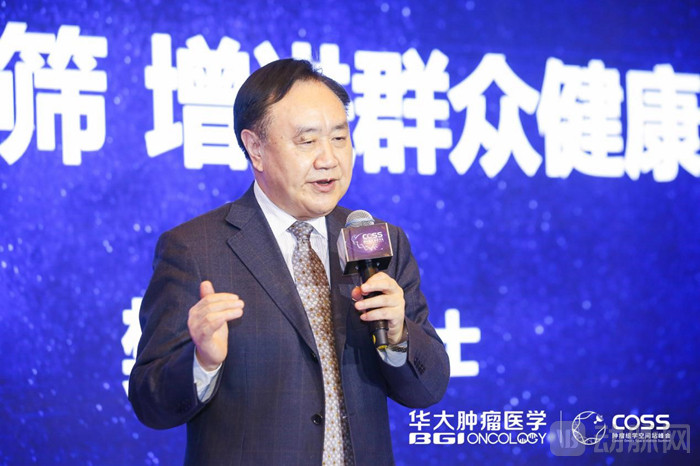
Address by Academician Fan Daiming
The “Three Early” policy of “early screening, early diagnosis, and early treatment” has become the central theme of cancer prevention efforts under the Healthy China Initiative. During the keynote session, participating experts and scholars exchanged their latest research findings and practical experiences from multiple perspectives, including policy directions for cancer prevention and control, exploration of multi-omics molecular testing technologies in early cancer screening and diagnosis, implementation of colorectal cancer population-based screening programs, tumor prevention and control strategies centered on “prevention–screening–early diagnosis,” construction of precision screening systems for gastrointestinal tumors, and health economics of cancer screening. This engaging academic feast offered attendees a comprehensive and insightful overview of current advancements in the field.
Dr. Wang Yuying, CTO of BGI Digital Intelligence, shared the latest interim research findings on the application of multi-omics molecular testing technologies by BGI Genomics in the diagnosis and screening of high-incidence cancers in China. Dr. Wang stated that multi-omics technologies offer innovative pathways for early cancer diagnosis and screening. In recent years, BGI Genomics has been committed to providing comprehensive and systematic solutions for the early screening and diagnosis of high-incidence cancers in China, launching products focused on key cancer types, such as HuaChangKang® non-invasive genetic testing for colorectal cancer and HuaGanNing® non-invasive genetic testing for liver cancer.Dr. Wang also presented interim research data on the simultaneous detection of five digestive system cancers and tumor origin tracing, based on targeted methylation high-throughput sequencing technology. She remarked, “Digestive system cancers are characterized by high incidence and mortality rates, poor patient compliance with endoscopy, and significant limitations in imaging-based screening, making early diagnosis a major challenge. Multi-cancer simultaneous detection based on liquid biopsy technology provides an innovative technical solution to address the pain points in early screening and diagnosis of these key cancer types. The interim research data from the early diagnostic technology development currently being conducted by BGI Genomics in collaboration with multiple clinical centers demonstrate high diagnostic sensitivity and specificity, indicating substantial potential for clinical application.” Moving forward, BGI will continue to accumulate data, optimize detection methods, and expand the range of covered cancer types.
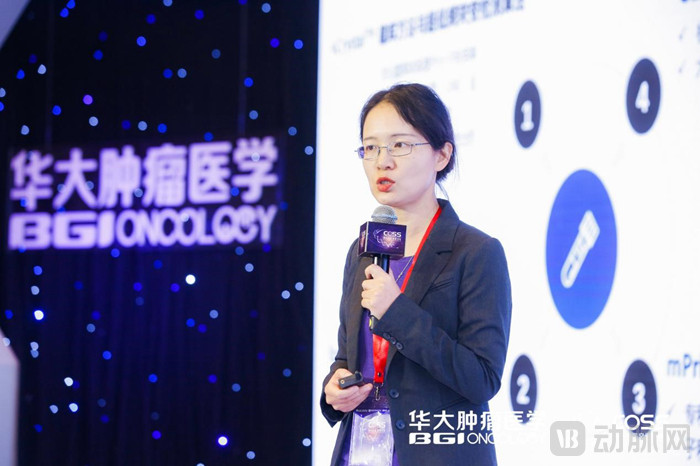
Dr. Wang Yuying Delivers Keynote Address
Professor Lu Yun, Director of the General Surgery Medical Center and the Second Department of Gastrointestinal Surgery at the Affiliated Hospital of Qingdao University, delivered a special report on the public health applications of colorectal cancer screening. The report revealed that in the Qingdao Colorectal Cancer Prevention and Control Project, led by Professor Lu Yun with technical support from BGI Genomics, nearly 20,000 individuals underwent colorectal cancer screening. The compliance rate for colonoscopy reached 47%, and the abnormality rate among those undergoing colonoscopy was as high as 61%. In this regard, Professor Lu pointed out that fecal DNA testing technology has demonstrated significant enrichment effects for intestinal lesions in large-scale, real-world population screening programs. Drawing on experience from implementing large-population screening initiatives, he noted, “The extent of public outreach and the level of public health awareness influence the smooth implementation and follow-up management of such projects. Intelligent, grid-based screening systems and models have played a highly effective role in project support and coordination. Successful overall project implementation requires close collaboration among hospitals, government departments, and providers of innovative technical solutions.”
Professor Wang Guiqi, Director of the Endoscopy Center at the Cancer Hospital, Chinese Academy of Medical Sciences, pointed out that implementing preventive screening and early diagnosis is the most effective strategy for cancer prevention and control. There is a significant gap between China and developed countries in the five-year survival rate for gastrointestinal cancers. Research has found that the decline in cancer incidence and mortality rates in the United States is attributed 53% to screening, 35% to cancer prevention and early diagnosis and treatment, while advanced treatment equipment and technologies account for only 12%. “Lessons from others can help improve our own practices. To address the high incidence of malignant tumors, low early diagnosis rates, and poor treatment outcomes in China, cancer prevention, screening, and early diagnosis and treatment are crucial.”
Professor Deng Kun, Director of the Department of Clinical Laboratory at the Third Affiliated Hospital of Chongqing Medical University, shared insights on the current status of building a precision screening system for gastrointestinal tumors. He pointed out that the incidence and mortality rates of colorectal cancer are closely related to the completeness of cancer screening, treatment, and management systems. Establishing regional cancer screening and early diagnosis and treatment centers can better facilitate broader screening coverage. Specifically, setting up screening centers in tertiary hospitals, leveraging community-based grid management, and constructing a closed-loop system integrating “screening, diagnosis, and treatment” can further improve the development of a precision tumor screening framework. It was reported that Chongqing’s precision screening system for digestive system tumors currently comprises four screening centers and 16 early screening monitoring sites, having completed approximately 8,500 colorectal cancer screenings to date.
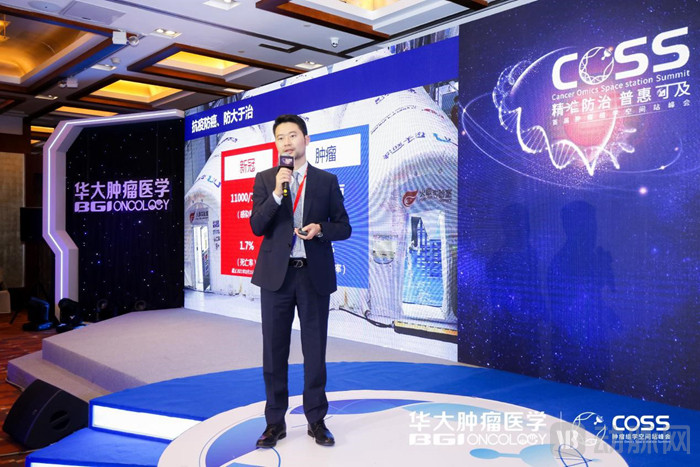
Professor Deng Kun Delivers Keynote Address
Professor Wang Haiyin, Director of the Health Technology Assessment Research Department at the Shanghai Center for Health and Healthy Development Research, shared insights on the value of cancer screening from the perspective of public health economics. Professor Wang pointed out that screening for high-incidence cancers can yield significant public health economic benefits. In terms of colorectal cancer screening methods, fecal DNA testing demonstrates considerable application potential compared to traditional questionnaire-based and fecal occult blood initial screening approaches. Taking the colorectal cancer prevention and control public benefit project supported by BGI Genomics as an example, interim follow-up results from over 100,000 screened individuals across 15 projects in 13 cities within 12 provinces nationwide show a positive detection rate of approximately 6.1% and an overall colonoscopy abnormality rate of 63.3%, effectively enriching the identification of patients with colorectal cancer and precancerous lesions. Preliminary health economic evaluations based on these interim follow-up data indicate a favorable cost-effectiveness ratio, providing important references for the future implementation of early diagnosis and treatment programs.
Under the national “Three Early” policy, effective cancer prevention and control measures have been implemented, including the National Program for Early Diagnosis and Treatment of Cancer and the establishment of regional centers for precision screening of digestive tract cancers, further empowered by technological innovations from enterprises. However, despite these favorable conditions, tumor prevention and control efforts still face severe problems and significant challenges. How can we better facilitate the rapid advancement of early cancer screening, early diagnosis, and early treatment?
To this end, a special roundtable discussion was organized for the session on cancer prevention and control. The panelists included distinguished experts and scholars such as Professor Chen Wanqing, Chair of the Cancer Screening and Early Diagnosis and Treatment Committee of the China Anti-Cancer Association; Professor Wang Xishan, Director of the Department of Colorectal Surgery at the National Cancer Center/National Clinical Research Center for Cancer/Cancer Hospital, Chinese Academy of Medical Sciences; and Professor Chen Xiaobing, Director of the Second Internal Medicine Department at Henan Cancer Hospital. Also participating were representatives from the insurance and specialized healthcare sectors, including Mr. Zhu Aihua, Vice President of Qianhai Reinsurance; Mr. Liu Xue, Head of Business at Taikang Online; and Mr. Sun Haijian, Director of Consumer Healthcare at JD Health, part of JD.com. The roundtable was moderated by Dr. Han Lintao, Dean of the Health Research Institute of People’s Daily Health Client, and Mr. Li Yantao, Director of Tumor Prevention and Control Products at BGI Genomics.
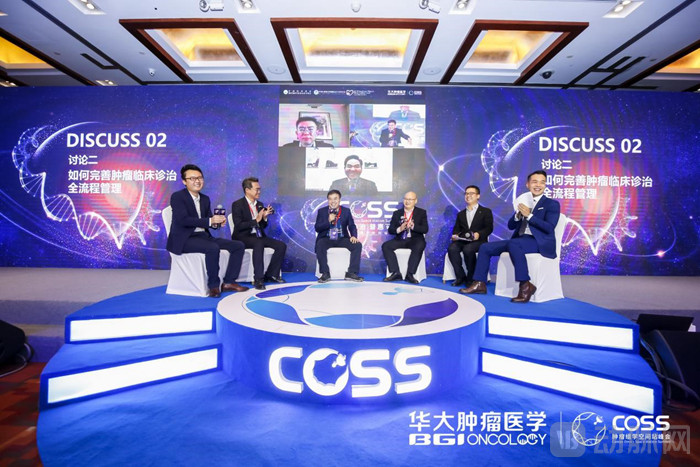
Roundtable Discussion
Experts and scholars engaged in an intense “brainstorming” session focused on the “screening, diagnosis, treatment, and management” integrated model for cancer prevention and control, conducting an in-depth analysis of the pain points and countermeasures at each stage. Professor Chen Wanqing took the lead in analyzing the shortcomings of China’s cancer prevention and control efforts by examining the current burden of cancer in the country and comparing cancer data between China and the United States. Over the past decade, China’s cancer incidence rate has risen by 3.9% annually, and its mortality rate has increased by 2.5% per year, whereas the United States has seen declines in both metrics. The limited adoption of early screening and diagnosis is a significant factor contributing to this disparity. He further pointed out that the root causes behind the lack of widespread early screening and diagnosis include the absence of end-to-end management across the screening, diagnosis, and treatment continuum, non-standardized oncology diagnostic and therapeutic techniques, insufficient public awareness of cancer prevention, and an imperfect payment system for oncology care.
In response to the questions raised by Professor Chen Wanqing, experts from various fields offered their insights and recommendations based on their respective areas of expertise. Professor Wang Xishan shared strategies and reflections covering the entire continuum of colorectal cancer care—encompassing prevention, screening, diagnosis, treatment, nursing, and management—from the perspective of colorectal cancer prevention and control. He proposed that promoting early diagnosis and treatment of colorectal cancer requires collaborative efforts among the state, society, and individuals. “The state should strengthen the strategy of ‘shifting the focus upstream and prioritizing prevention,’ while vigorously promoting early screening technologies and practices for early diagnosis and treatment. At the societal level, various associations and societies should play a leading role in establishing national standards for disease diagnosis and treatment. As ‘individuals are the primary stakeholders in their own health,’ they should further prioritize prevention through adjustments in diet and lifestyle habits.”
Cancer Prevention and Control: Prioritizing Proactive MeasuresWithin the three-tiered cancer prevention and control strategy, primary prevention aims to reduce risk factors, while secondary prevention focuses on early screening, diagnosis, and treatment. Enhancing individual awareness is crucial in both primary and secondary prevention. As a pioneer in cancer science popularization in the Central Plains region, Professor Chen Xiaobing points out that the traditional Chinese perspective often equates a cancer diagnosis with a death sentence. Beyond this fear of cancer, China’s cancer prevention and control landscape remains concerning, exhibiting a “date-pit” distribution—narrow at both ends and broad in the middle—indicating insufficient attention and action devoted to cancer prevention and rehabilitation. Professor Chen emphasizes, “While we should not live in fear of cancer, we must never lack vigilance in preventing it.” Changing public perceptions through science popularization is key. “Prevention comes first in the fight against cancer.” Primary prevention remains the top priority. We must start by updating mindsets, disseminating knowledge, and changing behaviors. For a Healthy China, science popularization must take the lead, with a particular focus on grassroots communities where prevention is paramount. In the new era, cancer-related science popularization must be tailored to different audiences with precise strategies. Communication channels and formats need to be diversified and modernized, while integrating scientific outreach efforts from the state, society, and individuals.
At the conference, guests from the commercial insurance and vertical internet healthcare sectors joined experts and scholars in an in-depth discussion on how to break down industry barriers and jointly support cancer prevention and control efforts. Mr. Zhu Aihua of Qianhai Reinsurance stated that, based on data experience, the incidence of cancer among domestic insurance customers is excessively high, making cancer prevention management an urgent priority. In the past, insurance primarily focused on providing compensation after a critical illness was diagnosed. In line with the “Three Early” policy (early detection, early diagnosis, and early treatment), the insurance industry should strengthen proactive insurance measures in the future and promote the standardization and productization of cancer prevention services.
Mr. Liu Xue of Taikang Online Insurance emphasized that insurance can link the entire closed-loop ecosystem of tumor prevention and control, playing a significant role throughout the series of processes from tumor screening, diagnosis, precancerous lesions/cancer, to treatment and rehabilitation. Examples include coverage for false-negative results, transportation and accommodation expenses for referrals, re-examination fees, and costs associated with treatment and rehabilitation.
Mr. Sun Haijian from JD Health stated that advancing cancer prevention to an earlier stage requires fully leveraging the advantages of both clinical and home-based settings. Through its internet hospital platform and consumer education initiatives, JD Health has enabled comprehensive reach of BGI Genomics’ early cancer screening genetic testing products to end-users (C-end), businesses (B-end), and government entities (G-end). This approach helps better realize the vision of “precision prevention and control, with equitable accessibility” in cancer management.
At the event, the integration of academia and commerce, along with the resource consolidation of internet and innovative technologies, unfolded in an interlinked manner, becoming increasingly clear through debate and proving to be brilliant and engaging.
Early screening and diagnosis of cancer represent the most cost-effective and efficient strategy for cancer prevention and control; however, comprehensively shifting the focus to earlier intervention remains a formidable challenge. The “Inaugural Tumor Omics Space Station Summit – Special Session on Tumor Prevention and Control,” hosted by BGI Genomics, has established a highly integrated platform for experts, scholars, and innovative enterprises. Through in-depth discussions involving a “national team” of renowned experts and leading innovators, this initiative will help advance early cancer diagnosis and treatment, accelerate progress in tumor prevention and control, and safeguard the health and well-being of the Chinese population. On the path toward achieving “universal early screening and diagnosis,” the future is within sight and closer than ever.