

Kanghui Medical's Strategic Transformation Amid Volume-Based Procurement: Positioning as a Comprehensive Orthopedic Solutions Provider
The global orthopedics industry is reaching a developmental watershed.
On one hand, driven by China’s vast aging population and robust industrial foundation, the global orthopedic market center is gradually shifting from Europe and the United States to China. For leading domestic orthopedic companies, this trend presents an unprecedented opportunity for industrial upgrading.
On the other hand, China’s orthopedics market is also undergoing significant changes. The nationwide implementation of volume-based procurement has accelerated industry consolidation, marking a turning point and triggering a wave of reshuffling in the orthopedics sector.
For participants in the orthopedics industry, challenges and opportunities coexist; traditional single-product business models can no longer sustain survival or long-term development. In this new competitive landscape, some companies have chosen to expand their product portfolios and enter markets beyond orthopedics, while certain domestic enterprises have opted for a last-ditch effort, winning bids with razor-thin profit margins.
The measures taken by leading enterprises to respond to volume-based procurement (VBP) in orthopedics will determine the future trajectory of the orthopedic sector, as their strength often enables them to steer the direction of industry development. Among China’s leading orthopedic companies, Medtronic Kanghui, which has been deeply rooted in the Chinese market for over two decades, offers its own unique insights.
Recently, this orthopedic company, which has demonstrated strong performance in provincial volume-based procurement programs, officially announced a comprehensive strategic upgrade.
Under its latest dual-brand strategy, Medtronic focuses on introducing the world’s most advanced technologies to China, while the Kanghui brand leverages its local strengths to fully harness domestic innovation. This dual-brand approach ensures a rich and diversified product portfolio, reinforcing Medtronic’s leading position in China’s orthopedic trauma and spinal implant markets. Meanwhile, Kanghui is actively expanding its global footprint, bringing more innovative products and high-quality orthopedic solutions to international markets through the Belt and Road Initiative.
Following its strategic upgrade, Kanghui will transform from an orthopedic consumables company into a specialist in professional orthopedic solutions, providing comprehensive solutions for the orthopedic market.
Amid frequent major moves by Medtronic Kanghui in the context of volume-based procurement policies, how will its new strategy align with development trends in the orthopedics industry? How will Kanghui address the challenges and opportunities in the orthopedics sector? How will the newly upgraded Kanghui participate in competition within China’s orthopedics market?
(Figure: The Kanghui Medical brand logo after a comprehensive renewal and upgrade)
Volume-based procurement is a pivotal event shaping the development trajectory of the orthopedics industry. In the short term, the most immediate impact is the decline in gross profit margins. However, beyond price reductions exceeding 80%, volume-based procurement has also reshaped the future direction of the orthopedics industry.
The impact of volume-based procurement on the orthopedic market is first reflected in market size.Will the Size of China’s Orthopedic Implant Market Be Halved Following Centralized Procurement? Over the past two years, this question has cast a pall over orthopedic professionals.
When VCBeat posed this question to Yu Jing, Vice President of Medtronic and General Manager of its Orthopedics and Neurosurgery business in China, she expressed optimism: “We are confident that China will become the world’s largest orthopedics market in the years ahead.”“The past decade has been a golden age of development for orthopedics in China, and we believe that the field will continue to maintain its robust growth momentum over the next ten years.”
This optimism stems from the market vitality that Kanghui has perceived through its deep engagement with China’s complex orthopedic market, as well as from Kanghui’s long-termist belief in the Chinese orthopedic market.
Yu Jing added, “In China, the orthopedic market is far from saturated; the large population base and accelerating aging trend are both growth drivers for the orthopedic market. Furthermore, compared with cardiovascular and cerebrovascular diseases, orthopedic conditions in China still receive relatively less attention. Taking spinal surgery as an example, if we use the U.S. market as a benchmark, the potential size of China’s spinal surgery market is projected to be dozens of times its current scale.”
Despite the implementation of centralized volume-based procurement, China’s orthopedic market remains substantial in scale. Data from the “Report on Market Demand Forecast and Investment Strategic Planning Analysis for China’s Orthopedic Implantable Medical Device Industry,” published by Qianzhan Industry Research Institute, indicates that the market penetration rate of orthopedic implants in China is less than 5%, significantly lower than the 40%–70% penetration rate observed in the United States. The rollout of volume-based procurement will undoubtedly drive an increase in the penetration rate of orthopedic procedures at the primary care level.
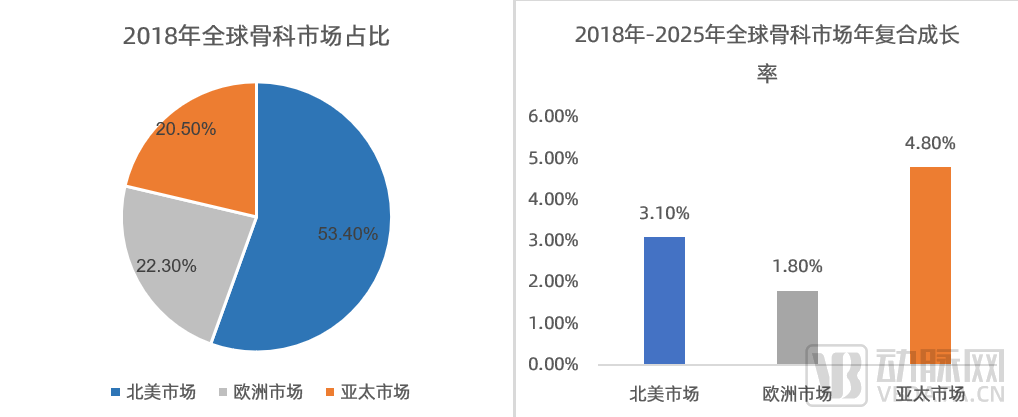
Data source: Relevant research reports from BiaoDian Information
The Impact of Volume-Based Procurement Is More Evident in Its Influence on Market Structure. Essentially, as competition becomes increasingly homogeneous, the compression of profit margins in the orthopedics industry is an inevitable trend in its development. Volume-based procurement will drive further industry consolidation, favoring companies with stronger R&D capabilities and more effective cost control.
Commenting on the evolution of this trend, Luan Chengpeng, Senior Business Director of Conmed’s China Division, offered the following analogy: “In the vast ocean, both aircraft-carrier-sized vessels and small- to medium-sized ships are affected by an approaching hurricane. Aircraft-carrier-sized vessels can make adjustments based on wind direction, whereas medium-sized or smaller vessels may suffer fatal blows. During this process, aircraft-carrier-sized vessels tend to cluster together; similarly, the orthopedics industry will undergo significant consolidation amid the storm of volume-based procurement.”
Limited risk tolerance makes volume-based procurement a matter of life and death. Within just days after the national volume-based procurement for artificial joints was finalized, multiple major strategic partnerships and acquisitions emerged in the orthopedics industry, underscoring the powerful market-consolidating effect of volume-based procurement.
Finally, we believe that at the micro level, in the post-volume-based procurement era, orthopedic companies must rapidly adjust to changes in logistics, services, and market education. As these elements are deeply interconnected, any change can have far-reaching implications, placing high demands on companies’ decision-making responsiveness and localization capabilities.
Yu Jing pointed out that under the volume-based procurement policy, all industry participants need to rethink and restructure their strategies in many aspects to better meet clinical needs. In the long run, participants with strong capabilities, rich pipelines, and high operational efficiency will drive product innovation to better address clinical challenges. Amidst these changes, different participants must also identify their respective positioning and strategic layouts.Of course, the process will also involve industry consolidation. Enterprises that are relatively small in scale, have a limited product portfolio, and lack cost advantages will inevitably face elimination, driven by market forces under policy guidance. Meanwhile, strong players will be able to secure their position in the future competitive landscape.
Striving in the orthopedic market after centralized procurement is akin to scaling a peak with myriad cliffs and ravines; the landscape has grown more complex, offering no ready-made answers nor a perfect blueprint for industrial transformation.
Deconstructing Medtronic Kanghui’s New Strategy: Innovation Remains the Driving Force as Kanghui Scales the Peak of Orthopedics
Medtronic Kanghui firmly believes that maintaining leadership in R&D innovation is essential to staying competitive in the industry. This is precisely why Medtronic Kanghui has adopted a dual-brand strategy to drive its growth. Leveraging Medtronic’s resources, Kanghui can rapidly introduce technologies tailored to Chinese market needs into the domestic market through further localization, thereby filling existing gaps. Meanwhile, Kanghui continues to increase its local R&D investment, exploring localized innovations aimed at addressing the needs associated with high-prevalence diseases.
In 2021, the number of R&D personnel at Kanghui increased by 34% compared to the same period in 2019, with the number of related patents more than doubling. R&D investment nearly doubled compared to 2020. Over the past two years, eight new products were launched, bringing innovative solutions to the Chinese market.
How Did Kanghui Medical Accelerate Innovation by Launching Eight New Products in Two Years? Zheng Xuehua, Senior Director of Strategic Planning and Project Management at Medtronic, stated, “Localization is our greatest strength. As a company established on the foundation of an industry leader, we possess profound insights into local clinical practices in China. This enables us to gain a deep understanding of Chinese physicians’ clinical needs and rapidly translate those needs into engineered products.”
Taking the NEOSUPRA (locking) tibial intramedullary nail launched by Kanghui Medical as an example, intramedullary nails are a key product among trauma implants. Placed within the medullary cavity and in close contact with bone tissue, they provide internal fixation at fracture sites, serving as critical implants in trauma surgery.
The primary technical challenge in intramedullary nailing for trauma cases lies in distal targeting. Implants and instruments that facilitate accurate localization of distal screw holes have consistently represented the direction of industry development for intramedullary nails. Kanghui Medical’s NEOSUPRA (locking) tibial intramedullary nail employs a lightweight carbon fiber distal targeting jig, enabling simple and efficient distal locking. Additionally, it allows multi-planar interlocking to maximize bone purchase across various osteotomy surfaces, thereby expanding the range of indications.
As the orthopedics industry reaches a turning point, channel development has also become a keyword for its growth. Insights from the implementation of volume-based procurement (VBP) policies reveal that extensive product usage serves as the entry ticket for participation in VBP. After winning bids, broad sales channels and strong brand influence are key to capturing market share.
The strategic upgrade of Medtronic Kanghui is manifested in the market as follows: on the basis of consolidating existing market advantages, it explores new market demands and extends its product reach to primary-level markets.
Over the past two decades, Kanghui, as a leading domestic manufacturer, has established a comprehensive distribution network that primarily targets the mid-to-high-end market while also covering the economy segment. In terms of regional presence, it has expanded from its strongholds in the Jiangsu-Zhejiang-Shanghai region to multiple areas across China. In recent years, Kanghui Medical has consistently maintained robust double-digit growth in performance. Regarding innovation ecosystem development, Kanghui has launched several training and exchange platforms for physicians, which have collectively reached more than 80,000 doctors to date.
As a long-termist in China’s orthopedic industry, Kanghui will increase its investment in market education as part of its future market strategy.As a company that has grown alongside China’s orthopedic industry, Kanghui Medical places great emphasis on market training. Yu Jing stated, “In our communications with senior experts on the front lines of orthopedics, we have found that many hold the Kanghui brand in high regard and have high expectations for this well-known domestic brand. We must live up to their trust and expectations.”
For many years, Kanghui Medical has been committed to providing standardized medical education to a broader base of grassroots orthopedic surgeons in China, playing a significant role in the Chinese orthopedic market. Its sustained and increasing market investments have earned Kanghui widespread recognition across China’s multi-tiered market. It is reported that Kanghui Medical continues to ramp up its investments in training and education.
Luan Chengpeng stated, “Kanghui’s future growth will stem from three key areas. First, growth in the grassroots market: Kanghui Medical has effectively penetrated lower-tier markets, covering a substantial number of primary-care hospitals, and its rapidly expanding logistics and distribution network will enable the company to respond swiftly to the needs of end-user medical institutions. Second, the promotion of innovative minimally invasive therapies: Kanghui places great emphasis on the development of innovative treatments, has launched a portfolio of minimally invasive orthopedic implant products, and has achieved rapid growth in its innovative business segment. Third, the continuous advancement of professional education and training, which lays the foundation for promoting product therapies and training physicians.”
In a market environment fraught with uncertainty, a diversified product portfolio serves as the foundation for mitigating risks associated with centralized volume-based procurement (VBP). Companies relying on a single product line face significant disadvantages in VBP processes. As high-value orthopedic consumables enter the era of centralized procurement, only a comprehensive and robust product portfolio can ensure a company’s competitive position within the industry.
Diversification is a key lever in Kanghui's strategic upgrade.
In the face of profound industry shifts in the post-volume-based procurement era, Kanghui has comprehensively strengthened its three major product lines—spine, trauma, and interventional products—while exploring diversified business layouts. Future offerings will encompass implants, consumables, medical devices, and surgical robots, providing integrated orthopedic solutions to enhance risk resilience.
On the one hand, Kanghui consolidates its competitive advantage in the implant sector through diversified innovation.In the spinal field, Kanghui will build a local portfolio of high-end and cost-effective spinal products through the localization of Medtronic technologies and indigenous R&D innovation; in the trauma field, Kanghui will develop implants tailored to Chinese anatomical structures through indigenous R&D innovation and commercial collaborations, while further expanding and enhancing its trauma product portfolio.
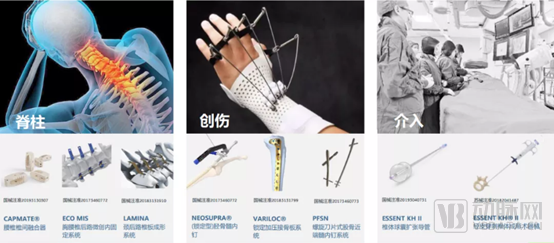
On the other hand, in addition to innovations and product line expansions in the implant sector, Kanghui Medical has also made comprehensive preparations for numerous commercial innovations within the orthopedic industry.In the future, Kanghui will strengthen its product portfolio through various forms of commercial collaboration. In addition to covering most implants and consumables, it will expand into the equipment sector, offering a comprehensive product line that includes intraoperative imaging, navigation, power tools, neuromonitoring, and even locally developed robotic systems. This will enable a strategic transformation from an orthopedic consumables company to a full-fledged expert in comprehensive orthopedic solutions.
Under the influence of the volume-based procurement policy, extensive international expansion also helps companies mitigate risks. Therefore, globalization has become a key focus of Kanghui’s brand strategy. With an emphasis on emerging markets along the Belt and Road Initiative, Kanghui’s products are currently available in 65 countries and regions worldwide.
China’s orthopedic industry is at a critical juncture of upgrading, breakthroughs, and innovation, with many far-reaching trends taking shape. In addition to volume-based procurement as a major development trend, continuous innovations in orthopedic surgery toward minimally invasive, personalized, precise, and intelligent approaches are driving the advancement and development of orthopedic implants, emerging as a key trend in the industry’s growth.
How Will the Intelligentization of Orthopedics Impact Industry Development?
From a clinical value perspective, orthopedic surgical robots represent disruptive innovation.In spinal surgery, the spine serves as the body’s central supporting structure. There are 31 pairs of spinal nerves—8 cervical, 12 thoracic, 5 lumbar, 5 sacral, and 1 coccygeal—with each pair connecting the spinal cord to specific regions of the body. Given the limited surgical field of view, the risks associated with spinal surgery are considerable.
The rise of spinal surgery navigation and the emergence of spinal surgical robots will drive the upgrading of China’s intelligent surgical ecosystem, making advanced procedures such as minimally invasive spine surgery gradually become standard practices in many hospitals. In terms of market value, the trend toward intelligence in orthopedics will also create new market opportunities. According to Frost & Sullivan, orthopedic surgical robots are regarded as the second-largest market segment, trailing only laparoscopic surgical robots, with the market size expected to reach USD 4036.7 million by 2025. The significance of the Chinese market in this context is self-evident.
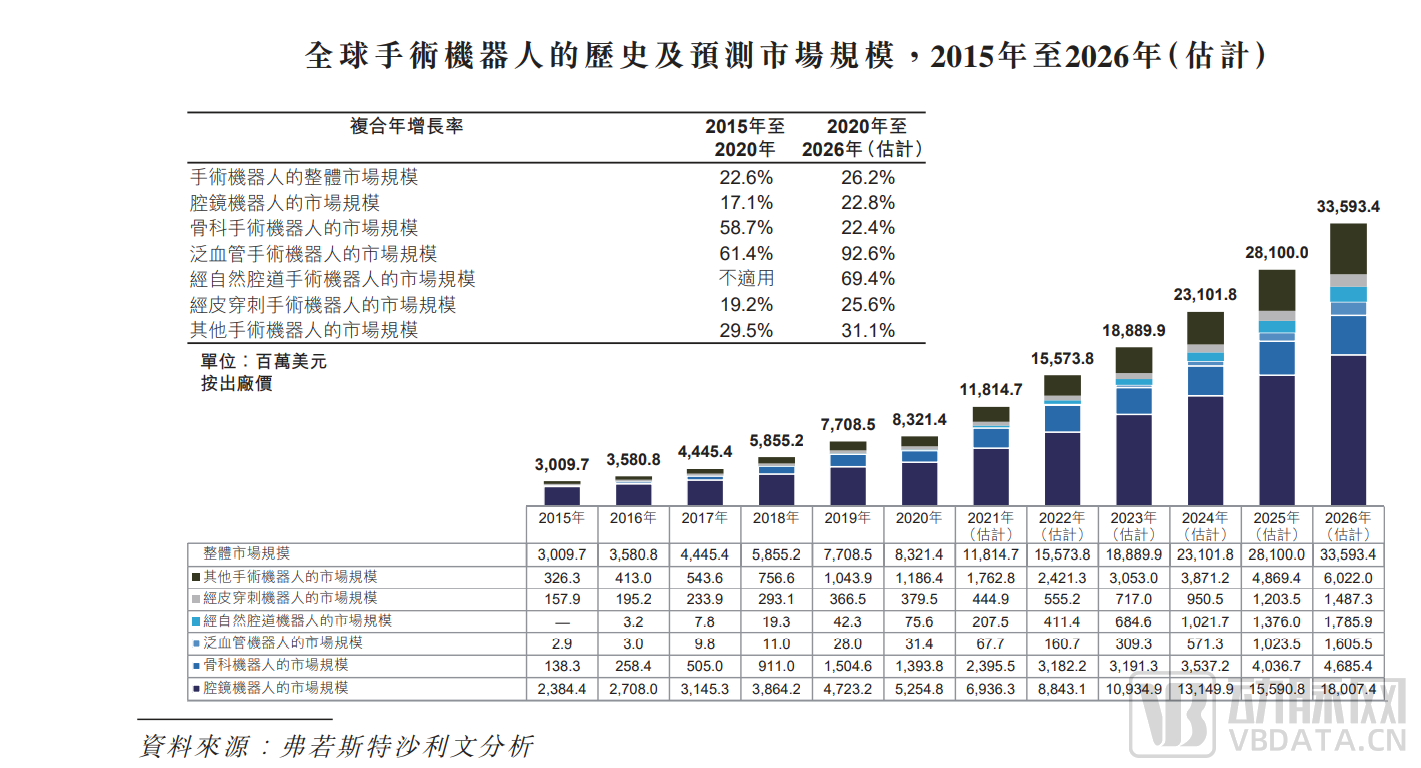
Currently, the penetration rate of orthopedic surgical robots in China remains relatively low.However, with the launch of several mature products and the inclusion of surgical robots in medical insurance coverage, China’s orthopedic surgical robot market is gradually transitioning from the introduction stage to the growth stage.While surgical robots are revolutionizing clinical practice and the market, they are also transforming the entire orthopedic industry chain. Intelligent orthopedic surgery involves the integrated coordination of multiple products, including robots, intraoperative imaging, navigation systems, powered instruments, implants, and surgical tools, placing extremely high demands on enterprises’ R&D capabilities.
Yu Jing told VCBeat that Medtronic Kanghui is actively building the SURGICAL SYNERGY™ integrated smart orthopedic surgery solution.It is a comprehensive, visualization-driven intelligent orthopedic surgical solution encompassing the entire workflow from preoperative planning and intraoperative execution to postoperative healing. It establishes a streamlined process that ensures synergy between physicians’ operations, surgical devices, and implants. Setting a new industry standard that “simplifies complex procedures and standardizes simple ones,” it further represents Medtronic’s commitment to collaborating with academia, industry, research institutions, and healthcare providers to co-create an open, localized intelligent surgical ecosystem.
The integrated smart orthopedics solution will become the core capability of Medtronic Kanghui following its strategic upgrade.
In late August 2021, Medtronic’s MAZOR X, an intelligent navigation robot for spinal surgery, was officially launched in the Chinese market, undoubtedly further accelerating the implementation of the concept of “integrated intelligent orthopedic surgery.” It is reported that the localization project for MAZOR X has also been initiated. In the near future, Kanghui will have its own branded, locally produced orthopedic robot. Leveraging its extensive market channels and localization advantages, this innovation will enable advanced solutions to truly penetrate the vast Chinese market, meeting collaborative surgical needs at various levels.
Looking ahead, Kanghui will further strengthen collaboration with various partners across the industry chain, leveraging the SURGICAL SYNERGY™ integrated smart orthopedic surgery solution as a platform to build a sustainable local smart orthopedic ecosystem. This initiative aims to promote the enhancement of clinical medical standards in China, facilitate clinical innovation and translation, and elevate the influence of Chinese orthopedics within the global innovation chain.
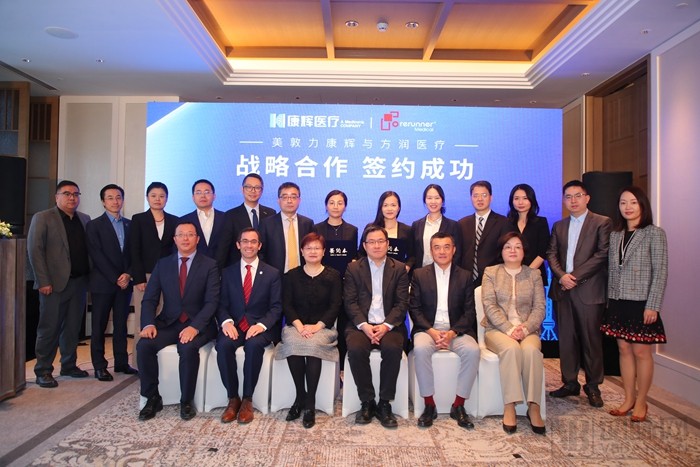
On the 15th of this month, Medtronic Kanghui announced a strategic partnership with ForeMed Medical, securing distribution rights for ForeMed Medical’s plasma radiofrequency system (ForeMed 360) and bipolar radiofrequency electrodes, among other products, in select regions of mainland China. This collaboration aims to provide patients with more advanced and safer minimally invasive spinal surgery solutions.
Minimally invasive spine surgery represents a major trend in future development, with plasma ablation technology currently standing as the most advanced minimally invasive technique in spinal procedures. Fangrun’s low-temperature plasma and radiofrequency treatment systems can be integrated into the SURGICAL SYNERGY™ intelligent orthopedic integrated solution, becoming an organic component that achieves synergistic operation. Leveraging Kanghui’s strong market foundation and channel resources in China, this integration empowers a broader range of orthopedic clinicians.Promote the enhancement of disciplinary standards and medical service capabilities at the primary care level.
Methods and strategies can outperform the market, but a commitment to long-termism will win the future. The orthopedics market has been constantly evolving. Its rapid growth in the past spurred the emergence of leading domestic companies, yet most enterprises remain at an early stage in product R&D, manufacturing processes, and market development. Volume-based procurement has returned competition in this industry to its essence. Only by sustaining R&D investment and continuously creating value for the industry can companies build dynamic moats and secure long-term competitiveness.