

Devoted Health Files for IPO Following $1.23 Billion Series D Funding Round Led by Harvard-Educated Founders

Devoted Health
Healthcare Service Provider
Recently, U.S. health insurance provider Devoted Health announced the completion of a $1.23 billion Series D financing round, with the proceeds to be used for expanding its services nationwide.
This funding round saw participation from existing investors GIC, Andreessen Horowitz, Premji Invest, Maverick, Frist Cressey Ventures, and NextView Ventures, as well as new investors ICONIQ Growth, General Catalyst, the Base10 Advancement Initiative, and Emerson Collective.
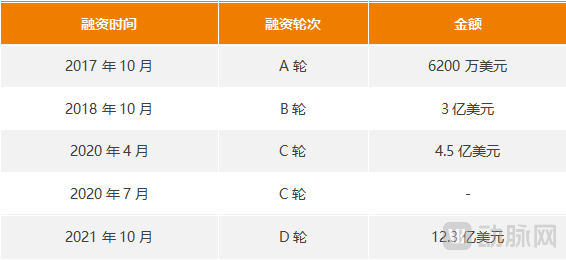
Devoted Health Financing History
According to PitchBook data, this is the largest funding round ever for a private company in Massachusetts.Devoted Health is currently valued at $12.7 billion.。
Devoted Health, established in 2017, specializes in providing Medicare Advantage health insurance to individuals aged 65 and older.
Medicare (the U.S. Federal Health Insurance Program) is a national health insurance program in the United States that provides health coverage to Americans aged 65 and older, certain younger individuals with disabilities recognized by the Social Security Administration, and people with end-stage renal disease and amyotrophic lateral sclerosis.
Medicare Advantage, also known as Medicare Part C, is a segment of Medicare that allows beneficiaries to obtain coverage through private insurance. Primarily, private companies contract with Medicare to provide customers with benefits from Medicare Parts A and B, typically covering prescription drugs through Health Maintenance Organization (HMO), Preferred Provider Organization (PPO), Private Fee-for-Service (PFFS) plans, or Medicare Medical Savings Account (MSA) plans.
Medicare Advantage is widely regarded as the most stable and valuable segment of the U.S. healthcare system, with star players such as Clover Health, Bright Health, and Best Covered participating in the market. How has Devoted Health managed to stand out amidst fierce competition? What insights does this company offer for the development of senior health insurance products in China?
Devoted Health was founded by two brothers, Ed Park and Todd Park, both of whom graduated from Harvard University.
Looking back on the entrepreneurial journey of these two academically gifted brothers, it can be described as “riding the wind and waves, with unstoppable success every step of the way.”

They co-founded the pioneering health information technology company Athenahealth in 1997. Under the joint leadership of the two brothers, Athenahealth has now become a provider of cloud-based software and services for physicians and healthcare practitioners.
The initial success did not deter the two brothers; in 2008, they co-founded Castlight Health, a platform for comparing healthcare costs between providers and patients. Notably, both companies have not only survived to this day but are also thriving: Athenahealth has achieved steady, long-term growth, while Castlight Health has gone public.
Later, in August 2009, Todd Park joined the Obama administration as the Chief Technology Officer of the U.S. Department of Health and Human Services (HHS), helping HHS harness the power of data, technology, and innovation to advance the nation’s health initiatives.
In recognition of his outstanding performance at HHS, Todd was named one of Fast Company’s “100 Most Creative People in Business” in 2010.
Subsequently, Todd Park served as the U.S. Federal Chief Technology Officer (also known as the “U.S. Chief Technology Officer,” USCTO) at the White House Office of Science and Technology Policy. This position was established under the Obama administration within the Office of Science and Technology Policy, an agency whose primary functions include leveraging new technologies to create jobs, reduce government operational costs, and lower healthcare expenses.
It is also worth noting that Devoted Health’s current leadership team includes many former executives from Athenahealth, making it a relatively mature startup team with strong synergy.
With extensive and successful entrepreneurial experience, a well-trained founding team, and broad government and enterprise resources, the success of Devoted Health seems to have been inevitable.
Devoted Health’s insurance services are designed for U.S. citizens or legal residents who have Medicare Part A and Medicare Part B. Devoted Health’s coverage is limited to specific designated areas, with slight variations in the services offered by region. While members may use their benefits across different covered regions after enrollment, services cannot be accessed in non-covered areas.
Upon purchasing the service, users will receive a personalized plan membership card. This card must be presented to access subsequent services, including insurance coverage, nursing care, and prescription drugs, with all service records stored on the card. If the card is not presented at the time of insurance coverage, the customer will be required to pay out-of-pocket.
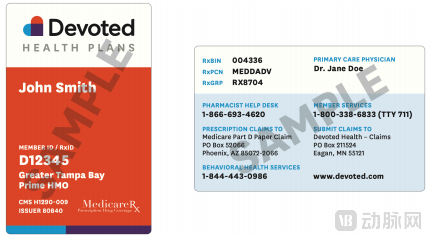
Devoted Health Plan Membership Card Example
Do not underestimate this card; behind its apparent convenience lies Devoted Health’s powerful network of resource integration capabilities. The warp and weft of this capability network are composed of “network providers.”
“Network Providers” refer to physicians, other healthcare professionals, medical groups, hospitals, medical equipment suppliers, and other healthcare institutions that have entered into cooperation agreements with Devoted Health to provide medical services to members and settle payments with Devoted Health.
From the perspective of service categories,Devoted Health offers a wide range of services, including inpatient hospital care, radiological diagnostics, and medical equipment rental, as well as routine dental care, acupuncture, hearing services, rehabilitative nursing, prescription dispensing, and optometry and eyeglass fitting. In each of these areas, members can choose from several to dozens of service providers.From the perspective of radiation region, Devoted Health currently has numerous service locations in Arizona, Florida, Illinois, Ohio, and Texas in the United States.
In Devoted Health’s nearly 300-page service description document, almost every service item concludes with a prompt for users to “obtain services from in-network providers.” This underscores the critical importance of this invisible, extensive network to Devoted Health.
After enrolling as a member, Devoted Health requires members to select a Primary Care Physician (PCP) from its designated “in-network providers” to deliver routine basic medical services.
After selecting a PCP, users need to send all their past medical records to the corresponding PCP to facilitate targeted service.
If a member requires specialized care or consultation with a specialist, their Primary Care Physician (PCP) must evaluate their condition. If deemed necessary, the PCP will coordinate and arrange a “referral” to an in-network specialist. If a member receives specialist services without obtaining a prior referral, they will be responsible for covering the costs themselves.
The PCP Referral System Benefits Multiple Stakeholders—For users, they can quickly and accurately locate the appropriate medical institutions, saving time and money while improving the healthcare process and efficiency;For suppliers within the service network, Devoted Health will refer a large volume of members to them, eliminating the need for substantial customer acquisition spending. Meanwhile, through optimized resource allocation, it prevents both undercapacity and overload, thereby safeguarding providers’ interests while maintaining service quality and stability to a certain extent;For Devoted Health itself, such an allocation model not only attracts more high-quality suppliers to join, thereby expanding the range of services offered and their geographic reach, but also strengthens Devoted Health’s bargaining power. This enables the company to attract more users with lower prices and superior services, creating a self-reinforcing virtuous cycle of continuous improvement.
It is also important to note that Devoted Health partners with Medicare to provide significant coverage beyond Original Medicare Part A and Part B benefits. If a member chooses Devoted Health, they remain enrolled in Original Medicare. However, the member will receive additional Part A (Hospital Insurance) and Part B (Medical Insurance) coverage through Devoted Health rather than through Original Medicare. Furthermore, members can access all Original Medicare benefits through Devoted Health, with the exception of hospice care. In other words, even if a member enrolls in a Medicare Advantage plan, Original Medicare will continue to cover hospice services.
Devoted Health not only excels in its core business operations but also delivers services on par with those of professional healthcare institutions.
1. Personalized Medical ServicesDevoted Health provides members with personalized care guidance, including home telephone follow-ups, urgent telemedicine consultations, and second medical opinions. By enhancing the efficiency and transparency of the care delivery process, simplifying cumbersome administrative procedures, and controlling unreasonable healthcare costs, it delivers personalized, cost-effective services to users.
2. Provide compassionate healthcare services.Devoted Health’s business philosophy is to treat every member as if they were one’s own parents: “every member should be treated like Mom (or Dad).” Devoted Health considers issues from the perspective of older adults, providing meticulous and comprehensive services. For example, because many elderly individuals have difficulty traveling and often cancel doctor appointments, Devoted Health assists them in scheduling appointments, arranging transportation to clinics, and providing childcare at home. Additionally, it offers free translation and Braille services to address members’ special needs, while also monitoring their psychological well-being and providing emotional counseling and support.
3. A professional medical team with timely response.Devoted Health has a team of physicians and nurse practitioners—Devoted Medical. Devoted Medical provides its home-based members with an efficient suite of telehealth and in-home care services, all powered by the company’s data and technology platform, Orinoco.
Users vote with their feet. As of June 30, Devoted Health served nearly 40,000 members in its markets across Florida, Texas, Ohio, and Arizona.
4. Ecosystem expansion through service innovation.In 2019, Devoted Health announced a partnership with Apple to offer its members discounts of up to $150 on Apple Watches, thereby encouraging older adults to adopt smart wearable devices. For members unwilling to purchase an Apple Watch, Devoted Health also provided alternative subsidized options, such as fitness and nutrition courses, aiming to help them improve their health outcomes. Although no further developments emerged from this collaboration, Devoted Health’s cross-industry initiative to identify new growth avenues has undoubtedly offered valuable insights.
Why is an insurance company investing so heavily in healthcare services? Beyond seeking differentiated competition through superior service amid product homogenization and intense market rivalry, it may well reflect a return to the essence of healthcare, as Ed Park stated: “Devoted Health cares for each individual like true family.”
At its core, healthcare rests on two essential pillars: technology and respect for human dignity. These services, extending from user needs and centered on people, represent a return to the original mission of medical care.
After reviewing Devoted Health, let us turn our attention back to China.
China has become the country with the largest and fastest-growing elderly population in the world. As aging and advanced age intensify further, the demand for age-related products and services will gradually be unleashed and experience a significant surge.
Recently, the state has also successively introduced relevant policies. For example, the China Banking and Insurance Regulatory Commission (CBIRC) issued the "Guidance of the General Office of the China Banking and Insurance Regulatory Commission on Further Enriching the Supply of Life Insurance Products," encouraging and supporting insurance institutions to further raise the upper age limit for policyholders and accelerate the fulfillment of insurance protection needs for elderly individuals aged 70 and above.
Currently, the main providers of senior health insurance in China areShanZhen. In the design of medical insurance for the elderly, Shanzhen has leveraged its physical examination network to transform the traditional risk control logic of health insurance, which previously defined insurable groups based solely on age. By incorporating multi-dimensional data and refining user health profiles on an individual basis, it aggregates data across different levels to precisely define the scope of coverage.
Other insurers are involved, but only in certain products, such asPing An of ChinaThe “E-Sheng Ping An Comprehensive Medical Insurance for Middle-aged and Elderly” is designed for individuals aged 50 to 80, covering twelve benefit plans including accidental injuries, sports-related falls, newly diagnosed diseases, sudden cardiac death, and unauthorized bank card transactions.ZhongAn Insurance“Xiaoxinbao Cancer Medical Insurance” is designed for individuals aged 45 to 80. As it is a cancer-specific medical insurance policy that covers only cancer treatment expenses, its health underwriting requirements are more lenient than those of general medical insurance policies. Individuals with hyperglycemia, hyperlipidemia, hypertension, or diabetes are eligible for coverage. For example,Standard Life AnnuityHeng An Standard's Specific Disease Insurance for the Elderly, with a maximum issue age of 75, covers 10 high-incidence conditions among seniors, including stroke and congestive heart failure.
As it stands, the coverage rate of commercial health insurance in China remains relatively low, with particularly insufficient enrollment rates among the elderly population.
At a time when industries across society are rapidly accelerating age-friendly adaptations, insurance companies should also seize the momentum to develop “age-friendly” insurance products. By capitalizing on policy and market opportunities, gaining a thorough understanding of seniors’ insurance needs, and providing products and services tailored to their elderly care lifestyles, insurers can better serve this growing demographic.
As elderly individuals’ awareness of risk protection strengthens and their purchasing power continues to rise, the state is advancing the top-level design of the new healthcare reform, with the insurance industry’s development focus centered on health and elderly care. Consequently, the market for elderly-related and exclusive insurance products is poised for explosive growth. As a dedicated recorder in the medical field, VCBeat will continue to closely monitor this sector.
References:
VCBeat Insurance Watch: Wang Yan, “Research | Devoted Health: A Health Insurance Startup Focused on the Senior Healthcare Market”
Yinshu Cloud: “From Apple Watch to Flu Vaccines, This Insurer Offers Creative Services for Seniors”