

Innovations and Practices in Viral and Non-Viral Vector Delivery: Insights from Industry Leaders
We have recently discussed drug delivery extensively, covering topics ranging from viral to non-viral vectors, and from conjugation technologies to various other novel and innovative delivery platforms. However, regardless of how much we write, our perspective remains limited. The true answers for the industry must be sought within the industry itself.
Recently, VCBeat/VCBeat New Medicine has consecutively hosted multiple salon events related to drug delivery.
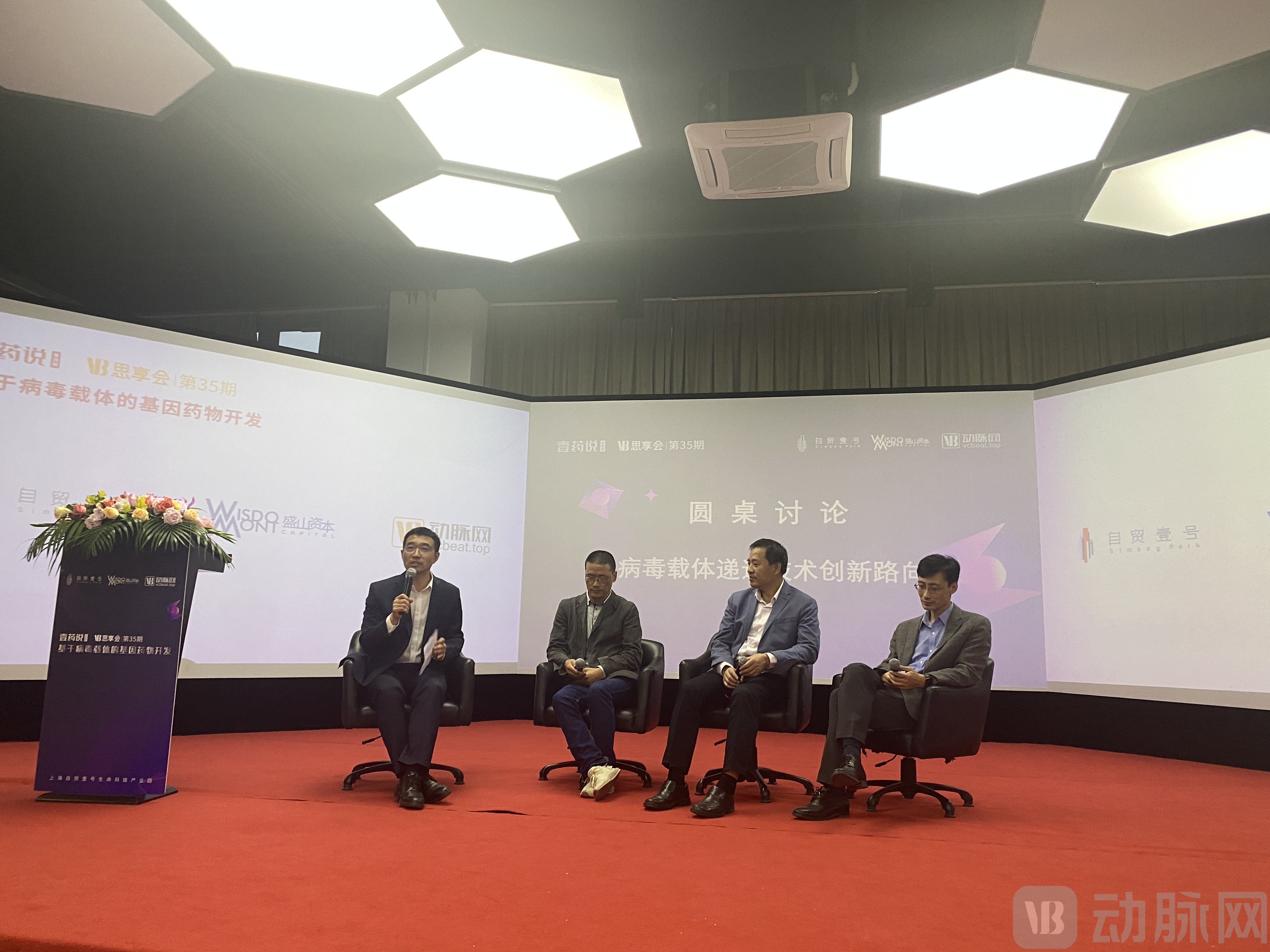
[VB Insights] Issue 35,VCBeat/Artery New Medicine, together with Shengshan Capital andFTZ No. 1, centering on viral vector delivery technology, has invitedZhang Yu, Vice President of BD at Huida Gene; Wu Zhenhua, Founder & CEO of Jiayin Biotechnology; Lin Qing, Founder & CEO of Lingyi Biotechnology; Wu Xiaojiang, Founder & CEO of Mujing Biotechnology; andJia Guodong, General Manager of Obio Technology。
[VBInsight Salon] Issue 36,VCBeat/Artery New Medicine, in collaboration with Shengshan Capital, Fenglin Group, and the Kasi Club, have invited experts to discuss non-viral vector delivery technologies.Yu Haijun, Principal Investigator at the Shanghai Institute of Materia Medica, Chinese Academy of Sciences; Zhang Wei’an, Professor at East China University of Science and Technology;Hang Yu, Head of Delivery Platform Technology at Swabio、SaiFu Pharma, Deputy Director of the Safety Evaluation Center, Wei Na、Xu Ke, Founder of Visicon, and Shi Jiahai, Founder of Bomi Bio。
At these two salon events, what important industry insights did the guests provide?Insights? We have curated the key viewpoints from the roundtable discussion as follows:
In the AAV field, risk, durability, and cost are three inescapable topics.
In recent years, safety-related incidents associated with AAV-based therapies have been reported in succession, with hepatotoxicity and thrombotic events being frequently cited. The initial optimism surrounding AAV vectors stemmed primarily from their high safety profile in humans, unlike other viral vectors that carry potential pathogenic risks. However, it now appears that AAV vectors may not be as safe as originally anticipated.
Founder & CEO of Lingyi BiotechLin QingAnalyze the issue as follows: “During the early stages of R&D, we must pay particular attention to the immunogenicity of AAV vectors; effective early screening can significantly reduce potential risks in subsequent clinical trials. Currently, optimization of vector construction primarily focuses on target gene expression, but immunogenicity must also be taken into account. In addition to capsid protein engineering, the packaging of the target genomic DNA into the AAV capsid results in new spatial conformations based on the tertiary structure of the DNA, which can also substantially impact immunogenicity. During early R&D and CMC process development, we need to carefully deliberate on the quality control standards for management. Nipping potential factors that may trigger immune responses in the bud is the key to our success.”
Jia Guodong, General Manager of Obio TechnologySafety concerns were also addressed: “Indeed, risks associated with AAV are increasingly being recognized. This is primarily because AAV was used very sparingly in the past, so its risks were not fully characterized. Consequently, while risks were previously unknown, they are gradually coming to light as AAV usage expands. The more it is used, the more risks are observed. Under such high-risk conditions, AAV therapy is actually better suited for certain currently untreatable indications, where patients tend to have a higher risk tolerance.”
The liver exhibits high affinity for systemically administered adeno-associated virus (AAV). Particularly in the indication of hemophilia, AAV can deliver the DNA encoding factor VIII (F8) protein to the liver, enabling hepatic expression of F8 protein and thereby improving coagulation function in patients with hemophilia A. However, in actual clinical practice, it has been observed that not all patients maintain sustained long-term coagulation benefits. This outcome appears to deviate from the common perception of gene therapy as a “one-time cure.” Therefore, careful selection of clinical indications for AAV gene therapy is crucial, and from a technical perspective, optimization of AAV viral vectors is particularly important.
Wu Zhenhua, Founder & CEO of Jiayin BioIt is believed that the drawbacks and advantages of AAV are both evident: “The greatest advantage of AAV is its long-term efficacy with a single dose. However, there are also significant disadvantages, such as packaging capacity limitations that prevent it from accommodating larger genes; immunogenicity at high doses has recently emerged as a major safety concern in clinical settings; furthermore, delivery efficiency in certain organs remains to be improved. In pipeline selection, priority should be given to therapeutic areas where existing treatments are either unavailable or suboptimal. For instance, although small-molecule drugs are available for spinal muscular atrophy (SMA), gene therapy can achieve superior therapeutic outcomes, thereby demonstrating its value.”
Wu Xiaojiang, Founder & CEO of Mu Jing Sheng Wu"Regarding the inherent biological characteristics of AAV, its genome does not integrate into the host cell’s genome; consequently, it is not replicated along with the cellular genome. However, long-term persistence within cells is desired. The current challenge therefore lies in cell replication: during cell division, the AAV genome becomes diluted. In this regard, AAV may be better suited for relatively quiescent cell types, where transgene expression duration is longer. Published studies have reported cases of sustained expression for up to six years. In contrast, in highly active tissues such as the liver, which possesses inherent replicative capacity, the therapeutic efficacy of AAV may be somewhat compromised."
The most significant commonality among gene therapy drugs currently on the market is their high cost. Sky-high prices, often reaching hundreds of thousands of dollars, deter even patients with critical medical needs. What exactly are the underlying reasons for the high pricing of gene therapy drugs?
Jia GuodongFrom the manufacturer’s perspective, this issue was analyzed as follows: “Large-scale production of biologics in China has a history of more than ten years. In the past, I might have meticulously calculated antibody costs; now, I focus on the production costs of AAV (adeno-associated virus). My personal view is that the current high prices of these products are largely unrelated to their production costs. Particularly with technological advancements, future production costs will continue to decline. The pricing of a product depends on the patient population affected by the disease. Therefore, market size is a crucial determinant of a product’s price.”

Compared with viral vectors, the application of non-viral vectors is still in its early stages. Were it not for the impetus provided by the pandemic, the lipid nanoparticle (LNP) system used for mRNA might have taken several more years to truly reach commercialization.
At the current stage of development, innovation has become an indispensable topic for non-viral vectors. Such innovation encompasses not only technological advancements but also extends to areas such as the innovation ecosystem and collaborative partnerships.
Swabio is one of the few domestic companies to have advanced non-viral vector technology to the stage of large-scale production. Before the pandemic, Swabio had only gained modest recognition within the niche mRNA community. However, propelled by the catalytic effect of the pandemic, the company’s name has become widely known. Amidst this rapid rise to prominence, Swabio naturally has its own untold stories.
Hang Yu, Head of Delivery Platform Technology at SMIShare to: “At Swabio, we employ LPP as our delivery system. Compared with the more mature LNP platform, our research foundation is indeed relatively weaker. From early-stage R&D through to late-stage scale-up manufacturing, we have navigated numerous challenges, including shortages of instruments and raw materials in the early phases, issues encountered during production scale-up, and staffing constraints. Through continuous experimentation and exploration, we adopted key domestically produced instruments and materials as substitutes, and via iterative trial and error, we ultimately established an integrated end-to-end supply chain and built a large-scale GMP facility capable of high-dose mRNA vaccine production. Our company’s workforce has grown rapidly from approximately 60 employees at the beginning of last year to nearly 500 today. This rapid expansion has helped ensure compliant and accelerated vaccine production.”
The Yangtze River Delta region, represented by Zhangjiang and BioBAY, has become a hub for biopharmaceutical innovation in China, with numerous companies possessing their own core technologies. Throughout its development, Zhangjiang has been repeatedly compared to Kendall Square in Boston, USA. The comparison between the biopharmaceutical highlands of China and the United States remains a topic of widespread interest.
As an entrepreneur who has just returned to China from the United States,Xu Ke, Founder of VisconHe shared his genuine impressions: “The density of emerging biopharmaceutical industries in Zhangjiang and the Suzhou Industrial Park is on par with that of Kendall Square, the core hub in Boston. Zhangjiang’s current development is very close to, and in certain aspects even surpasses, the clustering effect of Kendall Square, particularly in clinical trials, intellectual vibrancy, and the overall level of industrial digitalization. However, there is still room for improvement in talent distribution, which is more evident in Suzhou than in Shanghai. Therefore, we anticipate that over the next five years, the radiation of talent from Shanghai to surrounding regions will further increase. By then, the biopharmaceutical industry in the entire Yangtze River Delta may well outperform Boston, becoming the pharmaceutical valley and innovation center for East Asia, and even the world.”
In terms of innovative collaboration, what innovative enterprises need most is greater financial support. In recent years, global pharmaceutical giants have become one of the most important payers for domestic medical innovation. Various collaborative models, including technical services, co-development, and pipeline acquisitions, have been successively adopted.
Partnered with Takeda PharmaceuticalShi Jiahai, Founder of Bomi BiologyRegarding this, he remarked, “For our part, we recognize the potential of red blood cell-derived extracellular vesicles. They offer substantial cargo capacity, accommodating RNA up to 4.7 kb and DNA up to 30 kb, allow for repeated administration, and demonstrate a favorable safety profile. We believe this represents a highly promising direction for the future. However, large pharmaceutical companies like Takeda have ample capital to acquire opportunities. They tend to invest in a portfolio of emerging technologies with future potential, so that when these technologies reach inflection points, they can capture value from them. For instance, the patent for Keytruda was not originally owned by Merck & Co.; it may have been an opportunistic acquisition at the time, yet it has now become a cornerstone of Merck’s revenue.”
Many people like to use the term “iteration” to describe technological evolution, regardless of whether a true iterative relationship exists between the technologies. Comparisons between delivery technologies are also frequently discussed. Which is safer: viral vector delivery or non-viral vector delivery? Will non-viral vectors replace the application of viral vectors in the future?
Professor Zhang Wei'an, East China University of Science and TechnologyIt is advocated that differences among various delivery technologies should be viewed with greater openness: “The comparison between different delivery technologies is a dialectical issue and cannot be simply judged as good or bad. Non-viral vectors are still in an ascending phase of evolution; therefore, whether for viral or non-viral vector technologies, our core focus must remain on enhancing drug efficacy.”