

Exoskeleton Robots Reshape the Trillion-Yuan Rehabilitation Market: Breaking Through Constraints in the Elderly Care and Rehabilitation Industry

RoboCT
Exoskeleton Robot and Its Core Component R&D Provider
Recently, a paralyzed12The Beautiful Dancer of the Year (Weibo ID: Jimuduo-; hereinafter referred to as Duoduo) went viral online and topped the trending search rankings with a video of her walking again using an exoskeleton rehabilitation robot.
In 2009, she suffered an accidental injury that resulted in permanent paralysis. At that time, due to the inability to exert force with her lower body, she could only straighten and bend her legs by stabilizing her knees and relying on physical support, thereby achieving a standing position. Today, with the integrated development of medicine and technology, exoskeleton rehabilitation robots have enabled her to walk again.
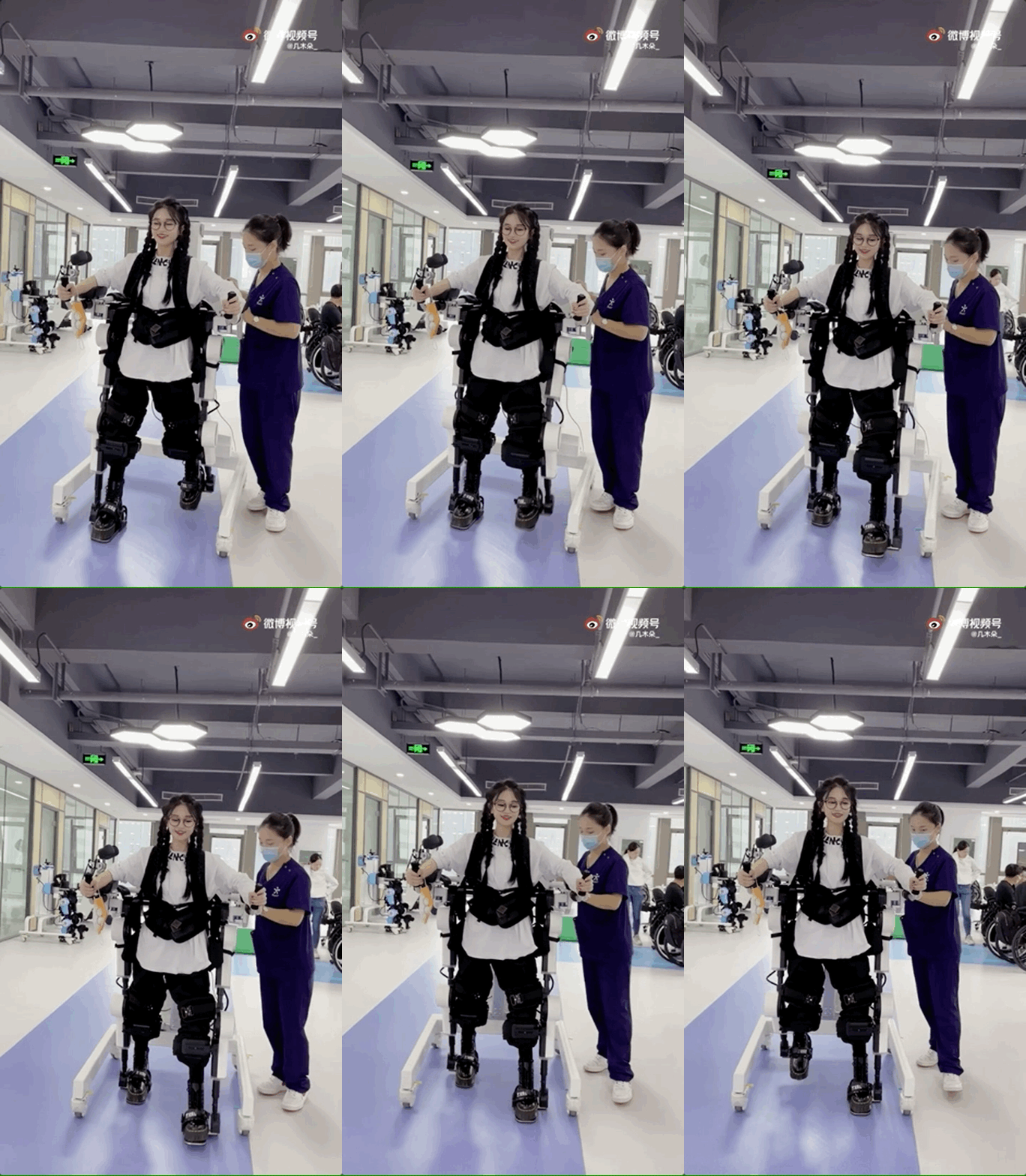
She posted on Weibo: “Walking is a sensation I haven’t felt in a long time, one I had nearly forgotten. I seemed to have grown accustomed to the wheelchair, completely abandoning the desire to walk. Yet when I stood up and took my first steps, with my lower body propelling my upper body forward, my heart could not remain calm.”
How do exoskeleton robots help patients regain the ability to walk? What rehabilitation principles underpin their use? And what impact are they having on the health and wellness industry? To explore these questions, VCBeat interviewed RoboCT, a leading company in exoskeleton rehabilitation robotics.
In fact, there are many patients similar to Duoduo. The latest data from The Lancet shows that patients in China with rehabilitation needs mainly include the elderly, postoperative patients, those with chronic diseases, and people with disabilities, totaling approximately 460 million.
As one of the four major branches of medicine, rehabilitation medicine not only eliminates and alleviates functional impairments in patients with diseases, injuries, and disabilities but also enhances their self-care abilities and quality of life. For instance, rehabilitation therapy enables 90% of stroke patients to regain walking ability and independence in daily living, and allows 30% to return to light-duty work; in contrast, without rehabilitation therapy, only 6% regain walking ability and independence, and merely 5% return to light-duty work.
However, the development of rehabilitation medicine in China is still in its early stages. First, there is a significant shortage of rehabilitation professionals and institutions in China. Data shows that there are only 11,000 rehabilitation therapists in China, compared to over 200,000 in the United States; the number of rehabilitation clinics in China is relatively low, whereas the United States has approximately 30,000 to 70,000. Second, traditional rehabilitation equipment relies heavily on the experience of rehabilitation therapists to achieve optimal outcomes. Given the varying levels of proficiency among rehabilitation therapists in China, it is difficult to ensure consistent therapeutic efficacy using traditional rehabilitation devices. Finally, traditional rehabilitation devices lack quantitative evaluation metrics, making it difficult for patients to perceive tangible improvements after use. This often leads to a loss of confidence and discontinuation of rehabilitation treatment.
Fortunately, with the advent of exoskeleton robots, the existing landscape of the rehabilitation field is set to be disrupted and reshaped.
Currently, the rehabilitation principles commonly used in clinical practice involve reshaping neural pathways through exercise and strengthening muscle memory to help patients regain function. Taking hemiplegia caused by neurodegenerative diseases as an example, patients perform standardized movements using rehabilitation devices based on their own motor intentions. By repeating these movements cyclically, damaged nerves are stimulated and reshaped, thereby establishing limb muscle memory and ultimately achieving full or partial functional recovery.
Traditional rehabilitation devices generally assist patients in performing movements through physical support and traction, which can cause certain damage to joints and other areas. Moreover, they only allow for passive training and cannot facilitate movement based on the patient’s voluntary intent, thereby making it difficult to stimulate neural remodeling. Meanwhile, the use of traditional rehabilitation devices requires assistance from rehabilitation therapists and long-term training before patients have a chance to achieve functional recovery.Standard Procedure, thereby initiating rehabilitation therapy.
Taking commonly used clinical orthoses as an example, during patient use, orthoses tend to cause declines in muscle strength, muscular endurance, and muscle volume due to the restriction of bodily muscle activity. Furthermore, joint immobilization leads to restricted movement of joints, muscles, and other soft tissues, which easily results in insufficient active and passive range of motion, ultimately causing contractures. In addition, the compensatory function of orthoses is relatively rigid for patients, making it difficult for them to experience the sensation of active ambulation.
Compared with traditional rehabilitation devices, exoskeleton rehabilitation robots not only ensure the safety and stability of patients’ joints but also provide more precise and effective rehabilitation training, thereby improving rehabilitation efficiency and outcomes.For instance, as wearable devices, exoskeleton rehabilitation robots can assist the human body in performing standardized movements based on biomechanical performance. Long-term use can double the efficacy of rehabilitation therapy. Moreover, these robots can replace simple, repetitive rehabilitation tasks that have long relied on manual labor, thereby freeing up rehabilitation therapists while ensuring the intensity and precision of rehabilitation training.
Additionally,Exoskeleton rehabilitation robots also help provide more standardized and customized rehabilitation treatment plans.For example, the second-generation exoskeleton robot independently developed by RoboCT is equipped with various training modes, including passive walking, active walking, and combined active-passive modes. The active walking mode is further divided into beginner, intermediate, and advanced levels based on gait parameters such as stride length and walking speed, with the training pace capable of real-time dynamic adjustment.Gait Patterns and Rehabilitation Training ProtocolsThere are multiple typesOptional, availableBy Rehabilitation TherapistsFormulationEfficient and ScientificOptimal Rehabilitation Pathway.

Finally,RoboCTExoskeleton rehabilitation robots equipped with digital and information technologies can effectively monitor and record kinematic and physiological data during rehabilitation training, and visually present patients with a comparison of indicators before and after rehabilitation., providing psychological support to encourage patients to adhere to rehabilitation therapy. Meanwhile, the comprehensive metrics and data also serve as a basis for physicians to optimize rehabilitation treatment plans.
The Chinese government places significant emphasis on rehabilitation treatment for individuals with disabilities and the elderly, and is actively promoting development in the rehabilitation sector. The “Notice on Issuing Opinions on Accelerating the Development of Rehabilitation Medical Services,” released on June 8, 2021, states: “Actively support the research, development, and innovation of a batch of”High Intelligence, High Technology, High Qualityrehabilitation assistive devices and rehabilitation therapy equipment, to gradually meet the health needs of the public.
Exoskeleton rehabilitation robots involve numerous disciplines, including sensing, control, mechanical power, human-computer interaction, human biomechanics, clinical medicine, ergonomics, and neuroelectrophysiology, making them the most intelligent devices among current rehabilitation equipment. With the implementation of policies, exoskeleton robots will be more widely applied in rehabilitation.
Meanwhile, the state is also promoting the decentralization of rehabilitation medical resources and encouraging private sector participation in the development of the rehabilitation field. On June 16, 2021, the National Health Commission issued the "Opinions on Accelerating the Development of Rehabilitation Medical Services," which proposed transforming some primary and secondary hospitals in areas with abundant medical resources into rehabilitation hospitals, and supporting and guiding social forces to establish large-scale, chain-operated rehabilitation medical centers.Increase the number of medical institutions providing rehabilitation services within the jurisdiction.. Innovate rehabilitation medical service models, and gradually promote multidisciplinary collaboration between rehabilitation and clinical disciplines,Actively Develop Community- and Home-Based Rehabilitation Medical Services, promote the integration and seamless connection between rehabilitation medical services and the provision of rehabilitative assistive devices.
Exoskeleton rehabilitation robots, leveraging their unique advantages and characteristics, will facilitate the decentralization of medical resources and promote the development of rehabilitation services at the primary care and community levels. First, these robots standardize rehabilitation therapy, enabling primary care and community rehabilitation institutions to achieve high standards of treatment and thereby expanding the effective coverage of medical resources. Second, exoskeleton rehabilitation robots can perform simple, repetitive tasks for extended periods, significantly reducing the repetitive workload of rehabilitation therapists. This not only improves therapists’ efficiency but also diminishes the traditional reliance on caregivers for rehabilitation training. Finally, the intelligent supporting systems of exoskeleton rehabilitation robots can promptly display users’ rehabilitation progress through a series of metrics, boosting user confidence. This, in turn, encourages greater public awareness and participation in rehabilitation, ultimately driving the development of China’s rehabilitation industry.
According to Duoduo, she was initially (in 2009) only able to stand with the physical support of a standing bed, but unable to take steps and walk. It was not until mid-October this year, at the invitation of RoboCT, that she experienced the industry’s latest generation of exoskeleton rehabilitation robots at the RoboCT Intelligent Rehabilitation Center, with the assistance of a team of rehabilitation therapists, thereby rekindling her “dream of walking.”
In 2020, RoboCT’s independently developed lower-limb exoskeleton gait rehabilitation device received approval from the National Medical Products Administration (NMPA) for market launch, providing a novel option for patients with central nervous system disorders (including those with paraplegia and hemiplegia). In March 2021, RoboCT’s second-generation U-Go exoskeleton rehabilitation robot was approved for market launch, delivering superior performance, enhanced comfort, and improved clinical outcomes.
Currently, most exoskeleton rehabilitation robot products are still in the stages of clinical trials and regulatory registration. However, RoboCT’s independently developed and manufactured series of exoskeleton products have played a positive role in promoting rehabilitation applications and the development of the rehabilitation industry. The approval of RoboCT’s product series for NMPA medical device registration certificates further validates the safety, efficacy, and reliability of its exoskeleton technology.
Data shows that the second-generation Youxing exoskeleton robot has achieved full digitalization of the rehabilitation process. It can record, measure, and evaluate rehabilitation data for each user, providing assessments and judgments on parameters such as range of motion, lower limb muscle strength grade, balance grade, muscle tone grade, stride length, and walking speed. Furthermore, it can visually display the specific status of users following their rehabilitation activities.
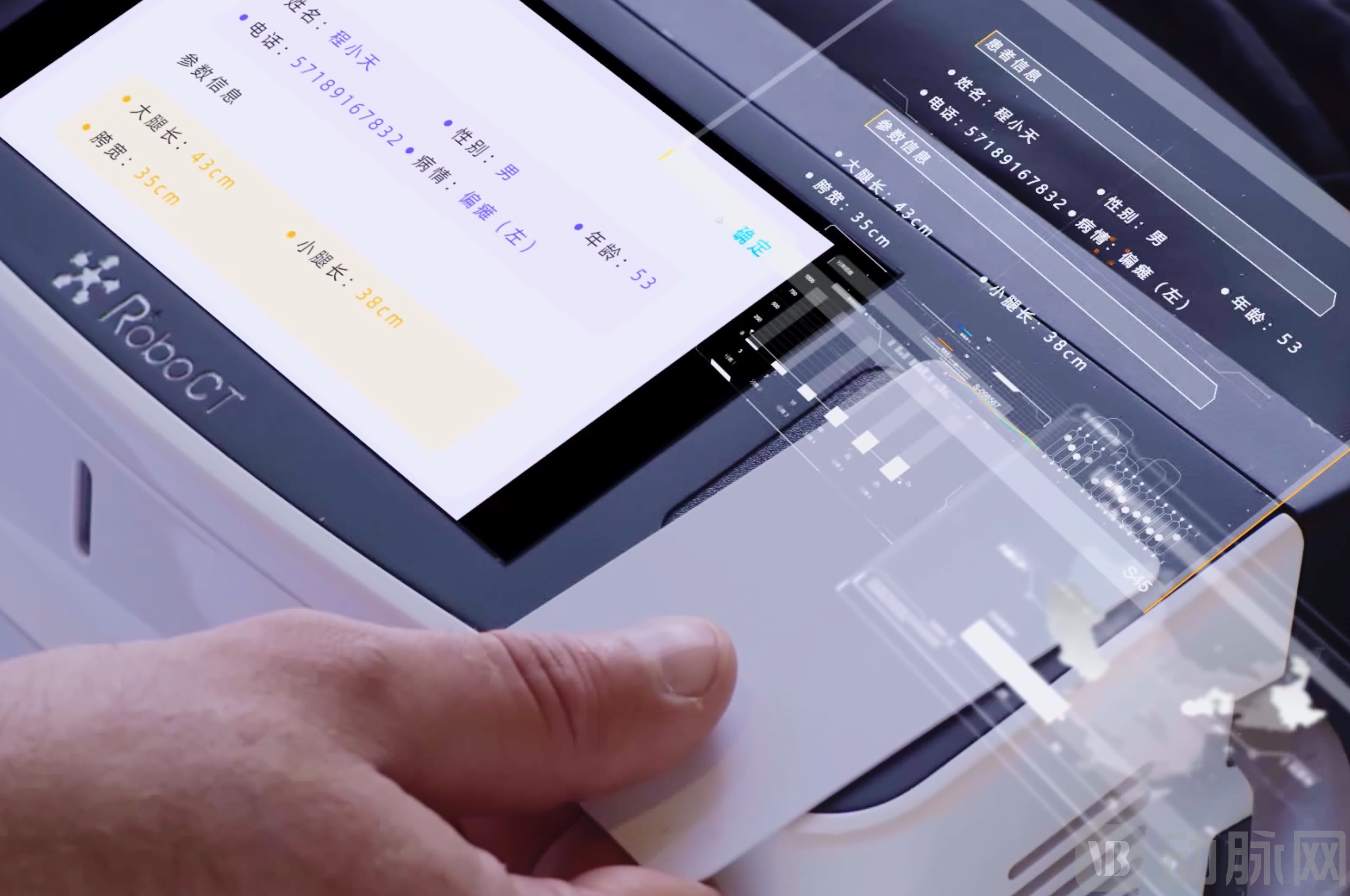
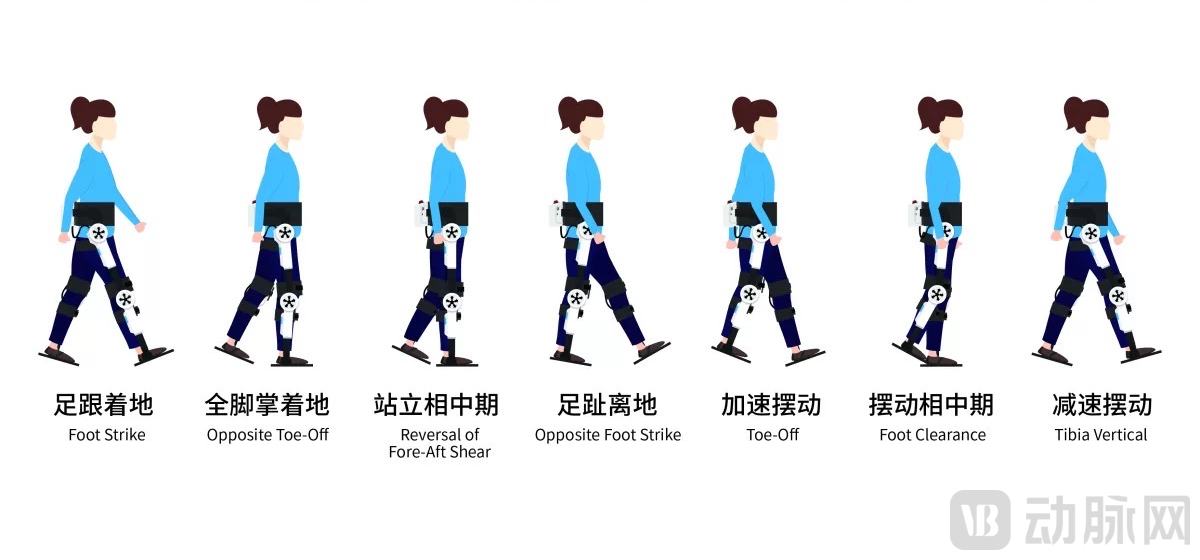
In addition, the second-generation Youxing exoskeleton robot is equipped with intention detection technology. After the patient wears the exoskeleton rehabilitation robot, the robot can detect the wearer's movement intentions through the organic integration of multiple sensors, assisting them in performing standardized gait training.
Clinically, the second-generation Youxing exoskeleton robot also delivers superior rehabilitation outcomes. According to Qin Mengxue, Head of Rehabilitation Therapists at RoboCT, “After donning the exoskeleton rehabilitation robot, patients can perform standardized gait walking with robotic assistance. Through efficient, repetitive training, this process stimulates neural pathways and fosters muscle memory, gradually restoring lower-limb locomotor function. The second-generation Youxing exoskeleton robot features proprietary multi-sensor information fusion technology, which accurately discerns the user’s walking intent and responds with appropriate gait adjustments, enabling compliant force interaction between the human and the exoskeleton. Combined with active and passive training modes, this technology accelerates the patient’s rehabilitation progress.”
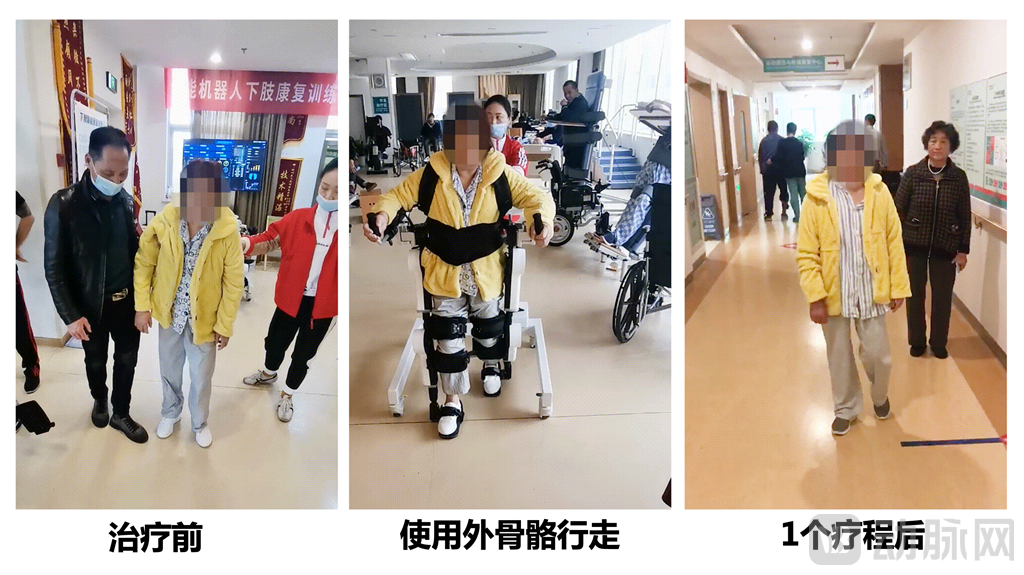
Taking the rehabilitation of a patient in the acute phase of stroke as an example, prior to using the second-generation Youxing exoskeleton robot, she required a cane for assistance when walking. Her gait was characterized primarily by shuffling, with extremely small step length, very slow walking speed, and highly stiff movements. However, after one course of treatment with the second-generation RoboCT exoskeleton robot, her muscle strength recovered rapidly, and her muscle tone improved significantly, enabling her to walk independently without any assistive devices.
Beyond technological empowerment, RoboCT is promoting the decentralization of rehabilitation medical resources by pioneering innovative service models.Previously, users with strong rehabilitation needs could mostly only receive treatment in the rehabilitation departments of tertiary hospitals in China. Given the overall shortage of rehabilitation resources and professionals, the current health and wellness market is unable to meet rehabilitation demands, and primary healthcare institutions are even less capable of handling them.
Based on market conditions and the safety and efficacy of exoskeleton robots, RoboCT is striving to provide users with exoskeleton rehabilitation solutions through its innovative “RaaS (Rehabilitation as a Service)” model. Specifically, RoboCT integrates China’s three-tier rehabilitation system by coordinating home-based care, community services, and private institutions to facilitate scientific “referrals” for rehabilitation therapy. Leveraging exoskeleton rehabilitation robots, homes, communities, secondary specialized rehabilitation hospitals, and other institutions can adopt standardized rehabilitation treatment protocols with consistent and repeatable therapeutic goals, thereby delivering phased, full-cycle rehabilitation services to patients.
It is foreseeable that exoskeleton rehabilitation robots will help an increasing number of people achieve recovery and fulfill their dream of “walking.” RoboCT stated, “We hope everyone can enjoy the benefits of robotic services!”